You can do a while lifetimes work, and yet sometimes it's a tiny action like this which can have the biggest benefit to mankind.
Just think how many billions of times someone has avoided pulling up to the wrong side of the pump because of this arrow - literal lifetimes of effort saved.
There is usually still a concept of front. Most desktops if laid down would be laying on their right side (so the motherboard & cpu aren't upside down). From there you can still pretty easily tell how the port is oriented without looking.
USB-C is better than A in that it works in two orientations instead of one, but the correct answer for connectors should be any orientation — the best connectors are cylindrical connectors: barrel plugs, RCA, BNC, banana, phono, TRS, TRRS, etc. Just make them round.
Would it be practical to have a round port as a universal connector? USB C uses a lot of pins, how would that work? Like an audio plug with a lot of rings?
I think it would be practical with glass fibre. Two wires/rings for power, and fibre for data. Something like a Mini-TOSLINK, but even smaller. Ideally the plug would be barely thicker than the cable.
My laptop has one of these ethernet ports that half close when not in use. It doesn't work anymore because someone mistook it for the USB port that's right next to it when distractingly plugging their keyboard in.
This reminds me so much of the old story about how a user called support to tell them their floppy drive wasn't working. When the tech got there, the computer had no floppy drives, and the user had been forcing the disks in the gap between the drive blank plates.
no, they definitely fit. They're just awkwardly exactly the right size that while you're trying to plug things in punched over under the desk and crawling around and feeling around the backside; it just yeah.
When I'm trying to plug my PS/2 keyboard into the port in back of my computer which I cannot see, instead of needing to try two orientations, I need to try every orientation.
It's very weird that USB-C solved the problem of "we can't tell which way to insert the plug" by mandating that both orientations should work, as opposed to just making the exterior of the plug as asymmetrical as the interior.
I don't find it weird. Not even having to work out a correct orientation is a great convenience. The micro-USB connection (or is it "min"?), which I need to fiddle with to charge some older gadgets, is a testament to how annoying an "asymetric exterior" plug can still be.
Yes, micro USB is far too flimsy for a lot of things it’s used for from what I’ve observed. The connector seems to have a lot of leverage for ripping its tracks off, but often not a great mechanical connection to the board.
You mean something like HDMI? If you’ve ever tried to plug one of those into the back of a TV, you’ll know it’s still pretty difficult to get it the right way up.
> If you’ve ever tried to plug one of those into the back of a TV, you’ll know it’s still pretty difficult to get it the right way up.
That's true, but the difficulty in that case comes from being unable to see the hole or fit into the space between the television and the wall.
For example, plugging an HDMI cable into the back of a monitor involves none of the difficulty of plugging an HDMI cable into the back of a TV, even though the connector and the port are the same in both cases.
Less weird as they get smaller. Call it an accessibility thing if you like, but I think it's better for everyone and congrats to them. Isn't this what technology is supposed to do, make things easier?
sometimes you're plugging in things at the back of something nearly flush against a wall and you can't really see, its quite useful for the connector to be reversible.
The Mac Studio has two of 6 TB/USB-C ports on the front, and has since inception.
So does the Mac Pro (well technically they're on the top now) and has on most models since the G5 PowerMac 20 years ago; The single model without front/top ports was replaced in 2019.
So does the Mac mini has two front facing ports now.
So your complaint is essentially about the extremely minimalist, consumer-oriented iMac, or maybe older Mac minis.
When you plug in a USB stick, surely you want it on the front? Do you get around this with an adaptor or something?
My use case seems common. The bulk of my usage of their desktops was during the ultra minimum list era that you mention. I mostly love their machines but some of the form-over-function is rough.
Presumably Pros don’t need access to the power button either.
On the rare occasion I plug in a usb flash drive (I assume that's what you mean by "stick") I use the usb-c end. On the even rarer occasion I use it with some device that doesn't have usb-c (this is actually just hypothetical I've never done this in practice) I turn the flash drive around and use the usb-a end.
It's been clear that usb-c is the future for a decade now. How on earth do you still have flash drives that are usb-a only?
I probably use the power button once a month, and I'd say this is the norm for most developers/similar people. It's no harder than accessing the menu button/toggle stick on the back of my dell display.
Sandisk have been making dual-port usb flash drives for years. I see no reason to buy/use any other kind, in the same way I see no reason buy a printer with a parallel port or a mouse with a ps2 plug on it.
If it's really a significant problem, use the benefits of usb and put a hub or usb extension cord on the desk to connect to.
I just cannot fathom how such trivial factors are a problem for people.
What's wrong with pulling up to the wrong side of the pump? I do it all the time when the petrol station is busy, just pull the hose over to the other side and fuel the car anyway.
just because there's nothing particularly wrong with only getting the usb in on the 3rd try doesn't mean it's not a minor inconvenience worth resolving.
but if you want a more dramatic example, it's right there in the text: Moylan got soaked because of this inconvenience. if he'd gotten a pneumonia as a result of this and died, then that is suddenly much more than a minor inconvenience.
I'm in Europe, in case you're on the "wrong" side of the pump you just have to make sure that you park the car a little further, so you'd get the pump hose through the back and on to the other side without scratching the car's paint. That's all it is to it. I'm from Romania and I've driven (and hence re-fueled) my car all the way from Bretagne, France, to Peloponnese, Greece, never had a problem.
I also don't know anything about any "arrow" signalling anything in my dashboard, maybe it's only on the US-made cars, I wouldn't know cause I generally know on which side I have to fuel my car.
I do not know where you are in the world but in the homeland of the English language, Britain and most of its direct (former!) colonies, "petrol" is the stuff cars and motorbikes run on and "diesel" is the stuff agricultural vehicles and heavy plant (lorries, buses) runs on. "Gas" is a phase of matter along with "liquid", "solid", and "plasma" and that is all the bare noun means. "Natural gas", and the obsolete "coal gas"/"town gas", are fuels, but for heating/cooking/light not vehicles as a rule, but generally we'd talk about propane, butane, etc.
We never, ever use "gasoline" or the Germanic "benzene" for this. Benzene is a specific chemical here, never ever a fuel.
Agreed about never having a problem with this, but our cars either have the arrow, or the hose in the icon is on the side of the car that has the tank cover. This has been true for all cars I've seen here.
I'm in Europe, the hoses always reach to the other side of the car just fine. Or maybe you know, remember that Europe isn't one country and actually say where you are.
2020s UX "experts" would bury the entire instrument cluster under a hamburger menu if they could get away with it.
The fuel gauge would be moved three menus deep and thus impossible to find, then removed in subsequent model years when their telemetry data "proved" no one used it anymore.
It drives usage up! Seriously, I wonder whether this “Make things to annoy people” trend is a normal situation, or an emerging behavior due to our era, and whether it will be solved one day. Example: In 2003 all UX was abominable, programs were ugly and black and white and text and boring, then came the iPhone with the idea to hire designers for apps, it was entirely new and absolutely unseen before. It was necessary during the take off phase of our industry, but are we simply witnessing the regression to normal, with UX being driven by corporate suits?
In the end, these engineers' job is make profit for the company. If the customer allows for all this crap, and still buys cars/fridges/tvs with such horrible UX, then it's the way forward.
Companies like Tesla and Rivian pioneered the trend of bringing webshit-as-an-instrument cluster to the mainstream. Other car companies saw dollar signs, rode their coattails and immediately copied it.
What is a customer supposed to do? Buy a Mitsubishi Mirage? Build their own instrument cluster?
Well personally I bought a used car which got out of the factory in 2010 and has a gauge cluster which isn't a screen.
I see no reason to buy new instead of used, and I see no reason why I would change my car to a newer one anytime soon.
I agree that automotive engineers do not work for the end customer leading to shittier cars, but I also think that most people are unable to vote with their wallet (or just don't care).
Most of the instrument cluster is superfluous. My 81 Vanagon has only these and it's fine:
Speedometer (which starts at 10 mph and I've managed to adjust so it's about right at 40ish but reports 70 mph when you're doing 60), odometer (5.1 digits), fuel gauge (non-linear, but consistent, the top half is a lot bigger than the bottom half, no arrow because it hadn't been invented yet). And then some lights: brake warning lamp (but the bulb is burnt out and doesn't seem replacable), high beam indicator, alternator indicator, turn signal indicator (one led for both directions!), low oil pressure indicator, and EGR indicator which really just turns on 10,000 miles after you push the button on the box under the front of the car.
Don't even need a tach, cause they put one dot on the speedo where you should shift out of first, two dots where you should shift out of second, and three dots where you should shift out of third.
The gauge lights come on when the headlights are on, so that's a subtle indicator too, I guess.
Don't really need much more than that. There was an optional clock in my model year, but mine doesn't have one.
It's all optional if you have enough mechanical empathy. No speedo, oil light, odo, gas gauge. You just get a feel for how fast you're going. You haven't really lived until you've ridden a salvage titled motorcycle with zero instrument cluster across 17 without headlights after the sun's gone down. Sometimes I'm surprised I made it this long.
Which is great for new cars. I drove a 78 Buick Riviera. Friends couldn’t figure out how to fill it up. Because the gas cap was behind the license plate in the back!
The fuel filler door is on the left side (driver’s side) of the vehicle. Therefore, the little arrow on the dash fuel gauge should point to the left to indicate that.
(Most Buick Rivieras of that era had the fuel filler on the driver’s side, though official Buick manuals or build sheets from 1978 confirm this location.)
TIL: There is an arrow signaling which side to refuel a car.
And while I am only slightly embarrassed that I did not know this, I am more excited about having learned this now. Yup, I just checked my car and it really is there, guys.
I was scrolling down the comments waiting for the first comment from someone experiencing this revelation.
I only learned maybe 5-6 years ago -- but then, I only bought my first car at age 55, because I have a kid and moved to a tiny country with infrequent public transport.
a better solution would have been to have an industry wide standard icon for the fuel inlet and then an arrow would point on which side of the vehicle it is. The way it is now with the pump icon really can be confusing. If the arrow is pointing right, it seems to be suggesting the driver should go to the right of the pump which is obviously wrong.
I like the way EVs have the squiggly hose icon and that tells you everyting.it doesn't depict the charger station, but the plug point on the vehicle.
I use it regularly when driving an unfamiliar car. I also don’t think it’s ambiguous: it’s a drawing of a gas pump and an arrow telling you where it should be from here, which is a convention from signage the world over. “Paris ->” has never meant “you are this way relative to Paris.”
The design I used to find confusing was the controls for periodic windshield wipers: does the width the triangle indicator represent frequency or period? I eventually just managed to memorize that it means frequency because you get more wiping as you turn it “up”. I don’t think anyone else ever found this ambiguous; we all have our little intuition gaps, I guess.
Isnt it that nowadays usually on the side of the driving seat? Or does this apply only to EU vehicles?
That would mean designing two separate entire fuel tank placements, fuel lines, etc for cars that are available both in left- and right-hand drive variants, with different SKUs for each of the parts needed. There is no way a car manufacturer would do that.
It’s a coincidence because the UK uses the same cars and ours are mostly on the same side (because we’re right hand drive where you’re left hand drive).
Usually, it will be where the passenger side is in the cars home market. That is left for Japanese and British vehicles and right for US and German ones.
Fun fact, for single exhaust cars, the exhaust will usually be on the driver side, in order to route around the fuel tank :-)
I think it depends. Especially with PHEVs, which also have a charge port, whose location is determined by charging infrastructure, and which is not IME on the same side as the gas tank opening.
Nobody ever told me and I drove my first car for a long time, rarely drove other people’s cars, and did not have the kind of lifestyle that either supported or required rental cars.
I found out around age 35, I think. From reading it online. I’ve told a bunch of people who didn’t know.
On cars without the arrow they often follow the convention where the gas filler handle is depicted on the same side of the gas icon as the filler door is in the car.
Unless you’re a professional driver - you’re in your right. We dont have to learn how to use UI made for people. If that’s the case we could just read where the fricking inlet is.
Is the side to fill up evenly balanced between cars in average? I imagine there is value to make it close to 50/50 to simplify the logistics at the gas station. I was thinking car manufacturers perhaps had agreed so that some brands do it one way and some do it another
I recall looking at a car to buy, and the salesman toted the gas cap on the right as the "safe side".
The logic was, if you run out of gas, you can refill on the side away from traffic.
Dumbest design reasoning. Plan the side, for an event most people never experience?! Or if they do, once... and maybe on a rural dirt road, not necessarily a freeway.
Even if there was a single side for filling, direction of approach being random is enough for 50/50 utilization of the pumps — so I’m not convinced there’s a pressure to spread which side the tank is on.
Costco and Sam's Club usually have their filling stations set up for one-way traffic, but offhand those are the only ones I've seen that way in US, Canada, Caribbean, and western/central Europe (though the Euro design of filling stations just off the highway encourages one-way traffic, it doesn't mandate it). Haven't driven myself elsewhere.
Here in Finland at least there are a lot of completely unattended pumps that once you exit the road it’s basically just a patch of land and you pull up in whatever direction you want to match the side of your tank to a free pump.
But in the UK where I’m from and just got back from this is maybe less common.
Why would it matter? Just park on any side, I've never been to a fuel station where the hose wouldn't reach to the other side if needed. Or since you said gas and not petrol, is that an American thing? Do you guys have short hoses thah don't reach?
Our plugin hybrid has both a gas side on the left and electric side on the right. The electric side on the right is helpful in the US to allow parking curbside and charging the vehicle.
My Dad explained to me what this symbol meant when I got my first car. We went to get gas, and I had no idea that I pulled up on the wrong side of the pump. He indicated that the symbol told you which side of the car the gas tank was on.
I was like 20 when I learned about this trick. Before then I'd only driven a few vehicles, and I just knew which side of the car the gas tank opening was on. A friend mentioned it when we were going to fill up a car a borrowed car and I asked which side it was on.
I've since met many adults who were unaware of this trick. It's like the real-world analog of an insufficiently discoverable UI functionality.
It's a convenient little invention but "the fact that there wasn't a simple way to know which side of a vehicle the gas tank was located on" is not quite true.
Usually, if the vehicle is of Japanese or British origin, the cap is on the left, otherwise it is on the right.
Source: I’ve driven dozens of different vehicle models all over Europe for decades. This rule always worked well enough for me.
Anecdotally I’ve driven far fewer cars; my Mazda 323 BG has the filler on the left, but my Subaru Forester SG is on the right, despite both being of Japanese origin.
My Forester is likely to be an exception rather than the rule, however I do feel that the everyday person isn’t going to make the connection between the country of origin and filler side, especially so if it’s not consistent.
I never noticed the Moylan Arrow on my Forester for a year in owning it, and often mixed up the side for that time. Interestingly, my 323 doesn’t have the Moylan Arrow, but the Ford Laser equivalent does.
Always found it incredibly strange that my Mazda 323 from 1995 (originally released in 1989) doesn’t have the arrow [1], but it’s co-developed Ford Laser KF/KH does [2]
Although, I believe the platform was primarily developed by Mazda so perhaps they didn’t catch onto this arrow until well after my generation of 323 was on the market.
His letter is from 1986. Mercedes W123 and R107 clusters had triangles pointing in the filler direction in the 1970s already. (Granted, not quite as clear as his next iteration).
That's funny, I know someone that's fairly famous in the product development world that claimed to be the inventor of the gas pump arrow. Weird thing to lie about.
And which side is the driver side? Surprise, it depends on the country. And a Japanese car manufacturer will move the driver controls to sell cars in USA/Continental Europe, but flipping everything else will cost more.
I've driven 2 models of an Italian brand, my previous car had the gas tank on the passenger side, and my current one has it on the driver side. I do wonder why they changed it.
There's also the issue of pulling to a small road side petrol station, having the fuel door on the passenger side means you don't have to be standing next to the busy road while refuelling.
Depending on model years, it could have something to do with Fiat merging with Chrysler in 2014. European brands usually have them on the passenger's side, while US brands have them on the driver's side. Maybe that new Fiat was designed in the US.
As it should be. If the Globalist cabal had their way, everyone would drive on the same side of the road (like mindless assembly line workers) and traffic signs would be completely standardized, and - yes - the fuel filler would be on the same side of every car (welcome to a monotonous Communist dystopia). They already came for Sweden ('Dagen H' Plan. Do your own research) /s
safest place is put it opposite of drivers side, because if you're out of gas on the side of the road and filling it up, you won't be standing right next to freeway traffic. Saab started this.
"... many European cars have the fuel door located on the passenger side, while many Japanese and American vehicles have the fuel door on the driver side. Both techniques have valid reasons. European automakers place the fuel filler on the passenger side for the sake of safety when a vehicle has run out of fuel and has pulled off onto the shoulder of the road to fill up from a canister. Meanwhile, American OEMs tend to place the fuel door on the driver side of the vehicle for convenience reasons, so that a driver doesn't have to walk around the vehicle when filling up at a gas station."[0]
Brings to mind the Dead Kennedys album name, "Give Me Convenience or Give Me Death"
My plug-in hybrid (Audi Q5) has the electric connector on the rear left (driver’s side) and the gasoline inlet on the rear right. I sure plug in way more than fill up.
Funny, my PHEV had it on the opposite side. Did you find it difficult to charge at stations, which are often designed for front-left or rear-right charge ports?
They could design the fuel tank to be symmetrical about the axis parallel to the car’s axels. This would let it be flipped during installation at the factory to have the refueling port facing either side. Then the only difference would be the body panel and little door that covers the gas cap.
Many (mostly European and North American) manufacturers can’t even be bothered flipping the indicator and light controls around, there’s no way they’d flip the whole fuel tank.
They could but there are downstream packaging compromises that would cause. It is easier to design the vehicle without imposing that design constraint on yourself


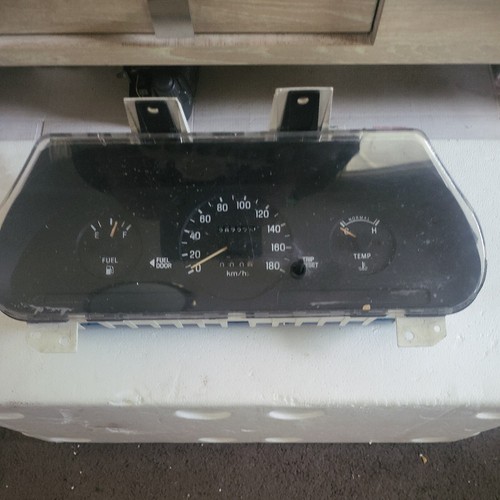
Just think how many billions of times someone has avoided pulling up to the wrong side of the pump because of this arrow - literal lifetimes of effort saved.