When I was a high schooler, I built a system in my room. Like this amazing thing, it was something I felt needed to stay intact. I can identify with the guys last wish and also know for sure it won't ever happen.
Honestly, it was OK. We did not have a lot growing up and so I had scrounged this and that often building things custom to take advantage of the room and passive acoustics to get good sound.
I, and friends and family, listened to a lot of music on it.
Then I did something one day that would turn out to be special!
Just for kicks, I wondered whether recording using the same speakers that would play the recording back would sound good.
Turns out yes! It was a little like a hologram. If you played those recordings in my room, you would hear the house! Mom cooking in the kitchen, living room TV, complete with CRT wine, in the living room, people talking...
It was all there! And one could place the sounds as if they were really happening. Listening in, say the middle of the night, was dramatic. With eyes closed, it was like midday. Hard to tell otherwise.
And those recordings only worked on that system, in that room.
Today, I bet software would tease out what I did on a wider range of listening scenarios. But back then, some considered it magic, and only in that room.
So when I left home, I left it all and some tapes and encouraged anyone wanting to hear family life from some years ago to go and listen before it all gets torn apart.
My mom sold the house and that was the end of an era. Sadly, the tapes have been lost too.
All I know is you can use a capable preamp to record through your speakers and when that recording is played on that system, it will be magic!
What a cool idea. I'm really surprised that using big speakers as microphones still let you pick up the CRT whine way up at nearly 16KHz! I would have thought you'd be mostly picking up bass. I guess the size of a tweeter at least, isn't that much bigger than what's in a dynamic microphone.
I had smaller 3" drivers mounted high, near the ceiling. In the cabinet with them were even smaller tweeter type, dome shaped that I am sure picked up the high end.
I am not sure I used the big drivers at all for recording. Hard to remember.
Reminds me of how you can get a mold of your ears made to put over a mic, then the recordings sound more like they're coming from outside your ears when you hear them even with in-ears.
Binaural recordings can also be made with small in-ear mics (be careful, they'll pick up clicks from your eardrum when you swallow), or a close approximation by clipping omnidirectional mics to your glasses.
It's like a multi-speaker version of binaural recordings!
Binaural recordings already have very realistic playback on headphones. So I'd imagine using multiple speakers would be a trip for everyone in the room.
I assumed you flipped the speakers around to record?
Check this out: (this is where I got the idea of recording through speakers)
In 8th grade, I took apart a dynamic microphone I had picked up from radio shack. It was essentially a tiny speaker! Naturally, I went ahead and connected it to the headphone jack of a portable cassette recorder and...
Heard some of the BEST sound I had ever heard out of small electronics! It was not loud, but it was detailed and full so long as one held the mic right against the ear.
I bought another one and mounted both of them inside some hearing protection type ear covers, essentially turning them into a sort of weird headphone.
Later on, a friend showed me a Walkman type radio / cassette player and the little open air type speakers it came with looked a whole lot like the dynamic mic "speakers" did and had a similar sound too.
I had come close to producing open air type listening gear on my own. My first attempt at stereo listening failed because I just did not have a great head mount. Went with the ear protection gear because that fit well and did make the most of the great, but somewhat quiet sound the little plastic cones in the cheapo dynamic mic could deliver.
Had I been able to come up with a suitable mount, it was extremely likely I would have ended up with two small speakers resting right on my ears Walkman style.
In any case, that is when I realized speakers can be microphones and that lead up to the point of discussion here now.
Speakers and a certain kind of microphone are exactly the same thing at the basic level. Sound hitting the diaphram (the bit that moves to produce sound) of a speaker will cause a voltage to be produced on the speaker wires that can be recorded.
Most speakers are basically a linear motor: there's a coil (the stator) and a diaphragm with iron in the middle (the "rotor"). When you apply an AC waveform to the coil, it moves the diaphragm in and out, producing sound. But it also works in reverse: moving the diaphragm in and out with sound produces a voltage in the coil. So fundamentally, a speaker and a microphone are really the same thing, just wired differently (and usually scaled differently: speakers are typically larger, and microphones typically have tiny diaphragms to be more sensitive).
This concept is quite general: most sensors and actuators are transducers: i.e. they work in both directions as a sensor and an actuator. It varies from one to the other how well something designed for one role can work as another, but in the care of speakers they are actually reasonably good microphones.
Another fun example: solar panels are LEDs and LEDs are solar panels. You can detect light with an LED (and in theory power something from it, but you'd need a lot of light and not need much power) and you can emit light with a solar panel. Most solar panels will only emit light in the infrared, though. I have seen a triple-junction solar panel being back-driven by others in parallel with it, and it glowed a deep red, which is pretty cool.
Most types of speaker are a microphone, they just need to be wired up correctly (hence the mention of a "capable preamp") to be used as one.
For example, a piezoelectric device that deforms when driven by an electric current produces a little current when deformed by external forces.
I'm sure there are many more examples but famously Groove Armada recorded the trombone parts of "Superstylin'" and "At the River" through a speaker because they didn't have a microphone in the studio.
Ok, these guys are great! I am watching the superstylin video right now! Lol, that near futuristic handheld locator, and their over the top, lightly overdrive, "in your face" production style hit solid.
That trombone part: well, it worked out well for them. There is one quiet part where we can hear the horn pretty well and I have to say the response of the speaker rolled off a lot of the subtlety of the instrument.
Normally, that would be bad, but for the overall production style of the tune, it just works! Feels a whole lot like a sample ripped from a cassette, or lo-fi vinyl setup.
I guess it must be a combination of getting both the frequency response and phase response just right. It won't be any where near as good but you might be interested in Room Eq Wizard too
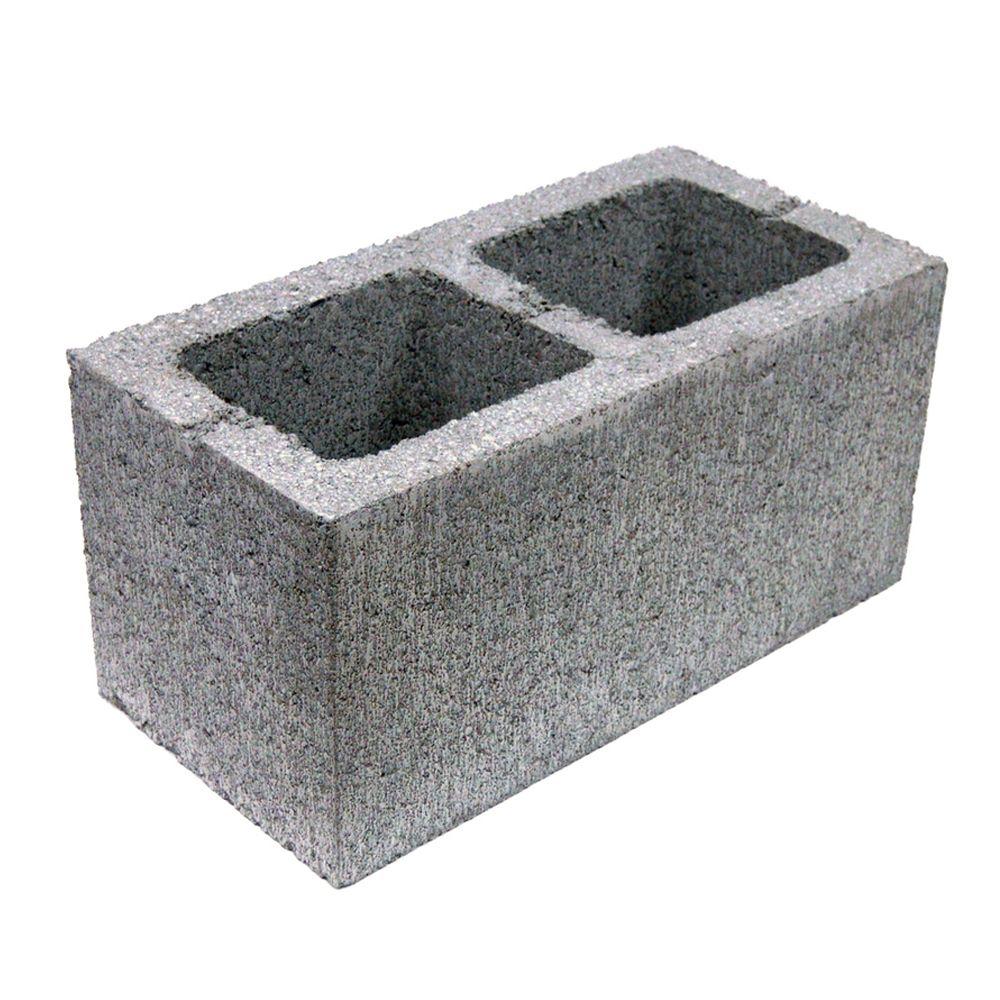
I worked with a guy who was crazy rich and wanted to build a great stereo. He went to a super high-end stereo shop and persuaded them to lend him a bunch of different speaker cables to "try out in his apartment". He was a phd engineer though, so rather than just listening to them he decided to do an experiment. He got some thick pure copper wire as a reference (got it from a hardware store because it's used to wire up domestic ovens and that kind of thing) and took his oscilloscope and measured the frequency response across all the cables. He found (as he expected) that the pure copper cable gave the best response so that's what he used to wire up his speakers. He did measure the acoustics in the room and put his speakers on metal pins on concrete blocks[1] to minimize mechanical interface between the speakers and the floor so the floor wouldn't clamp the bottom of the speakers.
His stereo sounded great and he was super smug about it, including taking the super expensive audiophile cables back and telling the shop they weren't as good as plain thick copper wire.
Spoiler: the difference between the coathanger and the premium cable is probably inaudible, and the difference between anything better than a coathanger (ie, literally any sort of copper wire) and the premium cable is certainly inaudible.
I had the same thought when I was building out my home theater system. Cables are cables, they're all just copper runs with gold plated ends, I'll just get whatever.
Well, I was dead wrong. Cheap cables hiss and hum like crazy when there's no signal.
Turns what you're paying for with expensive cables is better shielding around the copper. Unless you have perfectly air gapped cables that don't touch anything electrically conductive, they'll pick up some static charge and interference over a long enough run, and it's very audible.
So yeah, get half decent shielded cables for long unbalanced runs to passive speakers. Or just use balanced cables with active speakers.
If we're using the vodka analogy. Vodka is the metal of the cable: the copper/aluminum/gold. Yes, you can have really bad quality metal, but it's practically unheard of given how easy it is to make good enough quality metal for cables.
What matters more is the rest of the ingredients mixed with vodka to make the cocktail (which is the connectors, insulation, and shielding of the cable). If those are good, they'll easily mask the common issues with cables. If those are bad, it doesn't matter how good your vodka/cable metal is.
just for the record, the shielding is metal or it's not shielding; it also needs to be grounded, but the power audio outputs of amplifiers are generally not designed for grounding; and you also need to worry about capacitance and inductance; twisted pairs might give you better noise characteristcs wrt AC wiring hum than shielding
I'm not saying wires don't matter and I'm not saying wires do matter, I'm saying inasmuch as they make a difference, there are plenty of ways to undermine what you are doing. Might be a better idea to send shielded high impedance signals around the room and put power amplifiers at the speakers.
Irrelevant to your point: some vodkas to my and many others' (generally Eastern European/Russian) tastes do taste good. I drink Stoli the same way I drink whiskey.
The Code of Federal Regulations upgraded Vodka in 2020.
Previously:
“Vodka” is neutral spirits so distilled, or so treated after distillation with charcoal or other materials, as to be without distinctive character, aroma, taste, or color.
Now:
Vodka: Neutral spirits which may be treated with up to two grams per liter of sugar and up to one gram per liter of citric acid. Products to be labeled as vodka may not be aged or stored in wood barrels at any time except when stored in paraffin-lined wood barrels and labeled as bottled in bond pursuant to § 5.88. Vodka treated and filtered with not less than one ounce of activated carbon or activated charcoal per 100 wine gallons of spirits may be labeled as “charcoal filtered.” Addition of any other flavoring or blending materials changes the classification to flavored vodka or to a distilled spirits specialty product, as appropriate. Vodka must be designated on the label as “neutral spirits,” “alcohol,” or “vodka”.
I'm surprised there's enough energy in the EMI to be audible unamplified! That would make it audible even if you just had the cable run and speaker with no hifi.
Shielding is definitely important on the "line" side and somewhat on the PSU side.
You make a good point about it being unamplified. To be fair, I pretty much committed every audio cable sin by running the cheap speaker cables in parallel with powered cables with the excess coiled up plopped on top of coiled power cables. Maybe it would've been fine just not running it parallel to power or not coiling.
But yes on very important for the line side. Connected a long cheap RCA cable to powered speakers, and the moment I pulled it across carpet the speakers started crackling. Then I understood exactly what my buddy meant by "these are garbage" when he gave them to me, so not too sure what the intended purpose of such a long poorly insulated RCA cable was.
> To be fair, I pretty much conducted every audio cable sin by running the cheap speaker cables in parallel with powered cables with the excess coiled up plopped on top of coiled power cables.
Ah yes, that is basically just an impromptu air-core transformer between mains and your speakers.
Speaker cables are literally balanced, unless you're grounding them at the speaker. I grant you that if you're grounding them at the amp it's 'fake balanced', but if you're running an amp with an output transformer then it's literally balanced.
Also arguably you only need balanced when the noise gets way too much. When driving a speaker the power audio signal is much much much higher than any noise being picked up over a reasonable length.
For lengths longer than that, balanced cables (or digital signals over Ethernet) are used and the speaker has more local amplification.
As far as I know, that post is where the coathanger wire test idea originated.
Another thing I really love about it when viewed in context is, right after he destroys the entire idea of expensive cables in one post, the immediate follow-up post is "Is your speaker system time coherent?" Some people will never be convinced.
The guy in the article could have saved a lot of money by learning what SINAD is before building a stereo that even looks noisy. I’m a little shocked when I see audio nerds who don’t know about audiosciencereview. Far too many people in the world are still buying line conditioners and fancy cables.
The part where they had a poll was very unscientific, it left comparisons to random audio equipment on the listeners end. Results would be based on the listeners situation more than the source.
Romex is grand at audio frequencies but what's even better is just sticking the amplifier in the speaker.
What you get from vanilla integrated speakers today is something that would have cost tens of thousands in the 90s and would not have been available in the 70s: dedicated amplifiers for each speaker element, with electronic crossovers and, if you want it, room correction.
If you stick the amplifier in the speaker, then you have much lower voltages and currents in the cable to the speaker, so you are, perversely, much more sensitive to noise that couples into your wiring.
As a silly and dramatic experiment, touch a wire connected to a passive speaker (without power applied — don’t zap yourself!). You won’t hear anything. Now touch the center pin of an RCA wire leading to a powered-on speaker with appreciable low frequency response, e.g. a subwoofer. Bzzzzzzzzz!
I really don't know why stereo components do not communicate digitally via ethernet cables. The only thing that won't work for is the output of the power amp.
My stereo is the usual rat's nest of various cables and connectors. I also have a tub full of various plugs, adapters, etc. Wouldn't it be nice to have a receiver that just had an ethernet connector on the back? Run it to an ethernet switch, and plug your turntable, TV, cassette player, into the switch?
One cool consequence is your components could be anywhere in the house, as any component could play over any powered speaker in the house.
> I really don't know why stereo components do not communicate digitally via ethernet cables.
If you’re building a new pro audio setup today, be it studio or even live sound, that’s likely how you’re doing it.
Even 20 years ago we had digital audio routers that worked pretty decently (not great, but well enough). This was a recording studio of course, not a home audio setting.
The reason we don’t have this in consumer audio is almost certainly cost. Now you need to add a ADC, Ethernet, and a small chip to run it all. Meanwhile nobody wants to run cables anymore and WiFi is everywhere. But of course putting WiFi in everything drives cost too.
The $10 Lightning to 3.5mm dongle for my iPhone has a microcontroller with RAM and an ADC, and the $20 lightning to Ethernet adapter has an Ethernet phy in it, so it's just a matter of someone getting funding, building it, and selling such a product. Latency would be a concern, but get a good firmware engineer on it.
It should be noted that the wifi version of this is sold by Sonos though I don't think they do surround sound for movie watching, but are focused on multi-room audio.
Sonos does surround audio with their sound bars, and you can connect them with Ethernet. There's also a hack to take the IKEA Sonos bookshelf speakers and connect them to different speakers, eg https://makezine.com/article/maker-news/hacking-the-sonos-ik...
I've used a couple of single/dual/tri-band wireless transmitters to hook up speakers, and I'd say I'm not really a fan. You have to be ok with dropped packets from interference (which happens pretty frequently if you're also sharing your 2.4/5/6ghz spectrum with WiFi), which is audible as silence or wrong sounds.
Or you're using a protocol that does retransmission/buffering, which introduces noticeable latency with the video or even between speakers.
WiFi is not so good as a replacement for wires — the latency is too high. The main contenders seem to be Dirac and AVB, both of which run over Ethernet. Dirac uses entirely ordinary Ethernet, and AVB wants some fancy extensions, which will bump up the price of your switches quite a bit.
For good audio, you want known, controlled latency, preferably with quite precise timing. For live audio, or for a fully convenient replacement for analog cable, you want that known latency to be very short.
And you either need no drops or you need an entire drop + retransmit cycle to fit within your latency. (Hmm, FEC could be used, I suppose — encode packets such that an entire lost packet could be recovered from the preceding packets plus the next couple packets.)
Doesn’t twisted pair solve this problem? You can encode signals in the difference in voltage between the two wires which means that any noise which occurs in both wires cancels out?
We have gotten pretty good at sending low voltage signals over wires with little to no noise so it seems like we can apply similar principles to audio gear?
Balanced signals are widely used in professional gear, and twisted pairs indeed reduce loop area, but it’s not perfect. I once helped out in a sound booth where the cables picked up AM radio, and some nonlinearity in the system made it audible.
> I once helped out in a sound booth where the cables picked up AM radio
This right here is part of the reason the "coathanger versus cable test" annoys me so much. All these wonderful graphs "proving" that cables don't matter never take environmental noise into account, which is frustrating because in reality that's exactly what you're testing.
The fact that you could pick up AM radio inside a sound studio means that, for experimental purposes, that environment is simply not good enough.
Are expensive cables mostly bullshit? sure. Do better cables still make a difference? My personal experience tells me absolutely yes, just usually not enough to matter to 95%+ of people.
Pro audio “snakes over cat5” seem to be thing now. Performers will probably connect their gear to the stage box using analog cables for the foreseeable future, but the big connection to the mixer seems likely to be digital in most new installations. (Just an analog snake cable, materials alone, may be more than the complete installed cost of a digital replacement.)
The mechanical design of pro audio balanced cables is poor and it's common to end up with a bad one in the field. A balanced amplifier with one input connected to a long unterminated wire is way worse than a single-ended cable would be under the same conditions. Even in consumer home use XLR cable ends will fail. We're stuck with it unfortunately unless you want full custom gear.
It's digital to the active speakers, and everything necessary happens there.
I have a pair of genelec 8361a actives. They can become anything you want.
A lot of professional audio gear uses 5.08mm connectors. I bet WAGO makes some of them!
But be careful with NM-B cable. I didn’t find an exact reference in the NEC, but I bet that Article 200 and friends would not approve of the reuse of the bare conductor for anything other than ground and might also disapprove of using the white conductor for anything other than neutral. (If you’re not installing the cable in the wall, maybe it’s not subject to the NEC.)
> using the white conductor for anything other than neutral.
Where the NEC applies, you can use the white conductor in a multiconductor cable for anything as long as it is "permanently reidentified", that is color coded where it is exposed. cf NEC 200.7.
Can you tape the ends red and black in this case? I thought there were some provisions for options there in case you had some super heavy cable but wrong color
You can use tape or heat-shrink to re-identify a wire if its 4 AWG or greater or if it's part of a multiconductor cable (which NM-B is).
The reason for the 4 AWG rule is probably an economic one. Having spools of larger conductor cables in a variety of colors is not inexpensive. Allowing the reidentification seems reasonable, though I'd probably argue the cutoff could be thinner than 4. The multi-conductor cable exception is a practical [and economic] one. You might not be able to get multi-conductor cable assemblies with the exact color coding you need.
I seem to remember an article some years back that determined that CAT5 network cable made excellent speaker wire; though very thin, the wires were entirely capable of carrying the electrical signal, and the twists prevented interference from nearby electrical fields.
Speaker wire? Are you sure? Network cable has it all wrong for speaker cable.
Speakers are typically around 4-8 ohm. With long cables, it is easy to get several ohms of resistance, meaning a significant part of the current is going to end up heating the cable instead of producing sound. Not only it is a waste, but impedance is frequency-dependent, so sound quality will be affected. It is not audiophile bullshit, you can hear it clearly. What you need are the thickest and shortest cables that you can reasonable use. For very long distances, active speakers are preferable, or a high voltage (typically 100V) line and transformers.
Interference doesn't matter. You are putting lots of power in these wires, enough to move the speaker membranes, then move the air, then move your eardrums. Compared to that, what you get from external sources is negligible. If you hear humming, that's a ground loop, and your speaker wires are not at fault.
Now CAT5 cable could make great subwoofer cables. I don't know, but it kind of makes sense. Subwoofer cables are low current, and therefore more likely to pickup parasites. They also tend to be longer than typical interconnects. So shielding and twisting may help.
The resistance of copper cable is often overstated. Quality network cable has about 0.1 ohm/m/direction. So two pairs in paralel for each direction (4 wires), for a total of 5m should have about 0.25 ohm total resistance. I wouldn't say audiophile approved, but probably very close to undetectable for most, both regarding the loss and the response.
> but probably very close to undetectable for most, both regarding the loss and the response.
Yah. Take an 8 ohm speaker, which might vary from 5 to 20 ohms, but is relatively close to 8 ohms for much of its range.
At 5 ohms, your voltage is attenuated by 5% -- this is -0.45dB. Re: the "heating the cable" waste, you're losing .45 dB of sound output to heat.
At 20 ohms, your voltage is attenuated by almost nothing (.05 dB).
In any room, and with any real driver and amplifier you're going to have far bigger concerns for flatness of response than this .4 dB variation.
Bigger concerns are--- having something stranded and chonkier with big thick insulation is good for robustness and strain relief instead of trying to abuse network cables (even stranded) for the job. You can get thicker, nicer wire for this purpose than network cable for less money.
Not for speaker wire I wouldn't think, but it can carry balanced audio very well - people make converters to XLR or jacks that carry four balanced signals over a single CAT6 cable (using the shield also for ground). Given it's pretty close to the right impedance it can carry microphone or line level balanced audio very well.
It's a bit humorous to think audiophiles might be spending thousands of dollars on speaker cables to listen stuff that could have passed through literally $5 cables in the studio.
Passive speakers are naturally balanced, the necessary conditions being (a) stray currents induced in the cable see the same impedance on both wires, therefore producing identical voltage deviations (common-mode noise), and (b) the sound produced by the speaker is a function of the voltage difference between the two wires.
If induced noise is a problem in such a setup, the actual improvement to be made would be to use twisted pair or shielded cable, rather than bare parallel wires. This helps eliminate differential-mode noise due to near-field EMI which parallel wires are susceptible to.
> Interference isn't a problem in speaker cables because it is an amplified signal, so any added noise is too little to be audible.
I dispute that. Source: I could hear at a previous apartment where I used to live that something was off when I was listening to music. It was subtle, but it was there. It drove me mad until I realized that by lifting the speakers cable off the floor the interference was gone.
I don't care about the science in this case. I just don't for I've witnessed it myself (well, heard it really). I've tested my theory (lifting the cable of the ground) and repeated the experiment. It is a fact (for you it may just be a comment on the Internet, but for me it is factual).
Putting the cables on little wooden pieces I made got rid of the interference (at least I couldn't hear it anymore).
That was happening on a "budget" (less than $1 K) setup (including a DAC). Very clean source: bitperfect rips of my CD collection.
Quiet room. The added noise was noticeable and was perturbing the listening.
If there was interference then you would _always_ hear it, not just when playing music. In fact, it would be significantly easier to hear it when not playing music.
Weird things can happen. If you pick up RF on the speaker wire, it can make the output stage of the amplifier nonlinear in weird ways.
The extreme case is when you can receive radio signals on the speaker wire that are rectified and amplified by the amplifier; but you can get wonkiness short of that.
I've fought these arcane issues before. I don't have a ton of experience in audio, but I've seen them at lower frequencies (in servo amplifiers, where rectified RF causes DC offsets) and higher frequencies (as intermodulation in RF amplifiers from strong out-of-band interfering signals).
This is why you find things like this in design manuals. These are focused on offset errors in instrumentation amplifiers hooked to long cables (but intermodulation is an equal or larger concern in applications that care about frequencies above DC):
"In addition to filtering the input and power pins, amplifier outputs also need to be protected from
EMI/RFI, especially if they must drive long lengths of cable, which act as antennas. RF signals
received on an output line can couple back into the amplifier input where it is rectified, and
appears again on the output as an offset shift."
Microchip says the same thing: "Amplifier outputs also need to be protected from
EMI/RFI, especially if they must drive long lengths of
cable, which act as antennas. RF signals received on
an output line couple back into the amplifier input
where they are rectified and appear again on the output
as an offset shift."
Note that I'm not really saying you need anything special on speaker cables, other than common sense: don't separate the pair for as much of the run as possible, and make sure the terminations at the end are not total garbage. If you have strong RF sources nearby, like when I had a 50W HF transmitter in my apartment, you may need to add RF chokes/ferrites on the amplifier end of speaker cables to reduce interference (I did).
Indeed, the ARRL (American Radio Relay League, an amateur radio association) describes that adjusting speaker cables is a frequent way to cure interference for neighbors of people with high power transmitters:
"Speaker wires are often 8 to 16 feet long. When you put two of them together, you make an efficient receiving antenna. Try bundling the speaker wires to reduce their effectiveness as an antenna. This procedure has been known to eliminate the interference all by itself."
"A: For a detailed explanation, you can refer to the ARRL Handbook's section on controlling RFI, and the section of the ARRL web site on EMI/RFI Products and Other Resources. You can build two of them, one for each speaker output. Wrap ten to fifteen turns of speaker wire onto an FT-140-43 ferrite core. Use an FT-240-43 if the speaker wires are large, and use "73" material for interference from 80 or 160-meter signals. Alternately, type "31" material is an excellent general purpose choice for HF. Install them right at the amplifier. If the system uses amplified speakers, you should install one at each speaker, too."
This is all covered in the video I linked. Your whole post is classic HN. Waste everyone's time with irrelevant information. There is a reason it's not easy to find shielded speaker cables. It's not needed.
Dude, if people fix RFI problems by shielding speaker wires and putting ferrites close to the amplifier on speaker wires, clearly speaker wires are antennas for RFI that can affect amplifier performance.
Asking me to figure out what you're arguing based on a 17 minute video is not reasonable. I skimmed the video and took my best guess of what you're advocating. (It's not a representative or useful test; yes, it's harder to measure RF on a cable when it's plugged into an amplifier, but that doesn't tell you that RF on cables can't be rectified and amplified by the amplifier). You can use your words yourself.
In any case, the people who have asserted that RFI can get into ampifiers from speaker wires and cause problems are correct.
Your assertion "this is not an issue for anyone" contradicts the direct experience of lots and lots of people who have lived close to large RF sources and had RFI problems in audio fixed by adjusting speaker wires, such that it's the first step for engineers and radio amateurs working with angry neighbors.
It’s quite simple. I am asserting that interference on speaker wire running from an amplifier to a passive speaker doesn’t matter. Saying otherwise was invented by snake oil peddlers and you are doing harm with your akshually act.
RFI on a speaker wire going back to the amplifier is a big problem. As evidenced by all those sources.
Buying more expensive cables isn't generally the cure and is snake oil. Indeed, shielding itself can add enough capacitive loading to actually reduce speaker high frequency response.
But having to put in an RF choke on speaker wire to prevent RFI from having negative audible effects is common. And using a little bit of care to keep as much of the cables paired as possible, keeping runs as short as reasonably possible, and making reasonably good terminations is good insurance against it being a problem for you.
I've given plenty of high quality evidence, while you've given a long video of someone making a measurement that is meaningless to what I'm asserting.
> You have provided no evidence someone can walk into a store and buy an amp, speakers, and speaker wire and suffer any problems due to RF interference.
The ARRL wouldn't have to help neighbors of amateurs put chokes on speaker wires if this couldn't happen.
Most of us have the experience of having a cellphone close to speaker wiring and hearing LOUD buzzes and clicks. It was a bigger problem in the AMPS days (with higher output power), and more often the interference gets into the amplifier by signal lines than it does by getting in through power lines and speaker wires, but it can certainly go in the output (or power) as well. Have you never experienced this?
I still remember the first time I experienced this. I was 12, returning from a road trip with my (older) sister and her significant other's family, where we had handheld CBs. The hifi inside the house was demodulating and amplifying our CB signals; they could be clearly heard when we used the CB from the driveway. 5 meters of speaker cable was a good antenna for a 10 meter wavelength RF signal; a poorly filtered amplifier stage was demodulating and amplifying the signal.
Interference will not generate significant current in the cables, but for a sufficiently long run, it can generate measurable voltages at your amplifier output. Depending on the power stage, this can cause your amplifier to react to the interference (e.g. if there is high-impedance negative feedback). With just the correct setup, a poorly designed power stage, and a long enough speaker cable run, you can pull in an AM station.
If you have a reference showing audible noise resulting from interference on a speaker cable running from an amplifier to a passive speaker then please share it.
Class-D amplifiers pump out a signal literally buried in noise. You can't hear it because it's all shifted beyond human hearing and filtered by the speakers.
Class-D amplifiers are basically PWM run through some capacitors as a low-pass filter. The speakers are not what do the filtering, it's the capacitors.
In the video I linked, he was unable to induce any noise into the speaker wires greater than -130db at 60hz. The threshold for human hearing in absolutely ideal circumstances is about -115db. Anything less than that is provably inaudible for all frequencies, and for 60hz the threshold is much higher than -115db. The noise floor of the room only raises that further. For perspective, the very best state of the art DACs can only keep noise levels to -123db and just a few years ago the number was significantly worse.
Where the triangle isn't perfectly linear. If any RF gets into the output, it can be converted to audio frequencies by the nonlinearity and amplified. The open loop gain of the amplifier component can increase the magnitude of signals like this by tens of decibels.
Nah-- it's about high frequency noise getting in via the speaker lead, and coupling to the negative feedback of the amplifier stage, and getting rectified and amplified.
Yes, most interference is via line level inputs, but it can easily be via the "output" as well.
The shops know this. High-end hifi is full of grift. It literally relies on people with more money than sense who can be persuaded to spend a fortune on components and extras that either make no difference to the sound or make it objectively less accurate.
Which is why you get nonsense like directional cables, cable supports to keep cables off the floor, cables with magic insulation, magic rocks that go on top of components, magic knobs, magic creams, "quantum" anything, grounding boxes full of pebbles that don't ground anything, and so on.
Also, most of the people who can afford this hobby are rich old boomers who often can't hear much above 7k on a good day.
I had a friend in college who worked part-time at a shop that sold and installed audiophile gear. He was a music engineering major, so he was aware of how much of what they sold was snake oil. Example: a 3-foot RCA cable that sold for several thousand dollars. The jacks were gold-plated. Not just with ordinary gold, but "special" gold. From a particular mine in South Africa. He told me once "If I ever sell that cable, I don't know how I'll live with myself."
One time he and another guy had just completed an installation in a very wealthy customer's home. Hundreds of thousands of dollars on an ultra-high-end amplifier, CD player, speakers, etc. He started playing one of the customer's CDs on the systems. The customer went on and on, lavishing praise at how "warm" and "crisp" his music sounded on the new system. Suddenly my friend's co-worker leaned over and whispered, "Do you hear that?..." My friend knew exactly what he was referring to: they had accidently wired the speakers out of phase.
My favourite variant of this is high-end digital audio cables.[1] Presumably the ones are really spiky and the zeros are really round when you use such a cable.
[1] yes this really does actually exist as a thing.
If USB-C has taught me anything it’s that higher signal integrity in more expensive cables is actually really a thing. I have usb-c devices which are so temperamental (razer kiyo pro) that they won’t run stable without actual thunderbolt cables. Even high-end fasgear 10gbps/100w cables aren’t good enough signal integrity or the camera will eventually freeze and crash. The extra thunderbolt shielding/better termination really does make a difference even if the pairs are not being used.
Hdmi and DP cables also have a range of shielding and termination quality, and pushing more data through them will show the difference, especially in longer lengths that are at the limit of the spec. Everything looks good when you are only doing 1080p30, try doing 2160p120 on a tv or UWQHD 160 hz on a pc, with a max-length (2m) cable and tell me every cable is just as good. Even every DisplayPort 1.4 cable or hdmi 2.1 cable is not “as good” let alone a rando lower-tier cable with the older shielding.
Oculink folks know damn well that not every cable is just as good either. Copper oculink cables are a fucking mess.
I’m not saying Monster wasn’t ripping you off for some gold-plated connectors, especially back in 2000 when hdmi stated with 1.x in the name. But the reality is that if nothing else we have manifested the world where digital cable quality matters. And really the “hurr durr digital signals” thing has always been a little bit of an oversimplification, even as someone who’s said it before too.
There isn’t a correlation with price in the high end, going from a $30 cable to a $150 cable doesn’t get you anything, but going from a $5 cable to a $30 cable you certainly do get better shielded cable and better termination if nothing else, and yes, it does make a difference when you are actually pushing the spec to the limit. You will definitely find out that not even all 10gbps usb-c or hdmi 2.1 UHBR cables are created equal let alone ye olde hdmi 1.3 bullshit cable.
Digital audio, no matter how high quality and how many channels, uses vastly less bandwidth than even the lowest quality video signal these days. At absolute best, lossless audio with 16 channels is still less total bandwidth than even USB2.0 speeds. It’s just not fast.
Although signal integrity matters, signal integrity in digital signals is almost always not silent degradation. And often is extremely obvious degradation. So if your cable has problems, you know almost immediately (or, when it happens you know). Unlike analog audio, it either works or it doesn’t. In the marginal case you don’t just get worse sounding audio… you just don’t have audio periodically which sounds super obvious to the ear.
Just to support your point, there are many professional digital audio products used for recording that quite literally run on USB 2.0. For instance, this well respected interface that supports 32 channels in and out up to 192khz: https://www.sweetwater.com/store/detail/DigifaceUSB--rme-dig...
Why so aggressive? I didn’t make any claims other than less than USB2.
And for reference, I was assuming 384 kHz, 32 bit depth, which would be 196 Mbps at 16 channels. You cannot even do 32 channels over USB2 which would be the next logical step.
Sorry you got offended, that wasn't my intention. Pointing out inaccuracies is not aggressive, and in this case, I was reinforcing your claim, by saying USB2 is not only capable of tens of audio channels, but hundreds.
I was just adding context, and I'm happy you provided even more. 32/384 is indeed at the extreme top of digital audio signals, beyond what many people consider to be useful. Even in such cases, USB2 can still do the job, but most modern devices will use USB3 or Thunderbolt, simply to avoid issues and ensure enough headroom on the digital bus.
some inexpensive SDR dongles sidestep the question of getting a really good high-bandwidth ADC (still not cheap even today!) by just hooking up an intermediate frequency stage which downmixes RF to AF, and then you just hook it to one of the innumerable sound cards on the market to pull it into the PC for processing etc.
Wider bandwidth is wider bandwidth, the faster your sample rate the wider the range that you can sample. Iirc it's nyquist rate, so, with 384kbps rate you can sample a 192khz window.
Are you really taking a discussion about audio and making some sort of niche invented case of making a sound card be the analog to digital conversion from a software defined radio?
Even in that case 32 bit sampling is nonsense, the resolution of detecting voltages is never going to be accurate enough to need 4 billion different levels.
I'm actually quite serious, of the people who are buying really hi-fi audio inputs, it's not unlikely a large number of them are quite interested in the actual bandwidth of the input. They're using that sampling headroom for something else (oversampling).
Regulation and stabilization is a whole ""niche"" area of electronics called "voltage regulation" and yes, you can improve it a lot (and you can only do your best regardless of instability of the base). Actually a lot of audio engineers would be feeding it clean (linear regulated) power in this case as well. My Astron linear supplies are quite clean for radio and would be excellent for audio too.
USB optoisolator + linear regulated supply on a hub on the other side is something I've seriously considered for a nice SDR setup even short of that.
Again, of the people who buy this stuff, yes you will find a lot of people paying attention to the details and buying/building esoteric setups. Hams exist and the hobby almost inherently involves opening up the checkbook lol. Even decent audio gear is generally going to be $500-1000 most of the time.
While I agree with you, you can find 384 kHz 32-bit playback available on many of their LG cell phones as a marketing feature. Does it matter? No. Does it exist, even in consumer electronics? Yes.
High speed digital signaling over differential pairs requires precise impedance control to handle multi-gigahertz data rates. You're paying for that in a high quality USB3 cable. Audio signals running below 20 kHz are in a completely different electrical regime that doesn't require special manufacturing attention. It's easily doable with 19th century technology.
Right, but in the context of an audio stream, it's not going to matter these days.
Even a hugely overkill uncompressed 8-channel, 32 bit, 192kHz sample rate audio stream[1] is under 50 megabits/second.
Any digital cable and transceiver from USB 2 (480Mbps) or 100BASE-T Ethernet (100Mbps) onwards will handily do that, with headroom for so much forward error correction that you probably won't expect a single bit error in your lifetime.
[1]: good luck getting a clock with low enough sample aperture jitter to actually record that in the first place, it's probably under a femtosecond.
If the sample clock edges aren't very (very very very) regular, on a sample-and-hold ADC, the waveform isn't sampled evenly and that manifests as noise that swamps the detail provided by the higher bit depth.
This is called "sample aperture jitter". Requirements scale linearly with frequency and exponentially with bit depth.
Sure enough, 32 bits sampling a 96kHz signal, which is the Nyquist frequency of 192kHz sampling rate, is 0.3fs. At 24 bits, it's more like 100fs, which is much more doable, but still not easy.
Which is why audio bit depths usually don't go to 32 bits, despite formats like FLAC supporting that.
The practical upshot of this and other noise sources is that higher audiophile-grade bit depths and sampling frequencies are quite likely to have at least some of those bits swamped out by noise on real hardware.
This is just getting the audio recorded. Playing it back as physical sound waves adds something between quite a bit and radically more noise to the signal, even if there's never any lossy compression.
It seems like you are arguing with someone that 32 bits per sample is too much resolution and I agree, but I'm not sure who you are are arguing with or who is saying that.
It was an interesting (to me) footnote to the point that even if you massively overspec your audio stream to the point of physically being unable to record the audio at that quality (the footnote being why it's unfeasible), you can still easily fit many such streams down a single modern-ish digital link.
The point isn't that you shouldn't record audio at 32-bit depth (which you probably shouldn't if you expect it to bring much benefit, but that's by-the-by), it's that even if you did, and you have a 7.1 system with 8 uncompressed streams, you still won't be anywhere near the point where USB 3 cable grades will start to matter.
You're the one who asked for clarification on the footnote specifically.
> Dynamics are better and overall naturalness is improved. Here is a test for all you Silver Rock owners. Try removing the bakelite knobs and listen. You will be shocked by this! The signature knobs will have an even greater effect…really amazing! The point here is the micro vibrations created by the volume pots and knobs find their way into the delicate signal path and cause degradation (Bad vibrations equal bad sound). With the signature knobs micro vibrations from the C37 concept of wood, bronze and the lacquer itself compensate for the volume pots and provide (Good Vibrations) our ear/brain combination like to hear…way better sound!!
I get nerding out on stuff but I don't get doing it at the age of the guy in the story. I thought as one got older one started to see the foolishness in this sort of excess. You can't take it with you. And in the end you see what became of it. Split up and sold off to strangers for a fraction of what it cost.
I had a similar experience, though the other way around.
I was listening to some speakers at a relatively high end store (they sold 10k$ CD player power supplies, along with a selection of more reasonable gear), where they'd only have one set of speakers in the room at a time to prevent passive effects on the sound. (which is sort of reasonable, but a lot of work). So they bring in the Magneplanars and the (incredibly inappropriate) amp I was interested in, wire them up, and within 5 seconds I know they're out of phase, and then in another 30 seconds, pretty strong clipping.
Sales person was going on about how good they sounded.
Yup. When I used to do studio recordings as a musician, most studios have A/B/C speakers for mixing. They have the nice speakers usually on concrete breeze blocks which is what you do your first mix on, and those are equivalent to entry-level-ish audiophile speakers but not super-expensive, then they have the B speakers which are a bit worse and then they have the depressing C speakers which represent what people usually have at home. Even super-expensive studios that will happily drop 10s of thousands on a valve preamp or Neumann mic don't use any kind of fancy cable or unobtanium plugs or anything. Just regular hard-wearing well-shielded audio/speaker/whatever[1] cables depending on application.
[1] There are some differences based on whether the cable is going to carry just audio or audio+phantom power and also whether it's line level or speaker level or whatever it's called. It's been a while.
When I was a kid, the whine of CRTs was genuinely annoying, and those 'keep pests away' things hurt when they went off. I was looking forward to not having to experience that as I got older.
Now that I'm middle-aged, I can tell there's a little loss around the vocal frequencies... but damn if those old tubes and pest devices aren't as annoying as ever. Ears are weird.
I had a magic skill when I was in high school: I could walk into any computer lab and tell you exactly which monitors were on (when the computer was off). I believe this is around 15K.
it looks my hearing drops off between 13k (noticeably quiet compared to 12k) to 14k (can't hear it at all).
Hah reminded me of when I was a kid walking into the living room with a few people around many times and turning off the TV (crt of course) that was just showing a black screen. It was so loud and obvious to me. Now all the TVs seem to have bizarre screensavers
I also seem to have beyond normal hearing, and can hear some electrical devices or high pitched sounds where others don't seem to.
Last year I was in a mall where they had a Tesla store and it was emitting a horrible high pitched sound.
Where I live some houses have Seagull scaring devices and they also emit a horrible high pitched squeal which I'm guessing others can't hear, otherwise it would honestly drive you nuts.
Not so sure about that, mixing engineers have to do very precise manipulation of sound and there’s plenty of them working well into their 40ies and beyond. While of course aspects of your hearing deteriorate, it should still be pretty simple to pick out the artefacts of compressed audio if you’ve gotten attuned to them at a younger age… At least for heavier compression, something like a 320kbps MP3 or 256 AAC is hard to distinguish from lossless but that’s also true for young folks.
I had previously toyed with the idea of marketing "organic" audiophile speaker cables. The ad copy would have been that the cables were harvested from veins of copper dragons that lived in faraway mountains. That the sound would be warmer and richer than ordinary, industrially produced artificial speaker cables, which tend to sound harsh.
It's bad enough that some audiophiles make it a point to not talk about being an audiophile because they don't want to be the associated with that foolishness.
Ah yes, DirectStream Digital. I think the math behind that was solid but there wasn't really any point because PCM was totally sufficient. The company I was working for made AD and DA converters for recording studios and film so we were adjacent to all the insane HiFi stuff but didn't really interact with it. We did get bug reports that were real but effectively not visible, I learned a lot about debugging from watching my boss work on those.
I remember being an electronics store once and seeing some cables intended for audio that described themselves as being "low oxygen" cables. My god, the nonsense that people fall for!
Out of all the ridiculous things, this one is actually not completely ridiculous. For low temperature physics applications, Oxygen-Free High Conductivity (OFHC) Copper is the only material that is sufficiently thermally conductive at low temperatures. I’m not an audio person, but I have a hard time imagining it would make much of a difference at room temperature; maybe similar performance with a slightly thinner cable?
> High-end hifi is full of grift. It literally relies on people with more money than sense who can be persuaded to spend a fortune on components and extras that either make no difference to the sound or make it objectively less accurate.
Replace "hifi" with any other product and the sentiment remains the same. High-end houses, high-end cars, high-end clothes, high-end food, high-end technology... the ostensible quality of the product is entirely divorced from the price, because the actual product isn't the speaker or the handbag or the smartphone or etc; the real product is social signaling via conspicuous consumption.
To be fair, with most of those, you're paying for a piece of art to some extent. I don't think anyone buying $500 cables thinks the cables themselves are worth that, they're buying them because they expect some tiny increase in sound quality which measurably and provably doesn't exist. Someone buying a $10k sweater isn't buying it for the engineering in the material, but for the perceived artistic value. Of course, there's also a grift involved here, where fashion brands can pass things off as having great artistic value just because they're associated with the brand. But at least the perceived value is subjective and not coming from something that can be measured not to exist.
At MIT, I had a friend who wired his speakers with flat ribbon cable, alternating conductors so as to minimize impedance.
Me, I used 150 foot 18-gage twisted pair when I put my speakers down in the courtyard. I can't say the sound was perfect, but it was at least pretty good, which tells me 20 feet of the same would be plenty good inside a room.
This story hits literally so close to home. I grew up in a stereo-obsessed family. I went along with it but wasn't quite as involved, merely enjoying the ever-evolving family stereo, many stereo shows and electronics conferences. I probably bought an average amount of stereo gear, though typically spending more than average.
I didn't realize how much of a problem it was until our family bought a very modest house rather than renting for the first time--because the stereo-spending never allowed saving for a downpayment. The stereo-spending resumed with both my father and sibling starting separate stereo companies. They weren't good at it because they were in it for the fidelity and not the busine$$ aspects. My dad passed and it's all shut down now, but infrequently a call will come (on the number that was kept) from someone who's trying to service a unit that they'd been searching for, missed out on, then finally got but wasn't quite working right. If we have a small part to fix it, we'd just send it to them with instructions.
The thing that I find most amusing (and also distressing) about audiophiles is that they rarely seem aware of the conditions or equipment used during the creation of the recordings they work so hard to perfect the playback of.
The system described in TFA costs substantially more than the gear used to record, mix and master probably at least half of the record collection. There are studios with insanely "high end" playback systems, but they are not common - the gear in most recording studios is very good, but any audiophile would find faults with it (whether they exist or not, heh).
And then there's Ye Olde RIAA equalization curve for vinyl, which is a complete abomination if you're going to view things through the lens "I want to hear exactly what was recorded" - you just never can, because the curve was applied when the vinyl master was created.
Record producer here. I can confirm that while audio fidelity is an important consideration to us, the gear we use ranges from insanely pricey to utter trash and both are equally valued. Everything is fair game. More often than not the gear that is compelling was specifically designed to impart sonic color and vibe. To distort the audio in a way that is pleasing. A ruler-flat frequency response is rarely what's called for. Most music is far more colored than people realize. Even the recordings that sound "natural".
Fidelity often comes second to simply sounding cool. Sources recorded on $6k microphones will often get overloaded, distorted, and then re-amped through a tin can because the sound is compelling. If it sounds good it is good.
In my experience the place that fidelity is most important is in the monitoring. An accurate listening environment is critical to ensure that the choices we're making will translate to listeners at home. If our listening environment is flawed we will have to fight much harder to realize our intentions.
> In my experience the place that fidelity is most important is in the monitoring.
Some high-end headphones are marketed as "studio" headphones. Meaning for professionals such as you when doing the monitoring at the recording studio, and not for the consumer at home.
I never managed to understand why what's good for the pro is not good for the consumer. Might you be able to help explain?
What are your thoughts on using studio monitors for home listening? It seems like you'd want the playback at home to impart the least color possible, so that it does match what the recording engineer wanted it to be.
I'm all for it. I own several pairs of studio monitors and use them around my home for casual listening, but I don't know that I'd recommend a non-audio professional purchase a pair as a replacement for a home stereo, if that's your question. There's no problem with it, but it's probably more expensive than you'd need to spend.
I worked at the hi fi shop in the late 70s. Aja was the best sounding demo record. The Cars record sound like trash. We had speakers with 5 plus drivers. Playing a Beatles record, McCartney’s voice was emanating from a single driver. It was not great imagining Paul inhabiting the speaker cabinet.
And if you're talking about any popular music mastered (or "remastered") in the last 20 years, you're utterly wasting your time because it has been crushed into a wall of grating noise with dynamic compression.
the album Folk Singer by Muddy Waters was an ear opener for me. (1964!)
I had always thought Clapton Unplugged was really nicely mastered and then after I heard Folk Singer, I realized they were trying to replicate it almost in its entirety.
I was happy to start reading another treatment, with a new perspective, and from WaPo, who might have the funds to spend even more time on research. However, I found OP to be ignorantly disparaging on the tech side, and quite cold and glib in the human interest side.
Audiophiles are often foolish, and fathers are sometimes cruel, cold, and dictatorial. In my opinion this story doesn't justify its criticisms on either front. The author hears the stereo at its worst and can't get the wow factor. We have the story of one son who himself has truly cruel words for an ill old man, and for the rest, there were no vacations, there were lots of early mornings, etc.
To me, the above doesn't justify the depressive and dismissive subtext and resolution of the article.
The aftermath post is explicitly from the perspective of a fellow hobbyist obsessive, so it is not attempting to accurately state whether it was "worth" it, in an objective sense, as a listening experience. It has a prior that hobbyist obsession can be fulfilling for oneself, and most importantly, others that you share wtih. It also completely ignores/avoids his family life. But in spite of that, to me it provides a richer portrait.
>> However, I found OP to be ignorantly ... quite cold and glib in the human interest side.
> I don't know. I feel like the story hit quite close . . .
I agree. I've been on both ends of bad parenting. I've been the parent who crafts bad parenting notions out of empathy-free theory.
When covering intra-family mistreatment, cold and clinical is a good method. The outcomes are naturally striking. I feel anything beyond a witness adds little and risks much.
It's a cautionary piece about the price of obsession - you can make the greatest niche thing in the world - but without others who share your passion, or passing that passion on, it often comes for naught.
The fact that the stereo is separated in the end does not conclusively mean that it was all for naught. To glibly boil down the aftermath post, what about "the journey and the people you met along the way"? He was enmeshed in a community of like-minded hobbyists. None of them were able to take the entire behemoth system as a unit, but he seems to have made a lot of fellow hobbyist obsessives happy with pieces.
On the "people" aspect, the family story can be hugely significant. But Fritz doesn't seem to have alienated anyone except one son, and the story itself seems to resolve to he-said, he-said on that relationship.
> The fact that the stereo is separated in the end does not conclusively mean that it was all for naught.
Of course. Much was achieved and that included systemic harm to those around him.
He was a man who never understood that he was prioritizing things and accomplishments over people. I suspect empathy didn't factor into the calculations in his head.
I'm not damning him here. Having been him to a degree, I can testify the distance to working empathy isn't trivial. It gets crossed with a great deal of time and difficulty. Further, I see signs of pronounced OCD which may complicate his challenges in ways I may not understand.
These things are good to understand. So is the harm he brought to people who trusted him.
>He was a man who never understood that he was prioritizing things and accomplishments over people. I suspect empathy didn't factor into the calculations in his head.
Perfectly put, but this happens more frequently than you think.
My father is pretty much like Fritz but without the audio obsession. He's now in his 60's and his whole life he only cared about making money an being busy all the time with work.
Everytime I ask my father how he is he will always reply how well his business is going. I wasn't surprised by the following quote from the article because it's exactly how people like him are:
>A hard-driving boss at his company, he brought the same energy to his after-hours hobby, which he sometimes seemed to think of as everybody’s hobby.
Well, yeah, there are a lot of people who neglect friends and family for some kind of obsession - some write books, paint, create music, write software that outlives them to some degree or at least improves or inspires the lives of many other people. This guy spent his limited free time (and that of his family) building his dream stereo system, finished it when he was about to turn 80 and didn't have a lot of time left to enjoy it, and after his death his life's work was sold off bit by bit for far less than he invested in it (financially, not even mentioning the countless hours). So, to me, it's a cautionary tale to be wise about how to spend your time...
> However, I found OP to be ignorantly disparaging on the tech side, and quite cold and glib in the human interest side.
Interesting. I was discussing the article with a friend who is a bit of an audiophile (I'm not) this morning and we both agreed that the article was a lot more gentle towards its subject than it might have been.
> It also completely ignores/avoids his family life. But in spite of that, to me it provides a richer portrait.
It's hard to ascertain from this write up, but I don't see anything in the way of acoustic treatment in Ken's listening room.
A common shortcoming I see in the setups of many hi-fi enthusiasts is a lack of attention to the acoustic response of their room. Or if they do appreciate the problem their treatment betrays a profound misunderstanding of how to address it. The room we listen in has a profound effect on how we hear the audio coming from our speakers and it is mostly negative interference.
Treatment like absorptive ceiling clouds, absorptive panels at the early reflection points, and a means of neutralizing low-end room modes are severely under-valued relative to their influence on performance and their ROI.
If you want to hear the influence your room has, use a signal generator like this (https://onlinetonegenerator.com/) to play a steady sine wave at 60 Hz. You'll need speakers low enough to produce them. A higher frequency (100Hz) would suffice if your speakers don't go that low. Now, with that steady tone playing, walk around your room and listen to what happens. It will fluctuate wildly in volume, becoming much louder or nearly disappearing entirely, while only moving by a matter of feet.
Now imagine this phenomena happening at every single audible frequency in your room (low to high).
Getting the acoustic treatment right in your listening space is the single biggest thing that you can do to improve the listening experience; on par with your choice of speakers. And I'll argue that it's not worth investing in high-end speakers until your room is sorted, or else the room will distort your perception far too much for to appreciate much difference.
I won't pick on hi-fi enthusiasts who obsess over choices of wiring, de-coupling, and clean electricity (that's beyond the point), but solving those problems is fighting for gains in inches while your choice to address the room modes and time-domain issues is going to gain you yards in how you perceive records. It must be addressed before anything else.
Good speaker placement, a good listening position, and then covering the first reflection points in your room with 4" of absorptive paneling from a company like GIK acoustics. Doing so will cut down on room mode interference in your midrange and your high-end (300 Hz - 20 kHz) while dramatically tightening up both the stereo imaging and the time-domain response (ringing/echo) in your room. This applies to your listening position only.
SPEAKER POSITIONING:
In 9/10 cases I would push your speakers against the front wall firing longways down the longest dimension of your room. You can safely ignore most people warning you about SBIR reflections if the topic arises.
With your speakers against the back wall, space them symmetrically between the walls to the left and right of your listening position, but avoid placing them in positions that fall 1/4 or 1/3 of the width between your side walls.
For Example: If your front wall is 8' wide, your speakers should not be placed 2' from each side wall (1/4 of the room width) and they should not be placed 2' 8" off of each side wall (1/3 of the room width). Place them somewhere in between these nodes to minimize destructive interference from room modes.
LISTENING POSITION:
With your speakers against the front wall, place your listening position (your chair) in between both speakers in the spot that is 38% of the room length off the front wall. So if your room is 100 inches deep from front wall to back wall your chair should be located 38" away from the front wall that has your speakers.
Ideally, your listening position should be dead center between the walls to the left and the right of your listening position.
For Example: If your room is 8' wide your listening position should be located in the center, 4' from the walls to your left and to your right.
COVERING YOUR FIRST REFLECTION POINTS:
Covering your first reflection points means hanging at least a 4' x 4' cloud on your ceiling and hanging an equivalent amount of coverage on both the wall to the left and to the right of your listening position. Specifically these should be placed at your first-reflection points.
When ordering absorptive panels don't bother with features like diffusor panels or any hard reflective surfaces. They're mostly pointless. Just get the simple soft absorptive panels (4" thick) and don't worry about the add-ons and up-sells.
Covering your first reflection points will dramatically improve the performance of your listening position from roughly 600 Hz up to 20 kHz. If you mount the panels off of the wall with an air gap equal to the panel thickness it will extend your midrange coverage by an additional octave. So mounting your 4" thick panel on the wall with a 4" air gap behind it improve it's performance by absorbing as low as 300 Hz (instead of 600 Hz). This is good. There is no additional benefit for mounting with a larger air gap.
Locating your early reflection points for your ceiling and side walls is beyond the scope of this reply, but you can look up other explanations of how to find them in your room.
FINAL NOTES:
This (very rough) guide will only treat the midrange and high-end in your listening position (from 300 Hz - 20 kHz) and only for your listening position. Building a room that can manage low-end cancellations and also sound balanced in every position (not just the main listening position) is not a trivial thing, and cost-prohibitive for 99% of people. So you'll have to accept that these solutions are out of reach unless you want to tear down your room and rebuild it.
The fact is, learning acoustic principles to do this yourself is not something that is practical for 99% of people. So don't drive yourself crazy trying to sort it unless you feel very well-versed in physics AND professional audio.
Unfortunately the acoustics space is full of hacks and cargo-cult acousticians who don't truly understand the physics or the practical needs of listeners. It's a lot of voodoo and a great way to waste money unless your designer really knows what they're doing. Unfortunately most people aren't qualified to understand what they need, which makes it that much more difficult to find clarity in an already tricky problem-space. Our team has almost given up trying to make a dent in the field, but the fact is a lot of clients don't know what they don't know and hire people whose expertise is at best outdated and at worst complete nonsense.
In your advice your optimising for a single listening position.
I found, in my home, optimising for a coach with three listening positions, and a hard glass surface wall close to one speaker, that aiming the speakers away from the sidewalls and towards
the corner position at the
opposite end made for an ok result.
Theory being that this configuration would even out the drop in high frequency response at the corner listening positions, (closest speaker off-axis response matching farthest speaker on-axis response)
At the same time minimising first reflection from side walls.
Yeah. Headphones will introduce their own issues like a lack of cross-talk between ears, absence of body feel for the low end, and a skewed frequency curve, but yeah they do remove the room from the equation. Your perception of the record won't change when you turn your head or step back two feet. They've got that going for them.
I should stress that most casual listeners probably don't need to fret about this stuff unless they're really committed to the experience. My work studio may be well-optimized, but when I listen to music in my living room there is zero room treatment and it doesn't get in the way of a pleasurable listening experience.
For even like, $500 you can have an absolutely kicking sound system. There’s no way that you’re going to get the range of big ass speakers in small headphones, but regardless this is kind of apples to oranges.
> “Nobody wanted to come to our house, because he wanted to put them to work,” said his daughter Patty, 58. “I think we went camping twice, never took vacation. It was just work, work, work.”
> “Growing up, I had to get up at 6 in the morning to work,” [son] Kurt, 55, said. “I basically was his slave.”
> Judy drank too much in those days. She also was unimpressed by her husband’s music. When he played “Swan Lake,” she’d call it “Pig Pond” in front of the kids and crank up the TV to annoy him.
Having been an audiophile earlier in my life,
until other priorities and lower income but a stop to it.
I got to the point where I discovered you cannot built
the ultimate stereo that is suitable for "all generes".
On a typical audiophile setup
extremely well recorded music is an enormous joy.
The soundscape is amazing, the small details you can hear.
Sadly, there are fewer and fewer genuinely great recordings
seen from that perspective.
Listening to metal, industrial or rap (with some exceptions),
was painful. You could not get the extra resolution because
there was nothing to get.
The frequency range was not there. The drums adjusted for maximum
bass, the guitars had little dynamic ranger, and the sometimes
shouted lyrics where not a joy either.
But..
If you had a stereo that was optimized for listening to this
kind of music, which fit the soundscape the record expected,
is sounds much better than "high end audiophile stereo".
You really need more than one stereo so you can play the record
at its best.
It seems to me that his system considered of
6 speakers, possibly with a subwoofer
(Since in one place they talk about a 7.1 system).
Left, right of the mid to high range frequencies.
That gives a 5.1 or 5 system.
To me its odd if you are building out such a system to
try to make it surround sound system since it will not
enhance anything for classical music on vinyl
Two much more conventional looking ones, which appears
to be good at the lower end, either source bass
and / or surround speakers.
Then there is the center channel.
In one photo they are on either side of the fireplace.
(Another potential acoustic disaster.) I think.
In this image there are
I dont get concrete walls.
I dont think that is common as the first wall
in most general spaces for philharmonic or opera
is heard.
The two giant grandfather clocks in the background also makes
no sense. Those panes of glass would be joining in on the
vibration and sound annoying.
Perhaps he had super treated them to avoid it.
They way they are positioned and the fact that he has
two of them symmetrically placed indicates it was
purpose.
Porcelain dogs are rather surprising aswell.
perhaps they are the proud participants in
being sonically optimized two.
What, you never heard of them doing big concrete pours when building the classic performance houses in the 1800s?
Lifelong passion projects really resonate with me (sorry) and frankly, I have no doubt that this guy knew 10x more about sound systems than both of us put together.
My frustration is that I think this kind of extreme audiophile stuff is a legitimate mental illness. The sad truth about the fireplace and the porcelain dogs is that no, it literally doesn't make any difference that a human could perceive. Put them in or take them out, there's no way a 70+ year old man could tell you if he was blindfolded.
Still, I'm glad that he finished his project. Getting 4-5 years to enjoy something like this puts him in an incredibly rare demographic of human.
Squint, and I see Colin Furze's ever-growing tunnel system under his house in the same light.
> Lifelong passion projects really resonate with me (sorry) and frankly, I have no doubt that this guy knew 10x more about sound systems than both of us put together.
Probably. He would also probably fail a double-blind test in telling the difference between an ultra-hi-end system and a merely adequate high-end system.
IOW, he spent all that money on equipment and environment, but he almost certainly would have gotten the same result with less spend on equipment.
> My frustration is that I think this kind of extreme audiophile stuff is a legitimate mental illness.
Maybe some is and some isn't, but in this case he really was mentally ill. By his own account, he worked his children hard in pursuit of his happiness, and then when one of them wanted a keepsake worth a $100 or so, he disinherited them.
In cases like this one I think it is more about the journey than the destination, and I know it sounds cheesy and all but I think it best describes situations like these. I'm surprised that he even got to "finish" it all, for me those "finishes" come with associated existential dread, as in "what should I do now with my life that I've finished my long-pursuit project?".
The porcelain dogs would vibrate and create an easy to hear extra noise.
Unless as I pointed out they were modified.
Perhaps by making them heavy and letting them sit on a robber mat or some such.
Noise from a good bass makes all manner of things vibrate.
Some of which is noticeable.
About the fireplace.
An open fireplace would be noticeable.
Perhaps he has filled it in. even with some absorbing material.
I am not convinced about his skill level on matters like acoustics.
I dont think he could sit down and the do all the math.
What he could do was to try things out, and incrementally make
improvements.
Ultimately, he created a system he thought was great and that was what mattered.
In my day I would spend endless hours moving things down to a mm here or there.
Moving acoustic treatments all around, all such stuff.
Aside from the general rules, I did not have the math, so I tried to find a solution that I loved.
I was with 16 audio students and we did an eu-exchange thing. Our foreign guests were great at maths but bugger-all else.
We went for good sound, they went for good numbers.
Only occasionally did both match and we spent a lot of time analysing precisely 'why?'.
Most of the time 'move it and see' gave better results (for the majorities of up to 50 people at times) than using a tape measure, for example, to accurately place speakers.
How else would you correctly reproduce something that came from a $40,000 studio, whose equipment is chock full of $0.10 op-amps, and whose output is stamped onto a $0.05 worth of plastic?
I'm not an audiophile. I found the bare minimum that would make me happy a long time ago and it's not expensive (basically a decent amp that doesn't add a lot of hiss, and live lossless recordings from groups like Phish). I get more out of reducing sources of artifacts (hiss from poor amps, cover walls with sound-absorbing panels) than I do maximizing the performance of the components (like minimizing THD). I'm actually more interested in getting a good sound image (like the article mentions, if you set things up right, it sounds like the band is "in the room" with you).
For fun and pedagogy, I did build some speakers recently and it was educational. I bought full-spectrum speakers (IE, a speaker that handles both highs and lows, rather than using tweets and woofers and a crossover) and a simple stereo amplifier breakout board from Adafruit. 3D printed some speakers, and did all the soldering/wiring/enclosing myself.
What did I learn? That building good speakers is hard! There definitely are parts of the spectrum the speakers don't handle well (low frequencies; I can't hear above 15khz any more). But what I really noticed is that because I didn't do any isolation (no padding inside the speaker enclosure, the speakers are directly on my wooden desk) I can hear a lot of artifacts. I'm actually glad I can notice them, because in some sense it validates my own sense of hearing, as well as my understanding on how to improve sound.
If I were to do it again, I'd add a crossover, subwoofer, tweeters, and a ton of physical isolation (replace the 3d printed speakers with wood, add padding, and a mount under the speakers to reduce the table vibration.
One of the best speaker systems ever was an absurdly simple system: the Grateful Dead's Wall of Sound. Because large auditoriums with PAs had terrible sound, they did something nobody else tried: a huge array of speakers, each band member with their own subset of speakers (no mixing). It was absurdly expensive but it had a very high quality sound field even at low volumes (very clear 1/4 mile away).
I think you are an audiophile, in the same way I am - you're enthusiastic about audio. I don't like the term only referring to those that pursue the foolish end of high-end audio. I love buying budget audiophile gear and trying to get a nice, clean sound out of equipment. On my desk now I have a couple of dongle DACs, a Topping DAC/amp, some cheap Micca speakers and a bunch of headphones, ranging from budget Sennheisers up to my most expensive purchase ever - a pair of Focal Clear headphones, which I bought on sale with a further discount due to a damaged box. :-)
I expect to buy the same Sennheiser HD280 (possibly a clone) headphones over and over (the earcups eventually wear out). The only thing that made a big difference was getting a headphone amp because some audio is mixed really quiet.
> I'm actually more interested in getting a good sound image.
This is the goal. The best image I've ever heard was from a pair of Bang & Olufsen Beolab 5 [0], set up in their shop (due to their acoustic lens, I suspect).
I have a pair of JBL LSR305 (bought for 1% of the price of the B&O pair) [1]. They feature an "Image Control Wave Guide" inherited from a more expensive JBL line. The image can be stunning, but you have to sit in the right place.
1. Fullrange speakers are great, don't underestimate them! The ones I looked at need some help at the low end, but you get away with a much lower crossover frequency compared to a tweeter. Since they can have a relatively big diameter (compared to tweeters) they have a stronger "beam"/focus; annoying when moving or having multiple listeners (off-axis sound is horrible), but for solo listening the stage/imaging gains a lot from not being disturbed by those pesky reflections.
2. Don't add a crossover if you don't have to. They mess with the phase at the crossover point and are hard to get right anyway. Just do it all in a DSP and have an amp for each speaker. You can actually combine room correction (often via parametric equalizer) and the crossover itself into one big FIR, if your DSP is big enough. You can also play with crossover frequencies, slope, sacrificing headroom for a deeper frequency response etc. - in the analog domain, the costs for the passive components quickly add up. That's why MiniDSP + array of amps can have a huge impact.
3. While I'd go with MDF any day, most designs will sound terrible without padding (or too much!). For your 3D printed design I'd expect proper padding to be the lower hanging fruit.
Anecdata: My 4" full range speakers are fully active stereo speakers: 4" FR + 4" woofer per cabinet (based on "Double Four", but with a different FR), 4 amps and an ADAU145x DSP for crossover & room correction (Beocreate 4). They play down to IIRC 40Hz (-3dB, or was it 0dB?) with ultra precise voice/instrument locations. (Not all that glitters is gold: IIRC they're limited to 92 or 95dB and I still need to redo the DRC since we moved).
Edit: For prototyping, there is the free Windows "Equalizer APO" I used to output the four channels using the onboard sound card and fed them into an older 5.1 receiver (with 5 integrated amps) connected to the speakers. That way I could rapidly swap the FIR filters and compare them to insanely large filters. This is nice for experimenting, and with a decent sound card can eliminate the need for a DSP when used to build dedicated PC speakers.
In this situation, I sit directly in front of the speakers with only a single listener. And the full-range cones are quite small (100mm?), we're not talking 4" here (it all has to fit on my desk with my monitor).
4" are 101.6mm, though overall they're more like 120mm. The situation for me is quite similar (initially placed on/behind the PC desk) However my build is rather wide (20cm) due to the double MDF of the walls. Not sure they're necessary, though (would shave off 38mm).
The issue are usually the woofers, since these need displacement. 4" is already quite small. Maybe look for designs with passive radiators on the front and the woofers on the side? (I'm not deep in enough to make concrete recommendations).
Thanks. Turns out the speakers are actually only 2". You mentioned MiniDSP, which seems to be a collection of commercial products. It's not clear what exactly I would do here, my intuition says it might be fun to just take one of my existing ESP32s and use the ESP-DSP library to cobble together my own frequency filters, buy a 4" woofer, build an MDF enclosure and then just enjoy :)
I'm struck by this man's wishes and the wishes of my late family members. They are so similar in that they built these monoliths, only to have them fade into the sand as well. Ozymandias.
I was an audiophile when younger. Today I can't hear the cassette tape hiss anymore, whereas it used to bother me.
I no longer have a need for an audiophile stereo.
Last week I attended a dinner club that had a local jazz band playing. The music was painfully loud, as expected. I brought earplugs which distort the sound, but bring it down to an unpainful level. As far as I could tell, I was the only one with earplugs, other than the lead singer.
How are these people not deaf, especially the band?
Like with smoking, it'll take a long time for the general public to accept that loud noise is unhealthy and causes permanent damage.
> How are these people not deaf, especially the band?
They are, but going deaf is gradual, and the brain is good at compensating. So it's only when the signal ratio gets so low that you start having trouble understanding others that people notice it.
I think they are, which is why much of the public accepts absolute shit-quality mastering now.
I take earplugs almost EVERYWHERE. Restaurants, pubs, obviously clubs, and even movies. I saw Dune on the WB lot and didn't think to bring them; it was literally PAINFUL. I sat with my fingers in my ears for most of the movie. Disgraceful.
I recently threw myself down the rabbit hole of cassette tapes
Currently using an off-the-shelf cassette deck mechanism with the magnetic heads connected directly to an op-amp and a Dayton Audio DSP so I can tune all those Dolby B/C / Noise Reduction / Biases / equalizations myself in software while watching / listening to the results live
it's awesome how many hobbies you can tease out of music
If you spend your whole life obsessing over material things, you can miss the things that matter.
I care about audio quality, but not to the extent where I can call myself an audiophile. For me, the goal is the music. When a symphony clicks with you, when you find the time to listen to it all in one go, and when you are in the right state of mind to take it in, it's a rare experience. No amount of equipment will get you that. What will get that absolute high is making life decisions that carve out the space to engage with the music.
Yup. I was quite into this when I was younger, obsessed with research etc. Then with a new well paying job as a web developer/programmer I spent something like $9k or so in 1997 (in NOK, that's the USD conversion for that year) on a Rotel + Infinity 5.1 system, including a projector and a screen, VHS / CD / Cassette / LD - and then, best decision every, went completely cold turkey on the research/equipment obsession - I just checked out.
So from then on I have just been enjoying content instead, slowly over the years peeling down the input side to just a HTPC with a high end soundcard (with a multi channel RCA to DB25 cable), and the playback to now a Samsung QLED (2016).
So yeah, that was a lot of money back then, but I still use the base Rotel pre/amp + Infinity speakers (refurbished once), and the sound is absolutely lovely. (A no-name, cheap but big subwoofer was added along the way too, and it fills in the bottom end just right).
Divided by 26 years, I think I did pretty well. Some titles such as the new Dune movie still gives me goosebumps audio wise. Amp needs a service now, lost a channel, but once done I reckon it'll be good for many more years.
> When a symphony clicks with you, when you find the time to listen to it all in one go, and when you are in the right state of mind to take it in, it's a rare experience.
I don't think it's rare. Engagement happens when there is a balance between what is familiar and what is foreign. You might look at all the cover art, names and reviews, but if it's too familiar or too foreign, it won't click.
So music you like should be sorted by familiarity. If you're not switched on, you can tell your system, 'don't play this in a while' and the next time it chooses to play it to you, it'll be far more interesting.
With symphonies, I'm already familiar with them after listening to them the first few times. Like I've listened to individual movements separately several times, but if I listen to all them together, fully concentrating on the music , and not distracted with anything else, the whole is a lot more than the individual components. In busy lives hyper focused on always being productive, maximizing for status or money, getting the time to listen to hour plus long symphony in one go is hard. And having a settled mind to do that is even harder.
> In busy lives hyper focused on always being productive, maximizing for status or money, getting the time to listen to hour plus long symphony in one go is hard. And having a settled mind to do that is even harder.
I sold a pair of pretty renowned speakers with 6" woofers for a much smaller pair of DSP controlled close range studio monitors that came with a calibration microphone. Even though I liked my old speakers I could tell they couldn't shine in my room (mainly the bass couldn't be controlled, which impressed everyone except me that just wanted to hear what the audio engineers intended).
I'm super happy how good my mostly untreated room sounds now with some calibration and careful monitor placement. I'm a somewhat critical listener having had basic ear training and always protected my hearing at live shows. My room is very bad in terms of acoustics, so of course proper room treatment would greatly improve the setup, but not everyone is in a position where room treatment is feasible, so to me this is a great way to get maybe half way there.
Sure, it was a used pair from the brand IK Multimedia, the model is named MTM. I still can't believe such a small speaker can punch this hard above its weightclass in terms of bass. When I have people over they think my air purifier by the desk is a subwoofer.
The best thing I did for my music enjoyment was meditating. Working with audio receiver instead of emitter.
It makes sense to me that audiophiles spent so much money, each new purchase gives a dopamine hit and a temporary illusion of better sound, there is probably also a bit of hallucinatory effect from intense focus.
What a sad story. Men can certainly get carried away with their hobbies. I know I can at times. But you must prioritize your family over them and not make your hobby a burden to them.
This guy had a great stereo but it cost him much more than money.
A million bucks could have got him and his family many great trips to see the best musicians in the world play in beautiful places with amazing acoustics. In that scenario, when he died he would not have had the "best stereo in the world", but he would have been surrounded by people who loved him and all of them would have had memories of those experiences that would last far longer than the short period of time it took them to part out his "masterpiece".
Audiophilia is one of those things I very intentionally steered clear of as a teenager. It didn't seem well advised to get into a hobby that will eventually cost me thousands of dollars to get serious about. Nevertheless, I'm glad there's a market out there of people pushing the envelope which eventually makes next year's Skullcandies better on the margin.
It is a custom-built room. It has cinder block walls, but inside them are 2x6 studs spaced 12 inches apart with purlins for extra bracing, then two layers of 5/8-inch drywall.
From the video, you can see that the ceiling of the room is sloped. The front and back walls are curved and have curtains hanging on them. Although the side walls seem to be parallel, there are a lot of irregular surfaces that should break up the sound, including a big fireplace that juts out. The floor is wood but is mostly covered in rugs.
And as far as acoustic treatment, he had a local manufacturer of acoustics products come out and measure the room's acoustics, and then they installed sound panels. The company's blog talks about working with him on it: https://acousticsfirst.info/tag/ken-fritz/
There's the apocryphal story of the audiophile who when asked what the biggest upgrade to their system was replied with "getting the impacted earwax out of my head"
From the article, it sounds like he did have some room treatment:
> In the 1980s, Fritz launched his project by blowing up the living room into a listening room, a 1,650-square-foot bump-out based on the same shoe box ratio, just under 2 to 1, that worked magic in concert halls from the Musikverein in Vienna to the Concertgebouw in Amsterdam. The idea was that the acoustic waves would similarly roll off Fritz’s long, cement-filled walls and 17-foot-high, wood-paneled ceiling to bathe the listener in music.
> He got his older son, Kurt, to help pour the concrete floors. Then he worked alongside a construction crew to put up the 12-inch-thick walls and the sound panels to line them.
Wood-panelled concrete sounds like the opposite of treatment. You may get a nice reverberant mess off that, but it's not going to be controlled. If the walls are parallel you will absolutely get standing waves at the room modes.
This doesn't happen so much in concert halls because the walls aren't usually parallel and orchestras aren't loud enough to excite the modes for long.
But if you put a big PA in a large concert hall and kick it with sine waves, there are always a few frequencies that make the room ring.
> The general thoughts that went into the overall plan in designing this room was to accommodate not only audio but video. The acoustic plan was to eliminate as many parallel surfaces as possible. The side walls are skewed out by 2” from front to back to help reduce slap echos. Both the front and the back of the room incorporate a curve design that would help scatter sound. I replicated the ceiling design from a concert hall in Osaka, Japan. The ceiling to floor dimension at the front of the room, 11.5 feet, expanded in five different planes to 17.5 feet at the rear of the room.
> Acoustic testing was then done by a Richmond company, “Acoustics First”. ETF measurements were taken and sound panels were then designed according to a patented algorithm. The panels were then built by Owens Corning according to prescribed specification.
Thank you! These links paint a much different picture than the WaPo story, which is bordering on dishonest with phrasings such as "$1M stereo" and "modest split-level ranch". From these links, this project seems to be more appropriately described as a fancy and bespoke DIY home renovation. That wide two story shot looks quite gorgeous, independent of all the acoustic treatment. And yeah it is a sad fact that if you do extensive customization to your house the market doesn't really care, while new builder grade crap plus a coat of beige paint will be enthusiastically rewarded.
People have linked some cheap app things, which may work, but the real deal stuff is something like a Trinnov rack unit, or Neumanns DSP room correction system, which is what I use. Both are somewhat pricey, but this stuff isn’t audiophile junk, it’s meant for studios that really need the room to get out of the way, and it’s usually paired with quite a bit of treatment. The difference is insane. It’s not like a “this one has a tiny bit more sparkle” difference, it’s a +-15db at a couple of points in the low end kind of difference.
Someone also linked RoomEQWizard, which is an awesome tool, but dialling in a flat sound with it using just an EQ is going to send you to phase hell, and you’ll also need a halfway decent measurement microphone to get the most of it.
A cheap app that will provide results comparable to Neumann, Trinnov or Lyngdorf is drc-fir [0]. It will correct frequency response and phase while correcting the reverberation in your listening room. It's free software and quite well documented.
Been many years since I used REQ (as I've not changed my setup in a long time). Don't forget a decent soundcard (does not have to be expensive).
I use a USB (can't remember the brand/chipset) and an old Audessy calibration mic (+-1db) which is good enough and works well with REQ.
There was a period where my listening setup used BruteFIR running filters generated by this DRC program. To my ear it sounded really good, especially managing some of the quirks having large speakers in a small space. It was sort of an anti-audiophile setup though, the only way to play anything on it was via AirPlay and everything but the speakers was pretty boring and hidden.
I love the 'boring and hidden' aspect. I used to have a huge stereo system. Nowadays I have a PC with a good sound card. It runs Kodi and is hooked up to two active speakers.
Everything my old rack would do has been replicated in software at state of the art quality with free software. Any old desktop PC is powerful enough.
As a former PA system engineer, I get twitches when looking at the cable management in those pictures. Could have used a tiny amount more on that part in my opinion. Might actually make a bigger difference than... well, a lot of the other items.
Every time I see a story about audiophiles today it makes me mad and depressed, because I like popular music. And I like to expand my collection with good new music.
But that pursuit is dead now for anyone who loves music or high-quality sound, because the record labels have utterly destroyed all new music with dynamic compression since the late '90s. Even worse, they've busily ruined their back catalogs with "remastering."
Now we have a generation of people who have never heard how good music can and should sound. The "loudness war" is so monumentally stupid that it must stand as one of the greatest crimes against art of all time. It's so insidious that even some of the musicians complaining about sound quality now have failed to recognize that the real problem is NOT data compression or sampling rate.
Apple and Spotify, as gatekeepers to hugely popular music services, are the only sort of entity that has any hope of "fixing" this problem by setting dynamic-range requirements, the way Netflix sets technical requirements. But while dynamic-range measurements (specifically LUFS) have gained adoption, Apple has instead brought us the degrading gimmick of Atmos.
Something definitely felt "off" about it ... but they seemed to show that this wasn't a crazy loner holed up in his house by himself.
I guess they were trying to drum up publicity to sell the stereo. And announce the completion of the project.
After reading this article, he does seem crazy. Not quite a loner, but very troubled
The video obviously didn't mention the part about his estranged son Kurt, which this article described
I like audio and big speakers too, but this is way beyond audio. 20-30 years of "engineering", taking over the family home, and alienating much of the family
Engineering is done within constraints, and this project had no constraints
Not stereo stuff, but there's a YouTuber named 'Jim Lill' https://www.youtube.com/@JimLill/videos who has proven, beyond a doubt in an accessible way, where sound comes from in a guitar, an amplifier, and now he's doing microphones. It's super interesting and highly entertaining. I definitely recommend.
I think being an audiophile is the ultimate rabbit hole. I am glad my ears were “dulled” from listening to loud music on IEMs in my younger days. I have a pair of excellent studio monitors and that’s as good as it gets for my ears.
If you prefer listen to music on excellent studio monitors that already makes you more discerning than 99% of the general public. You could very well apply the label audiophile to that, no?
Maybe we need two words, one for people like you and me that care which speakers they listen on (because for most, whatever small bluetooth speaker is at hand will do), and one for the people that buy $500 cables?
BTW I feel everyone is affected by differences in audio reproduction. Like how much you can get into a the music at a party will be affected by the sound quality, it’s just going to be subconscious for most.
Yes! I posted a similar comment above - in my mind an audiophile is someone who is enthusiastic about audio. But you can have a lot of fun in the budget audiophile space without getting into the crazy side of audiophilia.
By the way, I recently went down a rabbit hole of speaker cables and $500 would be considered cheap for some people! Look up the Cardas Audio Clear Beyond Speaker Cables for examples of cables that cost tens of thousands of dollars.
For anyone taking this as inspiration, I would recommend spending good money on a comfortable ergonomic chair and a decent headphone setup instead. 95% as good as an S-tier speaker and room setup, for about 0.005% of the price, and you can go from nothing to audio bliss in 6 months or less instead of 60 years.
I am sad for this guy that he has this horrible neurological disease. But it's also hard to ignore the irony that this will now prevent him from enjoying the thing he spent his life building at the expense (it would seem) of giving love and attention to his family.
I sometimes think that headphone + subwoofer should be the best for most people who can't adjust room enough for speakers. I'd like to see such setup but I don't see much.
The bass is the part most affected by the room, though.
There are "buttkickers" for home cinema for simulating ~20Hz sub bass without actually having subwoofers powerful enough. But the "chest thump" affect happens at more like woofer frequency around 90Hz.
In any case $x00 and the ability to say 'eh, good enough' in the end should do...
... OTOH my quixotic project was figuring out RF capture of Laserdiscs which involves digging pretty deep, but it's all open source and it's not just my thing anymore.
This all makes me think of Kermit talking about dreams that get better the more people you share them with.
Yup! I started quite a long time ago (2013 or so), and then Simon Inns in ~2018-2019 built the duplicator and did a great job disseminating things.
oyvindln then worked on VHS decoding as well independantly, and there are quite a few other people helping out too that I can't remember to credit right now.
So my thought is if you're going to get sucked into a big hobby project, it's better to make it something other people can build and get into as well!