Trademarks are not limited to text, the gray and yellow color scheme is a Registered Trademark by Fluke [0]. Nowadays 2/3 of the cheap meters use this color scheme, at this stage this trademark is effectively dead, most people will not connect this color scheme to Fluke. I didn't even know it came from Fluke (neither did SparkFun I guess), until this incident.
But unless Apple registered something similar for shape or the color of the AirPods, or somehow patented its design, it's not an infringement, and the CBP cannot seize them.
Now the question is, how much does it cost to sue the CBP...
> Trademarks are not limited to text, the gray and yellow color scheme is a Registered Trademark by Fluke
Absolutely, trademarks can be made in a wider variety of things, but in this particular case...
> Description of Mark: The mark consists of the colors dark gray and yellow as applied to the goods. The dotted outline of the goods is intended to show the position of the mark and is not a part of the mark.
> Color(s) Claimed: Color is not claimed as a feature of the mark.
Interpreting whether or not the gray and yellow color scheme is in fact a registered trademark seems... More difficult than just point to a form.
> But unless Apple registered something similar for shape or the color of the AirPods, or somehow patented its design, it's not an infringement, and the CBP cannot seize them.
Apple most certainly did get design patents for them. First relevant search result:
Not debating that patents are good things, especially in this case, but it is pretty obvious to me (as in, not a patent attorney) that they heavily incorporated Apple’s design IP.
There's more than just trademark. I used to work with some attorneys formerly at the US International Trade Commission. From what they told me, most goods that they had seized at the border were caught in "design patent" cases. It was interesting to me how prominent that area of law was in practice, given that we never covered it in my IP classes.
I'm not flaming anyone, except Canadian trademark law. And in what way do you consider my view on free trade perverted? Don't you find that giving the trademark owner the ability to prevent imports restricts the free trade of people who bought their goods?
Say I'm Canadian, I buy a Mercedes, and 2 years later, decide to sell it to a buyer in the US. Now Mercedes can prevent that sale, by not giving permission to export my car. At that point, isn't Mercedes a third party?
Uh? This is exactly what I am saying. You should be free to buy a Mercedes in Canada and sell in the US or to anyone else you want peacefully.
Your original post seemed to be a criticism of free trade.
It's not that the "free trade stuff never applies to consumers". Everything that the state does in the name of free trade is baloney and only works to give power to politicians or lobbyists. As I said in my comment before: free trade is really free when it is unilateral. When there is no politics involved.
Isn't the fact that nobody involved in this seizure could tell that they weren't AirPods counterfeits a form of evidence that OnePlus Buds may in some circumstance be AirPods counterfeits?
Maybe it's evidence that AirPods are counterfeit OnePlus Buds.
If you want your customers to be assured of getting the genuine article you should put an actual trademark on your product. Apple shouldn't get to claim that anything with a minimalist design is a counterfeit Apple product.
They look exactly like AirPods, though, which is a design Apple created, as an evolution of EarPods. When EarPods were released, they looked unlike any earbuds ever released, despite the fact that ear buds as a product have existed for 30 years or more. If it were as simple as “minimalist design” any of the 100+ ear bud manufacturers of the past 30 years could have designed something similar.
Apple never gets enough credit for their design work in the general tech community. Lots of design work can look “obvious” or minimalist in hindsight.
Despite the resemblance to the "idiot in a hurry test" not really any more than the police mistaking flour for cocaine means that grain mills are massive criminal enterprises that through some sinister alchemy have managed to transmute wheat to cocaine.
The CBP is very hard to deal with. I once bought about 100 electronic items that come with AC adapters to power them.
Unknown to me, the AC adapters had fake UL marks on them. So, the CBP seized the shipment. I asked if they could just seize the adapters, and explained that I hadn't even asked for UL listed adapters. No dice. The adapters represented less than 10% of the value of the shipment. Argh.
And, of course, the Chinese supplier wasn't willing to reimburse me. Now I have the adapters go in a separate shipment in case something unexpected is shipped.
Seized the adapters. That would have been enough for me to be more careful about adapters in the future. Seizing the whole shipment hurts me, but not the supplier.
Respectfully, how would they be able to verify that a) you are being truthful, and b) that only part of the shipment is real, when once part has been shown not to be?
In a civil case like the one above, its based on a preponderance of evidence. Are you saying that when one device is fake, I should give the benefit of the doubt and assume no other is?
The main part was not a "branded" item at all. It was an LED thing where no part of the item would be listed, branded, etc. They saw them because they unboxed quite a few of them to find the adapters with the fake UL mark.
You seem assume that CBP will just trust you on your word alone. That's my entire point. They don't know what your intentions with this are, nor if you are being truthful.
If that's true... then they should investigate, not make an assumption and simply capture all of someones valuable property.
OP is inside of the US, and probably lives here as well. He's not a flight risk, and its totally reasonable to ask them to go through slow bureaucratic means to make sure they get it right.
CBP acts like they are the first line in a war when really they ought to be helping people come into compliance, and track down bad suppliers.
I think there is more to the story here than being told really. I bet they did investigate, and the poster didn't have documentation. Why are we assuming the commenter is being totally.honest?
I have absolutely no idea why “trust” and “intentions” are relevant here.
Why should CBP siege all the electronics if just the adapters are not legal? Sure, if the main electronics also have counterfeit UL marks then they also should be seized, but if the main electronics aren’t counterfeit why should invalid adapters be the grounds for seizing everything else?
I don’t know if the rest of the electronics were legit or not, but I sure hope CBP would be able to tell the difference rather than just asking. Seems like it’s literally their job to determine this kind of thing. If they can’t determine whether or not the rest of the shipment was valid and had to try and determine OP’s intentions, then I genuinely doubt if they should even be seizing anything at all.
As far as me “trusting” OP on the story, well yeah, it’s a random HN comment. Literally nothing is at stake here. If you’re going to start assuming that OP is lying for HN cred then be my guest, but it seems needlessly paranoid to me.
> Seized the adapters. That would have been enough for me to be more careful about adapters in the future. Seizing the whole shipment hurts me, but not the supplier.
Where the adapters packaged separately to make that possible? Or are you asking some customs inspector to unbox all your items, remove the adapters, and repack it all?
How about the government doesn't steal people's stuff!? Unless the item contained improperly secured radioactive material or something like that, I see zero reason why the state should have the right to seize someone's property for attempting to ship it into the country from another locale. If society is concerned about vendors here in the USA selling dodgy stuff, there are far superior solutions like regulating retailers and hold them accountable that do not require invasive boarder searches. Customs inspection are 99% a complete scam designed to enable the government to steal money and property from people.
There are large categories of products, this one included, where there are ZERO remaining US suppliers.
The only other country I could find with the products was Taiwan, and it wasn't 100% clear if they were just importing Chinese products. They were significantly more expensive.
>There are large categories of products, this one included, where there are ZERO remaining US suppliers.
I don't know very well how patents and intellectual property protection work... But, if there are no suppliers of such a product in the United States (assuming your previous argument as true), then what product is being pirated? if there is none (worth the redundancy),
to my understanding, there has to be a vendor whose product is being counterfeited within the united states for it to be taken as an infringement of intellectual property.
Other than that, you were not entitled to a trial? They just confiscated everything and there it ended?
It was a UL mark. Underwriters Laboratories. They are a company that tests products for electrical safety.
The manufacturer of the AC adapter didn't pay for testing, but put the mark on the adapter. The adapters weren't the main thing I was importing, so I hadn't paid any attention to it in the order process. The technical reason for the seizure was trademark violation.
Oh I understand, that is a really specific detail, they surely deduced that you wanted to sell them (for the amount (100)) although I am not sure if that was your intention. I think there should be a public blacklist of companies that are dedicated to piracy (because it is quite common, especially in China).
>The technical reason for the seizure was trademark violation.
Do you know what a trademark is? This wasn't a trademark violation, it was a fake certification.
The reason for the seizure is I don't want electronics in my house that could burn it down. UL cetifiies that. That's NOT a trademark. That's a certification.
You really don't seem to understand that you were caught trying to import bogus goods. It's also concerning that you are mixing up terms (trademark vs certification), as it casts doubt on the one side of the story I am hearing from you.
I get that it may not be your fault, but the CBP doesn't know that. They don't have a crystal ball to know that you were innocent of it, nor are they EEs who can figure out that's real and what's not. They also shouldn't be. Use a more trustworthy supplier next time.
I have the letters from the CBP. It's all "trademark", no mention of safety, testing, etc. Tons of products are sold with no testing, and no mark, by the way.
I do understand the issues, and would not have sold products using those adapters knowing the UL mark was fake. The cost to get "real" adapters was a trivial portion of the overall cost.
However, that was NOT at all what the CBP was complaining about.
I dunno, that sounds correct to me (contra the article here where they're just mindbogglingly wrong). The customs process isn't designed to prioritize customer value, it's designed to prevent counterfeit goods from reaching the market. These were counterfeit. Demanding that they part out the shipment for you to separate the stuff-they-can't-prove-is-counterfeit from the stuff-recipient-actually-wants isn't their job.
You bought bad goods from a bad supplier and got scammed. That's not the fault of the police.
They wouldn't "part it out", they would let me do it. This was an air shipment and the goods were in the same city I'm in.
While I'm not happy with the supplier, I don't think this was intentional on their part either. They just source AC adapters from someone else in Shenzhen. You can imagine they aren't real familiar with the consequences of trademark infringement. Which is what this was.
Edit: Note that it was all auctioned off later without the adapters. So the concept is known to them.
Gotta say, this argument that you aren't responsible for the illegal items in your shipment, and the sender isn't responsible for them either, really drives home to me the importance of these CBP inspections.
I didn't say I wasn't responsible. Just arguing what the consequences should be for what was pretty clearly an unintentional violation.
Also, see my friend's experience of a CD-ROM with a fake "Compact Disc" mark that resulted in a shipment of SBC's getting seized. Perhaps that one is more clear where the receiver wouldn't have any idea to even ask: https://news.ycombinator.com/item?id=24469959
I will also hazard a guess that many HN folks have ordered things like generic arduinos, led blinky stuff, etc, and gotten an adapter with a fake UL mark. Smaller scale, but the same thing nonetheless.
>While I'm not happy with the supplier, I don't think this was intentional on their part either. They just source AC adapters from someone else in Shenzhen. You can imagine they aren't real familiar with the consequences of trademark infringement. Which is what this was.
So you were their first U.S. customer and they'd never shipped anything to the U.S. before?
After experiencing this, I checked around. Adapters with fake UL marks are everywhere. All over Amazon.com, for example. I honestly hadn't considered it before buying. Had no idea it was a common issue.
I think I was just shipping during some customs frenzy to actually do something about it.
It's a fake UL mark. The manufacturer isn't listed in UL's database, and a genuine UL mark would almost always have the UL listing number right below it.
There's also lots of adapters there with no UL or Intertek marks or testing.
Yeah, that's what the custom text box on the order page is for. I always specify "please no fake markings, no anthrax spores, no xenomorph eggs and no methamphetamine" just to be in the clear.
It was, but the follow-up action designed to minimize risk of loss when caught by customs rather than avoiding import of fraudulent goods blurred image of your intentions.
If you can get the shipments split, I'm sure you could also get them to not send the power adapters at all. If, however, you needed power adapters, you need to import proper ones - not just for legal reasons, but for the safety of the end-users.
As a smaller player, it is very difficult to get the Chinese suppliers to guarantee they won't ship the wrong thing.
Separating the shipment is a relatively low cost way to protect the main item.
Edit: Another example that happened to a friend. He ordered some single board computers that came with some software on a CD...he wasn't even aware of the CD. The CD had a fake "Compact Disc" marking, which is a trademark. Whole shipment seized.
This whole thing seems crazy to me (I don't do a lot of importing). Customs has the ability to determine if the UL logo on a charger is fake or if a phrase breaks trademark law, and then confiscates an _entire_ shipment?
Why is it CBP/custom's job to enforce trademark law? I could just as easily print a fake logo in the US, but border control won't come after me - the people responsible for enforcing those laws will.
It seems you have absolutely no legal recourse here too, and it hurts American businesses. I know the US is far from libertarian, but this seems like overreach in the strangest way possible.
Wait so they effectively imported items into the country themselves, punished you and made a buck on it? Wasn't the purpose to prevent counterfeits? Or did they trash the adapters and auctioned the main item only?
It’s CBPs job because consumers have no idea if the UL or Intertek logo is legit or not. Because those adapters aren’t listed they don’t have to follow the electrical and fire safety standards. So a purchaser may be tricked into buying something that is much more likely to burn their house down. Having CBP intercept it makes perfect sense.
On safety, note that the same adapters could have shipped with no UL mark. CPB was enforcing trademarks, not safety.
Edit: Regarding below, sure. But there are tons of unlisted adapters that come with electronics you might buy. I'd hazard a guess that most people have at least one in their house. Not that it's okay, just noting that it's common.
>It was, but the follow-up action designed to minimize risk of loss when caught by customs rather than avoiding import of fraudulent goods blurred image of your intentions.
It seems pretty clear to me, I think you're missing the point of the post. It's that this person is protecting his business in a way that's effective because the government isn't, and this is what he's forced to do when dealing with agencies that claim they're looking out for his best interests.
CBP in this case isn't looking out for his best interest, they're looking out for the consumer's best interest. Counterfeit goods? Well, now the whole thing is suspect. It makes sense to me.
Counterfeit probably isn't the best word for this. It was whatever brand adapter it said it was. The UL mark was fake.
After this happened I found that's pretty common. Not that it's okay, but there's tons of generic electronics on Amazon that come with adapters with a fake UL mark.
"Consumer and Product Safety Commission's (CPSC) Office of Import Surveillance (EXIS) works closely with U.S. Customs and Border Protection (CBP) to identify and examine imported shipments of consumer products."
The products here may be considered legally counterfeit for one or more reasons other than simply using the word mark APPLE. For example: (1) trademark or trade dress infringement if the product's decorative features (color, etc.) or packaging copies a registered trademark of Apple, (2) copyright infringement if the product contains copied Apple code without a license,(3) patent infringement if the product implements some patented Apple technology without a license, (4) design patent infringement if the product is a copy of an Apple-patented ornamental design, or (5) some other copied intellectual property.
It's reasonable to think that One Plus could be found to be infringing on Apple's trademarks or design patents, but that would have to be decided in court. It's rather strange that customs could decide that some product clearly labelled with one trademark (and an established one at that) are counterfeits of another.
Copyright and patents don't make sense, obviously the CBP doesn't reverse-engineer on imported products. The CBP will only seize them if the case has been already litigated, which is not what's going on here. CBP claims they're counterfeits, so the remaining option is a trademark/trade dress infringement, or a design patent infringement. Now the questions boils down to: Does Apple own any trademark or design patent on the physical appearance of AirPods that justifies the confiscation? I'm waiting for someone to check it.
I'm scratching my head trying to figure out why you're being downvoted while the least well-informed comments along the lines of "Customs officials are dumb!" are at the top.
This is very likely a design patent case, not just trademark. In which case, they could be infringing regardless of the logo on the box.
Then again, the article isn't helping, as it also seems oblivious to the design patent possibility.
I think pinning this to the article is a bit rough, as the press release indicates they think the item is counterfeit, which implies that they're attempting to fraudulently pass themselves off as AirPods. To me, the use of the word "counterfeit" implies a trademark violation. That's clearly not happening, as the box indicates.
If the press release indicated - anywhere - even a whiff of there being a design patent issue (which is subtler and more nuanced than the word "counterfeit" allows for), I'd say it was fair to criticise the article. That's not the case though, and reading the press release, I don't think CBP thought there was a design patent issue either.
Shipping counterfeit products through customs with a misleading box that is then removed prior to sale is a common ploy. And one that CBP is aware of. The box means absolutely nothing here.
From what I understand, CBP doesn't confiscate counterfeits on the basis of design patents unless a specific complaint has been made by the patent holder to the ITC. So it seems unlikely to me that this seizure is design patent related and it's likely this seizure is in error.
Heck, there are fake AirPods in every store ever, go to Walmart (tall order with the pandemic) and you can see fake AirPods in the checkout shelf... lol
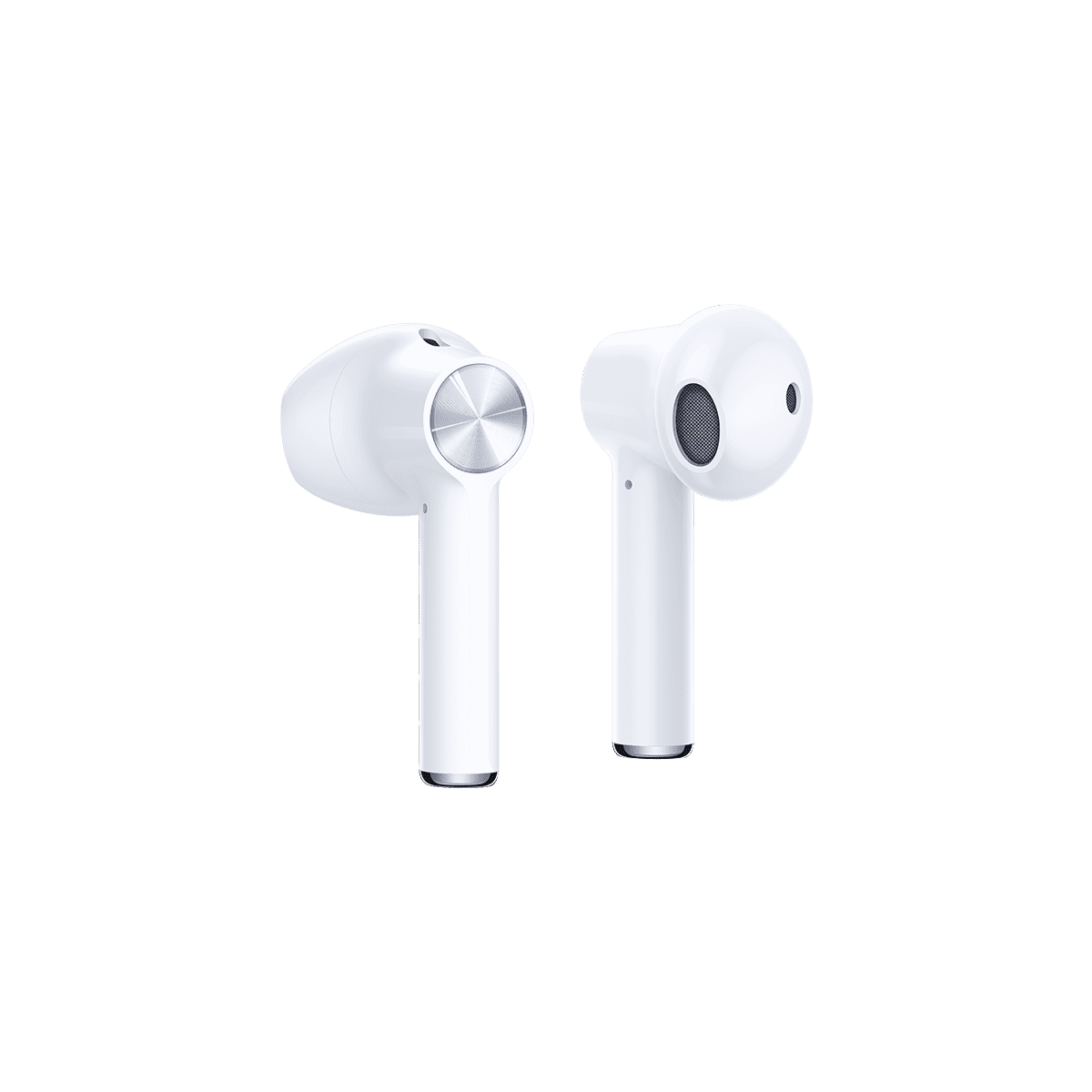
To be fair, OnePlus Buds appear to be counterfeit AirPods in everything but the name. Same shape, same white plastic, same metal endcaps, same black dots, even the same case design.
In other words, a straight-up rip-off of Apple’s design with a few minor changes.
This is how a lot of "design" works, be it product design, fashion or software. A standard is set by a market leader and consumers want as close to that as they can get. So other companies offer similar versions, often sharing some of the same supply chain. It has happened throughout history and will continue as long as consumers have choice.
Sure, but there’s different degrees, from a little inspiration to an outright copy.
In this case, I think it’s far towards the copy-end. If you presented a case of OnePlus Buds to the average consumer as Apple AirPods, would they know the difference? I doubt it.
There are degrees but the average consumer is blind to many differences which are only obvious if you're looking for them, or an expert. Debadge one of the many homogeneously designed cars and an average consumer wouldn't have any idea who manufactured it. Line up a dozen laptops from different brands and to many people they look the same.
The phone your holding has the same screen in the front, camera on the back, a home button, and the keyboard shows up on the bottom when you're typing. Maybe even the same front camera design.
All of that is just straight-up rip-off of.. everyone's phone?
The smart-phone form factor is largely determined by the rectangular screen, and for the cameras to be useful, they have to be on the back and/or front.
The keyboards are very different in design between Google and Apple, and many phones don’t have home buttons. Some even have more buttons.
Conversely, there’s nothing about ear-buds that force you to use white plastic with black grills for the holes, EarPod-style stems, or metal tips on said stems, nor a white round-rect pill box to store the things in.
The lazy OnePlus people chose to copy those features, making their product look like Apple’s.
The stems come from the antennae required for a solid connection, IIRC approximately 30mm long. The OnePlus buds are available in a number of colors. Metal tips on said stems is also a design decision to allow charging by slotting them into the container. The form factor of the container follows from the design of the stems.
well tbf the earbud form factor is largely determined by the shape of your ear.
Also the product in question come in several colors, white being just one of them. It's kind of ridiculous to rule that the earbuds they make cannot come in white colors because some other brand already does?
Also it is far easier to produce counterfeit packaging than electronics in the US. If I was going to smuggle something in, I'd put it in other packages and then repack it here.
It is, however, odd that they didn't say something like "Counterfeit Airpods disguised in OnePlus Buds packaging" or similar. It's a bit too early to tell which is right, I think. Photos of OnePlus Buds from TFA show that they are a different shape on the back, distinguishable from Airpods. The CBP photos don't show this part so it's hard to tell whether they are counterfeits or just a different product.
Interesting... apparently it qualifies as a counterfeit even though it doesn't say Apple anywhere on the box? Or is the image caption wrong - maybe they're counteirfeit OnePlus earbuds?
I am no CBP fan either, but has anyone considered the case that these are counterfeit AirPods in counterfeit OnePlus earbud boxes? If you look at the opened box picture in the CBP memo, you will notice the earbuds do NOT match the picture on the OnePlus box and look much much more similar to actual AirPods.
I did a double-take based on your comment, but after looking closely at the CBP pictures, and the pictures in this review [1], I think they are likely to be OnePlus pods.
The thing that caught me (and maybe you) is that the OnePlus pods have a flat part, and the CBP pictures have no flat part. But looking at the pictures from the review, the flat part is the end of the stem, and then the bulbous round part that goes in the ear is attached to the stem, with the flat part on the other side. The CBP pictures may have the flat part facing away from the camera.
I had to look at several of the pictures in the review which showed two pods next to each other to build a mental model of their shape.
True, I see your point. It seems that anything is open for weaponisation these days and previous frameworks for making assumptions have been shown to be invalid.
How is it malice for CBP to attempt to do the exact job it was created to do? It's job is to block counterfeit imports, and China is a huge state-approved growing source.
Sidebar: Why has the AirPod design become so ubiquitous? I always thought they were the ugliest earbuds since earbuds became small. Is there some technical reason they have this design? Or do people actually like it? Or is it simply the Apple effect?
https://www.instructables.com/id/Increase-and-extend-the-ran...: “As Bluetooth devices work at frequencies of around 2450MHz, the formula will give you an antenna length of +/- 12cm.
This figure then has to be divided by 4 to give us a quarter wave antenna, which will be 30mm in length”
Chances are hanging the antenna (a tiny bit) away from the bag of water called “skull” also helps reception quality. It also provides an easy handle to take them out of your ears.
Funny story about antenna lengt , I got a new job and was excited that I could at last upgrade my airpods to airpods pro. After a very frustrating couple days, I learned that my head is too big/dense/whatever for the airpods pro to reliably sync across my head. They would only work if used one at a time, or if I really cranked them at an angle such that the tails were far off my head which was unwearable.
I have long earlobes, I think the extra little bit of length of the non-pros gets it past my lobes and allows a connection that the pro's can't make.
- They fit my ear and don't hurt. Nothing else ever has expect apple buds, wired or not.
- I find the design much more appealing than all the other products on the market.
- They actually work properly.
I have had bluetooth headphones etc before that either sound like crap or are just to buggy to use. Hell, even my 'premium' Bose BT speaker randomly gives up for weeks on-end and then decides it will work again.
The latter two points hold for most apple products in my experience. Over the last year I've tried replacing my laptop and phone with non-apple products, and not the cheap crap either. It was fucking torture to me :P
>They fit my ear and don't hurt. Nothing else ever has expect apple buds, wired or not.
Same for me. I'm lucky, for my partner they hurt minutes after wearing them. The only other in-ear besides Apple's "dagger tip" design that works for me without pain is a custom mold.
What in particular makes them ugly for you? I have a pair of second generation AirPods and find them neither ugly nor particularly beautiful. I like them because they work really well. They sound good, they’re compact, and the integration with my phone/laptop is close to seamless. My wife has some other wireless earphones and they’re much worse: bulky, heavy, and always causing some kind of pairing hassle.
For me, the fake cable makes them look dumb. But as Someone said, they seem to require a certain sized antenna. I couldn’t think of a better solution to hide one either.
Note that I never said they suck, I was pretty certain that the $200 something is not all just the Apple tax ;)
The antenna stick is conspicuous. For a luxury brand, that's important. Think about how quickly people went from black headphone cords to white. Or how the coloured iMacs were introduced. Or how three visible cameras on the back of your iPhone came to signify something that two cameras didn't (you bought a newer, more expensive model).
Pointing into the head or away from the head are not ergonomically viable options. Realistically, if you are going to have a quarter wave antenna the product shape is going to look a lot like an Airpod, but not necessarily shaped as a white amorphous blob. Like a large touchscreen on phones means a rectangular slab of glass shape, but the industrial design around the slab can look different.
They are expensive - for a pair of wireless ear buds.
Putting aside all subjective qualities. People know they are expensive and regardless of whether you agree w/ the decision, you know they cost $195, $249 or whatever.
That's a signal of wealth like certain clothing, a super car, or a bloomberg terminal.
It may be confirmation bias, but it seems people care more about someone else’s phone choice (Android and iOS fanboys) than some more wealthy person wearing a $50,000 watch.
For example, Lifehacker posts some articles about how to do something on iOS every so often, and the comments always have those people saying, “iPhones suck; just throw it away and get an Android” with no mention of why.
Alternative designs come with their own problems or ugliness.
The ones that look like buttons give me the impression that it's a medical device and are simply too pronounced. I assume they are that beefy because they need to house the battery in the "head" but the "head and stick" design can have more elegant head since the battery is in the stick part. Since Apple was the first to have that design, they now pretty much own it.
I also suspect that the microphones work better with the head&stick design since the orientation of the mic and the proximity to the mouth is better.
I thought they look funny (although not ugly) when they first came out. But other designs (e.g. round blob sticking out of earholes) are even worse, and convinience outweighs visibility.
I agree so much with this. I bet that 2 decades down the line, kids will look at pics of people roaming around with alien-probe like dangling earrings and thinking they look "cool" and judge them the same way my generation judged people in the 80s for their fashion sense (or the wall street types in the 90s/early 2000s for their douchey bluetooth headsets: https://www.blueshoon.com/wp-content/uploads/2016/03/Bluetoo... )
The fully in ear design works very, very, very well once you figure out the proper tips for you. Otherwise, the around-the-ear IEM design works well too.
I don't get it as well. Especially the "let's make it look like it has a wire but it hasn't" aspect (there might be some ergonomic aspect to it, but it definitely looks weird)
But to be fair I don't think that I'm in their market as I think it goes too far into the ear to be comfortable to me
> I always thought they were the ugliest earbuds since earbuds became small.
Ditto. Whenever I see someone wearing them I make a point of locking eyes, then smirking. AirPods and similar headphones are an upscale version of a face tattoo. They are like a South Park parody come to life.
I firmly believe that in twenty years we will look back at them in chagrin, like bell bottoms and bowl haircuts.
> Whenever I see someone wearing them I make a point of locking eyes, then smirking.
Some people on hacker news are so cringy... I promise you they don't even know why you're smirking, just think you're either autistic or an asshole. The answer is likely both so I guess they aren't wrong.
1. Apple removed the headphone jack.
2. Apple stopped giving out dongles in the box.
3. Apple limited others' ability to compete by including proprietary chips in iphone and airpods.
4. Apple marketed airpods as a status symbol.
5. People bought into the hype.
   Objectively, airpods are the worst wireless earbuds in
   the market on every single metric, but still command a
   premium price.
Isn’t the burden of proof on the person making the claim? In this case, you’re claiming they’re worse, so the burden is on you to find a better one. Any would work. But to put the burden on the person claiming, in their own opinion, that they’re simply “the best on the market” doesn’t make sense.
They never asked me. Instead they resorted to name calling, personal attack. So understand why I don't feel inclined to continue this conversation and put more effort into it.
The audio quality is not good compared to other similarly priced buds. And the latency with Apple is exactly what I mentioned, it is an anti-competitive move by Apple.
I don't feel like arguing about audio quality, but the reason they're being anti-competitive about it is because they're leveraging the objectively better latency.
There are standard ways of achieving low latency. Everybody else does it. Why did they choose to implement a proprietary solution that works only with their phone and their earmuffs?
1. AirPods are convenient to carry. 2. AirPods are convenient to charge. 3. AirPods are convenient to wear. 4. AirPods are convenient to share between people. 5. AirPods are convenient to switch between devices. 6. AirPods sound good. 7. AirPods Pro have good noise cancellation, transparency and spatial audio. 8. People buy them because they want them and know others who are happy with them.
Objectively, this is the worst list formatting on the internet in every way.
I am not a native speaker, but I do feel my comment was accurate. For the price of an airpod, you can get other brand earbuds that are better in every metric relevant to an earphone.
If they have an identical shape to AirPods, they could run afoul of a design patent. But they look different to me.
That’s still not “counterfeiting”. The difference between counterfeits and knock-offs (KERFs) is consumers will help you fight counterfeiting and will go out of their way to buy knock-offs.
US Government bodies do a lot of public outreach, many have twitter/social media accounts as part of that effort. There are many reasons for this- the aforementioned help at budget time, Government officials geniunely want to be seen and celebrated as doing a good job, and a surprising amount of belief that the American people should see what "their" government is doing.
The interplay with that last point (belief in transparency) interacts with institutional secrecy in weird and hillarious ways. I remember one project I worked on was shrouded in secracy to the individual teams working on it until a news program showed up and talked to the public affairs office and senior leadership. After watching the broadcast, we all of sudden understood what the heck it was we were working on!
I imagine some employee needed to show they were doing something so they got the idea of making a twitter account for their department. Or it benefits them if they can add a bullet point on their resume such as “managed social media acccount”.
Even better if they can increase their budget and headcount and hire someone to post things. But then they need work to do, so you tell the person to make posts bragging about busts a government agency is making.
Positive media exposure can be used as evidence of effectiveness in annual budget request battles, as it is a pseudo-metric that government leaders find impressive.
Apple originally claimed that the Samsung Galaxy phones were a direct counterfiet of their work. They sued, and Samsung made changes.
OnePlus buds are a new product (I think released in 2020). It's probably just an honest mistake by the CBP, but it could also be they have some official direction to seize these OnePlus products either because Apple considers them to be infringing, or the Feds are acting as part of the broader trade-war.
Looks like rather generic design to me, especially since a substantial parts of are basically dictated by the human anatomy. So regardless the questionable nature of design patents in the first place, this design certainly does not warrant such patents. But in any case, that's for a court to decide. Does the USA actively seize other products that violate patents without a court case? How would they even determine infringement? I don't remember Apple winning any court case against OnePlus, so that can't be the reason for this seizure.
If these buds were seized as counterfeits, then there had to be an express intent to sell these as imitation Apple products, which I find rather hard to believe (for starters because the packaging isn't the same). Also, when producers remove any brand markings, like logos and other distinctive material unique to that company, knock-off/imitation cases are always weak. For good reasons too, just as with trademarking generic names. You don't want a single company to dictate the use of generic things.
Maybe most import is that this seizure will unlikely have happened on a whim. Almost certainly, somebody has requested for this to happen. That itself should give rise to some serious questions. Because it would likely make this a rather blatant (and probably unlawful) case of economical warfare.
To use the extraordinary powers of border guards for that purpose, without any court case, is downright corrupt. Like mafia style corruption. I wonder which highest ranking official signed off on this. That person has some explaining to do, for he/she just made the USA look like a tinpot dictatorship. Ignorant too, to boast about it on their web site. Unless that's done intentional, as propaganda to convince the locals this was legal or good "to protect America". People abroad will likely have a very different view on that.
What the American government often forgets, in its self-centred and mostly domestic focus, is that the rest of the world is observing things like these. Behaviour like this always has consequences, even if it can take a while.
Just make a 3-way comparison between apple airpods [1], oneplus buds [2] and the previous oneplus bullets [3]. Ignore the cable.
OnePlus change their design to be shaped like a quarter note, remove the controls, change to white shiny plastic, add a downward pointing cylinder with a silver ring at the end, change to hard plastic instead of a soft rubber earpiece, change to a 0 shaped sound outlet, add a charging case, and make the charging case white and unbranded with rounded corners a flip top and a single green LED at the centre?
This is fairly blatantly an off-brand clone. However, I don't think off-brand clones are illegal if sold as such, so I'm not sure this shipment should have been seized - but I can understand the custom agents' confusion.
Last time I checked, quarter notes, lack of controls, hard shiny plastic, silver rings on a cylinder's end, nor the color white are properties/concepts that Apple has (nor ever should) exclusive control/ownership of. Same goes for the charging case, which arguably is a good illustration of design follows function. It's Apple's choice to make it void of distinctive branding, but they like to have their cake and eat it too.
Your definition of an off-brand clone is going way beyond my understanding of that concept. To be a clone, the intention to sell it as such is a rather integral part of the concept.
Just as with car brands, each years many of the new luxurious models share common design features. It's called (contemporary) fashion, which is about as old as brands producing luxurious items. As are companies trailing behind in such trends.
Apple's many attempts to aggressively "defend" their (rather generic, but consequential of their minimalist) product designs could be seen either as a pathetic/cynical joke in the face of history, or more likely as a form of deliberate stretching of conventional wisdom regarding design (to a point of corruption), only for the sake of profits and damned to consequences or precedents it might set (or already has).
US Customs has been checking international shipments for counterfeit goods and other contraband since a long time. It's part of what a Customs agency customarily does.
How else would you prevent counterfeit goods from entering a country? For domestic mad counterfeits, it's possible to enforce laws (or court orders) prohibiting manufacture, but that's not really the case when the products are made overseas.
You said that correctly: counterfeit products. While Apple fanboys no doubt will claim that these OnePlus products are counterfeits of Apple products, that's mostly just their ignorance or wishful thinking talking.
From what I can see, there is no actual counterfeiting involved here. This product is both generic enough in design and not brandishing any Apple specific markings. Also comes with a box that makes it clear it's not an Apple product.
Sure, Apple might not like that people can walk around with something that looks similar to their overprices exclusive stuff, for a lot less. But that's not a valid definition of counterfeit. You see, it's missing the "fraudulent" part in the "fraudulent imitation" definition of counterfeit.
Maybe Apple should not have made their things look that generic. They might have a case if a logo or other protected asset was imitated. But this is not a clear-cut case. Rather one that should at least have a court rule on first.
The elephant in the room here is the USA showing what it can do (pretty much with impunity, short term at least) to a Chinese company. Long term, that will prove incredibly dumb and costly for the USA. But not a single person in government, nor any American company executive, will look that far ahead or even remotely care. By that time they are already long gone, pockets filled with short term gains and someone else to deal with the negative consequences.
Sorry, I didn't mention it earlier, since you seemed upset by Customs in general. This certainly appears to be a false positive, and it will most likely get resolved in favor of the importer, unless there's some trademark action we're all unaware of. The shipment is still gonna be delayed though, and that delay is not likely to be compensated; it's a risk in the system (along with many other risks of loss or delay in international shipping)
It would probably be better for CBP not to publish their seizures like this until they had gone through the process.
I'm not particularly upset by Customs in general, but I get upset when they stretch or abuse their already far reaching authority and privileges. Mainly because I strongly believe that all extreme powers come with extreme responsibility and require extreme accountability in order to not end up being used for all the wrong reasons.
This action, including its publication, smells like brutally political, shortsighted, and very likely unlawful (though Customs lives mostly by definition outside the usual legal territory, so there goes accountability).
Part of me stopped caring about it a long time ago, when it became clear that the USA is hellbent on accelerating its inevitable demise (as a defacto empire), as long as it can make powerful companies and politicians a few quick bucks along the ride.
On the other hand, it still hurts to see stupid things like these happen, while most people appear clueless about the consequences. I know it will be ordinary American citizens that ultimately will pay a price for this, with time.
That still pisses me off .. and hopefully it will always remain doing so.
Big corporations like Amazon are part of the dominating class. Me (and probably you, since you need to ask the question -- no offense intended) are part of the dominated class. Two different sets of rules apply here, it's not a matter of the products themselves being different.
Or more traditionally known as owning class and working class. Most folks here are probably in that quasi-state of working class but make plenty of money so it's a moot point.
I always prefered the 4-class system, which specified a class of people who cared more about the perfection of their art, than monetary concerns. Tradesmen, engineers, and academics would fall into this category.
Just lumping everyone into the middle-class based on income alone, always seemed to be an American conceit.
Class is supposed to be able pedigree; thus a king in exile is still part of the aristocratic elite because he was raised as such even if he doesn't have a dollar to his name.
You are looking for meaning. That is a normal human instinct.
I am talking about power structures. They should be examined. Most people here are not willing to do that, because they figure they will soon be the top dogs. They are wrong, and this expectation is being exploiting by less naive actors.
I agree though I think the 4 class system enables people to fight for their place within the social strata. Today, many are against unions out of an odd idea, that the economy is all that matters, and that with an unconstrained market they too will get their lottery ticket to being the next Jeff Bezos.
If one thinks the highest calling is to be a proficient tradesman then we absolutely want a union to push back against business interest stopping us from gaining more mastery. That's a direct attack against the existing power structure.
This is the same portion of the US government that runs the concentration camps in Texas (and has endlessly harassed me personally for exercising basic human rights), so I’m not that surprised that they remain dumb as rocks.
They also recently expelled 8800 unaccompanied children(!):
What if they're counterfeit OnePlus products and somehow the message to be released to the public was lost in a 'telephone' game? Brand name dilution can cause some less tech-astute folks to refer to earbuds by the popular AirPods brand name. And given the visual similarity it's easy to see how this kinda thing could cascade from a miscommunication like that.
That said it's also pretty believable that CBP thought they were intercepting clearly marked OnePlus goods as infringing on Apple's trademarks....somehow...
If you're the organization in charge of protecting against counterfeit claims, you better be able to tell the good, the bad, the fake apart. I don't think I'm setting too high of a standard. Also, when making a press release about your "success", it would be a good idea to take a breath and actually look into the seized goods. In this type of situation, waiting 1, 3, 5 or even 7 days until everything was clear would have zero negative effect.
As someone who (used to) travel a lot, the TSA have signs plastered throughout the entire security line to remind you to look through your belongings and make sure you don't have any banned items (they included what they were and had pictures of them too). If you went through airport security with a banned item (such as a knife), what they did was offer you three choices:
- They let you go back outside of security and come back without it (the idea being is you go back to your car and put it back)
- They had a small mailing station where you could mail it back to yourself (you had to pay for mailing, IIRC it was like $5-10)
A friend discovered that he had a pocketknife with him just before he was about to go through security. So he went out to the airport smoker's area, dug a little hole in the ground, and buried the pocketknife. When he returned from his trip he went back and dug it up.
I had a family member who tried to do a similar thing with a potted plant in the airport lobby, but it was still gone as security apparently runs metal detectors over common hiding places every so often as part of a bomb sweep.
The TSA is responsible for creating the roadblock, and therefore should be responsible for keeping travelers whole. "read the rules" is not a justification for their policies, as it's common to have an arbitrarily-prohibited item hide in your bag. Especially the types of items that you want to live in your backpack (eg pocket knives) that you have to make sure to unpack before the airport.
For anything that can be checked on the airplane, there should be a free miniature bag that gets added to your checked luggage.
Anything that cannot ride on the airplane but can be ground shipped should get you a free envelope to ship.
For the remaining stuff (eg bulging lithium batteries), there should be a system whereby you can leave it at the checkpoint to be picked up by someone else within the same day.
Failing all of those, disposal should be the last option.
> The TSA is responsible for creating the roadblock, and therefore should be responsible for keeping travelers whole. "read the rules" is not a justification for their policies, as it's common to have an arbitrarily-prohibited item hide in your bag. Especially the types of items that you want to live in your backpack (eg pocket knives) that you have to make sure to unpack before the airport.
Knives aren't "arbitrarily-prohibited item[s]". There's a quite famous case of a series of hijackings that were done with box-cutters (e.g. utility knives), that resulted in 3,000 dead.
... and which will never succeed again. "Arbitrarily-prohibited" was a jab at everything else they've seen fit to condemn by extension, for example pliers. It's not just knives that you have to be concerned about, but anything remotely non-basic that you otherwise keep in your backpack.
That seems a little...overconfident. While some of the TSA stuff is definitely security theater that adds little value, not all of it is.
> "Arbitrarily-prohibited" was a jab at everything else they've seen fit to condemn by extension, for example pliers. It's not just knives that you have to be concerned about, but anything remotely non-basic that you otherwise keep in your backpack.
You can carry on pliers, just as long as they're less than 7 inches long:
The pair of pliers I have is 7.25 inches long. That rule seems quite reasonable to me.
They do have a difficult task: write rules that can be executed quickly by relatively low-level employees to exclude items that could be used as a weapon or be a danger to the plane. I doubt that's even possible to do without creating corner cases that someone could gripe about.
Just a guess, but the TSA probably pays a contacting company to take all of the confiscated items away. Then the contacting company disposes of can't be sold and sells the rest.
If they consider them to be safe enough that it is not unethical to sell them in job lots to members of the general public, maybe they shouldn't be seizing them in the first place?
Before the change in policy you could choose to have the items moved to checked baggage, or packaged and shipped separately. Seizing the items is not the only alternative to letting them into the cabin.
Since they are legal items that are merely prohibited to transport through the checkpoint, and since no forefeiture action has been taken which would lawfully deprive the owner of title, only a seizure of possession to prevent the prohibited action, they should be held for return to the owner outside of the secured area with storage charge (and shipment charge if an option for remote return is provided) covering reasonable actual costs only.
Anything else would seem to be deprivation of property without due process and taking for public use without just compensation, in violation of both the due process and takings clauses of the 5th Amendment.
The owner is given the option to either go put it back in their car, ship it to themselves for a small fee, or let the TSA take it. It's not like "hey, you screwed up and now you lose this item for good!"
“small” fee my ass. When the TSA confiscated a camping knife I kept in my backpack and forgot about, the agent said it’s about $20. Also, for someone who boards in 30 minutes with a TSA line just as long, they don’t really have a choice: it’s lose the item, or miss your flight. So I had to let them take it.
Why? It's common knowledge and well signed [1] that knives aren't allowed on planes. IIRC, the TSA does people with knives the option of getting out of line to take their knife home, but most people don't bother because it's more important to them to catch their flight.
This is probably a combination of a Section 337 investigation by the USITC that includes OnePlus in its scope and directs CBP to seize certain OnePlus goods, a bombastic press release from CBP, and The Verge reporter not being insightful and generating clickbait.
I did, earlier, because they were a part of the article.
Ultimately we don’t know the legal basis of the seizure, it isn’t in the CBP presser and The Verge reporter writes he has no idea of the basis either.
I disagree with the assumption that CBP made an error, with the exception of their presser inducing eye rolling. Maybe they did, but to me it looks like they are acting within their scope.
My guess was this was connected to a 337 case, which is possible although the only OnePlus case I could find is a year old. Seizing goods on import is precisely the purpose of that mechanism. On reflection I am probably wrong about 337 litigation.
Another possibility is that this is related to design infringement, supported by Apple and AirPods being mentioned prominently. CBP is supposed to keep (their definition of) counterfeit goods from entering. If you compare the picture of the box of seized earphones, and then this marketing picture of the AirPods, wouldn’t you think that an average consumer could be confused? I have not reviewed the design patents for the AirPods, but I also don’t think it’s unfair to say that the OnePlus version have a lot in common. There are many design patents covering Apple earphones that could be relevant too.
given that USITC is a U.S. Agency, and this is a Canadian Seizure, but also GlobalFoundries vs TSMC dispute is resolved "dismissing all litigation between them as well as those that involve any of their customers", this doesn't seem likely to be the cause.
CBP is Customs and Border Protection (part of the US federal government). CBSA is
Canada Border Services Agency which is the Canadian border patrol. There is no mention of Canada in the article
I'd be interested in a writeup of that as well. The cavalcade of stupidity and maliciousness that was the Verge PC Build debacle leads me to think some quite bad stuff has been going on behind the scenes.
You need to be an elitist to object to someone building a PC in a way that doesn't work and voids warranties and then fixing it during jump-cuts without telling the viewer? You need to be an elitist to take issue with the Verge using takedown notices to attack everyone who pointed out their failures?
I was not aware of the takedown notices but I watched a couple of the “response” videos and they came across as extremely malicious/toxic. I can see why The Verge would want to do everything in their power to counter that. There are better ways to criticize something.
Pretending to be an expert at something while giving people advice that is not only wrong but dangerous makes you fair game for absolutely any and all criticism.
They do look like Airpods from the picture, not OnePlus - i dont see the chrome/metal disc on the back of the earbuds that OnePlus pods have. The case matches the OnePlus case though. So its possible they really are counterfeit. Admittedly the picture is very low-res so its hard to be sure.
Is it a non-sequitur? The same agency here seen seizing competing products for not being Apple products is the same agency responsible for caging and mistreating children unto death.
I'd prefer them stifle competition rather than kill children.
I just noticed a lot of suspiciously cheap AirPods show up on the Facebook marketplace here in Sydney. I think that the shipments here didn't get seized.
Not sure I understand how this is newsworthy exactly, people make mistakes (even those on HN) and there is due process and recourse for whoever was impacted by this mistake.
If the implication is that if law enforcement make mistakes they cannot be legitimate then I think we should just give up on the idea, but I guess this is more or less what is being advocated for, so maybe it can be stated more directly.
I guess it’s the fact that they proudly declared the seizure which was obviously a complete fail at even the briefest glance at the pictures they provided.



Bares a Registered Trademark and does not have a signed letter of authenticity by the trademark holder authorizing its import.
That is super broad and covers a lot of things most people would think to be false positives like legit items sold second hand.
But even that doesn't cover thinking OnePlus Buds are AirPods.