Former dating app founder here - lots of thoughts on the space - feel free to AMA
High level though, there's a lot of human behavior which makes dating frustrating with or without apps.
At it's core, even in the best case, dating has A LOT of rejection. Dating apps introduce more opportunity for incremental validation (you got liked!) but also incremental rejection (you got ghosted!) and the sheer number of interactions that lead to nothing is much higher and more quantifiable than IRL (you've all seen the r/tinder sankey diagrams)
Two "solutions" I believe would generally benefit dating
1. Apps are more transparent and equitable with how they expose profiles to other users. Don't bias toward highly liked people to increase perceived "quality" and shadow-hide show profiles that aren't liked often (and then ask them to pay lol). Show people more randomly, to better represent the true cross section of people on the app.
2. Daters set some type of routine that works for them - say "I'll try to go on ~1 date per month". Being intentional about this helps minimize the feeling that each date is so fatalistic / it's the end of the world if the person who seemed awesome when messaging is actually a jerk. It'd be nice if an app facilitated this type of routine and figured out a feedback mechanism to reward users who were generally pleasant / respectful on their dates.
> Apps are more transparent and equitable with how they expose profiles to other users. Don't bias toward highly liked people to increase perceived "quality" and shadow-hide show profiles that aren't liked often (and then ask them to pay lol). Show people more randomly, to better represent the true cross section of people on the app.
This won't work; if you do this, you'll expose that the average online dating user is... well, average.
There's a bit of kayfabe going on; users want to think the other users of online dating are 8+/10, sexy, flirty, fun, and desirable singles. Unfortunately, 69% of Americans are overweight and 36% are obese. If profiles users see weren't heavily weighted toward highly-rated ones, the perception of online dating would immediately change from "online dating is fine, a bunch of attractive people are using this" to "online dating is only for the ugly and desperate"; the article points out that this is the way Gen Z perceives online dating already.
Dating apps really struggle to keep the most desirable, because those are the ones least likely to need it. Yet they're also the most important for a dating app to have. As fewer desirable people use it, the less perceived legitimacy it has, which results in fewer people using it, particularly the desirable ones. I suspect dating apps are experiencing this death spiral now.
I see your point here - and I do agree, from experience, people sometimes express a desire for a bit of reality distortion in dating (we often heard that they want the experience to feel more like 'fate' or 'chance' than overly engineered).
That said, I don't fully agree with the idea that there's a uniform concept of x/10 scale for daters and that they uniformly will balk at those below that uniform rating and therefore the only way forward is boosting those based on their global like %. And some data backs this up.
The oft-cited OkCupid Dataclysm book talks about variance (e.g. lots of people like / lots of people dislike), explaining variance is meaningfully more important to messaging and engagement than raw like %.
Additionally, on the point of weight / body type, we found that a little under half of daters (and > 50% of women interested in men) do not report body type to be a significant factor in their decision making. So it is a meaningful factor, but for about 1/2 of daters it isn't.
The point I'm trying to drive here is, while there is for sure data and intuition that points to what you're describing, there are others that point to other ways that people perceive the quality and likelihood of finding a partner on an app that may work as well, if not better, while not relying on a need to as heavily hack perception.
> Body type is a significant factor for way more than 50%. People lie on surveys because they feel guilty for being superficial.
I think you are extrapolating your own view. You have no way of knowing what they feel and even for an educated guess you do not know which country/social class/occupation those users tend to be from in the app being discussed.
Revealed preferences are a thing, no matter the social class. What people self-report to want and what they actually want is rarely the same, especially in fields with high social pressure.
Of course but you can't just claim that because you feel like X then everyone feels like X even if they say Y. You gotta have something to back it up. Especially if you represent a minority of users in many categories...
First, I think you're making some big assumption by implying that GP's statement is him projecting his own beliefs/attitudes, rather than being generally cynical.
Second, I think "people are superficial and attracted to people who fit conventional beauty standards" is a fair null hypothesis. That's what conventional beauty standards mean. I don't think it's a stretch to assume that people's stated preferences there are biased towards making themselves look less superficial.
> "people are superficial and attracted to people who fit conventional beauty standards" is a fair null hypothesis
Most likely is that you are extrapolating from your experience. Average here is male middle class from US or EU. A real average person lives in an Asian country on 50 USD/month trying to make it in life.
The gene wants to carry on and in this world survivability is not up to the looks unless you are already middle class in a stable rich country. Perhaps you are not being cynical enough if you think the looks is what's important for >50% of users.
>Additionally, on the point of weight / body type, we found that a little under half of daters (and > 50% of women interested in men) do not report body type to be a significant factor in their decision making. So it is a meaningful factor, but for about 1/2 of daters it isn't.
According to the previous poster, 69% of Americans are overweight (36% obese). Assuming the dating app users are representative of Americans, then well over half of those daters are, themselves, overweight. So of course many of them won't report body type to be a significant factor! They're already overweight, and their expectations in a partner are probably realistic. What's disturbing is that only about 1/2 of daters said it wasn't a meaningful factor: this means that almost 20% of daters are both overweight AND (assumedly) expect to date fit people.
That's true. The sad reality about dating is that, for 99% percent of people, the partner that would be ideal for their tastes is "out of their league" so to speak. Humans have dealt with this reality of dating acting somewhat like a marketplace via mores of commitment, dating within social classes, condemnation of promiscuity, etc., but the human nature is still there. 10's want 10's, but 5's don't want other 5's, they also want 10's.
The strategy most dating apps use has been to keep people in a perpetual cycle of heightened seeming possibility. You see the young, cool, attractive people, and perhaps one out of 100 times you'll strike out, and the unlimited options keep you feeling that such an opportunity could happen infinitely. For average hetero dudes, this obsession will drive purchasing premium, paying for swipes and super likes, etc.
I know it's controversial but I do believe that robotic/AI partners is the "ideal world" solution to this. You get someone who fulfills all your physical needs so you don't have to play the roulette in real life, or string along someone in your league because you believe you could get someone out of it. I'm sure in the future we'll see them similar to how we see sex toys today.
Strange analysis. Considering that what people want from dating apps is sex and partners, and that both are easier to obtain from people of matching attractiveness. As a former dating app user, the possibility is something I never cared about: I cared about a date, there is a marketplace and- while I will try to find someone acceptable- certainly I'm not wasting my time chasing people out of my league. That produces just waste of time and money, rejection and frustration.
I would rather say something different: dating apps have zero interest in making you find a partner- this means for them simply losing a customer. They would rather keep you in a cycle with some intermittent reward but preferably without losing you.
Finally there is an huge difference between different classes of users: at the very minimum by gender, attractiveness and purpose. Casual sex is a totally different use case than looking for a partner; high attractiveness allows using the app intermittently for immediate reward, while average people need to put much more effort and entirely different mode of use. But despite all this complexity, apps have converged to a single hyper-simplistic model that optimizes maybe intake of new 20 year old users but works much worse than it could for most people.
> Considering that what people want from dating apps is sex and partners, and that both are easier to obtain from people of matching attractiveness.
But people don't have an accurate perception of matching attractiveness. The average person is a 5 who thinks they're an 8. And they've been looking at celebrities rather than average people, so if you match them with a 5 then they'll think that's a 3.
And yet the overwhelming majority of people of average attractiveness have mated and formed couples and married since forever. So that's possible. If an app is not able to match them, must be a failure of the app, not of nature.
Ages ago, people had very, very limited dating options: generally only the suitable partners in their village. They didn't have porn to distract them, and they weren't allowed to just stay single because of social pressure and (for women) economic need. It was rare that anyone stayed single, and they were generally considered weird or "unmarriageable".
So basically, people took what they could get, even if it meant someone they didn't care about or worse, someone who was downright abusive.
The higher rate of singledom these days isn't necessarily a bad thing. Centuries ago, these people would have gotten married, had terrible marriages, and produced kids (remember, no contraception back then) that were neglected and abused and grew up to be awful people.
You're defining attractiveness like boomers handing out grades where in real life that's not how the 10 scale is used, it follows video game review rules where 7 is middling.
And this is right to happen with humans same as video games. It's not centered at average it's centered where 5 is "not quite unattractive." And because the typical human is attractive the average sits at around 7.
Your dating standards are high if weight automatically makes someone a sub-5 in your eyes. I’m not saying that’s morally wrong—you like what you like. But recognize that it’s a high standard and will make dating more difficult.
I mean look you're attracted to what you're attracted to but this is such a sad comment. You're not like doing anything wrong but reading this it's not so surprising that 2/3 of women have disordered eating.
What if I stopped showering and women found me unattractive for it? And I started blaming them, saying it’s their fault I can’t bring myself to shower?
You're ignoring the magnitude. To make this a fair comparison it would have to be something like
"Women find men's musk so repulsive that men who struggle with controlling it due to their hormones, diet, or lifestyle are showering with so much chemical exfoliant to keep it under control that it's destroying their skin."
And in that world I think you have a case that women have to get over it.
You can be like "just lose weight" up to the point where it drives a super-majority of women have an unhealthy relationship with food and starve themselves to do it. It looks like the new weight loss drugs might finally just fix the problem in a way that satisfies everyone. I have an ED and I will be so happy if I live to see generation of women who don't ruin their mental health to chase the thinness expected of us -- but it still sucks that the solution is drugging women to lose weight and not growing to find "heavier" (i.e. women with a BMI higher than 20) women attractive.
It would not be a good thing for people to find indicators of poor health to be neutral or attractive. It would just perpetuate eating disorders generationally.
Astonishing mental gymnastics to think that others have to "grow" to find unhealthy, overweight women attractive rather than they themselves needing to improve themselves if they want to be found attractive. Prime example of externalizing blame.
Men and women alike have been achieving acceptable weight for thousands of years. You don't need drugs to be thin, those are a recent invention. Do you think I don't have to watch what I eat too? If I gave into all my cravings I'd also be fat and find myself gross. Others do not need to adapt to your failures.
Right we prefer our women unhealthy and underweight. Look at this point I don't know what else to tell you. There's clearly an experience gap we can't cross if you're equating disordered eating with watching what you eat. I wish you could see from a woman's perspective how horribly women treat their bodies to be thin -- it's not healthy.
By your own measure I'm incredibly successful. I'm not stupid and know how much better skinny women are treated in all aspects of life. I am of a socially acceptable weight for a woman in 2024 which means I get lightheaded if I don't eat for a few hours or stand up too fast, I'm always cold, I'm always tired, I can never eat to full, and sitting on hard chairs for too long hurts. So when I say grow I mean finding women at actually healthy weights attractive. There have been times in human history where it's happened.
Don't want to add fuel to this debate, but what you say sounds a bit strange to me. I am of thin build- slightly underweight- and never felt this gave me any problem. Granted, it's just how my body works so it's possible that if I had to make an effort to keep this weight this would come with some slight issues. On the other hand it's also not normal for a lot of people to be overweight, this has clearly to do with culture and food rather than innate needs. So it's strange that your body would give you negative symptoms for just keeping a natural weight.
So I think the dynamic here is that it's really common to consider women who are of a healthy natural weight to be overweight. I'm not out here defending women who are 5'7" and 200 lbs as healthy but what happens is that that 5'7" woman will be viewed overweight at 150, chubby at 140, and "normal" at 130. And may god help you if you're close to 160. Which is fine for folks who's natural resting weight is 130 but for everyone else it sucks, you end up fighting your body 24/7 to keep it that way and having to ignore/suppress your bodies natural signals.
It's no one person or group's fault that this happens but it's where we're at. I'm technically not underweight by the numbers but my body violently disagrees with that, I've learned to accept it. One of the most common experiences for women in late 20's early 30's is to ease off the constant dieting, gain 10-20 lbs because that's where their body always wanted them, and suddenly feel great -- more energy, less brain fog, regular periods, and suddenly it's not work to maintain it.
Yes, these numbers make the discussion a bit more concrete. But 5'7'' and 150 is definitely in the healthy weight range- girls can strive to be thinner than that but it's to fit some arbitrary idea of beauty rather than to, as you say, "be treated better in each aspect of life" (yes of course, attractive people in general are treated better- but it should be a negligible effect for the ranges we're talking about). In other words, I assumed that the user you were talking to was talking about much higher BMI indexes than these. Personally, as a male, I don't find the 5'7''/ 150 unattractive at all- though it also depends on how fit someone is.
The idea that real world couples necessary match attractiveness is kind of incels invention. And then they get angry whenever they see a couple with one person super attractive and other .. normal.
I find the whole argument, especially with the grades, silly. But it is true that usually partners match each other by attractiveness- also keeping in mind that attractiveness is not exclusively physical and means different things for different people. Attractiveness is not a scalar, it's a vector.
> I would rather say something different: dating apps have zero interest in making you find a partner- this means for them simply losing a customer. They would rather keep you in a cycle with some intermittent reward but preferably without losing you.
It sounds like you're agreeing with me. The apps benefit from people staying in the app, not partnered up stably. If the app only showed people they'd have the best longer-term prospects with, then it would likely show people in their attractiveness range as a rule.
> There's a bit of kayfabe going on; users want to think the other users of online dating are 8+/10, sexy, flirty, fun, and desirable singles.
I'd go a bit further than that, people are explicitly looking for that different reality when opening the app.
That's one of the reasons of getting the app to them, getting better matches than in the reality.
I don't think it's a solvable problem, online dating is just full of paradox, the paradox highlighted in the article is real but this is another one on top of that.
> "online dating is only for the ugly and desperate"; the article points out that this is the way Gen Z perceives online dating already.
The article notes that Gen Z usage of dating apps is down, but it's not clear to me it's because they think it's low status. (Polo is unpopular, but it's high status.) Do you have more info on why Gen Z isn't using dating apps? It being low status is certainly possible, but lower over all interest in romance is too; Gen Z is famously having less sex.
I followed the "failing to woo Generation Z" link, and just got this PDF, which didn't help much: https://www.generationlab.org/_files/ugd/b2ee84_c2430c8256ff... (College students are using dating apps less than post-college 20-somethings, but I think that's always been true.)
I think it's pretty simple - Gen Z are young and have better opportunity to date IRL. They are surrounded by many peers, have more free time and friend circles are still strong.
As people grow older, they have more obligations, they sometimes move away from where they were raised thus breaking away from friends, they generally hang out in less homogenous age bracket.
I believe the claim is that Gen Z uses dating apps less when controlling for age than their predecessors. (I don't have the data to tell whether that's true.)
When people say Gen Z are they talking about Gen Z in America or Gen Z on Earth? I notice many qualities ascribed to Gen Z seem to be completely alien to Gen Z where I live which makes me suspect that these qualities are simply random variation and correlation hunting, and not inherent to that cohort’s formative experiences (smartphones, covid, etc).
The solution to dating app problems is actual human contact and throwing dating apps away.
There is too much to get wrong with text only. Say the wrong thing online and you're done. Say the wrong thing in person and you can judge by facial expressions that you did and get a chance to correct a misunderstanding. You also get a chance to actually see what the other person subliminally likes and dislikes. All in real time.
Sure, you can text "I like that" but how would you know what you were getting into?
I’ve dated for years without apps trying to meet people organically, and then also years through dating apps, and I’ve had way more opportunities for human contact with dating apps. I mean the whole point of dating apps is to meet in person once you feel the person might be a good match
The benefit of dating apps IMO is that everyone on there is explicitly there to find a partner for some reason. In real life it’s a bit of a guessing game, which is fine, but the simple math is that love is easier to find where all the people looking for love are hanging out.
+1 - one of the biggest things we found actually, is externalizing the potentially uncomfortable elements of dating generally helps people be more authentic and focus on getting to know each other. A few examples:
- As you said, dating apps, everyone is there to date, so you don't have to feel awkward about approaching someone not knowing if they're not single or interested in you or even if they are in the mood for conversing with a stranger
- Hinge did a good job forcing Q&A. Before that people often thought it was uncool / signaled trying too hard to add a bio so people often had less info to go on.
- On our app - we helped facilitate where people went on their first date (generally tried to pick more affordable / neutral options) - this took the pressure off of worrying if the person picking made a bad / too crowded choice - blame it on us!
Not saying dating apps can remove everything uncomfortable about dating, but they can definitely help!
My experience is that the major limiting factor in finding partners is whether people "click" with me, not whether people are single.
In other words I'm better off going to an event with my kind of people and looking for the 5% that are eligible singles, than going to an event with singles and looking for the 0.5% that are my kind of people.
Obviously this would be different if you're a person who likes almost everyone and is attractive to almost everyone — a golden retriever, as it were. I offer no opinion on whether many such people exist.
The trouble there is that the attractive people on the dating apps often aren't looking for partner, instead it's often just for self-validation. And as discussed above, these are preferentially shown to many people.
Really? I find that it is way easier to meet people in person. In real life, girls approach me at the gym. On apps, I get maybe one like a week and it's usually not someone I'm interested in.
Just casually make eye contact with people and see who looks back. Smile at them. If they smile back, that's an invitation to talk to them - or sometimes they'll just walk up and talk to you.
Socially, we have to reduce “riskiness” of IRL approaching people with the intent to date.
Right now, it’s scary to want to approach someone only to risk getting roasted for being a creep, barking up the wrong tree, and the myriad other reasons why people you want don’t want you.
It has to be thing everyone does - somewhat like bar hopping on a weekend. You know you’re at the bar to find someone and so is everyone else.
>The solution to dating app problems is actual human contact and throwing dating apps away.
You aren't wrong, but you dramatically expand your dating options by using these apps. Just relying on your social circles is no different than remaining in the Middle Ages, just relying on a possible partner to show up at church or in the market. These apps spread your geographic and social opportunities, after that it's up to the human contact you describe.
>The solution to dating app problems is actual human contact and throwing dating apps away.
This is backwards. Dating apps were a solution to the problem of opportunities of meeting potential mates drying up. Dating apps wouldn't be popular if "actual human contact" was a viable strategy.
I mean apps can facilitate actual human contact though, common advice I see is to transition from text to a low stakes in person meet up as soon as possible.
Thank you for showing up, it would be great to hear more of your input. #1 is so, so key. Dating apps made me feel terrible about myself and invisible (“why am I getting no likes?” — for context I’m a guy).
It wasn’t until I realised I had no idea who my profile was actually being shown to that it all started to make sense and I realised that’s the lever that apps can pull to make money.
Fundamentally though I think your comment about human behaviour is spot-on and at the end of the day my belief is that dating is something you just can’t short-cut with technology. Parabox of choice and low investment are garbage-in, garbage-out so to speak. You can’t ‘Uber Eats magic food box’ dating.
"something you just can’t short-cut with technology" - totally agree - it can be a helpful part of the process provided the service is in service of the customer's goals, which often isn't the case.
That said, there are definitely things products can do to improve the experience for users - this paper is a bit old, but was eye opening to our team when thinking about designing our product https://people.duke.edu/~dandan/webfiles/PapersUpside/People...
> and the sheer number of interactions that lead to nothing is much higher and more quantifiable than IRL
I've done tons of online dating and used to bartend so I'm around single IRL people all the time. I absolutely have far, far more "successful interactions" in OLD, unless you're also referring to chatting, which is pointless to even discuss. I'm referring to actually meeting the person and whether that turns out success in whatever way someone considers that.
If I go out to a bar and hang out, and potentially start talking to some new woman for hours knowing absolutely nothing about her - I have no idea if she's attracted to me, nor single, etc. I've probably spent thousands of hours casually talking to someone I may find interesting only to find out before they leave that they're either not interested or not single or not hetero, whatever.
I'm not one to ever care about rejection but the fact that people take it personally in OLD and call it "ghosting" when someone you've matched with and don't connect with through chatting and move forward to meet and etc is absolutely pathetic.
That isn't ghosting. GHOSTING is when someone who actually is involved with you in a RELATIONSHIP beyond a 1 steak dinner tinder date disappears from your life without any recognition that they're leaving. Someone you ACTUALLY have ties to.
I've had it happen before. I've also had thousands of OLD rejections (uwu oh no), and there is absolutely no comparison between some dweeb getting rejected after 2 dates and crying about it and having someone you've been with for years disappear.
My partner in 2020 disappeared when she stopped taking her medication. It was absolutely traumatizing that this person I spent 2 years with just disappeared without a word one day. I know she's alive and in my city but in 4 years I've never heard a word. No drunk texts, nothin. And I'm not going to track her down or seem stalkerish if she clearly lost interest in having me in her life.
And you know what one of the most frustrating parts of that 2020 when I was stuck at home hiding from covid and my partner just disappeared? When I'd look up support from other people online about being ghosted/dear-johned and 99% of the posts on reddit/etc where about ONLINE DATING GHOSTERS. God. Some of those people were absolutely pathetic.
It's ABSOLUTELY ridiculous to expect someone you've hung out with a few times via OLD to NOT disappear without telling you why. Christ I've done it a billion times. You don't feel a connection, you move on, both people USUALLY understand and are mature about it and don't cry and almost all of the time it's mutual because if I'm not feeling a vibe I'm probably not going to seem interested, and vice versa.
I don't think I've ever had a woman cause any stress when we've ended things and moved on.
> I have no idea if she's attracted to me, nor single, etc. I've probably spent thousands of hours casually talking to someone I may find interesting only to find out before they leave that they're either not interested or not single or not hetero, whatever.
This sounds very off. It's extremely common for people to overshare when drinking. If you can't figure things out in that environment I'm not sure how much lower the barrier to entry can be.
This sounds like dating app propaganda or I just live somewhere with much friendlier people.
Well, I didn't say "I can't figure out how to pick someone up at a bar or IRL," I said- in less words, my ratio of successfully picking someone up via OLD is higher than my IRL pickups. You have no idea if that's 20 or 300, I can easily say 80-90% of mine, and I think ALL of my last 5-10 serious partners all came from OLD. People IRL, especially frequenting the dive bars I worked at, were't very much out there to get married.
I can open up tinder right now and go grab coffee with a match. I can also go to a coffee shop or bar or game alone and sit there for hours speaking to nobody because literally nobody in that shop is remotely interested in me Vs OLD where I know the person at least at some degree finds me attractive and we HAVE to interact with one another. I also absolutely would not sleep with bar patrons no matter how many passed me a number behind bar, that meme is kind of offensive to bartenders who take pride in their work and value their regulars/customers.
I'm admittedly biased because I definitely cannot pick up anyone online, but do well in person.
Online dating is working with limited information. Some people just look better than others when squinted at. I guess the low-res digital version of me is too unappealing.
> I have no idea if she's attracted to me, nor single, etc. I've probably spent thousands of hours casually talking to someone I may find interesting only to find out before they leave that they're either not interested or not single or not hetero, whatever.
Most of those _were_ interested, but decided you weren't a match.
What about throwing out the whole swipe-app paradigm with the matches and algo-stack and going back to okcupid style profiles that you can browse? Anyone can message anyone. It was the best dating site by far.
tl;dr tons of spam / offensive messages. I actually think that with advances in NLP and content moderation since then, you could re-introduce a paradigm like this with potentially less spam.
Ok, that explains requiring a match before messaging. But the swiping and algo-determined stack? That seems purely intended to make it more like a gambling app.
That was a more effective and pleasant experience. Sending a well-crafted message drawing on someone's profile usually worked for me, and I completely ignored the "matches" gimmick. Been off the market for many years now.
Why do you think apps don't do (1), if it would benefit dating? Because people would just choose to use different apps because of the perceived quality issue you mentioned?
To what extent do you think the core issues are driven by the different goals of men/women, and the dynamics they create?
Great qs - As for why apps don't show profiles more randomly - I think because the space is so competitive, perceived quality is so important and frankly its "easy" for apps to leverage who they show to who and when in order to make users most likely to keep swiping and/or upgrade. I do think apps generally want you to find a partner, but are generally okay with making the experience valuable to them (even if that means gamifying and playing with who gets to see who and when) along the way.
I'd say (assuming by the way you phrased the question you're referring to men who are generally interested in women, women who are generally interested in men) there are certain factors and preferences that trend across genders which do influence dating behavior and outcomes for these populations. Based on survey data we collected a few years ago - some are shared across genders (e.g. political views) others are not (e.g. height). But I wouldn't say there were glaring different "goals" by gender, so much as some difference in how important certain factor were.
I'm curious to your thoughts: what do you think about a nonprofit dating app?
Do you think they may shift the balance of your quote from above?
> I do think apps generally want you to find a partner, but are generally okay with making the experience valuable to them (even if that means gamifying and playing with who gets to see who and when) along the way.
I could see it for sure - it'd at least be worth experimenting with. Beyond the functionality itself, I'd be most curious about how the idea that its a non-profit influences perception of the app and the people using the app. Profit or non-profit, it'd be nice to see apps talk more openly about how they approach matching - I think Coffee Meets Bagel did this a while back.
Thanks for the responses. In terms of goals, I was thinking more of the relationship goals. Many men are happy using apps to play the field (I've talked with friends who simultaneously 'dated' half a dozen or more women), whereas most of the women I know used apps to find longer-term relationships.
This can result in a small fraction of men going on a large number of dates (expecting that they don't need to commit) and a large fraction of women not thrilled that the desirable guys don't want to get serious. Are there ways around issues like this? Or is this more of an urban myth than a reality?
There are statistics studies both endorsing and invalidating this concept.
Some OkCupid / Tinder data suggest that "likes" are not evenly distributed, which has been extrapolated out to mean that dating is unbalanced. On the same token, unmarried rates are pretty equal across genders in the US suggesting that from an outcomes perspective people are achieving their relationship goals (at least in terms of marriage there are other goals).
In our app, which was much more heavily skewed toward actual dates than likes, I would not characterize the pattern of people who went on dates heavily skewed toward a small portion of men - so it may be real from a liking perspective (I can't claim to refute data directly from the dating apps) but may be more of a myth when it comes to actual dating.
Not the OP but I think they don’t because it’s more profitable and makes a more addictive experience for the user.
Think about it - an app can directly influence the amount of matches you get. Show your profile to everyone at the beginning, a fair number of matches. Not paid yet? Show their profile to fewer people, then when you think the user is about to leave, ramp up the visibility for just enough matches to keep them hooked.
User just paid for the Gold tier? Increase their profile visibility… Not too much though, you want to create that dry spell so you can repeat the cycle and get them onto the Gold Plus tier.
For-profit dating apps are essentially gambling apps.
>...and figured out a feedback mechanism to reward users who were generally pleasant / respectful on their dates.
This sounds like a social scoring system, which is bound to be fraught with issues.
It's also possible/plausible that trying to increase the instances of this proposed reward (e.g.: per date) is bound to end-up being an objective - in and of itself; not to mention that the reward instances would potentially occur far more frequently for people who are generally considered "attractive".
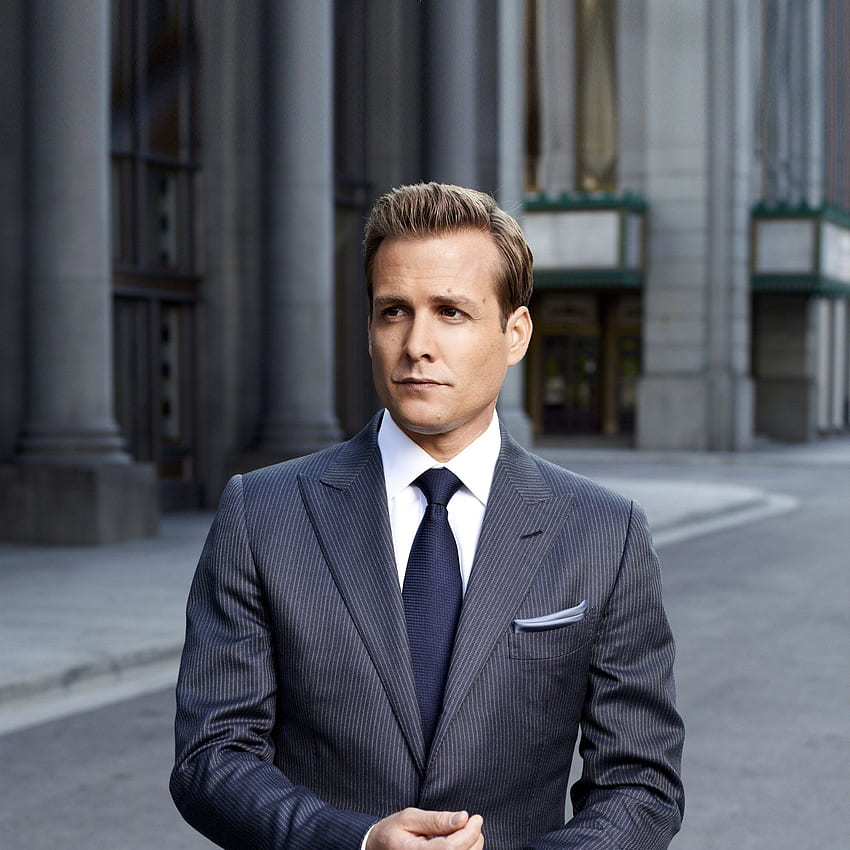
I have very little info. I like snowboards, standup, dogs, no description. I've put software engineer as a job. A couple years ago, I've A/B tested a few photos and with regular photo in a t-shirt I've only got a 2-4 likes per week. With a very similar photo to this one https://e0.pxfuel.com/wallpapers/29/831/desktop-wallpaper-io...
I've got about 60 likes per week. I've thought that's a lot, but my ex told me she's got almost 2000 in a first week.
If your "best foot forward" is a snapshot in a T-shirt, that is understandably going to draw less interest than a professional model shot by a professional photographer with professional hair, makeup, lighting, and expensive clothes.
I've got clothes that probably aren't much cheaper than that, and while I do look my best in them in random photos, it's nothing compared to the response I get when I'm seen wearing them in person. I'm not a model (I don't have the looks), but a man in a good suit is going to provide enough pause to make most women at least consider him. Then it's up to you to be charming.
I should probably add that the picture was average quality - my mate made it using old Samsung. Second one was in a plain black t-shirt, but much better lighting and camera.
I have enough signal to claim that a profesional picture in a suit can boost your matches by 2 orders of magnitude. All my ex-girlfriends said it excites them I'm confided and ambitious - I'm not - but the suit conveys that messages. It's fascinating.
Pics like that really are a “best foot forward” approach. Mediocre photo, casual dress, nothing remarkable about setting? Not going to get a lot of attention. Wearing a wetsuit on the beach with a surfboard or SCUBA gear will also get a lot more attention. Or t-shirt, but while you’re sitting in the pilot’s seat of a private plane (preferably while in the air).
Hospital medical people are pretty wild. Especially with all of the visiting nurses in some places… those folks are usually young, making too much money, and hitting anything that moves.
I recently wondered if AI could reasonably help with the awkwardness of such interactions. Could AIs do the awkward "is this a match" chatting anonymously and asynchronously? At least enough to conclude that a) If matched, these two people will likely reach their first date?
I am married so outside the target customer base, but do you think there is a market opportunity for a dating app with some sort of built in coaching service? Based on complaints I hear it seems like a lot of younger people are so awkward and lacking in social skills that they literally don't know how to act and move the dating process forward. Maybe they need at LLM (or human coach for a premium fee) to prompt them on how to chat without seeming boring/crude/creepy/narcissistic, ask someone to meet in person, and then follow up after a date. Of course some people are just shitty and beyond help, but others just need a nudge in the right direction.
LLMs won't help them any more than "normal" dating/socializing advice did and does - which is not much. In the end, you just gotta socialize, and practise that. Advice is just merely a small nudge, has to be very personalized, and is full of the tiniest subtleties depending on the situation. LLMs would just repeat the generic advice out there which is 95% total crap.


High level though, there's a lot of human behavior which makes dating frustrating with or without apps.
At it's core, even in the best case, dating has A LOT of rejection. Dating apps introduce more opportunity for incremental validation (you got liked!) but also incremental rejection (you got ghosted!) and the sheer number of interactions that lead to nothing is much higher and more quantifiable than IRL (you've all seen the r/tinder sankey diagrams)
Two "solutions" I believe would generally benefit dating
1. Apps are more transparent and equitable with how they expose profiles to other users. Don't bias toward highly liked people to increase perceived "quality" and shadow-hide show profiles that aren't liked often (and then ask them to pay lol). Show people more randomly, to better represent the true cross section of people on the app.
2. Daters set some type of routine that works for them - say "I'll try to go on ~1 date per month". Being intentional about this helps minimize the feeling that each date is so fatalistic / it's the end of the world if the person who seemed awesome when messaging is actually a jerk. It'd be nice if an app facilitated this type of routine and figured out a feedback mechanism to reward users who were generally pleasant / respectful on their dates.