Good article, bad choice of quote to take out of context for a title leading to a load of comments about history and inflation.
That's not at all the point here. It's about persistent, clunky notions about hit-making in the game industry.
>'The problem with the AAA world is not the games; the problem is the structure of assumptions and arbitrary targets that surrounds them.'
>'Gotta tick those boxes. Gotta justify that $60 price-point. And here's the rub: in a digital world, whether AAA or indie, those restrictions should be irrelevant.'
I think that's spot on.
---
Note: The original article/HN title was 'The Astronauts: "In 2014, $60 for a game is a little insane"'. HN has since been updated to something much more descriptive.
People talk down about AAA games, but Skyrim despite being an ok game at release is far better value for money than any Indy game simply from all the free content. Modern graphics engines and real world building take capital and lots of it.
I don't think you can objectively say that. I spent many hundreds of hours in Minecraft, which I paid something life $5 for back in infdev. I also spent less on both Dark Souls games and sure enjoyed them more, but I wouldn't call them AAA (though that may be debatable).
A $60 game to me, commmunicates a rehash of the same ideas we've seen in gaming for decades and/or a sub 10-hour campaign with a bland multiplayer experience.
Minecraft is the outlier, not the rule for indie games and for multiple reasons.
It has a modding community larger than most actual game communities for indies. That's extremely rare in indies (and even AAA's!) to achieve an Elder Scrolls level of modding. Some of the modlaunchers/modapis that I use have more versions and active development than some indie games I play, and that's before we consider the mods themselves (hundreds, almost thousands, available for every MC point release) which are almost all separate projects being actively maintained.
And two, Minecraft is a procedurally generated emergent game, an rarity among all games.
My point is that it's wrong to use Minecraft as a generalization for "indie" game, when it breaks most of the rules/paradigms that most indies follow.
">A $60 game to me, commmunicates a rehash of the same ideas we've seen in gaming for decades and/or a sub 10-hour campaign with a bland multiplayer experience."
It is not the rule, but neither is it an outlier. From the last several years I'd also point to indie games like Terraria, Starbound, Kerbal Space Program, The Binding of Isaac, Torchlight, FTL, and Spelunky.
Eh I don't like the list. IMO only Terraria and Starbound should be in the same category. Throw Cubeworld in there too, even though the dev wasn't capable of handling the demands of modern indie games and the project fell from popularity. There's some space ones like Space Engineers and StarMade.
Games like torchlight are ARPG's played on rails, with zero emergent gameplay. Same with BoI when I played it, it's a rougelike not an emergent game. It wasn't a world to explore but levels to complete in order. KSP can be emergent but requires you to play very specifically to experience the content. FTL is cool but it's linear by design, no exploration, no freedom, no building, no game world destruction etc, just running from and attacking things on a mostly linear random path. But FTL is a game to play and finish, Minecraft is an emergent experience, a world to work on until you abandon your world.
You are right they don't necessarily compare well to Minecraft as systemic games. But they have procedurally generated worlds, and rival the best AAA games in terms of amount of gameplay they offer, and at a fraction of the price. I have over 200 hours into Spelunky, and it still frequently manages to surprise me.
From my perspective the value of games has plummeted because I do not enjoy many of the AAA titles. I dont like looking down the barrel of a gun and shooting humans (or human like formations of pixels).
I would pay $60 upfront and $10 a month to play a RTS like command and conquer or SC2 (not the new new MMO one) that is on a long lived or persistent map w/ set teams (factions).
It has to have no annoying timers, not feel like grinding and cannot charge me incremental dollars to get further in the game "recharge" packs, "advisors" to unlock end game functionality, or premium currency that (in practice) cannot
be obtained otherwise.
Hell, I might just quit my job and learn to build this game.
Yes, that's really the problem with the "$60 games". I often find $10 indie games more enjoyable and more fun to play than those $60 games. The $60 games are keeping costs too high for assets, realistic graphics and other expensive stuff that eat up a lot of a game development's cost, and then there's not as much focus put on the gameplay.
It's like hollywood and their summer tentpole blockbusters. The need to make a huge movie that appeals worldwide discourages studios from straying from the most formulaic pattern available, because anything new is unlikely to have the same kind of broad appeal. Meanwhile, the huge budget (and high expected revenue) of those films makes the upside of making something better (because everyone's going to go see "Godzilla" or "Xmen" anyway.)
But people making lower budget films can take more risks, because if they do come up with a new type of hit they'll see huge returns.
I used to work on a site that covered the movie industries and one of our views was that fixed ticket prices were hurting the movie industry. A dumb, low-risk summer movie makes the same per viewer as an intelligent but niche film. Things would be a lot more interesting if some films targeted at smaller markets could charge $20 or more per ticket; and you might see declining returns on dumb tentpoles if they had to compete on price with each other (e.g. "How to die in the west" for $5 vs "Godzilla" for $15 ... ?)
Speaking of RTS, I really miss the 90's/early-2000's. It was basically like a golden era of RTS's lol. But they don't really work on consoles (needed for AAA these days), and with mid-sized developers vanishing, the RTS genre has kind of slumped. Blizzard can still do it and maybe other companies here and there, but there's very little going on in that genre I feel now. The new freemium C&C will be interesting though for sure.
You'd think tablets/mobile would have an amazing plethora of RTS's, but it kind of seems like the simulation/Facebook games took over (Clash of Clans etc).
You might find folks to help you with that project, but lets work the business mechanics a bit to see if you could get it funded.
$10/month - So how much load does the game put on a server? And what sized server? That's important because if you have a bunch of dedicated AWS instances they can cost you hundreds of thousands of dollars a month, if you put them on demand you will have to figure out the latency issues.
The game is going to change quickly, and as you said its multiplayer and 'persistent maps' so lots of memory? Recovery if you lose a machine in the middle of the game? And a staff of Game Masters who can help angry 11 yr olds trying to get their 'Mom's crappy Dell' to play the game with a decent frame rate.
To put it a different way, I would love to play that game too, and I would pay $10 a month, but could I run it at $10 a month in at least a cash flow break-even mode? Turn based games are easier with their arbitrary latency allowance, RTS gets to be less easy. Especially if one player lagging out freezes the map for everyone? So perhaps the game engine isn't the challenging part, perhaps the backend stack is a harder challenge, or the support infrastructure. I don't know but I wonder about that some times.
Continuous value could be added from a few game mechanics:
1. Games could have a true end. One faction wins, game over, server reset.
2. Different maps. Could be worked in the "game over" scenario or could be running concurrently.
3. Different "ages": the game code could adequately work with past, present and futuristic units, giving users different experiences when they play.
As for AWS costs, I really have no idea the kind of load you would get from that game, but given a C3.xlarge is about $175 a month (or less for reserved), I'd be shocked to hear that you cannot serve at least 175 concurrent users from that server-- giving about $1500 a month profit per server utilized. IMO dev costs, engineer time etc will far far outstrip the infrastructure costs.
Of course you could. Only need 100,000 to be making a million a month and in RTS you use deterministic simulations which require little juice to run. It's completely different to a FPS.
The reason you probably won't get funded is that it's hard to make a fun game which lasts.
The article is good, but I agree that the headline taken out of context is highly misleading.
In the context of the article it makes sense. But out of context it appears to be saying that all games should cost a lot less than $60, which really isn't the point.
In fact to justify a luxury price point you just have to give people something they really want. For example, right now lots of people are paying $150 to get into the beta for Elite: Dangerous, a game that I presume will be substantially cheaper in full release:
If $60 is insane then $150 is totally nutballs, yet that is what a nontrivial slice of people are paying, because this beta is giving them something they want that they can't get any other way.
// and Wing Commander including Armada, Descent, and Freespace (even Star Wars Tie Fighter). The last Space Sim that I found was Strike Suit Zero (http://store.steampowered.com/app/209540/) which is nice, but not as epic as the WC series.
[disclosure: I'm one of the cofounders of DCL, a junior officer in Rangers, and my wife is the primary developer of D1x-retro.]
I also have friends who actively play and mod Freelancer. Their team is at http://ripteam.com/ [Disclosure: I'm a member of team RIP, though only in their Descent 3 division.]
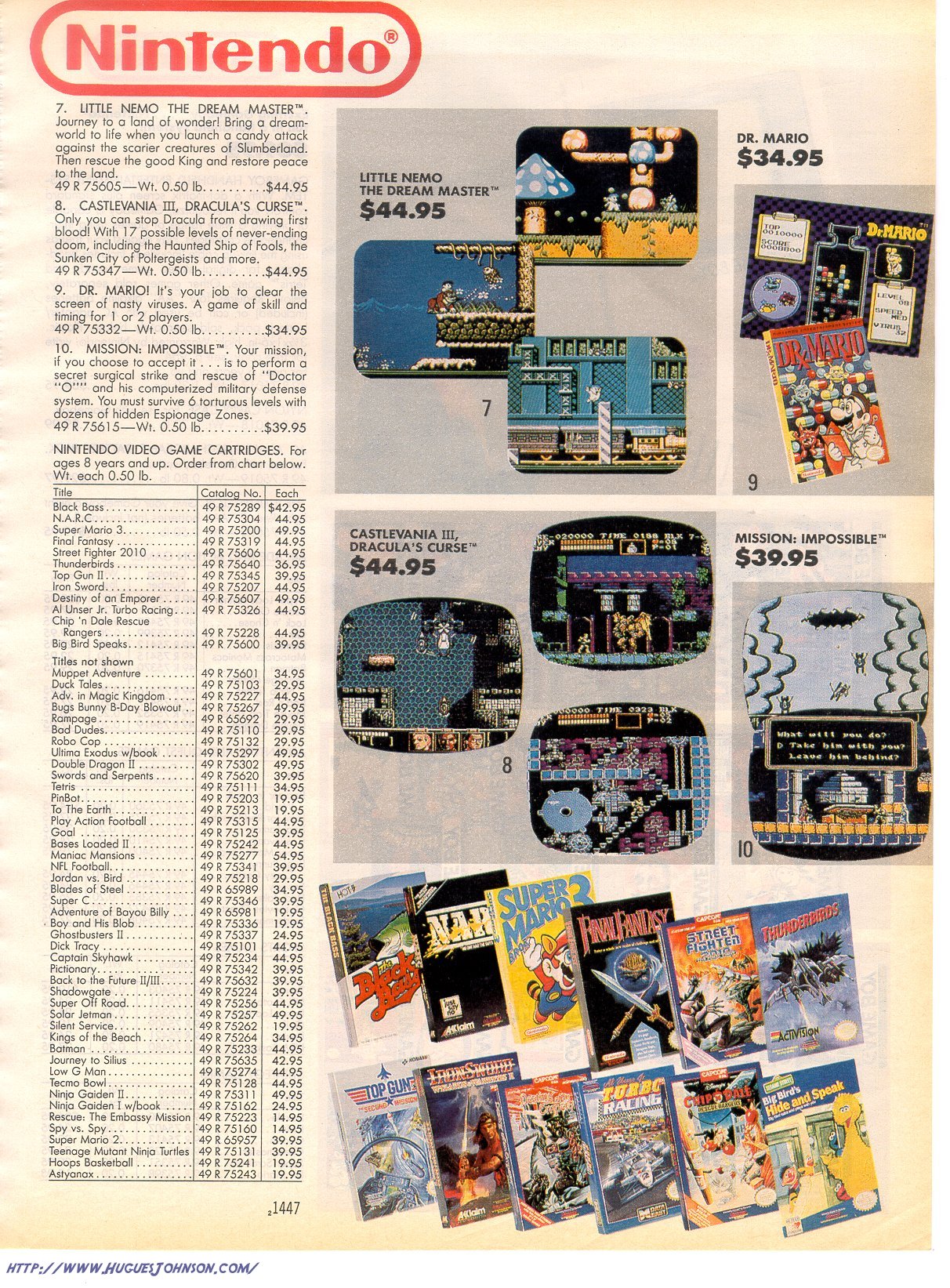
I bought (well my parents bought) FFVI (III in the U.S.) and Secret of Mana for I believe $80 each in 1993-94. That's $127 in today's money. The standard SNES cart was like $50, or $80 in today's money. Games have gotten a lot cheaper even as game budgets have exploded.
Let's remember that those games came in cartridges that were very expensive to manufacture. As games got physically bigger in the SNES, the prices had to go up, just to pay for the hardware.
After the SNES era, we saw how Playstation games were quite a bit cheaper than N64 games, but it had nothing to do with Nintendo wanting to make more money per copy: It had to do with the fact that pressing CDs was cheap as dirt, so the game developer would get as much money, per copy, despite a cheaper price.
With the switch to downloadable, we can save even more than that: The cut from the retailer, the distributor, the box manufacturing... You could cut at least $20 from a game, easily, and still get the publisher the same cut.
If you want to talk about game pricing without dealing with fixed non-development costs, you are comparing apples and oranges, on purpose.
I don't see how manufacturing cost is relevant. If a game is worth $60, you as a consumer don't care how that number gets divvied up amongst the people involved.
Because manufacturing cost and other costs that are a direct per unit cost, as opposed to an over all sunk cost like development, can not be recouped by 'making up for it with volume' as they say.
So a company selling such games will have a higher price floor than games without those costs, and due to that floor may not be able to achieve a profit maximizing profit maximizing point that a game without those costs may be able to achieve (such as selling 100 million games at $1 each). Their entire set of optimal production possibilities would probably be shifted inward.
Not saying a consumer should factor this in, just the game maker has a restriction on the consumers they can target that they would not have without those costs.
I do. Little factors like that may well nudge me one way or the other if it's something that I'm not sure about buying. In economic terms this is somewhat irrational, but then economics' assumption that the consumer is fully aware of his/her utility function/ There are lots of situations where this is not the case - have you never gone into a bookstore without having a clear idea of what you wanted to read?
Yes, I distinctly remember trying to convince my Mom in 1992 that paying $75 for the SNES version of Street Fighter II was worth the money. That was more than 20 years ago and it's still expensive for a game by today's standards.
They may have gotten cheaper if you count it like that, but standard SNES games were not riddled with bugs on release day.
(On PC at least) it's quite common for a AAA game to launch riddled with bugs. Recently it was Watch_Dogs which costs 60€ on Steam, yet it has a lot of performance issues, the publishers client has connectivity problems etc.
And FF III has a lot of weird bugs and glitches as well. I remember about half the games on PC I had in the 80's and 90's I just never could get working on my system or had really weird flaws/quirks (especially things that used a modem).
So the problem is not that $60 is insane for a game, but rather that games these days are crap?
I think it's more that when releasing any given game, you aren't just trying to sell people on "Our game is worth $60." you also have to sell "You are better off spending $60 on our game than on all the other games you can currently buy for $60 or less."
Plus, if games these days are crap, I don't even think there are words to describe the relative awfulness of the games I played in my childhood on the NES.
AAA these days are crap. The majority of them. When you scale the team to a thousand people on 4 continents you are doomed to slide into mediocrity. Too many moving parts, too many demands to satisfy, too much content to be able to polish it effectively, budgets that don't allow innovation and risk taking. You know Assassin's Creed 3 in all of its boring shining. In the indie and mobile there are gems of pure brilliance for fraction of the price.
The only AAA title so far this year that game me good value for money was Reaper of Souls, mostly because devs listened to the public and for a change made the right decisions.
Games these days are insignificant experiences for people who've already played plenty of them. Taking Secret of Mana, that was surely the first game at all of its kind that I'd played. But I'd barely part with any money to buy an RPG today. Games today have a much harder job being original, and tend to be shameless in their lack of originality anyhow.
Standard SNES games didn't do anything relative to todays games. Watch Dogs can be digitally downloaded, played in multi languages, with thousands of players, etc. All things that the SNES while more expensive couldn't do.
If you apply your logic to the automotive world we should just stick with the single barrel carburetor V8 Chevrolets because, otherwise we just end up with BMW's iDrive issues and Prius throttle problems.
Downloading is just a delivery medium, a number of SNES games included more than one language, and you cannot meaningfully play Watch Dogs with thousands of players. (I mean, yes, thousands of people are playing the game simultaneously, but you don't concurrently interact with all of them. Most people are playing their own game, not playing with you. This is the same as SNES games.)
So I'm not sure what distinction you're trying to draw here.
Replace Watch Dogs with any game you wish and the point still remains.
In 1990 you had a game that was 1-2 players, 16 bit, no upgrades/updates in content or playability, no versatility in mediums, limited scope of possible actions within the game itself. In 2014 you can play with a number of players greater than 2, a few more colors, constant updates in content and playability, easy played on any number of platforms and a drastically increased set of possible actions within the game.
You are frustratingly trying to explain that a narrow capability system with great stability is greater than a wide capability system with a decrease in stability.
I will be driving a car that breaks down every couple months and you can continue to ride your skateboard everywhere.
The ability to update a game later means that QA can be less thorough, this makes things cheaper.
Versatility in mediums? Having the choice between download and DVD is much cheaper than any cartridge. Or wait you're talking about platforms? There have always been multiplatform games. And being multiplatform means you expand your audience perhaps 50% while using the same art assets and a lot of the same code; that doesn't make a game's price higher at all. The amount of code you can share keeps rising, too.
So while games are prettier and more complicated, with art and animation getting crazily expensive, talking about convenience features like translations and downloads and patches is a red herring.
Back in the 90s PC games were full of bugs, even AAA games. There were a few exceptions like Doom etc but there were quite a few games I didn't finish because of bugs or corrupted saves. Alone in the dark 2 springs to mind.
Games also often came on multiple CDs , scratch one CD and that's the end of the game.
Don't forget the NEO GEO AES. I wanted the Gold System, MSRP $649.99 and each game was usually around $200 or more.
I have some N64 games that still have the price tag on them from Toys R Us, Sears, or Target. One or two say $89.99 on them. I distinctly remember Street Fighter II: The World Warrior being $75 at Target when it was first released. I had to beg mom like I never begged before to get it.
I'd still pay these prices too, if, and only if, we didn't have the digital DRM, online requirements, bugs, patches, etc. that plague today's games. I realize though that today's games are far more complex probably and that's part of the problem.
I think the title is misleading. It implies $60 is too much for the game. But I took the opposite from the interview.
> "The saying in the industry right now is, 'If you want to sell a game for $60, to the player it has to feel like $200.'"
> "Bulletstorm was a $60 game for $60. And these days $60 for a game sounds basically crazy, when there are literally hundreds of high quality games out there for a much smaller price - even on console. In 2014, $60 for a game is a little insane."
I believe that, economically speaking (and I now almost nothing about this), customers pay the value they percieve the product has. Chmielarz is actually saying that some games have a bigger value that the price they are sold. That they priced the game right but some other games of equal value were sold cheaper.
Or, in other words, people are paying less for games than they should.
I could rant for hours about this, but I'll refrain from it. I just wanted to add this clarification.
You're right, of course. The reason for this is that digital entertainment is long-lived, cheap to produce and practically free to distribute, even moreso than film and literature. As the demand has increased, the supply has exploded, and the market has responded by emphasizing infungible goods, perishable goods and rent-seeking (franchises can be argued as all three).
As supply exceeds demand, prices tend towards manufacturing costs rather than utility provided. Suppliers therefore have to either increase demand or reduce supply (big publishers), or segment the market (small publishers) to maximize profit.
I wonder how much of this sticker-shock is due to psychology and the new market of cheap games? In New York, as far as I know, Broadway theater prices haven't really changed...and you are paying $60 for 2-3 hours of sometimes crummy seating, for an experience that, visually, doesn't compare to a $20 IMAX screen. And yet not many theater goers really cringes about having to pay that fee because there is not a mindset that non-discounted shows should be any cheaper...Hell, I even paid $200 for nearly the worst seats in the house at "Book of Mormon" (back when it was new and really really hot)...of course it helped that BOM was actually worth even the inflated stubhub price...
I remember back when I was in grade school, me and my brother were so excited that we saved up enough to buy Ninja Gaiden...for the NES, not XBOX...and someone then stole the game, which was our first new game in a loooong time (we were not a wealthy family). $50 had a lot more value in the the 1980s...and that game was very primitive by today's standards...so thinking about that stolen NES cartridge makes me laugh with a bit of a wince
You also have to take demographics into consideration. I'd imagine the average gamer has much less spending money to play with than the average Broadway theater patron.
>and that game was very primitive by today's standards
Is the game primitive, or did it look primitive?
I think it's important to make the distinction, because for all the fancy technology that goes into making a AAA shooter look cool, the actual game underneath it all is never terribly sophisticated, and usually even less so than the average FPS from the 90s. Yet people nowadays will claim that something like The Legend of Zelda, where you have a fairly nonlinear adventure through a huge world, is more "primitive" than a modern game where you are basically guided on rails from start to finish.
More important than price is engagement value. If I spend four months with a game, I don't mind the $60 price. Some notable examples for me: Skyrim, GTA-V, and Dark Souls 2. However, I have played games with little or no engagement value. BioShock 2 lasted less than 2 weeks (2 play throughs).
If you want to talk about low value for a high price point, look no further than X:Rebirth. I'm hard pressed to believe the developers didn't know what an absolute mess they were pegging as a top dollar game; more than any question of price I'm wondering what happened to the demo THEN buy procedure that, at least for the games I cared about, seemed to be the norm. Nowadays it's prerendered trailer after prerendered trailer, and you may not have any idea what you're buying until the money has already changed hands.
Most empty action games I play (CoD series, Halo, etc.) I view as interactive blockbusters. So, if it costs $20 for a 2 hour movie, I'm getting my money's worth from a 6 hour game that costs $60.
That said, I actually enjoy good games, so I take my money elsewhere and buy little indie titles for $15-20 intead, and only occasionally buy a AAA theme park.
Unfortunately engagement value is only weakly linked to the price tag. It's expected a AAA title costing $60 to give at least 70 hours of entertainment, but beyond that it varies vastly across titles and players.
Usually, games with multiplayer features last significantly longer than single player games, but there are exceptions like the ones you listed which all have high replay values. Also, genres matter, open-world sandbox games lack the intensity but enjoys longevity, the price could hardly reflect that.
Then there's Minecraft, which keeps its charm after months, for some people even years. And it cost a lot less than the typical AAA titles.
I feel the pricing model in gaming industry is so rigid and backwards (although no so much for casual games, eg. in app purchase and mulitplayer games eg. esport games and MMORPGS). Some movement toward more flexible pricing mechanisms to reflect games' contents will undoubted benefit both game makers and players.
> It's expected a AAA title costing $60 to give at least 70 hours of entertainment
Does that include multiplayer? Personally I'd be surprised to find a majority of AAA single-player games to have that much content, barring the Skyrims and Fallouts. For me, playing the same game past around the 20 hour mark starts to feel like a chore.
Exactly. There is room in the world for big and expansive (and expensive) games like TES, Borderlands, and StarCraft and small one-off (and cheaper) games like all the indies. I would have loved the current game ecosystem when I was growing up 10-15 years ago.
Given that games cost $50 in 2000, they should be costing $68 in 2014 based on inflation alone. So if anything, games are much cheaper today for much more content on a man-hour basis.
I've been saying this for years. We used to pay $30-45 for NES games, $50 for SNES games, and I remember several PC games in the 80's being in the $45-50 range. NeoGeo games were in the hundreds. C64 systems launched at $595, which makes buying a Wii U, Xbox One and PS 4 together look cheap. Maniac Mansion for NES was $54.95 when it launched!!!
Also, the amount of content in most games these days is absolutely huge. Per hour, they are an incredibly cheap form of entertainment.
That seems to be the thesis of Chmielarz's remarks - not that $60 is an insane price to pay for a game, but rather that gamers in 2014 expect so much out of their $60 that it's difficult to deliver without very high volume.
Thus the industry bifurcates into low-cost, quality, smaller-scope games and huge-volume annualized franchise games like CoD and Assassin's Creed, leaving no room for high-quality, mid-scope, "middle-class AAA" games like Bulletstorm.
Eh. In 2000, paying $50 for a game meant much more than 10+ hours of enjoyment (assuming it was a game you liked). For all the polish and technological prowess of modern games, I think most of us consider them a ripoff because of just how little substantial content and replay value there is in many blockbuster games.
$60 is a misnomer. Games don't cost $60, just like movies don't cost $15/viewing. Games cost $60 for those that want to play them at release time. Gamers who can wait, will pay anywhere from $5-$30 for AAA titles. The economics of games have shifted and new categories have opened up (e.g. freemium) but this kind of pricing is quite reasonable, and I don't really see the author's point.
Furthermore, what's the alternative? Mobile, as a platform, has been out in force for a few years now, and though there are a few gems, I've been largely disappointed with it. Mobile gaming hasn't really evolved into producing true, quality AAA titles.
Shit, I got a ton of fun out of Skyrim and paid absolutely $0 for it - it was a pack-in when I bought my 360 late in the console's lifecycle.
Oh wait I paid $7 for it when I decided to port my save files from the 360 to my computer and futz around with mods. Either way. Lots of fun for not very much because I didn't care about playing it when it was the hot new thing.
That's part of the problem. The game publisher gets like $30 of that first sale, which for some game represents 10 users when you include the people who buy it used. So the people that fund the game get ~$30 for the game and Gamestop makes $100+. At some point gamestop needs to fund games to keep their business model afloat.
It's better for the publisher to make an online game that can't be resold.
I was actually thinking digital sales, like steam and the xbox online store etc. This is a good model. It feels like a healthy ecosystem. Released games are at the $60-70 price-point, which decreased as they gradually migrate into the long-tail of sales.
Gamestop lucked out this console generation when Microsoft caved. I sincerely believe they won't be so lucky next gen.
Ironically in the case of Bulletstorm it made a ton of sales primarily because the Xbox 360 version included early access to the Gears of War 3 beta. If it wasn't for the backing of Epic Games and EA, the title would likely have tanked. Personally I'm glad it didn't, I loved the game and always thought it was very underrated.
The Japanese game industry is a great place to look if you want to see companies that understand this principle. Companies like Atlus (now owned by Sega) are almost as big as any other AAA developer or publisher, but they've flourished by producing concentrated, well-polished semi-niche titles, with (by modern standards) fairly small teams and budgets, and doing it consistently. Their games give me a similar feeling to a lot of the games of the 80s and early 90s, which were made by core teams of under a dozen (or even half a dozen) people that were still (unlike modern indie games) supported by large corporations and not just a couple dudes in a basement. It's a "third way" to the game industry (compared to the West, where there seems to be little in-between the indies and the AAAs for whom millions of sales is a failure) that is arguably closer to its roots than either.
cough ahem Uh, everyone, the article's headline is a bit deceptive, at least when out of context. It's not about how games should cost less than $60 to the consumer. It's a good article, I suggest reading it before commenting.
(At the time I wrote this, it was on the old title.)
I think a big challenge for companies making console games is that now when they're competing with the biggest franchises they're not just competing on graphics and gameplay, they're competing on time. The best selling triple A games have deep multiplayer experiences that can suck gamers in for 40 to over 100 hours. When a gamer plays one game for 100 hours instead of 10 games for 10 hours that means they're buying far fewer games.
Then, even if you make a game witha good multiplayer element, you're still struggling against the tide because you need a big enough player population to keep players engaged. It's the network effect working against you. If all of a given gamer's friends are playing Call of Duty they're less likely to invest in the multiplayer of another game. Or when they do go to another MP game and there aren't many players available for matchmaking, they just give up and move on.
The point was well made in this article that what needs to happen is that the game dev industry needs to set more sane goals and sane budgets. There's not a lot of room for games with $30+ million budgets because of the amount of copies that would have to be sold and the fact that gamers only have so much time to play. The only way to get around that would be to significantly expand the player base, which is not happening.
I know this is about price point but I feel that some things are being glossed over a bit - mainly the release date and the competition. At that time Mass Effect 2 was just killing it and all other games were feeling the heat. Other good titles run over at that time included Homefront, Rift, Crysis 2, etc. My memory is a bit vague but I do remember thinking about how terrible they were marketing Bulletstorm.
For a long time I played the Wii and picked up mostly used games.
Recently I got a Playstation 3 and a Vita and joined Playstation Plus where you get a pretty generous set of free games. These are not the latest blockbusters but instead the really great game they are following up.
On the Vita I haven't bought a single physical game, but I do get good sales offers a lot. For instance, I never would have thought of getting Killzone Mercenary for full price but at $20 it is a awesome game and great value. I liked it so much I bought a used copy of the Killzone Trilogy. Later on there was a sale on Persona 4 Golden and that too was excellent value.
My son tried "Need For Speed Most Wanted" on the Vita and we went looking for PS3 NFS games at Gamestop. I hear "Rivals" is a good game but I can buy him two older games that are quite different for a lot less, have a lot of fun, and even have it written up in GameFAQS!
Someone has to buy it at full price for you to get it at a 'used' price. Still, Steam sales and sales in general is how I keep my library full of games I've never played.
If a game sells poorly , there's more pressure to discount it heavily and quickly. But, if you like a game, you should try to buy it at full price as that incentivizes them to make more games "like" it.
Those who are seriously in to multiplayer pay full price. If one waits until the price comes down, multiplayer usually goes in a few directions detracting from it's enjoyment. one, the vast majority of players may have moved on and it's a ghost town. two, everyone is high level and it's hard to find games with other players until you level up enough and leveling up without other players is a grind. Last, it's a skill based game and the majority of players are good and know the levels/races/whatever and you must suffer through many, many losses until your skills and knowledge gets up to speed.
Part of it is that I live in the United States (and not in Austin, TX or Kansas City) so I have to live with either high latency phone company DSL or expensive high latency phone company LTE. This means usually I get fragged as soon as I get in the room and there isn't much I can do with it.
My son, however, likes the multiplayer mode in Need For Speed.
What's annoying me with the article/opinions expressed, is that AAA games should have multiplayer.
I think it's annoying, and I'm always thinking about what would have made it to the game if they didn't spend time and money tacking multiplayer on top.
Obviously I must have a pretty unpopular opinion since all the new games have multiplayer now :(


That's not at all the point here. It's about persistent, clunky notions about hit-making in the game industry.
>'The problem with the AAA world is not the games; the problem is the structure of assumptions and arbitrary targets that surrounds them.'
>'Gotta tick those boxes. Gotta justify that $60 price-point. And here's the rub: in a digital world, whether AAA or indie, those restrictions should be irrelevant.'
I think that's spot on.
---
Note: The original article/HN title was 'The Astronauts: "In 2014, $60 for a game is a little insane"'. HN has since been updated to something much more descriptive.