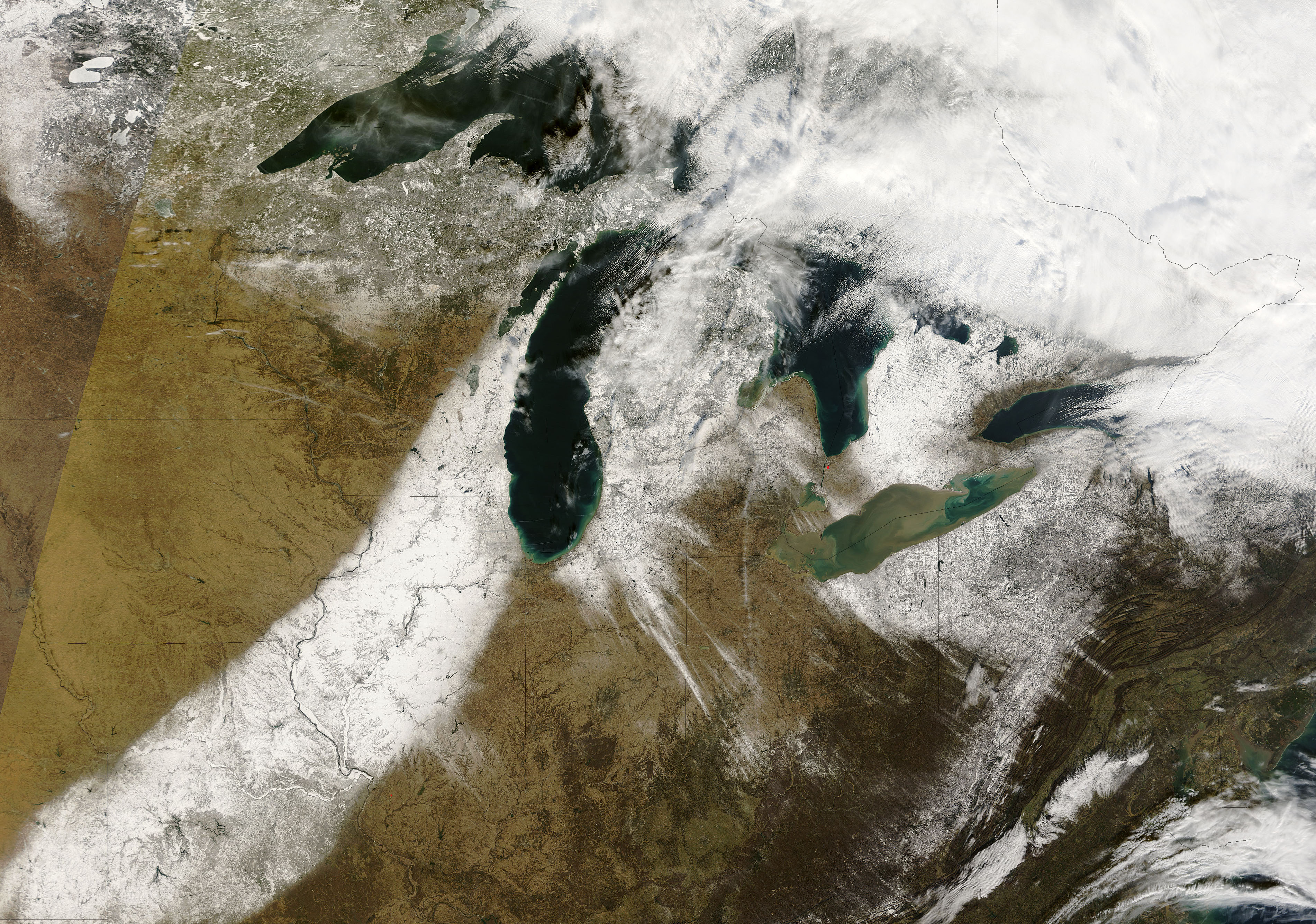
It's less a matter of snow fall and more one of snow accumulation.
For snow to fall you want warmer temperatures (relatively) which allow large amounts of atmospheric moisture. Ideally striking a cold air mass which then causes snow to fall. Most notably in the U.S. in the form of "lake effect snow", where warmer, moister air over the Great Lakes moves (typically NW to SE) over colder land, and dumps often major amounts of precipitation:
For snow to accumulate you need annual temperatures which remain below freezing. In this case, even with modest amounts of annual precipitation you can achieve large ice sheets. The annual precipitation over the Antarctic is quite low: "As strange as it sounds, however, Antarctica is essentially a desert. The average yearly total precipitation is about two inches."
But with an annual average temperature well below freezing, any snow which falls will accumulate.
The daily high temperature in Boston is above freezing every month of the year, and the low from mid March to early December. Odds of Boston being covered in kilometer-thick ice sheets any time in the near future are exceedingly low.