Saved you a click (from the top comment the last time this was posted):
The three points from the article:
> [1] Students sit all day, and sitting is exhausting.
> [2] High School students are sitting passively and listening during approximately 90% of their classes.
> [3] You feel a little bit like a nuisance all day long.
People wonder why high school aged students are unruly, unpleasant, and filled with deep negative emotions (anger, disdain, need-to-rebel). I look at this list (especially [2] and the lack of autonomy that follows) and the reason seems really clear. The basic model seems broken.
And this, in a nutshell, is why my wife and I let our son "online homeschool" when he asked. He's a freshman in highschool and to quote him: "I'm happy to not have to deal with the arbitrary 'lord of the flies' social structure in High School and just be a normal person."
To be honest, I'd say there's actually some value in socializing and the concept of engaging with friends and students on a daily basis - especially outside of class. Aren't you worried that your kid might be missing out on those social interactions? There's a lot more to school life than attending several 90 minute classes in a row and calling it a day.
Everytime someone mentions "homeschool", there are always people asking: but what if the kid is missing out on (insert things). How about another point of view: high school students are (potentially) missing out on the opportunity to not wasting their time, to not being unhappy during the 3 years, to truly reach the potential they can be.
I did not study high school in the US, but had I have the chance to be homeschooled, skip high school and graduate university at 20 without a social life, I'd take it in a heartbeat.
Fair point of view - but you make it seem as if having a bad time in school is a given. I'm from Germany, maybe it's different in US highschools, but back in my time (29 years old now), school life didn't have much in common with your average highschool movie. Bullying was a rare thing, being "different" not that big of a deal and we generally got along rather well. I sure as hell wouldn't have wanted to miss those days.
I had a rather "terrible" public school social experience (like I'm sure many of the people in our field did, unfortunately, if I may be assumptive) which also failed to teach me much of anything of value. Even with all that time spun out for very little, I mark it as less of a waste than kindergarten, elementary, and middle school. Highschool _forces_ you to some extent to play the social game, if only to survive it; in either case you start to understand the true nature of people far more personally. These are all very important insights, IMO, and have served me well post-factum, both in college and in industry. I think the other posts in these comments indicate the "highschool" in both of those scenarios quite well.
(And to address why I think the prior schoolings are so vapid, all of the lockstep progression through "tasks", gameable metrics, and the sheer environment that felt more like a babysitter than a place of learning removed both any natural drive to learn 'interesting' material AND any opportunity for social growth.)
Agreed. I could have (and sometimes did) passed every high school exam with decent grades (~B+) without studying, just by having actually learned the K9 material during the previous years. However, what I got out of the experience was 2 things:
First, I got a better grasp of the breath of human knowledge. It was mostly shallow, mind you, but in my mind it was like a buffet. You sample a little bit here and there, and figure out what you like and what makes you good (or sick).
Second, it is the social interaction thing. I think this is important, but not in the way you imply. What I learned most in high-school in this aspect was:
* How to deal with assholes.
* * What to do when you are forced to be around with assholes.
* * There are many kinds of assholes, and you should not deal with them in the same way (i.e. You can escalate conflict and make the typical bully back off, but this might prove a horrible mistake if attempted on the truly violent psycos).
* * Assholes can climb into positions of authority too (aka asshole teachers). You need to know how to fly under their radar.
* Dealing with Authority.
* * Authorities are not necessarily competent or event interested in fulfilling their nominal roles. You have to educate yourself.
* * Authorities do not care about your problems. You have to figure out and solve them yourself.
* * Authorities are very interesting in maintaining the status quo. You do not go around shaking the waters without reason.
* * * Unless you figure out how to turn status quo disruption into leverage. Then you go for it and turn authorities into unwilling allies in your dealings with assholes.
Not wanting to participate in the aptly compared Lord of the Flies culture of high school is perfectly understandable, though. Moving from high school to a large university sees most all of that culture evaporate, and that lack of a strong social structure favoring the individual can certainly seem a whole lot more normal considering in the real world a person is much more free to leave rigid social structures if they choose.
People wonder why high school aged students are unruly, unpleasant, and filled with deep negative emotions (anger, disdain, need-to-rebel)
They don't wonder it at all; it's not some mystery solved by sitting in a classroom. Adolescents, as a demographic, have always been known to be raging pits of hormones with mood swings and strong passions. Items 1 and 3 are common in the working world, and there's a few jobs out there as a 2 as well (particularly if you focus on the 'lack of autonomy' part), yet we don't see the same kinds of behaviour from those workers.
Adolescence is a time where you're finally becoming an adult, finding where the boundaries are, and putting your own flavour on life. There's a certain amount of experimentation with that, and it's entirely normal to have more unruliness amongst adolescents.
I do sit a lot during my day job, but I can tell you that my sitting conditions are vastly more preferable than those of the typical high school student. I sit in an $800+ chair, with a desk with more space than I need, next to a huge window. I can get up anytime I want and go for a walk or break.
In high school, I sat in chairs that often felt like they were going to fall apart, and my butt was numb or in pain half the time and sometimes my back too. The desk rarely was big enough to accommodate even just a book and a sheet of paper side by side, which was incredibly infuriating to me. Classrooms were typically horrifyingly dreary. And just getting up to stretch or walk around often wasn't an option.
I went to high school in the south (Mississippi) and north (Washington state); I can tell you the latter was much more accommodating to lefties than the former.
> south (Mississippi) and north (Washington state)
The whole concept of "North vs. South" is an anachronism from a time when most of middle-/western-America wasn't part of the picture. Washington state, while north of Mississippi, is part of the Pacific Northwest, not part of the "North." You'd be in for a rough time if you would expect (e.g.) Washington (state), North Dakota, Ohio, and Rhode Island to all have some sort of a normalized "Northern experience."
True. This was in the 80s/90s, maybe its better now, but Mississippi was like a third world country even compared to Tennessee, Kentucky, or some parts of Arkansa, while Washington definitely has better schools than next-door libertarian Idaho.
On another note, no one is left handed in China, so I've had problems in Beijing with the inevitable right handed desk at work.
It's pretty representative of tons of professional workers I know from many industries and extremely typical in technology companies. Most high quality office chairs are pretty expensive; the Aeron chair that is used at so many tech companies is easily in that price range, depending on where you buy it (and in what quantity).
Maybe the only thing that's slightly unusual is the window.
If your company is not providing comfortable working spaces, then there are plenty of competitors which are.
The real point, though, is that high school classrooms are often downright uncomfortable and unaccommodating. I'd rather stand all day than have to sit at those desks again for long periods of time. (And that'd be a lot healthier, too.)
So your rejoinder to my point is "professionals have nice working conditions"? If so, perhaps go visit a call centre. I've worked in one where the floor staff had less than a meter of desk space each. Or clerks in a crappy government department. Or try being a taxi driver. Professionals also have a nice salary that keeps their interest; rarely is it below median wage. These shitty places don't have a lot of acting out, and in my experience, most of those who do act out are either still in adolescence or not long out of it.
Seriously, the reason why the adolescent demographic shows 'anger, disdain, and need-to-rebel' is not going to be solved by giving them aeron chairs and free reign to use the toilet. Crappy chairs in high school don't help, but to imply that they're the cause of adolescent acting out? It makes me wonder how far removed from your own adolescent experience you are, not to mention how many other demographics you're thinking of.
And yet, in a pyramid shaped economic structure, there probably are 100 call center employees for every dotcom programmer, making it extremely representative of "real world office conditions".
I didn't say they were good. I said that they don't cause the problems we associate with adolescents in adult staff: ie: it's not the bloody chairs that cause adolescent acting out. Saying "I don't act out. I have an expensive chair" is not a counterpoint.
You really don't think sticking somebody in an uncomfortable chair for 7-8 hours a day, giving them a desk that's too small to even accommodate the work they're expected to do, telling them to basically shut up all day, and getting on to them for even getting up to take a 3 minute stretch-walk is going to have any impact at all on adolescent behavior?
There are reasons that all these things are done, of course. But pretending that they don't have an impact is just silly. There are huge costs to structuring classrooms like this.
I recently spent all day in such circumstances and it really reminded me of how oppressive the conditions in high school felt. By the end of the seminar, I was just flat-out tired and frustrated and I wasn't listening to anything the speaker was saying. I just wanted out.
Honestly, if decent chairs are too expensive, then we'd be better off throwing the chairs away completely. Have students stand. Just use standing desks that don't have to be shaped so that you can get in or out of the seat easily, thereby sacrificing half of the working surface. This solves the problem of not being able to afford reasonable chairs and it's far healthier for everybody as well.
To quote myself: "Crappy chairs in high school don't help". I'm not 'pretending they don't have an impact'. Mind you, I'm also not pretending that $800+ office chairs are the norm for adult [office] workers, and that it's those chairs that underly the difference between adult and adolescent behaviour.
Are you aware that adolescents who don't go to school - like home-schooled kids, early drop-outs, kids in developing countries with no access to high school - that those adolescents still act out?
Or that adolescents have had a long history of being featured in stories as not behaving 'appropriately' (such as Romeo and Juliet), well before the advent of modern high school?
You're just attacking strawmen. Where did I say the cost of the chair is the determining factor? Where did I say that improving high school conditions would just universally eradicate bad behavior in adolescents? You've made up all this. Go re-read my first post which offended you so and see if you can find any of that in there.
You were upset to some degree that I mentioned an $800 chair and you seemingly won't let go of that even in the face of the broader context of what I clearly meant. All I ever said is that really bad classroom conditions do play a role. You agree with that even, but are still fighting back against an imaginary opponent.
And in my experience, yes, even call centers have more comfortable seats and desks than the typical high school classroom. I certainly didn't always have a full square meter of desk space in high school.
Up-thread there was a comparison from office workers to high school students. Do you really think that the "average office worker" has a chair (in the price-range of an Aeron), an office with a view, and a flexible schedule?
As a paper pusher during college, I had a $400ish chair, a desk with more than enough space to spread out the documents I was working with and the keyboard I was using, and could get up and take a quick break whenever I felt like it, just to stretch my legs, go to the bathroom without asking, grab a quick bit of food, or whatever. I could snack at my desk as I saw fit. While they preferred I not take personal calls at work, it was similarly acceptable to momentarily step out to answer important calls. They were more concerned I moved a bunch of papers than I sat obediently at my desk every second of every day. The only difference is that I wasn't sat next to a window, but across a cubicle farm from one, but I could clearly see out a bank of windows if I lifted my head a bit from my desk.
So yes, I actually think that it's fairly representative of the experience of US office workers when compared to high-schoolers, which are given a much smaller work area in much worse conditions with considerably less freedom to deal with the reality of every day life.
You can replace $800 chair with $200 chair, maybe a cubicle vs. an open office and no windows as a typical medium case insurance company / call center office worker. And if your at a place where the rent is cheap, your cubicle is probably bigger than his desk too.
Still much better than a lot of student classrooms.
this is a bit condescending to teens to write them off as that. Biologically we are not programmed to sit in a classroom, teenage girls are programmed by evolution to do something not too dissimilar to HS (show off their new found sexuality and attract a mate), boys on the other hand are better suited to hitting stuff with sticks. That's exactly the kind of mate you want if you're a teenage girl, someone who can go off and bring nice big juicy protein sources for all those babies that are coming soon enough after flaunting their newly grown hips and breasts that signal sexual maturation.
About the only times that boys get to be what evolution programmed them for is during war time. When boys race their cars and do crazy shit we think of it as delinquent behaviour, but those are the exact same skills that made for the best pilots.
Algebra and Shakespeare didn't feature much in evolution's "plan". Even Shakespeare would rather have been shagging Queen Elizabeth than writing Elizabethan soap operas, but he needed to put food on his table... And let's not forget where Richard Feynman did some of his best work - in a strip club. The modern world sadly is something that will take us a long time to biologically catch up to.
Evolution is not sentient, and doesn't 'design' or 'plan' or 'program'. It's merely the name for a process, like 'the water cycle' or 'the bessemer process'. Evolution can result in things, like any process, but it doesn't design, and it's wrong to characterise it this way.
This being said, if you're looking to the behaviour of primitives, the male-heavy roles were not 'war', but 'hunt'. And no, we're not all driven by sex - some of us are driven heavily, others driven lightly, and others still are asexual. And even those who are heavily driven by sex find time for other things in their life.
Anyway, it's ironic that you ping me for 'writing them off' (I don't see where I do that, seriously), but then turn around and say that they're only doing what 'evolution planned for them' - particularly your stated role for what teenage girls should be doing.
> Evolution is not sentient, and doesn't 'design' or 'plan' or 'program'.
Literally true but the effect is "as though" it designs or plans. See eg "Why evolution is true" or any evolution text book eg "Evolution" by Douglas Futuyma.
As for war versus hunting, the levels of violence in hunter-gatherer societies were astronomical with death rates from violence typically in the 30-50% range. So yes 'war' though not usually on a very large scale.
There were some exceptions. For example San people (formerly known as the Bushmen of the South African desert) had as weapons bows and arrows with slow-acting poisons. A full-on war would result in everyone getting killed (mutually assured destruction). So they tended to avoid doing that.
The effect isn't 'as though' it designs or plans at all, any more than clouds 'plan' to rain on the plains. Evolution is better described as 'survival of the fittest' than 'programmed to -foo-'. Keeping it phrased correctly also helps keep specious Intelligent Design arguments at bay - by talking about 'design' or 'programming', you're implying a sentient cause. And you don't actually need to say things like 'programmed by evolution' anyway. It's better to say 'resulting from evolution' or similar. Makes the same point, but keeps it correctly phrased.
'survival of the fittest' is also misleading because fittest doesn't mean how buff you are, but how successfully one fits into their current environment.
Being ripped doesn't save you from the plague, but it might help later against the zombies.
no, please stop spreading such misleading information, it is not survival of the fittest at all. go read about evolution please. You're right, evolution is not sentient, we're passed that, it is useful to think of it in that light when looking backwards at the process (as we can only really do anyway), we've all read the Blind Watchmaker and don't need this obvious point made over and over when it's been explained why we are doing so.
to be honest I can't follow what you're even trying to say. It's making no sense, and in general just inaccurate.
I'm not talking about individuals, but in general, and in that regard we are all sex driven. Of course evolution isn't sentient, but when you think about it, it's a reasonable way to think about it because the results are the same. It just depends which way you're looking at the process, looking forward, you cannot refer to evolution as a design process, but looking backwards you can. The design we see today is the result of the evolutionary process. It's tiresome having to explain all this.
hunting skills are much the same as war skills and man certainly hunted (I believe that's what I said) but we are also a very violent species.
I think the whole thing can be flipped. Assign the lectures as homework. Do the homework in class. This is exactly how Khan Academy (https://www.khanacademy.org/) is structured.
Technology opens up entirely new teaching methodologies. We should be encouraging mastery of concepts rather then praising good marks on tests. What does getting 80% on a test mean. It means there was 20% you didn't know. I sure hope that 20% wasn't important. When you consider that concepts build upon each other that 20% deficiency compounds pretty quickly. It leads to students thinking they are stupid when maybe there was just a concept early on they struggled with and never mastered that has caused them to stumble from that point forward.
I breezed through High School only to later stumble with high level university Math courses.
Khan Academy has helped me correct this problem and I think it should be integrated into the school system. It demands mastery, it is addictive to use (earn points, achievements) and it standardizes the lecture quality. Being able to watch a great teacher on video and having control of the pace (fast forward, rewind) is a much better use of time then copying notes off a blackboard.
Teachers can have a dashboard view of how all of their students are doing and exactly what concepts each student is struggling with. Smart students can take it as far as they want without being slowed down. Students that are struggling can get help in a much more constructive way (and can stop being convinced they are stupid). Teachers can use class time to actually help the kids learn something. Pair students who excel with the ones that struggle and use them as tutors.
Make the classroom a collaborative experience. That's where I think things need to go.
A great lecturer can make a subject fascinating. A great teacher can organize information in such a way that it fits together logically. But an average teacher does neither of these things. They are giving you material you could learn better and faster by simply reading the book. So far as I could tell, in most of my classes through grade school and high school the only reason for lecturing is that some kids can't or won't read the book, so the teacher needs to say out loud the exact same things that the textbook author said better in print.
When choosing a textbook, you can use one written by one of the best subject-domain teachers in the entire country and that author has an editor whose job is to hone the material to minimize repetition and confusion. What's more, you're not even constrained to currently living textbook author/editor combinations. If the best treatment on the subject was written in 1947, schools can still use that 1947 textbook (or relevant quoted sections from it). But when choosing a teacher you need to find somebody who is alive and teaching today and lives in or is willing to relocate to your neighborhood, which hugely lowers the expected quality. Your math teacher might be quite good compared to most math teachers in your county but probably is not a world-renowned subject expert the way your textbook author is. Your teacher has no editor tightening up the prose. Your teacher's lectures are (compared to the book) rambling, poorly organized and repetitive.
As a result, the best learning strategy to get at least some value out of the time you're forced to spend sitting in a class being talked at by idiots is to read the textbook and ignore lectures - use that time to read books or magazines that you actually enjoy.
During class I hid whatever book I actually wanted to read at the time inside the class book and drowned out the teacher.
If homework was worth >10% of the total grade for the class (so that you couldn't get an A from tests/quizzes alone), I would copy the homework from someone else the period before.
Tests & quizzes are so gameable it's a complete joke. Standardized tests even more so. Without any actual learning from the class itself, you can generally come close to ace'ing most high school tests by being moderately intelligent.
There was one class where I got busted for copying the homework and actually had to apply myself for the rest of the semester to avoid being failed, and this was only because the teacher felt I could rise to my potential if challenged to do so. Thankfully, that was actually one of the more interesting classes I had to attend.
I was warned constantly that college was going to tear me apart if I didn't instill good study habits, but it was mostly more of the same. It actually required even less work because most classes relied more heavily on quiz & test scores than High School did. After my freshman year, I went to class about 2 hours a week (out of ~18) and still kept above a 3.5 GPA.
At the two corporate jobs I've held so far, the same formula still seems to apply where you can avoid applying yourself 98% of the time as long as you can shine during the corporate equivalent of "tests."
To date, it's the hardest thing in the world for me to garner the self control to apply myself to a task if I'm not passionate about it (even forcing myself to pay bills is a challenge), and I think a large part of that is due to the fact that I've been able to coast through every "challenge" quite easily, and everything has seemed to work itself out so far.
This next month I'm actually striking out on my own, thankfully on something I'm passionate about (and have been working on for the past six months on the side), and I'm scared to death I won't be able to actually follow through on the hard work required to be successful as an entrepreneur.
One thing that's missing here is that college really is a "you get out what you get in" situation. As a prof, you see people like this all the time, and hopefully you take the time to try and engage them more, but at the end of the day it isn't your responsibility if they choose to waste the opportunity. The "challenge" in college isn't to make a 4.0 GPA, it's to push yourself to find your own boundaries. Many profs will bend over backwards to help a student who is doing this, and (unlike high school) you can scale up your program to meet and exceed any persons abilities.
Sure, maybe you can skate by and manage a decent GPA, but you aren't doing yourself any favors, your basically telling us that you half assed four years of personal development, and you should know that it is probably obvious to those you've worked with and for. The corporate world has its share of people too, skating just like they were. Typically they are the ones not being considered for rapid advancement and grooming for bigger things.
Of course, you may just be exceptional. And it's not like you can't recover from this with hard work. But consider this as you head out on your own: Sometimes you just get lucky, but it's more likely that you will succeed or fail now largely on the back of hard work (and here's the tricky part) applied to the right places. Consider an alternative universe "you" who grabbed hold of college with both hands and squeezed until it gave up as much useful stuff as it could....
That guy would be eating your lunch right now. Not because of the college, per se, but because of the attitude and experience.
I agree in principle...but in practice I think college is much less of an opportunity to make it what you want it to be than you make it out to be. Perhaps at a graduate level or at a top level school you can learn more if you apply yourself more, but at a regular state school, it was really just an extension of high school. I left with the opinion that liberal arts is just a repeat of everything you were supposed to learn during middle and high school with longer papers and more reading, but really just the same content. The only students who had trouble either 1.) Didn't actually pay attention in middle or high school or 2.) Couldn't read or work fast enough to keep up. The major classes were really pretty easy as well as a computer science major, but that's because I was already a programmer...I suppose that's not the norm. At least towards the end, I put a lot of work into it and read pretty much every page, but didn't get a lot out of it.
Many of the same problems plague colleges that plague high schools though...professors that either don't care or aren't very good at teaching, students that are just there for the degree, books that don't really challenge, and papers that just require following the formula "5 paragraphs, 3 summary sentences". Very little learning took place for me in any of that. The learning I did was from outside of college and was from learning what is considered generally graduate school work for C.S.
I really hope that most people's experiences aren't that way, and that colleges do teach young people. It just wasn't my experience through 3 different colleges. An Oxford style school with mentors and customized content probably would have served me much better than colleges that continue on the same factory system setup that is broken at the lower levels.
The workplace hasn't been difficult for me, but I definitely learn a lot more than I ever did in school. I come across actual challenges that require research and stretch me. Perhaps that's just being a software engineer though.
Well, I think that theoretical guy would just be succeeding in a different industry than the one I happened to succeed in so far.
It's not like I didn't apply myself to anything, just not to schoolwork; except when I found a class interesting. As it turns out, the things I did apply myself to became my career rather than what I had gone to school for.
There's a large difference between "half assed four years of personal development" and simply concentrating more on things that are unrelated to your official studies.
In fact, one of the big reasons I'm striking out on my own (well, as part of a team) now is that I realized my day job was no longer providing me with nearly as much opportunity for personal development as it had during the first few years I worked there.
Edit: And the fact that it's entirely what you make of it isn't what's told to the 18 & 19 year olds heading off to college (at least not in the circle's I was in). What's told to kids is that it's the piece of paper that matters in today's society. Once you get it, you can do anything you want, but make sure you get that piece of paper or all opportunity will shut down for you forever and for always.
What causes these situations is the combined narrative that the piece of paper is what matters alongside the fact that getting that piece of paper is a highly gameable activity.
Ok, "half assed four years..." was making some assumptions I shouldn't have. You could well have been doing other useful things at the time. At ~2hrs a week, you didn't actually find out what you could have done there, so that's a waste, but I understand being afraid to follow that conviction and drop college in favor of whatever you were finding interesting. I'm the last one to support the everyone-must-go-to-college message, but I understand it feeling risky.
Even in your circle though, I'm sure the (unfortunate) message was clear that the piece of paper was table stakes, not success. And every university has some variation of this message, repeatedly.
Table stakes get you a seat at the table, that's all. It's the things that aren't shown on that paper that decide what sort of a player you are. And success, in the end, is most of the time dependent on getting good at doing many of the sort of things you describe as struggling with, not because it's what you want to do, but because it's what is necessary to achieve what you are trying to do.
I can relate to this so much it's not even funny. Don't let your fear of failure get in the way. I currently struggle with the same -- applying myself to a difficult task. Staying focused longer than 10 minutes at a time was difficult -- so difficult I was even suspicious I may of had adult ADHD. Turns out that I don't. What I have is the fear of failing and rejection. The fear of exposing my weaknesses to others, and my coping mechanism is procrastination. My procrastination shields me from the possibility of ever failing because, hey, I never gave it my best shot anyway, right?
Hopefully this wasn't too off base, Just thought I'd share as well because I related to this so much.
> Staying focused longer than 10 minutes at a time was difficult
I found an unexpected solution in working with someone else - that is - not working alone on the project. The more social interaction is involved, the less I am affected by procrastination. You have to make yourself visible and accountable to other people, to feel shame if you slack off, to feel energized when you make progress and then discuss it with them. In other words, you need to have a person witnessing you as you work.
Think back - in school and while being employed you always had a teacher or boss to witness your work, you had colleagues, but when you are alone with a project, then all this social stabilizing effect is gone.
I have severe ADD, and this is very much true for me as well. I look for reasons to "cross-train" with coworkers, having them sit in and comment on whatever I'm working on, because just having someone looking over my shoulder makes it so much easier to resist distraction. I'm hoping to develop more formal pair-programming practices.
I've found that this can be applied to exercise as well. Not necessarily hiring a personal trainer but having someone who counts on you to meet them to go on a jog or meet at the gym and not wanting to let them down helps keep you accountable.
We're social creatures. When we work cooperatively with others we gain an enriched sense of accomplishment, even when know we could have done the work ourselves.
I did my best work when we were on the pairing machines. However, we stopped using them as much because some of our work is so siloed. It was a shame. I am always looking to pair with people, but its very difficult I have found. I tried the online things, like the "#PairWithMe" initiative. No dice so far.
> so difficult I was even suspicious I may of had adult ADHD. Turns out that I don't.
I want to thank you so much for writing this. I feel like I've heard this story a million times, but every single time it ends in the author self-diagnosing AD[H]D. This is literally the very first time I've ever heard of someone suspecting they had it and then ruling it out.
It's a relief to hear that there might be other possible causes of common problems.
I know tons of high school students who attempt the strategies you just described. The great majority of them barely scrape by with Bs and Cs and they do indeed crash and burn in college. You are not even remotely a representative case.
The guy who cruised though high school and even the early years of college only to crash and burn later on is so common it is a cliche. This is part of the price we pay for not challenging our brightest students.
With dumbed down courses these days it may be possible to get a degree without actually learning much. I know I have met a lot of people with IT degrees who could not program the foobar 'challenge' to save their lives.
It actually depends more on what the college is and what the classes. Is it a party school and are the courses in a soft major? Or is it a tier one research university and the courses are weed outs for engineering or medical school?
I was one of those students in high school, and I could see it going either way (thankfully, I took the hard classes and got my act together).
I've experienced similar, to a lesser extent (I never cheated, I just didn't do the homework). I also recently struck out on my own and so far I've been successful. In your case, you may want to just farm out all of the non-passion-inducing work. Accountants, book keepers, virtual assistance, all of these are there to help you succeed.
I'm hiring a CSP to handle all the paperwork/taxes/etc and an assistant to handle organizing my appointments/schedule. I'm hoping that will be sufficient for at least the first six months or so.
What type of corporate jobs have you had? My experience has been quite the opposite...there is a ton of research, knowledge transfer, fire fighting, teamwork, meetings, writing, thinking, etc.
I am definitely not able to coast...although I'm a product manager, basically involved in everything across the company.
As one of my colleagues once told to one of people like you, "I celebrate your existence because it guarantees my job security".
Do yourself a favor and study what you're actually interested in, seriously. Avoid places where you have to or even can coast, because it wastes your time and gets you used to wrong things. Also, such positions are usually dead-ends career-wise.
/* To tell the truth, I spent little time in university classes because they were too slow. I learned the same topics, and some more, myself, and worked a lot with professors on actual research. So I had pretty high [equivalent of] GPA and graduated well without much 'coasting'. */
Standardized tests even more so. Without any actual learning from the class itself, you can generally come close to ace'ing most high school tests by being moderately intelligent.
How do you do this? I mean if a test asks you to solve 3x^2+5+2x=7, how do you solve it without know the quadratic formula or some such?
There is a difference between gaming a test (in the sense of not knowing the material, but still passing) and simply learning the material very rapidly. If you actually know how to do the former, I'd love to hear a concrete explanation of the mechanics of it.
Standardized tests are almost always multiple choice. So, given four (or five) possible answers for x, plug them all in and see which one equals 7. That's arguably faster than using the quadratic formula to solve the problem.
So in the US, math tests are multiple choice AND teachers don't even require the student to write down the process by which they've come to the conclusion?
Both of those seem unusual to me and I don't see how that method could possibly be beneficial in assessing knowledge.
I went to school in the US and never had a multiple choice math test that counted for a grade. We'd also almost always get no credit for failing to show our work on tests or homework.
The Florida standardized math tests and the SAT have fill-in math questions as well as multiple choice. Teachers themselves can choose whether the students must show their work for their tests. In my experience, most only check the answer, but some do check the work.
Even better, put it in standard form with coeff 3, 2 and -2 and just by inspection the answers have gotta be "around" the zero. So you can outright ignore the multiple choice answers like +1000, -1000, one bazillion, ...
Also there will be a lot of "stupid" answers on MC tests like listing three, four, five zeros for a quadratic to see if you understand the basic concept of what you're doing, always read the answers before you start. If you think you're getting five zeros out of a quadratic by some unusual plug and chug of the formula then you've already failed.
Another fun one... the discriminant of this one will be 28, right? Its simpler than solving the whole problem, I did this in my head in a couple seconds even though I'm pretty much asleep. So you'll have a bunch of boring rational number zeros which can't possibly be correct for that discriminant and one whacked out obviously irrational answer and that will be the correct answer.
I've seen variants of tests (maybe SAT Algebra?) where you fill in bubbles to choose a digit. (E.g., in column 1 you fill in a bubble next to []0, []1, []2, ..., []9, column 2 you fill in a bubble for the second digit, etc.) Cumbersome, but it would seem to overcome this.
This also only seems to be an issue for the narrow set of problems where checking the answer is a lot cheaper than solving it. Sounds to me like standardized tests are on the right track, we may just need a few small tweaks.
I don't understand how math answers without workings presented and marked are in any way useful or anywhere near "the right track"?
The first thing any teacher will tell you about UK math tests is write all your workings, because these are marked by a human. So if you're solving some complex statistical thing, and you type 0.535346 instead of 0.545346 so get the wrong answer, but all the steps are right, you get almost all the marks. There are so many places in late high school math where this matters that I can't imagine any use of a test that doesn't have a human look over workings.
Given there's probably only a few questions on each assessed topic, it seems much more important to know whether the student can apply the steps for solving a problem than to just give no marks to someone who makes a minor data entry mistake under exam pressure.
I thought math testing was already pretty bad because revision can be optimised so easily by learning to apply steps (not derive them) and by just doing past papers - but I had no idea anybody actually used an all or nothing approach to assessing these questions.
I don't even understand why you would mark it like that, unless you're only assessing math and other subjects you can feasibly reduce to objective answers. I mean, the point is presumably so a computer can mark it? But if you still bother assessing, say, English or History, presumably you still have to have a human mark them essays?
I don't understand how math answers without workings presented and marked are in any way useful or anywhere near "the right track"?
The goal is to have a score which is a) standardized and objective b) well correlated with mathematical knowledge in the curriculum.
Bsilvereagle identified a flaw with my particular example - students can substitute an easier problem for the real problem. But there are mechanisms to fix that. So given fixes for particular flawed questions like that, it seems like a typical standardized test will provide both (a) and (b).
It would be quite a coincidence if a student could write down the answer to many questions without knowing the intermediate steps, no? (I'm of course assuming security is sufficiently strong, i.e. no cheating.)
>>I mean if a test asks you to solve 3x^2+5+2x=7, how do you solve it without know the quadratic formula or some such?
If you have memorized the general heuristic to solve any particular equation, its basically that is all there is to solving that equation. What is left after that is to practice that algorithm enough number of times until it just comes to you naturally when you see such equation again.
Richard Feynman, noted people find math difficult because all the while they are focusing on just that 'memorizing that algorithm' part. He used to call this as 'for people who don't know what they are doing'.
In school, or even in college, there are only a finite number of such algorithms to rote memorize. If you do, and practice those problem enough number of time, you can essentially score big marks in the exam.
Unfortunately the same is in software interviews these days. The most common algorithm experts you come across these days, are exactly algorithm experts. These are simply people who can recall all the algorithms they have rote memorized earlier. I know of people who spend dedicated time every day memorizing time and space complexity of many commonly asked interview algorithms on flash cards.
Ironically hiring such candidates at times is almost synonymous with hiring bad candidates.
>> how do you solve it without know the quadratic formula or some such?
This is actually possible, if you've been taught to solve problems instead of being taught to apply magic formulas. Of course, one is rarely taught math this way now.
Let me try. Suppose you have 3x^2+5+2x=7. Now, you have no idea how to solve for x. But what you could solve? If you had something like (ax+b)^2 = c, then probably this would be easy for you to solve, right (of course, provided c is not negative, won't get into that now)? We just take square root of both parts, and then it's a simple linear equation. Now, we can notice we can also get rid of a, for simplicity, by dividing both parts by a and get something like (x+b)^2 = c. Which in our example should represent 3x^2+5+2x=7 or alternatively x^2 + 2/3x - 2/3 = 0. But how we find proper b and c?
So, is there a way to make that equation look like that with suitable values? Let's look at (x+b)^2 = x^2 + 2bx + b^2. We have 2bx = 2/3x which means b = 1/3. So we have (x+1/3)^2 on one side, and on the other side we have to get 2/3 and also additional 1/9 which is the b^2, meaning c would be 7/9. So, x + 1/3 is sqrt(7/9) with + or - sign (since square on non-zero root always has 2 options), and x would be that minus 1/3.
As you can see, we used no special magic formula - only thing we needed is how to write (x+b)^2, which is easy to see just by multiplying (x+b)*(x+b) by hand.
You can do cubic equations this way too, but it is considerably more laborious. Look up Cardano and Vieta methods. Doable but I wouldn't enjoy doing it by hand too much.
tl;dr; If you are really good at math, but didn't follow the math curriculum closely, you can probably rederive most of it. I'm not sure this counts as "gaming" a test. I'd describe it as "understanding the material really well and getting a high score."
Remember, the goal of an exam is to measure if you have the knowledge. Whether you got the knowledge by studying hard in a traditional classroom setting as scheduled by a syllabus is irrelevant.
It doesn't really qualify as "really good" (I'm not - I know people who are and they are way beyond what I can do, I mean light years beyond). It's just a set of basic tools about how to approach problems. Like when programming you don't have to have library function for everything - you learn to write your own functions, etc. You don't have to be able to write your own OS (though some people can) but going beyond clicking buttons in Word is not a bad idea.
Of course, I do not see it as "gaming" - I see it as learning the right way. IMHO, all learning should start with that and formula should come after - as a shortcut, which you can take but you know if needed you could do it from scratch because you understand where it comes from.
I had this problem at high school, and it's taken me years to undo the expectation that everything should be easy. It happened to my brother too, except if something's too challenging for him, he just quits.
If you're gung-ho enough, expose yourself to the fire so you build up resistance. It's going to be rough once you start hitting walls.
Grit and determination is important for long-term success when your brilliance and creativity is less than world-class, and it requires honing and practice to build. Skating through school and gaming the system ends up short-circuiting that process. Hence, lazy smart guys.
I had a very similar experience and I have found that being independent/freelance is the way to go because your actual performance and productivity actually matter for once. You can still get by and even be very successful without applying yourself but if you want to do that, you need to find work that allows for such. That is a skill in itself and may itself require actual effort.
Similar situation and ventured on my own. Crashed and burned since the incentives are very much different. Lots of other issues too but best of luck. It's a wakeup call for sure and completely for the best.
There may be similar ways to game thing as an entrepreneur. There seems to be a lot of activity out there reminiscent of copying the other kids homework.
Interesting analysis, but as a current student I would find the things she wanted to change to be annoying in high school. It probably depends a lot on the student, but I really just wanted to listen to the teacher teach. My best teachers really knew their stuff and assigned interesting work for homework.
The ones that tried to get us to hop around were not appreciated. I'm there because I want to learn, not do jumping jacks.
Seriously, it was so annoying when the teacher would have us get up and "move", for instance to demonstrate a math concept. She doesn't seem to get it that physically commanding students like that is demeaning, treating them like a dog.
"I was struck by this takeaway [#2] in particular because it made me realize how little autonomy students have, how little of their learning they are directing or choosing."
What strikes me about this is how none of the solutions the author offers fix this problem. In fact, it's unfixable with our current concept of what a school is. No amount of monkeying with how classes are taught will change the fact that the kids are there because they have to be there, not because they chose to be there.
It would be nice to see more attention on unschooling-style homeschooling and also on non-coercive schools where children are free to play and explore for themselves, so-called "democratic free schools" like Sudbury Valley School in MA.
https://www.youtube.com/watch?v=awOAmTaZ4XI
I've been thinking more like that lately, and came here to say pretty much that. School is an inherently coercive institution. I think it's designed to snuff out independence and creativity and churn out people who blindly follow orders, who will be good corporate peons, Army privates, or something similar for their masters, and outcomes other than that are achieved more in spite of it than because of any attempts at positive change in the system.
I don't know exactly what removing it would look like. I tend to think it needs to be less of a top-down organized system. More people doing whatever feels interesting to them at the time and getting as much help and support at it as we can practically provide, whether that's building cars, writing computer programs, reading about history, playing sports, or just screwing around for a while. I think that people inherently want to learn and do stuff, and you'll get much better results just letting them go do what they want to as great of an extent as possible than by ordering them around and restricting their options as much as possible.
Why is this so surprising? Wasn't every teacher a high school student at some point? Is the experience so traumatic that they completely forget what the schedule was like once they become teachers themselves?
I'm in my 4th year of teaching, yet I graduated from high school 10 years ago. How well do you remember your daily schedule from 10 years ago? Do you remember what made you restless? What made you tired? What made you stop paying attention? And were you so meta cognizant that you recognized the source of that restlessness?
Doubt it.
It is rare for teachers to have the time to truly consider the student's perspective in their class, and the context of how that fits into the entire school day experience.
EDIT: I should note that I read this article a few days ago. The entire staff at my school held a discussion on how to make school better in that regard. This blog post alone will at minimum affect the 1400 students at our school, but given the number of places I've seen it shared, it will have a much larger impact than that. Always a good reminder.
I can appreciate the fresh aspect of it, but I do definitely recall the stark contrast between 12th grade and my first semester at the local community college. Just the fact that you didn't always have to be in a class room -- you could schedule an hour break between classes, and go hang out in the cafeteria or library to catch up on some work. Or go outside between classes and walk around (in high school it was like being in a day prison, not allowed to leave the building). Oh, and you didn't need to get anyone's permission to use the washroom. Not to mention that there was no forced group activities such as dodge ball (any athletics was strictly up to you signing up for it).
For me, the biggest change between high school and college was honestly just being able to wake up at 8 AM instead of 6-something. Suddenly my recurring insomnia, and my tendency to just flat-out fall asleep during afternoon classes, were mostly gone.
I don't disagree. In fact, I agree completely with the author of the linked post. The symptoms he writes about are very real, and very damaging.
I just think it's hard to expect every teacher (even fresh ones, 4-6 years out of high school themselves), to remember these specific causes of what made high school a subpar learning environment.
She's accustomed to being an adult, and being treated with respect. High school students aren't accorded much respect, from needing permission to use the restroom right on through the existence of bullying and other 'hijinks' which would be viewed as prosecutable criminal offenses in any non-pathological office workplace.
I have three kids: a five year old, a three year old, and an infant. They all cry when they get tired. I did too, when I was their age. Now, as an adult, I know that they're only crying because they're tired. But they, as children, aren't self-aware enough to realize that. Neither was I, when I was their age.
When I was in high school, I was restless, but I didn't realize it was because I needed some physical activity. I was bored, but I didn't realize that sitting passively for 90% of the day wasn't "normal". I felt like a nuisance, but I didn't realize that I shouldn't.
Every teacher was a high school student at some point, but the memory they formed were not formed with the self-awareness they possess as adults. Re-experiencing the same conditions a decade or two later is enlightening precisely because you understand yourself so much better.
You don't need trauma to just forget things. You've experienced many hours of continuous stimulation every day for years, and most of that is naturally thrown away, including the mental impact of experiences that seem at the time like they will always stay with you.
Plus, it seems reasonable that doing the same tasks from the point of view of actually being the teacher, now having a lot more life experience and other things to think about, should make previously normal parts of the experience stand out. If you think this should be unnecessary, and 'obvious' just from thinking back to your own school days, I think you are either highly abnormal or simply wrong.
::I think you are either highly abnormal or simply wrong.
Is it really that abnormal to remember the stresses of a bad situation, especially when you transitioned to a better one? I can see people not thinking anything is wrong while they are going through the experience, but I really can't find anyone that I know, at least, who thinks high school was a worthwhile experience. And who hasn't had that feeling of relief at the beginning of summer break, and that sick feeling in the pit of their stomach when summer was over? Or recognized immediately on the first day of college that a student actually can be treated like a person, not an inmate?
I recall sitting in a college class that had a recent high school graduate in it, and he raised his hand asking if he could use the washroom. The instructor just looked at him and told him that he is in the real world now, and doesn't need to get permission for a normal bodily function.
Of course, you might be right, in that I probably spend too much time reflecting on something from 25 years ago. It is the main reason that I don't put up with BS from people I work with -- had enough of that from school teachers. But it is possible that it affected me bad enough that I could probably use some counseling about it, if it is considered normal to just forget about what high school (and junior high, to an extent) was like.
I think that rather one gets used to that stuff in school--by high school you've had eight or nine years of it. But coming back to it as an adult, it can be a surprise. As a parent, I did find some of the offspring's work odd. Some was the stuff we did (maybe resenting, but taking for granted), some involved new trends.
Seems like many people who become teachers enjoyed school. Also, when she was a teenager she may have blamed herself and her peers for restlessness and other problems rather than blaming the system.
tldr the person got old, and realized they were old.
In HS I had English, Physics (very fun and active), Drafting (elective), Algebra (1or2), spanish 1. Caring a full backpack was worse for me. I remember it tearing apart on top from the weight
I think to some extent she underestimated the differences in her own body after 15 years. I recall being bored and fidgety in school, but I was never so physically drained just from sitting in the way that she describes. That's probably something an increasingly inflexible adult experiences more than a child does.
Maybe you just become more accustomed to long periods of sitting and listening for hours while you're frequently having to. First day back after a break always seemed more exhausting possibly because you weren't having to do it all week.
I personally was constantly fiddling with something, be it drilling holes in erasers or doodling or whatever, but I was always doing something. Had I not been able to do something (allowed... now that's a different story ;)) I would never have passed a single subject! Just tiny tasks to keep myself busy while I was listening. Even to this day, a couple of decades later, I can't really concentrate on one task.
That said, people learn differently. Some people can just put their mind to it and grind through material, others, like me, aren't quite so fortunate. If only there was a way to gauge the learning method most suitable for a child, and put that child in an appropriate class... I believe things in education would look a lot brighter.
It's really funny, later in life, to be in a meeting full of people who have similar coping mechanisms. A dozen grown-ass adults spinning pens, playing with badges, anything but sitting still.
I remember being tired every day in Jr. High and High School, struggling to not fall asleep. Once the school day was over, I'd suddenly get a huge boost of energy.
I always hated that. Sitting in a warm room, a lecturer drones on in a pleasant monotone, I fight to keep my eyelids open but they just feel so heavy, I need to sleep... Then, class is over, step outside, BAM. Fresh and awake. WTF, body, why couldn't you be this alert when it mattered?
I recently spent a year as a full-time language student in a college (in China, so more like US high school in many ways) after teaching English for 10 yrs, and also unexpectedly discovered point no. 1, i.e. how tiring it is to sit down all day, and almost never did so as a teacher. Even after 1 year I was still often yawning after 2 or 3 hrs of near continuous sitting, and always got up to walk around outside for 5 or 15 minutes during breaks. Most other students were much younger, usually 20-ish, and often stayed sitting in class during breaks. I don't know how they do it, but maybe it's just their age, or maybe they haven't done a job where they're on their feet all day for 10 yrs.
The headline must have changed since the link was posted to HN- it's currently "Teacher spends two days as a student and is shocked at what she learns", which is about as matter-of-fact and non-clickbaity as it gets. It's just a literal description of the article contents. What was it originally that was so sensationalistic?
It's the word shocked. You're not wrong, there is nothing wrong with the post title in itself. But the internet has caused a lot of people to falsely attribute some form of grandeur to innocuous content in order to get you to click on the article. It's the crossroads of intellectualism with capitalism. The point is we're all striving for the most clicks because clicks translate to dollars, either directly in the form of advertising, or a personal brand. But on HN, it's considered gauche to acquire links in this nature. You should be getting the clicks because the content is worthy, not the title.
I do wish that my school had had the block scheduling this school seems to have. We had 8 periods in a day (school was a half period) and they were all ~50 minutes. This is barely enough time to accomplish anything, and days where the classes were shorter (teachers' meetings) then each class was worthless.
The problem is that it's near impossible for a student to pay attention during longer classes. I think you're trying to measure accomplishing things by the amount of material you work through during a given class, instead of by the amount of information the student actually absorbs during that time.
That seemed to be one of the main points in the article, just getting through material was a terrible way to look at classroom learning.
>The problem is that it's near impossible for a student to pay attention during longer classes.
Impossible seems a bit harsh. The situation could certainly be improved, and it might certainly be improved if the instructor has more time to engage in students as individuals, which can't be done much in a short period system (this was my main complaint with HS and why I never took a huge lecture course). I do agree that the current method of engagement, overall, is not ideal.
The problem is not the engagement as much as trying to sit and pay attention for 90 minutes. You will way better results by having a 5-15 minute break every 45 minutes.
Lectures of any sort longer than an hour are pretty painful. Science lab classes shorter than an hour are likewise pretty painful. Designing a schedule that can accommodate both is not easy and people typically don't even try (though they should!).
This is one of the reasons I like my school. Points 1 and 3 in the article are pretty close to nonexistent.
[1]: We operate on a 4x4 schedule (4 classes August - December, 4 classes January - June). So we sit in one class for 90 minutes, a good time to focus on a task and get it done.
[2]: Issue 2 is a problem with every school I've been in and seen. I can't think of any school that has managed time in a way that will cover curriculum and capture student's attention.
[3]: I'm lucky that my school is only 3 years old, extremely new for my district. I can easily form personal connections with my teachers and administration. My teachers know my extracurriculars and understand if I didn't complete my homework that day (I turn it in later, but I do have to finish it).
Overall, this article was a reflective experience and made me even more thankful of my school.
My experience with a 4x4 schedule was that I would lose focus about 15 to 20 minutes in, start trying to work whatever homework the teacher had assigned, realize I didn't understand it, refocus on the lecture, and realize that I had missed half of it. The only reason I graduated High School on time was because one of my math teachers gave out D's. This was really only an issue in Math classes, where we were expected to passively absorb information. The classes I did really well in were Honors English, AP English, and History/Social Studies courses where the teachers asked us to think about what they were telling us.
Looking back, the only reason that I was able to go to college, get a degree, and end up working in Engineering is that my parents were willing to support me monetarily while I replaced my shitty High School record with a good Community College record.
I recall one of my best math class grades was pre-cal my Junior year. I would normally fall into the trap you did, and completely failed Algebra 2 but somehow didn't swing back on it..
Anyway, the teacher, the girls soccer couch, actually gave us a good amount of time after the lecturing to work on our homework. And often he would start the class about 10-15 minutes late and I knew it was to give us a chance to polish off the homework. I recall being in a class of mostly Seniors, and a group of us always ended up working together.. The baseball teams pitcher, who was actually quite sharp, his friend, and a girl I don't quite remember that well. The teacher encouraged us to move our desks together as needed. This arrangement worked out fantastically. We would often divide and conquer the homework, or race through the problems individually. Both had advantages; somebody(me or the pitcher) would almost always have a particular problem figured out if the rest were stuck. It created this interaction that was part competitive and part cooperative/supportive. I suspect we all had fun, learned a lot, and did great on the tests and grades(I did).
I had three main takeaways from this:
1.)The lectures were focused, dense, and did not take up the entire 90 minutes.
2.)We had plenty of time to practice the problems and help each other/get help during the period
3.)I now just recall that this was our lunch period as well, which we took the 2nd to last slot, so we had a break before the last bit of the period. This was quite nice.
As an aside, three of the coaches I had for academic classes are probably in my top 5 list. Their classes were very engaging.. I find this interesting.
Your math teacher sounds like a bad teacher. My calc teacher is very much the same, but he heavily focuses on being able to teach us how to learn on our own (i.e. looking up new concepts on khanacademy/other resources, looking for practical applications to theorems we learn, etc.)
I found her description of being tired in an icky way very good. I remember feeling exactly that way at the end of the day in high school.
I also agree with her suggestions. Short bursts of information, plenty of chances for physical motion, participation rather than passive listening. I believe all of this would have greatly improved what I got out of high school.
Oh, and also cutting out a significant portion of the bullshit and indoctrination which was passed off as eduction but which was not. That's a different topic though I guess.
When I was a student teacher I asked permission to do this and, without exception, was met with baffled looks. What specifically are you hoping find out? I was asked. Why would you want to that? my mentor teacher wanted to know. It's not that anyone had objections, they just couldn't fathom why an adult would want to do it.
My biggest take away was how out of control and unpleasant lunch period was. Also, how much the kids got yelled at during class transitions.
They are 30 minutes longer than my high school classes were, but we had 7+ different classes per day. I'm pretty sure our day lasted till 3:30 or 4pm. We had 5 minutes to get to the next class, and on a big campus, that could result in some pretty good cardio workouts. So maybe inadvertently we were getting those stretches recommended by the author.
(Note: we have a block schedule; not all classes meet each day)
The reality is that in a typical 1-hour class with 5 minute breaks between classes on a big campus you lose the first 5 minutes of class to people arriving late and the last 5 minutes to everyone packing up their books so they can rush our the door. So you get 50-minute classes, or about 5/6 of your nominal instruction time. And if you have to do a lab or something, you either have to do double-period classes or stick to labs that can be effectively completed in 40-45 minutes (because you need time to set up and clean up too).
So enter block scheduling: the idea is to lengthen the classes to 90 minutes or so and alternate days when they meet. You still lose 10 minutes of each class, but that's 8/9 of your nominal instruction time, not 5/6. And teachers get a bit more flexibility in terms of what things can be done with a class. The drawback is that if you lecture for the full 80 minutes, the outcome is typically not so great: it takes an exceptional lecturer, or an exceptional student, or for some sorts of material both, to pull off someone still being able to absorb information in a lecture that's longer than an hour.
I found this interesting. I worked for a few years teaching technical subjects to mid-career adults and ended up adopting an educational theory not too dissimilar to the author, but for mostly different reasons.
I remember high school very well, and it was a pretty torturous experience. If you could design an educational program that was almost guaranteed not to be a conducive learning environment with poor mastery outcomes, the public k-12 system in the U.S. would probably be it. Even worse, when they measure educational outcomes, the place systems like South Korea's at the top, a system that's absolutely optimized and excels at the lowest possible form of learning, rote memorization.
In the previous discussion, I point out that I believe students need to "complete the circuit", go from input/reception to output/production to say they've learned a topic. In today's school environment, if this happens at all, it happens by accident:
1) The teacher gives a lecture, information is shoved in
2) The students do homework and tests, okay, the students "produce" what they've learned, usually a brain dump of what they've memorized, but let's be honest, not a demonstration of learning or mastery.
3) The homework and tests get an impersonal grade, the "feedback loop" necessary to complete the circuit. But if the student got it wrong? Too bad, the lesson is moving on anyways. There's no time really spent in education to have the student go back with this new course correction and see if they got it now. And out of schedule help in most schools is woeful.
Because of this systematic failure, by the time many students are involved in "advanced" topics in high school, their foundational knowledge is so flimsy and filled with holes that new topics are like turning a strong fan on in a room with a house of cards. Yet the professional educational establishment seems unable to figure this out and correct it.
Keep in mind, without even a template of any kind, we're all fluently able to learn a complex language, a mass of complex social rules so complex that libraries are full of books describing them and how to sanitarily complete a digestion cycle on our own (everybody poops) before we even show up for day 1 of 1st grade. Keep in mind that we spent the first two of those 6-7 years not even being able to talk - so we did all that in about the same time it takes to get through high school. If we learned as much in our 4 years of high school, we'd all be leaving with the equivalent of advanced degrees in physics.
Children can learn at phenomenal paces, yet it takes years before students accumulate any worthwhile new skills in this kind of environment -- skills that should take them weeks or months.
As an example, people routinely study a foreign language for 3+ years and come out with zero ability to actually use the language. While a couple of months in the same country will produce a person with real useful usable skills in the language.
If you believed that school was there to teach people this is shocking. But it all makes sense on the basis that school is there to keep young people out of the way.
While true, this ignores the actual number of hours spent using the language. 3 years of at most 2h a week lessons, that's around 300 hours. Deal with the language 15 hours a day and in 20 days you reach the same 300 hours.
Of course actual involvment in the lessons, motivation, effectiveness of being immerged also make going to a speaking country a better deal.
About the social role of school, one of the badic goals is to format young people into "standard" citizens who can obey rules and bear authority. Sitting for long hours listening to some adult is part of the process.
I don't think of myself as being good at learning foreign languages, and I don't know enough of any of them to have any useful conversation, but I kinda disagree that just being in a country that speaks that language will get you started.
I've spent weeks in Mexico, and my Spanish abilities are barely adequate to order a meal in a restaurant most of the time. I didn't feel like I gained anything at that point by being surrounded by Spanish speech and media.
I think that the first hard part or learning a new language is just bridging that gap of memorizing thousands of new words and their meanings. If you haven't done that, any amount of exposure to the language is mostly meaningless gibberish that you don't know where to start at deciphering. I don't see how that helps you learn it.
For what it's worth, I learned a lot more from using Duolingo for a while than from immersion. I figure a better way to really get started would be to work at that, and translate newspaper articles by hand for a few hours a day, not that I've tried it.
>my Spanish abilities are barely adequate to order a meal in a restaurant most of the time //
So you didn't eat out, how did you manage getting your shopping in, buying bus tickets and such without learning any of the local language, just hoped people spoke English?
Yeah, it could be kind of annoying in a way. I could catch maybe 5-10% of a Spanish conversation. Like I was saying in the original, I think I'd need to boost my vocabulary by at least 10x before listening to spoken Spanish would have much benefit.
Trying to listen actually kinda reminds me of learning Vim, where you spend what feels like forever at first totally lost, and doing the simplest edit seems to require so much mental effort that you can't actually think about the code you're working on.
There are two problems here: approach and motivation. Most of the schools, as you correctly notice, are places where undersocialized youngsters are warehoused so that they don't get in trouble and don't cause trouble themselves. For the worst of them, they are just a temporary place to store them until they are grown up enough to put them in prison. OTOH, on the student level many of them lack any motivation to learn, and create an atmosphere in the class which is not conductive to learning. But schools can be different - I've witnessed it myself, within the same school even, where one teacher can take you in a year to knowledge which will still serve you decades after, and another may tread water for years and produce a negative outcome.
For example, I had very good teachers in math and physics (and I am still benefitting from their work) and spectacularly bad teachers in English (not my native language) - which I remedied by outside study both in the family and commercially and consistently was way ahead of school requirement, the school was pretty much useless for me, and in literature, which had profound negative effect on my appreciation of literature that took me quite some time to overcome.
I don't know if there is an approach that allows to solve it in a systemic way. I think if somebody invents it, he or she would be a benefactor of humanity on the level of Fleming, Pasteur and Borlaug.
Hear, hear! I use Duolingo for new languages and their system of spaced repetition is so vastly better than Ms. McGee's that I wouldn't even think to enroll a student in a class anymore. I was using Duolingo to study Italian before a trip to Milan and even then using the app was nearly pointless. All it did was get me started in the grammar and some basic words, but actually being surrounded by Italian, seeing it on every billboard, every menu, every streetcorner, having almost no-one speak to you in English (if requested), THAT got me good in Italian. If we simply wanted to take a random assortment of children, fly them to #Country# and let them live there, that would get the language and culture into you.
Reading this back, actually, that is what I think I'll do with my kids then. We have family all over the world, speaking a variety of languages, we should just have the kids go there for a month each summer. In the end, it'll be less expensive, maybe....
Maybe schools should use a system like Spaced Repetition (or Anki) that integrates in an intelligent way the repetition of old material with learning new things. It works very well for foreign languages, but could be adapted to other subjects.
There is too much blowback and ignorance in regards to how memory and thinking works. We have been horribly brainwashed into thinking that all memorization is bad and that focusing on "critical thinking skills" is superior. In order to think any thought, memory is required. Rather than memorizing useless facts, schools should use spaced repetition from the first grade onwards to ensure long term retention over important ideas and concepts. This needs to be implemented on every level of our education system. Far too much ignorance and bureaucracy stands in the way of this ever happening, but at least those tools are in the hands of any autodidact that wants to use it.
Anki is great for memorizing vocabulary words and other facts, things that you can google. It doesn't help with critical thinking, creativity, or social-leadership skills.
It seems tough to have a class that can shovel the information into you and have you actually practice it right then and there, but in the classes I've had where we've done that... holy crap, what a difference it makes. If every class was like that, I'd absolutely love it.
I think a system with short lectures followed by quality labs/recitations would be a huge improvement. In my experience, labs are often rushed and confusing, and recitations are taught by crappy TAs and are truly horrendous. Improve that part of the course and you'll make a big difference.
One of the best high school teachers I had used to teach Dutch to adult immigrants before becoming a Dutch high school teacher. She treated her previous students with respect and expected them to do the same. She taught us with the same approach and had thoughtful discussions with us, and it made a world of difference.
This is reminiscent of a book called My Freshman Year, by a college professor who actually enrolled as a student at the same school. She writes about numerous discoveries that she found shocking, despite having taught at the same school for many years. It's a great read.
This is actually terrible. Kids peak at all different times and mostly learn from peers who are more accomplished than they are. And to avoid the cache-22, the most advanced kids of course might learn from a teacher or kid of a more advanced year.
iirc either McDonalds or BK has rumors of an internal rule that even the uppermost layers of management have to spend at least one full day each year standing behind the cash register and selling burgers.
It would be nice if a) this was more than an urban legend and b) if more companies embraced variations of this rule.
I believe it to be a good way to catch problems (e.g. unrealistic expectations of workers) before shit hits the fan like in a Mannheim (Germany) hospital where medical instruments were not disinfected properly due to too few workers and time - and reports to upper levels vanished in bureaucracy.
It would be easier for teachers to notice these things if their schedules included some time for reflection and preparation instead of packing as many classes as possible into an eight hour day.
This article actually made me angry, to the point of pacing and muttering, that these points are not commonly understood and addressed.
How can these be new concepts? how can this be news? Students are bored because they have no autonomy, are force to sit and be talked down to all day, are not empowered to be involved in their own learning. WOW! AMAZING!
How out of touch do educators have to be for this to be considered innovative thinking?
I lived in a rural area during this time in my life. School started at 7:30am, the school bus picked us up at 6:30am, which meant I had to be up at 5:30-6:00 to eat breakfast, shower and get ready for the day.
This meant a 9:30 bed-time.
This also meant that I got home by about 3:30-4:00 depending on traffic. An hour for dinner gave me 4.5 hours to study. Let's be honest, I also took an hour for free-time otherwise I wouldn't have any. So 3.5 hours to study every day.
In college at least, when you plan your schedule, you should plan 2-3 hours of study-time per week for every hour of class time. As you can see I really only had time to study 1 subject a day, maybe 2 if I didn't give myself free time by that standard.
The district my kids are in is even earlier, we're at a very high latitude, and on paper the reasoning is so that even in the darkest days of mid December the kindergartners travel time at the start and end of the day will be in sunlight.
The same bus that carries a high school kid between 6am and 7am carries a grade school kid from 8am to 9am (roughly). Its actually even more complicated because we stagger grade school, middle school, and high school, so there's a middle school run from 7am to 8am in between. Rather than three times as many buses and drivers each only working two hours a day, they all put in pretty much an 8 hour working day split shifts.
Unofficially its all about high school sports and away games travel time, also somewhat optimistically getting in a practice or maybe even a game/meet before a "normal-ish" dinner time.
The question stands, She isn't experiencing what a student experiences she is experiencing what a student experiences when there is another adult in the room. Two very different things.
No but the problem with the schools isn't that kids don't get to play basketball a minute before class.
My history teacher sent me to the office for saying columbus was a slaver, my computer teacher wrote me up for proving he wrote insecure code (sql injection), my science teacher chewed me out for stating that every legitimate scientific body acknowledges evolution is a fact. The problem is the education system isn't about education it's about control.


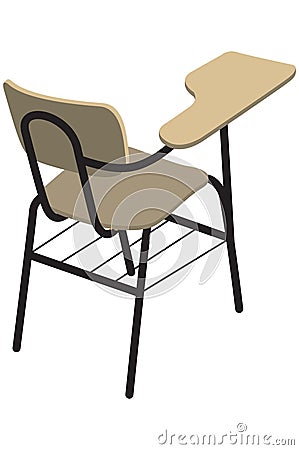
The three points from the article:
> [1] Students sit all day, and sitting is exhausting.
> [2] High School students are sitting passively and listening during approximately 90% of their classes.
> [3] You feel a little bit like a nuisance all day long.
People wonder why high school aged students are unruly, unpleasant, and filled with deep negative emotions (anger, disdain, need-to-rebel). I look at this list (especially [2] and the lack of autonomy that follows) and the reason seems really clear. The basic model seems broken.
Previous discussion here: https://news.ycombinator.com/item?id=8442067
Original source of the story here: http://grantwiggins.wordpress.com/2014/10/10/a-veteran-teach...