As someone who came from the SGI O2/Octane era when high-end workstations were compact, distinctive, and sexy, I’ve never really understood the allure of the Mac Pro, with the exception of the 2013 Mac Pro tube, which I owned (small footprint, quiet, and powerful).
For me, aesthetics and size are important. That workstation on your desk should justify its presence, not just exist as some hulking box.
When Apple released the Mac Studio, it made perfect sense from a form-factor point-of-view. The internal expansion slots in the M2 Mac Pro didn't make any sense. It was like a bag of potato chips - mostly air. And far too big and ugly to be part of my work area! I'm surprised that Apple didn't discontinue it sooner.
As much as I love alluring designs such as the NeXT Cube (which I have), the Power Mac G4 Cube (which I wish I had), and the 2013 Mac Pro (which I also have), sometimes a person needs a big, hulking box of computational power with room for internal expansion, and from the first Quadra tower in the early 1990s until the 2012 Mac Pro was discontinued, and again from 2019 until today, Apple delivered this.
Even so, the ARM Mac Pro felt more like a halo car rather than a workhorse. The ARM Mac Pro may have been more compelling had it supported GPUs. Without this support, the price premium of the Mac Pro over the Mac Studio was too great to justify purchasing the Pro for many people, unless they absolutely needed internal expansion.
I’d love a user-upgradable Mac like my 2013 Mac Pro, but it’s clear that Apple has long moved on with its ARM Macs. I’ve moved on to the PC ecosystem. On one hand ARM Macs are quite powerful and energy-efficient, but on the other hand they’re very expensive for non-base RAM and storage configurations, though with today’s crazy prices for DDR5 RAM and NVMe SSDs, Apple’s prices for upgrades don’t look that bad by comparison.
As someone who worked on the M2 Mac Pro and has a real soft spot for it, I get it. It’s horrendously expensive and doesn’t offer much benefit over a Mac Studio and a thunderbolt pci chassis. My personal dream is that vms would support pci pass through and so you can just spin up a Linux vm and let it drive the gpus. But at that point, why are you buying a Mac?
Yes- that's what I referring to. Basically the virtualization framework supporting handing a specific PCIe device off to a VM. Link management is still handled by macOS but the actual PCIe packets are handled by the VM (which could be windows or linux, which would have a GPU driver)
They're trying to make it very clear they're not speaking on behalf of Apple Inc, despite having worked (or working) there.
Big companies like to give employees some minimal "media training", which mostly amounts to "do not speak for the company, do not say anything that might even slightly sound like you're speaking for the company".
Hardware generally isn't allowed outside of lockdowns. There are things you can do with dev fused hardware to remotely control it which make life easier. But most devs just come into the office since being there in person is nicer.
I'm surprised they even tried selling an Apple Silicon Mac Pro - I expected that product to die the moment they announced the transition. Everything that makes Apple Silicon great also makes it garbage for high-performance workstations.
The allure of the Mac Pro is that you could dodge the Apple Tax by loading it up with RAM and compute accelerators Apple couldn't mark up. Well, Apple Silicon works against all of that. The hardware fabric and PCIe controller specifically prohibit mapping PCIe device memory as memory[0], which means no GPU driver ever will work with it. Not even in Asahi Linux. And the RAM is soldered in for performance. An Ultra class chip has like 16 memory channels, which even in a 1-DIMM per channel routing would have trace lengths long enough to bottleneck operating frequency.
The only thing the socketed RAM Mac Pros could legitimately do that wasn't a way to circumvent Apple's pricing structure was take terabytes of memory - something that requires special memory types that Apple's memory controller IP likely does not support. Intel put in the engineering for it in Xeon and Apple got it for free before jumping ship.
Even then, all of this has gone completely backwards. Commodity DRAM is insanely expensive now and Apple's royalty-bearing RAM prices are actually reasonable in comparison. So there's no benefit to modularity anymore. Actually, it's a detriment, because price-discovery-enforcing scalpers can rip RAM out of perfectly working computers and resell the RAM. It's way harder to scalp RAM that's soldered on the board.
> An Ultra class chip has like 16 memory channels, which even in a 1-DIMM per channel routing would have trace lengths long enough to bottleneck operating frequency.
CAMM fixes this, right?
> Actually, it's a detriment, because price-discovery-enforcing scalpers can rip RAM out of perfectly working computers and resell the RAM. It's way harder to scalp RAM that's soldered on the board.
Scalping isn't a thing unless you were selling below the market price to begin with which, even with the higher prices, Apple isn't doing and would have no real reason to do.
Notice that in real life it only really happens with concert tickets and that's because of scam sandwich that is Ticketmaster.
Ticketmaster is a reputation management company. Their true purpose is to take the reputation hit for charging market value for limited availability event tickets. Artists do not want to take this reputation hit themselves because it impacts their brand too much.
Which is why it's quite appropriate for their reputation to be absolute shit and for members of the public to make sure the stink spreads to anyone who chooses to do business with them as a disincentive to doing it.
Ticketmaster is owned by Live Nation which owns at least 338 major concert venues [1]. Their market power in the venue business allows them to force artists to use Ticketmaster for ticket sales. The artists don't mind though, as they can tell their fans they have no other choice but to use Ticketmaster. Ticketmaster absorbs all of the reputational stink and the artists likely earn more money than they otherwise would have if they were forced to sell tickets at the low prices their fans want.
Except that they don't absorb all of the reputational stink because "Live Nation owns at least 338 major concert venues" is clearly a BS excuse when there are more than 10,000 concert venues in the US, and then the fans still blame the artists for using Ticketmaster.
It's dumb from a practical perspective. But I keep hoping they'll vertically compress their trashcan design so it looks like their Cupertino headquarters.
I also have a standing desk, and my desktop computer is still on the floor. That way I can just route all the cables to the back and then under the desk to my PC. Looks very clean as well.
But I think the Mac Pro was never really trying to be on your desk in the first place. For a lot of its target users, it lived under the desk or in a rack, and the size wasn't about aesthetics so much as airflow, expansion, and serviceability
i wish i'd never traded in my 2016 mac pro (aluminum polished tube) as it was beefy, it was silent, clever thermo design (like the powerpc cube 20 years earlier or so), and i'd upgraded the living crap out of it for cheap.


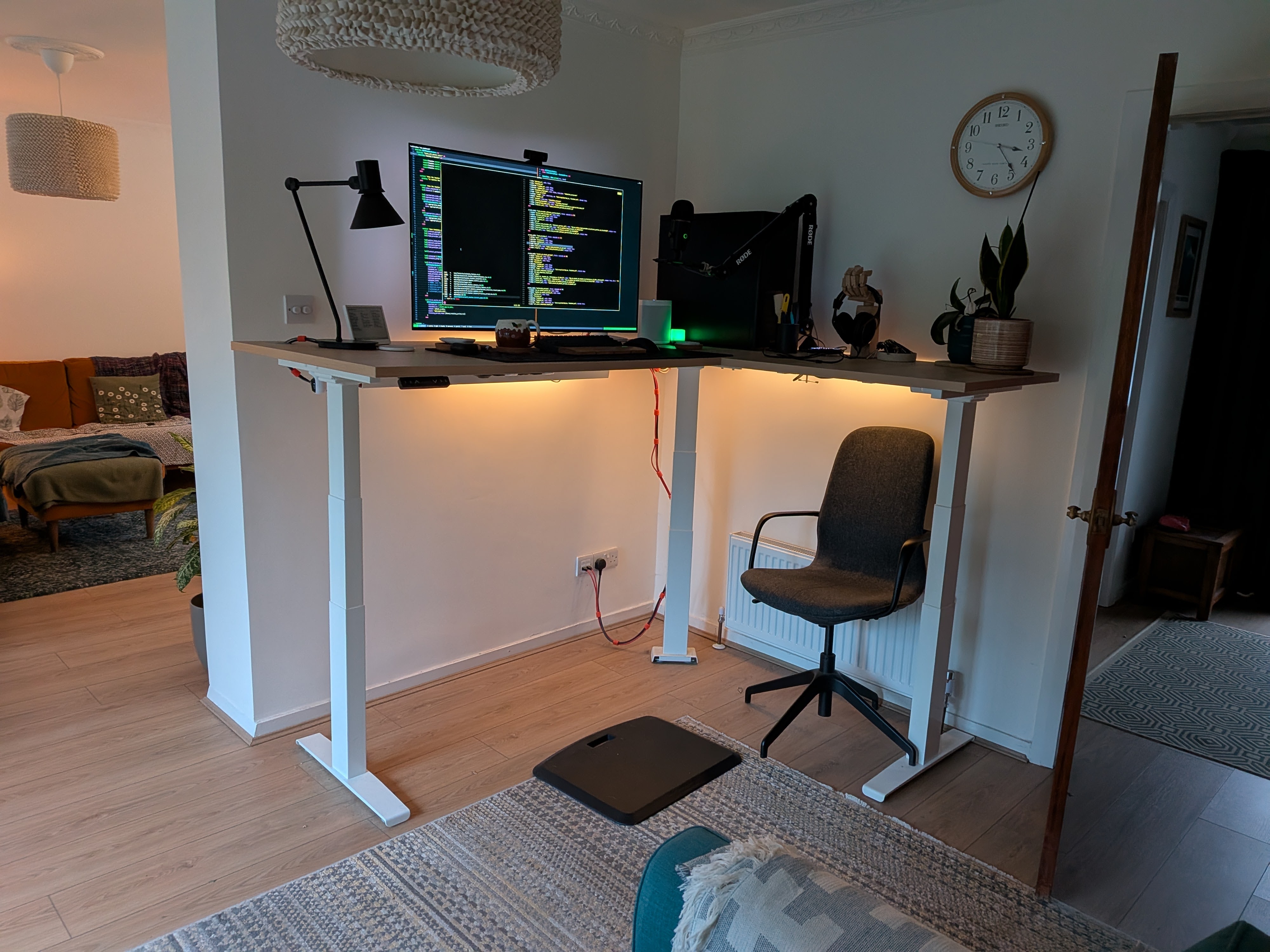
For me, aesthetics and size are important. That workstation on your desk should justify its presence, not just exist as some hulking box.
When Apple released the Mac Studio, it made perfect sense from a form-factor point-of-view. The internal expansion slots in the M2 Mac Pro didn't make any sense. It was like a bag of potato chips - mostly air. And far too big and ugly to be part of my work area! I'm surprised that Apple didn't discontinue it sooner.