I don't trust this for one bit. For the owners there is quite the incentive to label this as the work of a genius. But in reality, this is just pretty complex for a 12 year-old to produce by yourself.
Edit: as others have pointed out, and if I were to actually read the article carefully before commenting, the composition is not attributed to Michelangelo. So it is just a copy. Quite the achievement, but possible for a twelve-year old.
I once confronted a gallery owner who was proudly presenting a newly discovered work by Mondriaan [1]. An original black and white photo in an old newspaper [2] was shown as proof of authenticity. But many details such as the creases in fabric differ in the original and the new painting. No OpenCV required to see that. Mind you, the picture is already framed with Mondriaan standing next to it. Unlikely that he's still working on it.
Instead of responding, the gallery owner simply turned away.
Just to engage with your “12 year old to produce by yourself” , here are some examples of art made by Picasso in his early teens to mid teens.
It’s absolutely possible to be that good. Especially in the middle ages / early renaissance with the work you did for guilds and working for masters as an apprentice.
Some people are just prodigies - very, very few, but it's a real phenomenon. Even with early craft training, which people don't get today, exceptional talent still cuts through.
This is why the common "There's no such thing as talent, it's just hard work" line can't possibly be true. It's soothing to believe that you too could be a genius if only you put the hours in, but it just doesn't work like that.
Ability is set by a talent ceiling, which is on a bell curve. "Most people don't reach their ceiling" and "There are extreme outliers of native ability" can both be true at the same time.
- Some use extreme outliers to justify their own failure to get close to their ceiling. "I can't be Einstein, why should I try?"
- Some (parents, coaches, motivational speakers) also use extreme outliers to claim there are no limits/ceilings for others. "If you can dream it you can do it!" (but somehow it doesn't seem to apply to them)
The best essay I read last year described how there are two types of artists: those born with great talent, that usually create their masterpieces in their early 20s and coast for the rest of their life, and those that take most of their adulthood before finding their voice, peaking late in their 40s and 50s. The author used Picasso as an example of the former, and Kurt Vonnegut for the latter.
Gave me the greatest impulse to explore my creative drive like nothing else before, after spending my 20s lost in a daze. I know you’re joking, but if you aren’t, do not lose hope yet.
More broadly, we're doing people a disservice today by treating them as juveniles until they graduate college. When someone's that good, we shouldn't waste four years of his life in school he doesn't need, but instead let him be productive immediately out of college.
Christ a-fucking mighty, in some states, the law says that Michelangelo, had he been alive today,would have had to sit on a booster seat at the age at which he made this painting. Absurd.
One of my more heretical beliefs is that tech companies should do more hiring of high brilliant people right out of high school.
> When someone's that good, we shouldn't waste four years of his life in school he doesn't need, but instead let him be productive
Or perhaps we need more challenging schools. I'd hate to harvest before cultivation has a chance to grow without the constraints of organizational biases
- Marquis de Lafayette was only 19 when he helped the US win independence.
- Alexander began conquering when he was 20, smashed Persia at 25, and "wept, for there were no more worlds to conquer" at 30.
- Pascal and Galois did revolutionary math before 20.
- Mary Shelly wrote Frankenstein at 18!
We need more rigorous secondary education and a pathway that lets people with rocket-ship trajectories skip useless tertiary education. I am sick and tired coddling mediocre people by pretending geniuses don't exist. If I ran things, I'd set up magnet schools nation-wide.
Mozart wrote his first symphony at eight, his first opera at 14. There are some people who have something extra that most people can barely comprehend.
It's controversial in education schools to "track" students, i.e. sort them into ability-categories and tailor each category's experience to its needs. For example, activist groups in New York City have been trying to kill gifted-and-talented schools and programs (e.g. Bronx Science high school) for years. It's painful to watch.
People can and do create rigorous private schools, but they're not accessible to the masses and often embody the same anti-talent mentality public ones do.
Nothing, based on the existence of thousands of exactly such schools within the US alone.
On the other hand: a disagreement about the actual definition of gifted, based on the existence of thousands of such schools in the US alone. "Gifted" in some jurisdictions simply means something anodyne like "top 10%" which obviously doesn't get close to creating an actually targeted school environment for your Mozarts.
>One of my more heretical beliefs is that tech companies should do more hiring of high brilliant people right out of high school.
I have more. Most average people need less education. No point in putting them through 15+ years of 'education'. They can start working at least part time by the time they are 12 or so. This way they also grow up psychologically very soon.
But he had not been an apprentice before making this, he started the apprenticeship that year, and this is supposed to be the first thing he ever painted.
> Michelangelo's biographers—Giorgio Vasari (1511–1574) and Ascanio Condivi (1525–1574)—tell us that, aside from some drawings, his first work was a painted copy after a well-known engraving by Martin Schongauer (1448–1491) showing Saint Anthony tormented by demons. Made about 1487–88 under the guidance of his friend and fellow pupil Francesco Granacci, Michelangelo's painting was much admired; it was even said to have incited Ghirlandaio's envy.
[https://www.metmuseum.org/exhibitions/listings/2009/michelan...]
I can’t respond much too this being Michelangelo’ painting, but if he was an apprentice under his fellow pupil it’s possible that he just did minor things or filled in. It was how you learned. You did final retouching and such.
The part with being an apprentice in a masters workshop is of great importance in regard to that time imho. Neuroplasticity at that age is insane and if you spent all your time on just that, especially if predisposed to a certain way of processing visuals and image, that is a totally different circumstance then a 12 to 13 year old that is also capable of writing, maths, history, different languages, and all the other things we do in the way generalised education at that age is laid out in our modern world.
Then that's very believable (well, depending on what age he started).
As a comparison, Mozart's compositions when he was 15 years old was unbelievable, unless you put in context he was already composing music at 5 years old
This one is a copy (Bargue plate − a famous set of plates designed to train students efficiently). And to be fair, it's not _that_ great of a copy.
The paintings really aren't impressive either: compare them to student works from e.g. the Angel Academy[0] (yes, they are older than 15). Incidentally, they also use Bargue plates a little to train students, and are far, far more demanding with themselves than Picasso in terms of accuracy and cleanliness.
Picasso wasn't terrible − he's definitely better than a non-painter − but he's genuinely far from having ever reached the level of his peers.
It's like comparing a food truck with historical French cooks.
They are 18+ at Angel Academy, right? I would say they are a lot older than 11, 14, and 15. One year I think is a lot of development in the teens. Doesn't seem a fair comparison
I don't have an opinion on whether the attribution is correct, but I don't think the complexity of the composition is a strong argument against it considering the artist was copying the engraving by Schongauer exactly (maybe even painting on top of it?) which takes a lot of the complexity out of it.
You might be right but the gallery owner has probably learnt that disputing the authenticity of his pieces with walk in punters rarely leads to a fruitful discussion
It seems unbelievable that this is the first time the child ever picked up a paintbrush and applied paint to a surface.
It's probably more like: this is the first "published" final painting he ever did, after doing hundreds of other practice paintings/sketches that don't "count"
Every single one of those demons is also a chimera and so if you look, there’s a half elephant, half fish in the top left corner. If you look in the top right, there’s like a half fish half horse. So if you look at the gaping demon butthole again, and look at the rest of the features around the gaping opening. You’ll realize that it is the lower half of the creature and it is a sea creature you can see there’s like a coral tentacles thing behind it. It’s just a fish‘s mouth. That does also happen to function as the demon‘s butthole, apparently
Something about this painting is reminiscent of the way I(and I'm sure many others) would paint my comic-book heroes at around that age, albeit perhaps lacking some of Michelangelo's talents and skills.
This painting makes me feel like the bible was pretty much a comic book to the adolescent Michelangelo, and I like that thought. He later went on to paint the ceiling of a huge temple dedicated to his equivalent of Charles Xavier.
He hated painting the Sistine Chapel ceiling because he saw himself primarily as a sculptor. You can read some of the graphic language he used to describe his perspective of having to do it. Also, he was constantly in pain and would go temporarily blind from holding his head in certain positions for hours at a time.
This painting is a masterstudy of Schongauer's engraving "Saint Anthony Tormented by Demons". If you look closely you can see how its a study but not a 1:1 copy, but aside from some color and light all of this "style" was michaelangelo copying Schongauer as he learned.
my father made reading The Agony and The Ecstasy a requirement to go to Italy when I was a sophomore in high school. It's a thick tome, but a great read if you're a curious kid.
as the others said Michelangelo hated doing that painting. He's a very tragic, albeit heroic to me, man. I'd recommend that book if you're at all fascinated by him.
There were two St. Anthony's. The one in this painting is the first St. Anthony. He was celebrated by Athanasius in a widely read biography and was famous for fighting off demons in the Egyptian desert. He lived from ~251-356 AD. (But yes, a post-Biblical figure.)
It seems like we do know the year it was painted fairly reliably, but we don't know that it was Michelangelo specifically that painted it (the article exudes more confidence that I would give based on the inherent uncertainty of these identifications).
The article/video only points to this being proven by research done by Giorgio Bonsanti. If you're curious, you'll have to investigate that angle.
It is frustrating that the article is so coy about the evidence around the premise of the article! But, this website and the youtube video this article is based around both lean more towards pop than investigative.
Why? There were other talented people who produced masterful works at an early age. From the same time as this there's a Dürer self-portrait, also aged 12-13:
I came here to agree with you but then I had the good sense to read the original page which is at the Met (https://www.metmuseum.org/exhibitions/listings/2009/michelan...), and has a lot of background on this painting, including that it WAS actually painted from an existing image (https://en.wikipedia.org/wiki/The_Temptation_of_St_Anthony_(... - worth a look to compare), so my primary skepticism "how could a kid even come up with that" makes a lot more sense that he had an existing image he was copying.
"As a young boy, Michelangelo was sent to the city of Florence to study grammar under the Humanist Francesco da Urbino.[13][16][d] Michelangelo showed no interest in his schooling, preferring to copy paintings from churches and seek the company of other painters."
It seems like this painting would be from his time at Urbino's grammar school. His first apprenticeship started when he was 13. You might expect a renaissance artist to do a lot of work on their master's paintings (detail work, etc.) before ever putting their own name to a canvas, but this is, apparently, Michelangelo doing his own thing before ever being apprenticed.
So, while he likely did paint things before this that didn't survive, it's pretty amazing that this is the work of a kid who has yet to be apprenticed and is just pursuing it on his own with nothing more than the advice of people he was hanging out with.
Do they mean that he grabbed a paintbrush one day and painted this out of the blue? Or does "painting" here mean "specifically painted on a canvas" or whatever?
>... it became "the only painting by Michelangelo located anywhere in the Americas, and also just one of four easel paintings attributed to him throughout his entire career," during most of which he disparaged oil painting itself.
It is less obvious than you think. Obvious to you and me, perhaps. But a significant portion of the population genuinely believes that you are born with the talent to just do this like it's nothing, or born with the talent to be a piano prodigy, etc, and as a result never bother to apply themselves, even though with the wealth of educational resources available today anyone[1] could make paintings of this quality if they were to put in the effort to learn. I think that article headlines that reinforce this popular misconception are rather damaging.
[1] Given the level of pedantry on this site, I suppose I should say "almost anyone", since a small minority of people with severe disabilities may not be able to.
Cmon, even famous virtuosos still have to go through a period of being children without fine motor control.
I won’t argue about the obviousness as that’s a tarpit of comparing each others social circles, but let say it’s reasonable to assuming this wasn’t his first ever brush stroke to touch canvas.
My observation has nothing to do with my social circle, but rather the general population. Coming back to this thread hours later, the top comment thread has people blathering on all about how talent is genetic and citing works like these as an example, despite the fact that Michelangelo is in fact a very proof of the opposite, of nurture over nature, given that he was training from a young age. The majority of people genuinely believe certain people are born with the skill to move a paintbrash well and that it's somehow not the result of years of disciplined training.
HN specifically selects for a population that leans towards a belief that hard work creates results, and yet even here you can find this nonsensical ideology of genetic paintbrush skill as a mainstream part of the discourse. It is 10x worse in the average population, and this garbage, factually incorrect framing of "first painting" rather than "earliest known published" for something that Michalangelo had spent years of his childhood practicing for contributes to that misunderstanding of the world. Rather than making misleading claims and leaving the reader to "assume the obvious", why not just correctly state the obvious in the first place?
You could find, for example, a journal entry attesting that it was his first painting he'd ever done. (Either his own, or by somebody who knew him). While that's not proof, it's at least reason to believe that it is his first.
As far as I can tell, nobody in this case is claiming that it is or even might be the first, except the headline, which makes the headline misleading.
It's mentioned in the article that this is a (really good!) painted version of The Torment of Saint Anthony, an engraving by Martin Schongauer.
Michelangelo would go on to find his first patron, a Cardinal named Raffaele Riario, by forging a sculpture and artificially aging it (which, back then, was a conventional practice to demonstrate expertise and skill: https://www.atlasobscura.com/articles/how-a-forged-sculpture...)
Dishonesty aside, both stories are reminders that there's a power to doing stuff with your own two hands (not genning it), as well as not to let today's emphasis on originality take away from using imitation/transcription to practice your craft: https://herbertlui.net/in-defense-of-copycats/
What a crazy coincidence... I had not been to the Kimbell art musesum that is only about 20 minutes away from me in many years. We had a family outing this weekend to go see the Torlonia Collection exhibit there and this painting was just sitting there in their permanent collection! I even got to listen to the guided tour group that happened to be at that painting as I was walking by.
The Torlonia collection was recently in Chicago and had some truly stunning pieces. The Ostia relief was tucked away in a corner and I nearly missed it. The traveling exhibition is well worth seeing for anyone remotely interested in ancient history.
St. Anthony is a fascinating figure. Father of wilderness monasticism, left Egypt to hear god, spent the night in a cave fighting the devil and won; the patron saint of psychedelics or at least Ergotism, the affliction of entire towns when the grain was infected with ergot fungus, which would later by synthesized into LSD.
I am actually in the process of curating a museum quality coffee table book in collaboration with Getty of at least 117 of the variations on this theme from Dali to Bosch to Michelangelo.
(1/17 is St. Anthony's day, and my birthday, and my name is Anthony - coincidentally).
Shoot me an email if you'd like to collaborate or would like an update when the project officially launches! a+st@175g.com
Interesting if true. This painting seems like it's largely in the style of Northern Renaissance painters and has been considered to be the work of Martin Schongauer. Allegedly, he was initially trained as an engraver and made 100+ prints, so it is possible that the painting got misattributed due to the original print: https://upload.wikimedia.org/wikipedia/commons/thumb/b/b7/Sc...
I've seen this painting a couple of times a week for the past few years, since I live within walking distance of the Kimbell Art Museum in Fort Worth, where it's held. It's super tiny in person, but it's very cool to see it.
“Fort Worth” probably doesn't conjure to mind a very lively art scene, but in the museum district here we have the Fort Worth Modern Art Museum, the Kimbell Art Museum, and the Amon Carter Museum of American Art, all within walking distance of each other. Each one is worth a visit.
Ft Worth hits above it's weight WRT high art. The Kimbell, the Modern, the Amon Carter... all world class. (And if you're an architecture nut, the main Kimbell building was designed by Louis I. Kahn and is a delight to wander around in.) The local symphony is better than you would expect, given the city's size.
I have too many memories of dead friends and family to want to live in Fort Worth, but if you get a job offer in Tarrant County, it's not just pickup-trucks, guns and C&W clones trying to be extras on Landman. (And pickup-trucks and C&W clones aren't as bad as you might think. And I lived there for decades and was, surprisingly, shot when visiting a different city.)
Comments here are interesting. Of course it’s a copy, he was 12. For pretty much of all of human history, to make art you would first consume large amounts of it to develop taste and then make many copies to develop skill and style. The average modern-day artist (writer, painter, poet, etc) does this far less than ever before, to the point where we have forgotten that’s how learning works.
I'm willing to bet this was assigned to him as part of his training or something, but I don't know that.
On the subject of the content, in actual seriousness, this was a pre-modern, pre-secularized age before the traditionally religious was privatized and viewed as some kind of optional quirky fantasy for adults, subject to taste, one as good as the other. So, moral instruction would have been more overt and crisp, and the subject matter prominent in public. The challenges and difficulties of the moral life would have been taught and spoken of more openly.
I know the OP is joking, but this would be no cause for alarm, as the image is noble in its content. It depicts St. Anthony's triumph over the demonic. It does not glorify the demonic or debase the good.
In this context, Man's fallen state predisposes him toward sin. He is tempted to do things he should not and knows he should not. Add to that the malice and opportunism of the fallen angels - the demons - who, while on a short divine leash, nonetheless can exploit the weaknesses and evil in men to lead them toward their doom. The image would then be received as quite inspiring, perhaps helping to inspire and concentrate the viewer's own efforts to resist temptation, combat evil, and to progress on his own journey of conquering the self.
I don't want to compare anyone to Michelangelo, but the opening sentence of the aticle is more than flawed. My daughter got some painting classes in that age, and I saw work of some gifted kids. A bit better than "directionless doodles, chaotic comics, and a few unsteady-at-best school projects".
yeah it’s more like the earliest one that was worth preserving or considering “a finished piece” however that worked back then, the first shippable code
The first presupposition behind this painting is that Man is fallen. That means we have a predisposition to sin, that is to say, to voluntarily choose to do what we should not - in short, sin is an abuse of free will, which can only be licitly used to choose the good. A person might feel the temptation to do something he should not. We are enticed. It seems to promise happiness. "I could have X, if I only did this evil thing Y." Do we give in? Do we indulge? When we do, we have sinned. We have lost the spiritual battle. Ultimately, the smoke evaporates, the mirrors crumble, and we are left with empty hands and the damage done, above all to ourselves.
Then, there is the fallenness of some angels, the demons, immaterial beings of various species of superior intellect and power who - while on a short leash - are still able to act on fallen men in malicious ways to lead them toward self-destruction. This "short leash" should be expanded. If God did not constrain the power of the demons, it is anyone's guess the devastation of the universe they could wreak. But since God is master of all creation, even the demons are pressed into the service of the good, but instrumentally. Even evil is made to further the divine plan. Thus, God permits the demonic assaults on St. Anthony as a kind of spiritual training for him, part of which involves developing a greater surrender of self to God.
Now, someone who doesn't believe in demons won't find demonic activity and role in human sin compelling. I suspect that is the motivation behind your question. Someone who doesn't can at least recognize the struggle with various temptations and the struggle of the moral life. In that sense, if these are the sorts of things you struggle with, then you may find the image you have in mind helpful. But, of course, to know how one should act and choose, one should also know where one is going. St. Anthony knew his destination, and this destination is not arbitrary. That's what he suffered for and a large part of the reason how he came to know how to move in that direction and why he was able to bear it all.
The interesting thing in Michelangelo's case is that he viewed himself primarily as a sculptor. He was more or less forced against his will to paint the Sistine Chapel. And yet he was a master of the medium.
Checkout the movie "The Lost Leonardo" for a glimpse into the weird world of art attribution. tl;dw is that there are big financial incentives to attributing one way or another.
I also didn't expect that, but then I realized that's the work of a teenage boy with a catholic education!
Teenage boys love badass, edgy stuff. And what's badass and edgy in Catholicism? Demons! As for the art style, it is the style that was popular at the time.
In a sense, it is not so different from today's kids drawing scenes inspired from their favorite comic. Of course, the painting here shows incredible talent, he is Michelangelo after all, but that doesn't make him less of a kid.
as a 20th century dude, i expected edgy medieval stuff to be more like knights in armor with 2 swords and dragons.. but maybe that is a distortion from our era.. maybe most of what people talked about was god, good and evil
I am by no means an expert art historian but I'm not sure I 100% follow the logic of their conclusion.
"pentimenti, or correction marks, a common indication that “a painting is not a copy, but an original work created with artistic freedom.”"
How often are they analyzing copies made by 12 year old. Is a 12 year old more likely to have made errors or drifted from the source during the process of the copy? Could the corrections be attempts to bring the painting closer to its source, because it wasnt close enough?
If you're copying from another painting, you don't paint a figure and then decide to move it a centimeter to the left. But original paintings often have such changes.
Of course it's much better, Schongauer was ~25 when he did the engraving. Michelangelo was 12 when he copied it. Likewise, it goes without saying that Haydn's symphonies circa 1765 were much better than Mozart's from the same time, since Haydn was ~30 years old and Mozart was ~10 years old.
The remarkable thing about the early painting/symphonies isn't the absolute quality of the work, it's that they showcase the artists' intrinsic baseline talents, which they would then leverage as their skills improved with maturity to become some of the greatest artists of all time.
At this point in his life, Michaelangelo was probably apprenticed to Ghirlandaio. This wasn't a freeform doodle, but likely something of a homework assignment. It was common for young artists to be given famous works to copy, or common religious scenes to remake.
there's a cool background to Dali's Temptation of St. Anthony.
In 1946, 11 surrealist painters were asked to submit a painting to be used in a film (Albert Lewin's "The Private Affairs of Bel Ami"). Among the contestants were Max Ernst (who won), Leonora Carrington, Dalì, Stanley Spencer, Dorothea Tanning. Among the judges was Marcel Duchamp. The painting is then shown in color - the only color scene in an otherwise black and white movie.
I think the reason why they specifically wanted the temptation of Saint Anthony had to do with censorship, but sadly I can't remember the details
It's just a reflection of his education. Even today, many children are raised with religious education that includes stories of demons attacking people. Kids love scary stuff; monsters, battle, etc.
12 years old is pretty old for a kid. I remember trying to reason through my grandparents’ religious beliefs at or before age 9, and they had taught me about lots of different demons, gods, etc.
It makes me wonder what his home environment was like where he could put such detail into a painting. Something like that isn't made in an afternoon or weekend; and it definitely requires parents to provide resources and moral support.
In modern representations, I think you'd be hard-pressed to find red-dude-with-horns. Seems like we shifted towards hot-dude-with-something-off (Lucifer series, Good Omens), when we do see red-dude-with-horns I feel like it's meant to be somewhat ironic/on-the-nose (south park, preacher).
Hehe, not that that hard pressed. IMDB has a whole horned-demon category keyword: https://m.imdb.com/search/title/?keywords=horned-demon&explo.... And those results don’t even include South Park, nor Hellboy. If I Google image search for “Satan” I get nothing but red horned demons for pages.
There have always been wolf-in-sheep’s-clothing stories about The Devil too, it’s just a separate category.
Most of human history we didn't have electronic distraction devices and we have one Michelangelo; the answer is probably not as many as the question implies.
I agree that support is crucial, but stand by the "danger" of distraction. Digital distraction is a drug, and like other drugs has pros and cons -- I don't mean to demonize it. But it cannot be ignored.
We've collectively arrived at point where we could have a post-scarcity society where the arts could be a driving force for so many of us. It's painful to see these possibilities and know that they are out of reach because of the sociopaths who have power over us.
I'm not educated in painting but will just assume it's similar to music and someone like Mozart. I genuinely believe you wouldn't get as many as you'd imagine. There were few people making music at that time and only a small portion of the population ever had the chance to listen to it (.5-1% around 1750, 5-10% around 1850). We didn't get 10x the number of Mozarts. We got some people who were as talented as him for sure and pushed boundaries and some got famous for it We also got many talented people who wrote very great music which doesn't get played at all anymore, many of those didn't push the boundaries.
Even with people like Beethoven who're seen as disruptors and wildly popular by general audiences there were talented disruptors at the time who actually did things he's 'known' for and they don't get played at all. Bach himself had largely fallen into obscurity for +-100 years. There's probably only so many Michelangelos or Mozarts people can be taught about in middle school, high school, university.... I believe it's more about the institutions that basically allowed someone like mozart or michelangelo some kinda 'patronage oligopoly', something which barely exists these days. Free market didn't really exist here well into the 1800s, even then you still had gatekeepers. In the end history picked a few winners very loosely related to their 'musical worth'.
The same as any other century. The whole point of Michelangelo is that he went beyond the limits of his time. To be the Michelangelo of today you need to go beyond the limits/tastes of today, not of Michelangelo's time. And the Michelangelo of today would not be identifiable in any way with Michelangelo given where modern art ended up in terms of style.
It's like that quote about it taking Picasso 4 years to learn to paint like Raphael but a lifetime to learn how to paint like a child.
Or think of it this way: Your average math PhD today is way better at math than Galois, Bernoulli, Gauss, etc. But they are nowhere near them because the field moved into a different stratosphere entirely.
I don't think there is that significant amount of artists that do not draw because entertainment. Artist communities online are doing pretty fine. There might not be enough money for all of them, but drawing is still popular enough hobby.
Children today are expected to go to school and get a well rounded education. They don’t start specializing as apprentice to some master at an early age
While working under a master isn't available to everyone, some schools are trying to give students more apprentice type experience.
I met a high school shop teacher who has his class buy, renovate, and sell a house each year. Students plan, use real tools, meet with building inspectors. It's a very real world experience and makes an indelible mark on a nearby neighborhood without committing everyone to a life in the trades.
The feedback I've heard about this class makes me wonder why more of the schooling experience isn't more like this.
Rather ironic when you consider that Michelangelo, along with many of his contemporaries of the era, are precisely where the term 'Renaissance man' comes from.
Not many at all. In the past 100 years there have been a staggering number of people alive, vastly more than in the 13th century. Comparatively very few of them had electronic distraction devices. Adding some small faction additional people-without-electronics-hours won't move the needle.
Also consider the tools and materials available today. I don't know much about Michelangelo, but I imagine people's opportunity for sheer iteration (due to availability of qualitys pens, pappers, ink etc) is magnitudes higher (and cheaper) today.
Not his first painting. Nobody picks up a brush for the first time and paints like that. Not an original work either. Just a practice masterstudy, one of many many many he'd made up to that point I'm sure.
It's impressive that he did it at 12, but like you said, he had years of focused practice under his belt before he did this one. Anyone can do this level of work - they just need to actually learn it. It doesn't require someone be born with talent.
Articles like this contribute towards the gatekeeping feeling people get about the arts in my opinion.
>Anyone can do this level of work - they just need to actually learn it.
Sorry, that's like saying with enough math practice, any kid could perform at the level of young Terry Tao (e.g. teaching himself calculus at 8, winning a gold medal at the International Math Olympiad at 12). Some people are just intrinsically talented at certain things, and no amount of hard work in people lacking those intrinsic talents will get them to that level. This is indisputable when it comes to athletic talent; everyone would agree that no matter how much an average tall person practices basketball, they will never play at the level of Michael Jordan, LeBron James, or even the lowest ranked NBA player [0], for that matter. Artistic and intellectual talent is no different.
I didn't say anyone can become Michelangelo. I said anyone can do this level of work.
That is, the exact same thing he did when he was 12, which is a master study. He didn't create the design - he copied a previous work and added color to find out what Schongauer's thought process was when making the original piece.
I very much doubt the majority of adults with sufficient practice could do this level of work. I can say with 100% certainty that an infinitesimal minority of 12 year olds with sufficient practice could do this level of work.
What are you basing this off of? Do you actually have any experience making art? Or is this just learned helplessness talking?
Also please stop implying I said any 12 year old can do this. I didn't. Once again, I said anyone who puts in the time can do what 12-year old Michelangelo did.
>What are you basing this off of? Do you actually have any experience making art? Or is this just learned helplessness talking?
I've done ≥weekly life drawing classes for 20+ years, and have observed the distribution of progress people make over time. Based on my observations and conversations with my teachers, I agree with you that a nontrivial fraction of adults starting with zero artistic ability can be trained to an advanced degree. But I disagree that this holds true for "anyone"; a larger fraction cannot be trained beyond a basic level.
>Also please stop implying I said any 12 year old can do this. I didn't.
You literally said: "It's impressive that he did it at 12, but he had years of focused practice under his belt before he did this one. Anyone can do this level of work - they just need to actually learn it." To me, that heavily implies any 12 year old with sufficient training is encompassed by that "anyone."
I'm surprised at how few parents understand what it takes to create a great artist. You need to start when they're 5 (or preferably younger), put them in a workshop with great artists/pedagogues etc. (costly!) where they work full time (forget school), evaluate potential and there is a tiny chance they themselves will become great. Annoyed by parents talking about their 5 year olds as "too young" or when they recommend their teenager to 'pursue their dream' when they don't provide a fraction of above. It's still possible but odds go down dramatically.
Contrapoint is that you do not need to pressure kid ever since they are 5 for them to be good artist as adults.
And the second point ... why should parents to do that with their random kid before that kid even shown interest? It is not like art represented some kind of career or lifetime security or even happiness in life.
Many of the comments here are expressing disbelief that this could have been created by a 12 year old, but people fail to recognize that, not only did Michelangelo have tremendous natural talent, but grow up in a world where, as a child, he was allowed to spend enormous amounts of his time and energy studying with professional artists.
He wasn't being dropped off a school at 7am, squirming in a chair until 3pm, playing video games before dinner and then doing homework until bed all while squeezing in a bit of time for sketching.
The vast majority of people probably benefit more from our current structure, but it does make it much less likely to have "genius" of the type we see in Michelangelo, Mozart, etc.
> at the age of 13, Michelangelo was apprenticed to Ghirlandaio. The next year, his father persuaded Ghirlandaio to pay Michelangelo as an artist, which was rare for someone that young
He was literally getting education in art. It is not like there was no structure.
The apprenticeship was after this was painted. Prior to engaging in formal training he largely ignored school and spend his time painting and seeking out other painters to learn from:
> As a young boy, Michelangelo was sent to the city of Florence to study grammar under the Humanist Francesco da Urbino. Michelangelo showed no interest in his schooling, preferring to copy paintings from churches and seek the company of other painters. [0]
You can search other sources and you'll find the same: prior to apprenticeship he was not formally enrolled in any form of art education.
> The apprenticeship was after this was painted. Prior to engaging in formal training he largely ignored school and spend his time painting and seeking out other painters to learn from:
He WAS in schooling and parents sent him to that city literally for education. And then he got into apprenticeship for a vocation that was well paid and supported back then.
He was very much dropped to school and squirmed there to the forced extend. And very much, boys of his age could slack on school work in variety of ways - they did not played videogames, but they did played games in little gangs of theirs, hanging around and generally wasting time to the extend adults allowed it.
Boys and girls who draw well, have talents and spend some freetime doing that exist. They usually learn from youtube (today equivalent of him meddling with artists). They may be put into extracurricular classes, but no one sane will put them into apprenticeship for art - because art is unlikely to feed you.
Burden of proof is on the other party. In one sentence the opinion can be summarized as "if you want increased probability of child becoming a great artist you need great commitment." That's a null hypothesis.
No. Your claim is “great commitment and pressure by parents will increase the probability of their child becoming a great artist”. The null hypothesis would be “great commitment and pressure by parents will not do anything about the probability of their child becoming a great artist”.
Don't have a book but here's some quick thoughts: 1. Biographies on, e.g., Chinese pianist Lang Lang. When he was ~9 he 'retired' (it's an extreme case but telling, can recommend). 2. If you want formal/mathematical/CS perspective, study Reinforcement Learning (e.g. Rick Sutton).


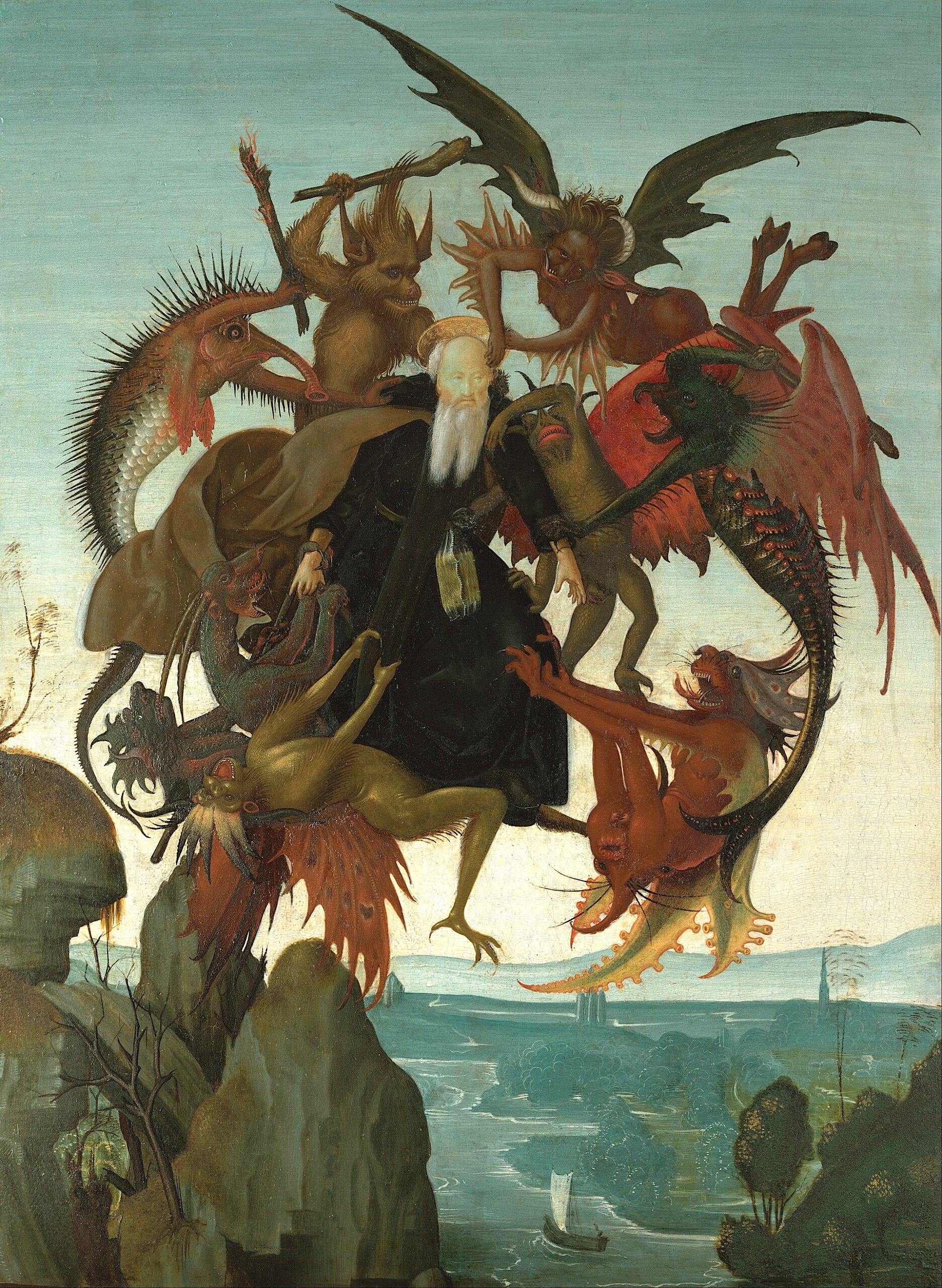


Edit: as others have pointed out, and if I were to actually read the article carefully before commenting, the composition is not attributed to Michelangelo. So it is just a copy. Quite the achievement, but possible for a twelve-year old.
I once confronted a gallery owner who was proudly presenting a newly discovered work by Mondriaan [1]. An original black and white photo in an old newspaper [2] was shown as proof of authenticity. But many details such as the creases in fabric differ in the original and the new painting. No OpenCV required to see that. Mind you, the picture is already framed with Mondriaan standing next to it. Unlikely that he's still working on it.
Instead of responding, the gallery owner simply turned away.
[1] https://upload.wikimedia.org/wikipedia/commons/b/bb/Cavalini...
[2] https://www.vrt.be/vrtnws/nl/2022/03/02/nieuwe-werken-mondri...