This tracks with my own bias as an ER doc. I do feel that the risk of c-spine injuries from mountain biking is understated. As they said in the article, you are especially vulnerable to a hangmans fracture when thrown over the handlebars. I wonder if the ergonomics or geometry of a bicycle could be modified to better protect a rider’s neck.
> I wonder if the ergonomics or geometry of a bicycle could be modified to better protect a rider’s neck.
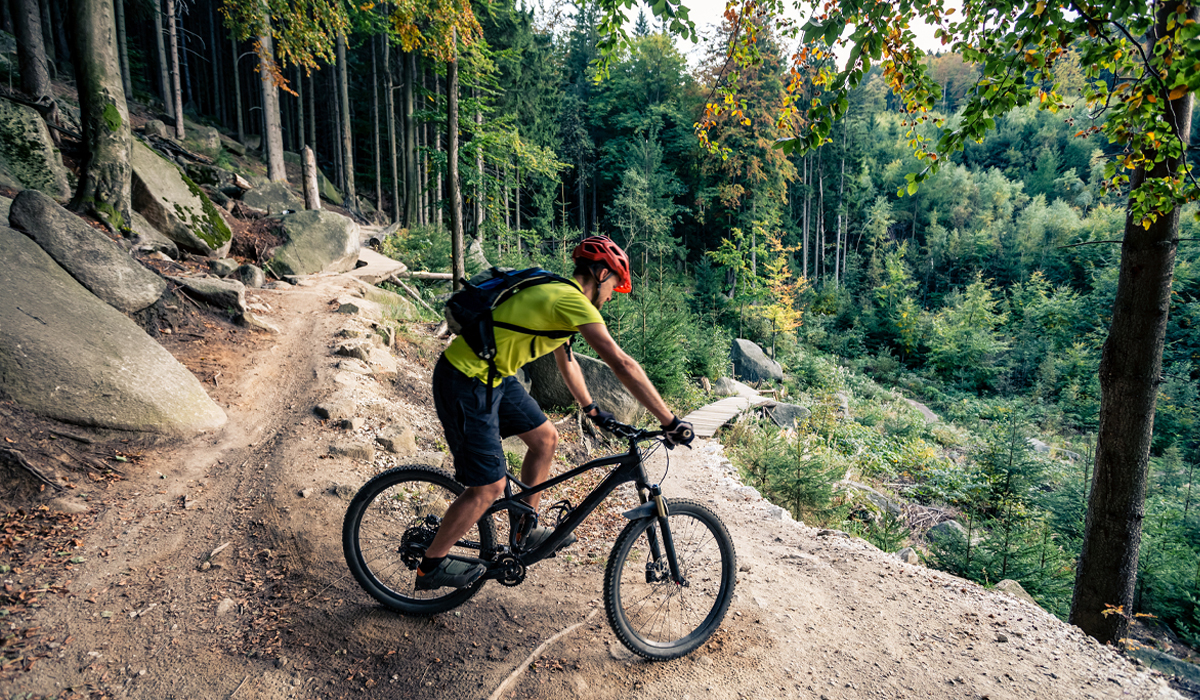
There has been a huge trend in this direction in recent years! For example in 2000 the head tube angle on a typical “trail bike” was something like 71 degrees, but today it’s more like 65 degrees, meaning the front wheel is a lot farther out in front of you. Bikes have also just gotten longer, especially in the front end which adds to this effect. This all means that (assuming you don’t ride more difficult terrain to compensate) it’s way harder to crash “over the bars” on a modern mountain bike than in the past.
There are sections of trail that I would almost always OTB (over the bars) on when attempted on my old 1998 hard tail. After finally upgrading in 2018, I almost never go OTB because of the longer and slacker geometry.
One ride on a double black rated tech trail nearby, the air shaft in my fork seized up so I lost all front compression. Even without front suspension, I was able to complete the ride and even keep up with my group, my arms were just toast after that. Modern bikes are just that capable based upon geometry alone.
That said, I now ride at significantly higher speeds and ride much harder terrain. But even still, my crashes are different and more to the side than directly over the bars.
The more downhill oriented a mountain bike is, the more it resembles a dirtbike — more suspension travel (up to around 220mm, where the suspension starts to work against you and makes the bike too mushy for something that light and human powered) , higher and wider handlebars and more space above the seat (nowadays the seats actually move out of the way and come back when needed, operated by a lever on the handlebars).
I'd say that most honest to god OTB accidents happen on slower, gnarly, downhill stuff, where it's easy for the (still relatively light) mountain bike to get stuck and unable to roll over an obstacle in time (before the rider arrives), or for the obstacle to slap your steering to the side, which again suddenly stops the bike.
Dirtbikes are much heavier compared to bikes and the weight of the rider, and you generally ride them a bit faster and not necessarily downhill.
Over the years the geometry has slackened, size of wheels length of wheelbase and size of cockpit have increased. Suspension has also evolved dramatically. This makes the bikes much safer and more stable at higher speeds. The bigger cockpit area has less responsive pitch and yaw, giving riders an increased sense of security. So the bikes are "safer". But this just means riders are going faster. The style of trail has evolved with this as well. Well manicured, wide bike park trails have got much faster with massive jumps. These types of trails are generally easier to ride than slower, more technical terrain and give maximum thrill at higher velocities. Amateur riders today are doing stuff even the best pro's could barely attempt 25 years ago.
I would like to see complimentary stats for age and years of experience riding, as it wouldn't surprise me if a lot of these folks are starting downhill as a midlife crisis and the modern bikes make them feel invincible. Everyone trying to do this sport at a higher level is going to get hurt at some point though.
They mention the costs, but what about the overall benefits to health, wellbeing and the economy.
Downhill is my main passion in life, it's so much more than just a thrill, and it's such a privilege to be able to enjoy it.
I mean, you can avoid going over the bars by riding a recumbent, but that's not going to be a viable solution for riding singletrack. The real trick is teaching people how to fall. I had a coach back in the 90's who was big on that, and it's become instinctual enough where the last time I went over the bars (mid-2023), I was able to manage my landing where I hobbled away with a massive bruise on my thigh, and not much else. I don't know that I've ever seen an MTB skills class that teaches you how to fall properly.
Yes mate. In my 20+ years of riding dh I've never broken a collar bone, let alone my spine. I put this down to learning to fall properly doing breakfall drills in jujitsu. Side fall, and diving front roll being the main falls used in mtb. Side fall involves not putting hand out and distributing impact across whole side; good for loss of traction fall on corners, skidding out sideways. Diving front roll like a commando roll for going out front over the bars.
Even moderate experience with martial arts goes a long way in instinctively managing falls - probably saved my bones a number of times in MTB and skating... The scars always in the same locations and on the same axis show it is a reproducible technique !
When I was a kid I thought I was going to be a stuntman, and falling down in various dramatic ways, sometimes off of tall things such as balconies, ladders and garages. In the decades since I've fallen off of bikes hundreds of times, I've taken many more falls skateboarding, snowboarding and rock climbing. I've suffered many bumps and bruises. A helmet, however has never had the opportunity to come in handy for me.
The funny things is that in sports such as skateboarding (or BMX) participants fall and crash regularly. There's no point in mentioning to them that falling is a skill, they already know. In the world of road cycling, where participants take a hard slam once every couple seasons or so, it's hard to convince them that skill is a factor.
Of course, with downhill mountain biking even if one is exceptionally agile in the event of a wipeout there is still a good chance they will smash themselves up.
MotoX riders wear a device which prevents the neck from unnatural extension. I wonder if medical doctors could champion their adoption among MB riders.
Edit: some controversy of the effectiveness of neck braces in motox
These became popular for mtb, some riders still use them. REason for not using them is the 2 main designs either transfer load to collar bone, or further down the spine. Many rider complained of getting a worse injury for the velocity of impact.
Michael J. Vandeman was arrested by UC Berkeley police on May 28 after he allegedly attacked a bicyclist with a handsaw on a fire trail above the UC Berkeley campus weeks earlier.