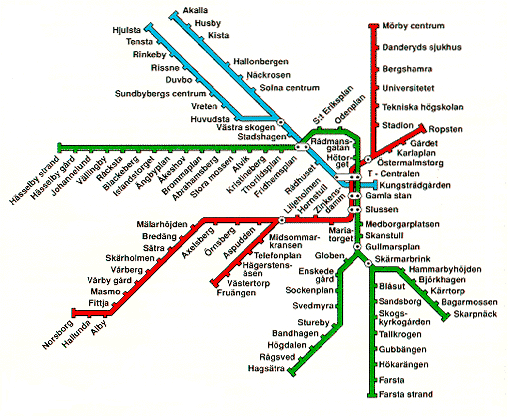
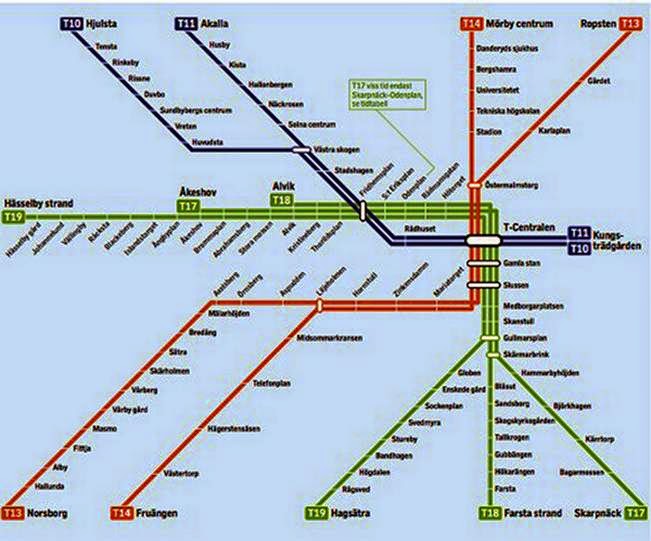
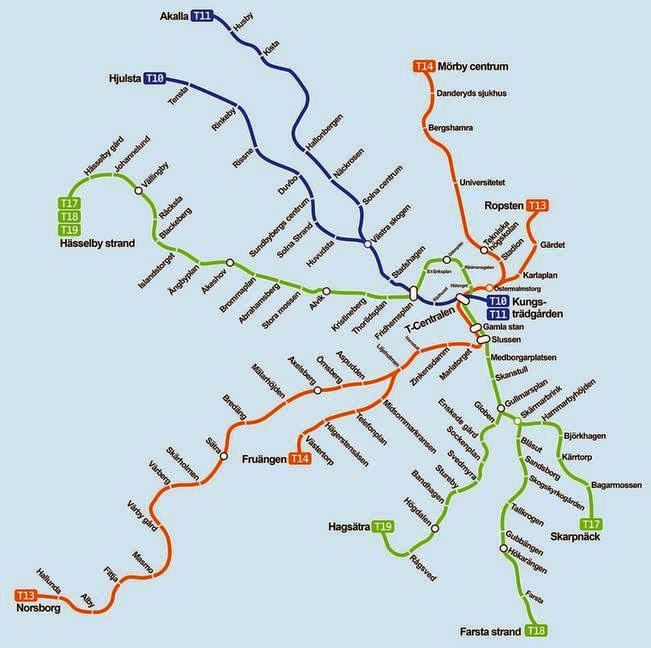
The system diagram drops important information such as how far a rider is traveling and how long it will take. This contributes to the interminable feeling of riding forever under the streets of [city name]. It also makes it harder to integrate with intermodal options, or walking, because riders are never quite sure where they are. The system diagram is ubiquitous, and there's a point to it, but it ought to be just one tool in the box.
In my city there was, for a brief time, a neat combination of the two. It was visually stylized with simplified geometry for easy reading, but it sorta-kinda indicated real distances and directions. I really miss that one -- seemed like the best of both worlds to me.
The major shortcoming of that is it doesn't show walking times for some fairly easy connections between different lines and instead implies a much longer indirect route (e.g Angel to Farringdon is a 15-20 minute direct walk which is quite reasonable compared to an >11 minute journey involving train and platform changes or the suggested 42 minutes walking a very indirect route via a station interchange)
This is definitely hard to parse. Canada Water to Canary Wharf is 144 minute walk on that map LOL. It's a couple of minutes by Underground. It is about 2 miles walk, but it's definitely not 2 hours and 24 minutes!
If you're relying on the underground those data aren't important.
How long maybe, but the journey time between stops on the tube is minimal and after riding it once you'll just assume its 30 seconds - 2 minutes.
There is a huge disconnect between underground users and walkers, I walk everywhere in London, as do most locals, mercifully the tourists and out-of-towners take the tube, unless you're going > 6/7 stops it'll take about the same amount of time.