GNOME 3/Shell was something I hated with every fiber in my body until someone told me to actually give it a chance. They said "don't compare it to Windows, don't compare it to macOS, don't compare it to Gnome 2, just try and learn its idioms and go from there".
It turns out, at least for me, he was 100% right. I grew to really like Gnome after I dropped all preconceived notions about what it was supposed to be. I ended up loving the fact that the number of virtual desktops is dynamic, I ended up really liking how much could be done without a mouse, and I ended up being kind of surprised how it was both pretty and fast on my (admittedly fairly beefy) laptop.
I use macOS right now dude to the fact that I got it at a discount, but the next computer I buy will probably be a Linux machine, and it will probably be running Gnome.
Generally I find this to be a rewarding strategy for approaching digital interfaces: try to understand what the designer was going for, and go with the flow. Often it works quite well, and while a small deviation might be more similar to what you are used to, the friction it causes with other parts of the interface can offset those benefits.
>try to understand what the designer was going for, and go with the flow.
This is bad, I should do whatever some dude decided I should do? Example from yesterday , I am testing Chrome and I discovered this browser does not have an option(not even a super hidden one) for "prompt me before quitting" except for Macs where this option exists and it is very visible in the menus. Why Windows and Linux does not have this option? Because designers think so, they know better then the users, they prefer some people getting frustrated, installing weird extensions or stop using the application because their giant EGO tells them that this option is too much, they read in a book somewhere that most users are idiots so the solution is to treat everyone as idiots.
You don't have to do anything; you don't even have to use the software in the first place. All I'm saying is that often the choices do make some sense when taken together, or at least more sense than combining some of them with patterns that weren't considered in the design, and thus will work better for you. But if that's not the case for you, or if you don't believe that to be the case, then don't - nobody's forcing you.
The issue is when the code exists, the option exists but a fucking designer decides that say 5% of users can be screwed over because his GIANT ego says so.
Explain me how it makes sense, please Google the issue with Chrome, read the user issues and then figureout why this things are how they are. Don't waste your time if you don't want to be changed your mind though, the short story is;
1 users need this option, someone with a touch screen was having issue closing the tabs and he was quiting the browser
2 the code exist(and is enabled on Mac)
3 Firefox,Vivalid and other browsers have this option
4 not all Chrome/Chromium users are button licking designers or low RAM idiots that an option somewhere in about:config is too much
5 there was no UX study to support hiding this option.
Sure, I will not use Chromium but you can't stop me complain when I see stupid decision made by designers or developers to satisfy their ego, so I will NOT stop complaining, Chromium UX is bad, GNOME UX is bad, you can
1 accept the criticism, yes sometimes designers/leaders are bad, see Apple reverting the keyboard changes after years of fanboys pretending Apple is perfect and users are the problem
2 ignore the criticism, probably you have better things to do then defending some random designer
3 copy/paste some shit excuse like "only 5% users use that so removing is fine" where the numbers are fake , and the rule applies selectively to only whatever the big ego designer decides to remove (other excuses are : is too much work, is too hard for our developers to maintain it, use a third party insecure extension/patch, don't use that, etc.
I accept your criticism but I still find your comment to be unconvincing, if you have reason to believe some statistics (such as 5% users) are faked, then it would be helpful to show:
1. Evidence of that
2. Other more accurate statistics that do show it affects more than 5% of users
3. An explanation as to why 5% is a meaningful threshold. Why shouldn't it be lower? Higher?
4. Suggestions on how to reduce workload if it's too much work or it's too hard
Or any other data that you think could back up the conclusion. I understand that this is not easy to do. But if it's not done, then it will continue to be a battle of egos as you describe, and that's not helpful. You don't have to stop complaining but in my experience it pays off to always improve your complaints and make sure they're done in a fully convincing manner. It also helps to avoid insults and personal comments about others, those just distract from the issue. It pays to make sure your complaints are as fact-based as possible. In a big project the original person who made the decision may not even be there anymore, so it's really everyone else that you need to convince.
Edit: And please don't just show them to me, show them to the stakeholders who matter and can get things done. I may think some of your info is interesting but that's about as much as I can do, I am not the person you need to be convincing and neither are other random commenters on social media. I get that it's fun to rant on social media but the real hard work doesn't happen there.
OK, so when someone says we removed X feature, or you should do X like we want because is OUR vision, then I think I do not need to bring evidence that this is EGO based and not fact based.
About the percentage based excuses, there are several issues:
1 this big ego projects never shown the statistics/telemetry data so I can't prove them wrong since I am not the one that has the data.
2 it is easy to lie with statistics (or studies) so you need to keep an open mind when the source of the statistics is the big ego person and this statistic is supporting his point.
3 I bet that Chrome dev tools are used by less then 5% of users but you don't see the big ego dude removing those super complex features and moved them into a dev version of Chrome only. Why is a super small option super important for this designer person but this super complex and scary and not cool looking feature is there in the menus for a random clueless users to open? The stats are only used when the dude wants to impose his vision.
Complaining is important, see Apple new laptop changes, the big ego designers forgot to do actual UX and test with real users/customers and that costed Apple a lot of time. I understand that for open source project I can't apply same demands for good UX research with real users but GNOME has the money from RedHat and it's toxic community forced it as default on distros over DEs with actual real UX research.
Conclusion, I as a simple user that just tested Chromium I can't open a ticket and put in it real world data to maybe convince the big ego dudes that are wrong, I can at most put a me too there and get ignored for decades like the File Picker GNOME meme issue, and I will probably get spammed each time an upset user will add it's me too comment and the developers repeat again "you are using it wrong".
But I use Chromium/Chrome as minimum as needed, I avoid GNOME and the entire Linux community social media , just the comment I responded was complaining about X and Y browser and I added the Z browser there too to complete the list, and I was salty sicne the solution is to install some "chrome extension" to fix it - it reminds me of the install a GNOME extension excuse too.
Sorry, I'm not saying that what they're saying isn't ego-based. I really don't know because I wasn't there for the conversation. What I'm saying is, the only way you can shift it from being ego-based to being fact-based is to present those facts that show the right way, or at least find a way to change the conversation into being headed in that direction. Just calling out ego-based behavior isn't enough. To me this has applied to every professional situation, it's how to keep any meeting on-track and avoid having coworkers getting into fights about egos. If you don't have the data then it's going to be hard to make a convincing argument, I don't know a good solution to this unfortunately. It requires real work and you may have to get creative. At a big company often the most convincing argument you can make is that a decision will save X amount of dollars, so you can start from there. For a volunteer open source project you will have to find out what else really motivates the developers and then go from there.
Apple I think is a good example. It only mattered to Apple when it cost them a non-significant amount of resources. Ultimately they are a company and they respond to profit, if people buy or don't buy the product then that's the strongest fact that will influence them. Also I think it is a misconception that GNOME has a lot of money from Red Hat. They don't really from what I've seen, most of the Red Hat people I know are pretty strapped for time. I also have no idea what you mean by forced it as default. Distros don't have to choose it, I've seen many distros that choose other things or just don't have a default. If you mean things like Ubuntu, IIRC they chose to retire Unity and go with GNOME because Unity wasn't profitable for them. So with companies it always comes back to that...
I also don't really think it is useful to call out people for imposing their vision. On a certain level, everyone who builds things is doing that. They have their point of view and that's the only thing they can express, because well, what else would they express? If they expressed your point of view all the time, then they wouldn't be themselves, they would be you. It's possible to change someone else's vision but that's usually done by presenting new information, i.e. convincing facts.
- GNOME forced on people, the things that come to mind was pushing of tech like Wayland that makes it hard for little DEs. As for the default I remember clearly a giant anti_unity mob , there were some big Youtube channels giving Ubuntu and Linux a chance and the GNOME fanboys popped up in chat and convinced the dudes to purge Unity and install GNOME, this was idiotic because it was not a correct procedure so they created a broken Ubuntu and gave Linux a bad image.
About the "vision" comment, at my work there is always a support team, they get feedback from users and we never give a response "it is our designer vision or our dev leader vision that things are like this". The differences are that
1 we care for each and even one of our users so we never say "go use our competitors because we don't care about your problem"
2 we do not have a big birocracy or a tyrant with a big vision, so we can think for ourselves, propose solutions and implement them. Sure it happen that later the designers demand we simplify the GUI but we know that each complex feature is still used by some power users and w propose ways to keep it in, but more hidden so designers don't complain.
Maybe GNOME does not have enough money for their big ambitions but they have a lot more then other DEs.
My summary would be, vision is fine in your hobby toy project, GNOME, Chrome, Apple's OSX are not toys, if you do a radical change only based on a dudes vision IMO you are doing it wrong, you forgot about the users and are only thinking at your ego/CV.
I don't understand what GNOME using Wayland would have to do with any other DEs, those DEs don't really have to use Wayland if they don't want. Although they probably should for technical reasons. Also I don't think any youtube videos were a particularly big factor in the decision, Mark Shuttleworth said it was because of money: https://www.omgubuntu.co.uk/2017/10/why-did-ubuntu-drop-unit...
"About the 'vision' comment, at my work there is always a support team, they get feedback from users and we never give a response 'it is our designer vision or our dev leader vision that things are like this'."
Yeah you may not actually say those words exactly but I've many times heard support staff essentially state the same thing. They might say "sorry the product is not designed to do that" or "we don't sell that here", e.g. if you go to a car dealership and what you really want to buy is a helicopter, they will say sorry we don't sell flying cars, these cars were not designed to fly. Maybe they don't use the word "vision" but it's all the same, if you decide you are going to build a car a certain way then you have to stick to that, once you decide to add helicopter blades then it's a different product for a different market. So you could just exchange the word "vision" with "plan" if that helps to understand it.
For a big project, yeah, they can obviously afford to do more and to put more features in a product but they still have to draw the line somewhere.
Your example with cars is flawed when you are talking about
1 having the thing but hiding it for Windows or Linux users because "vision"
2 having the thing, everyone else having same thing but you remove it because of vision.
So is not about just 1 dude demanding Gnome or Chrome to add say something weird like "vim" keyboard support , but many users asking something basic present in similar products and in previous version of same product or for the Chrome issue I mentioned the feature is visible but only on Mac.
Btw I appreciate our conversation, is refreshing to disagree with someone that puts effort int he comments and is maintaining respect, thanks
EDIT: about wayland, we will have to disagree, in my opinion Wayland could have been implemented much better like
1 have a protocol
2 implement this protocol and share the implementation with all DEs, like Xorg , so only say Rust guys could have a go and create their own version in their cool language
3 define the extensions and implement them, not do "X11 did this but it is stupid, it is not our job, go figure it out yourselves"
I don't really know the details of this but for some things it is non-trivial to ship even small changes on other platforms, even those will have to go through full dev-test cycles which takes time and money. About removing things, I don't know, I had a car once that had some really nice cupholders. Really deep and exactly the right size, exactly at the right height for the arm. My current car doesn't have them and I can't find any cars that have that were quite as good as that. They just stopped making them. If that's not "vision" then what is it? I mean somebody has to make the decision of how to make the new cars. There is also the question of, do I value cupholders over everything else in the car? Would I buy a car with terrible steering if it meant the good cupholders? If I could get the good cupholders in any car would I pay an extra $3000 or however much the dealership charges? I think probably not but it really depends. So there's many factors at play here.
Edit: Or say maybe I am a startup founder and I design and build my own car exactly how I want and turn it into a company. It's perfect for me but then someday I get bored of driving my car and I retire. Then I hire someone else to design the cars and pass responsibility on to them and they change some stuff. Well, now the cars are different and everyone pretty much has to accept it because the original designer is gone, and as much as people liked the old one, nobody else can really copy them exactly because it was really their personal vision that made it what it was.
For Wayland, I think all of that is happening already? There is somebody making an implementation in Rust. They did try to make a shared implementation (Weston) but it turned out that people didn't actually want that, they preferred to write their own implementations.
It is software, in Chrome case is just a simple popup, the code is there and it only is visible for OSX because the platform forced the vision guy's hand. The bullshit excuses that is hard to code and test and maintain do not work here.
Also excuses do not work even if valid if you destroy your users workflow, you don't remove system tray, server side decorations and just tell your users to find replacement applications because the ones they use do not conform to the GNOME vision.
Again, if is not a toy you target some users, is your duty to listen to this users and not to impose your vision on them, I am upset when there is no actual testing/research involving actual users and real world work, say when you test your app with "hello world" simple workflows that fail in real world with real users, or you make your app look cool on your expensive screen but looks like shit on real users hardware.
But you are right, GNOME has decided they don't want a part of the users and they are cultivating the perfect GNOME type user, a user that adapts to the software and not the reverse.
I don't know what you mean bullshit excuse. Everything has a cost to test and maintain. It doesn't help to say that it's bullshit if nobody has done a real cost analysis. Remember that this is something that has to be maintained for years. If some bugs occur in it later and it has to be removed again then the users will be upset again so it's not really useful for us to say just ship it and don't test, that's what we want to avoid. Yes, you and I could guess what it costs but that doesn't carry as much weight as somebody who actually works on it full time doing their cost analysis.
I get your frustration about your workflow but I'm still upset about my cupholders :) For the system tray and server side decorations, there are technical reasons for those to have gotten removed. Their existence may enable some workflows but it also breaks some other workflows so that's not an area where everyone can win. And if you want to bring them back then I can guarantee you that's not just a matter of flipping a switch, there is real work that needs to be done there and it won't happen if nobody is willing to pay the cost. It doesn't really make sense to blame volunteers for not being able to afford that either when this is something that's so expensive that the bigger contributors like Red Hat don't even want to pay for it.
Your DE has 10 features and 10 users, we decide we remove any feature that is only used by 1 or 0 users.
We look around and find that
1 feature F1 is used only by user U1 , we remove F1 and we push user U1 to go away.
2 feature F2 was used by 2 users but now that U1 left , F2 is used only by 1 user, so we remove F2 and kck out the user U2 , we left with 8 users now from 10 and 8 feature
3 feature F3 was used by 3 users including U1 and U2 , but since we kicked this 2 users ut only U2 left using it , so now we remove F3 , kick out user U3 (U3 regrets now that he was a dick to U2 and U2 accusing them of beeing snowflackes and using it wrong)
4 ... repeat until you reamin with 2 users, the designer and the developer (the dev uses other DE on his personal machine anyway)
My second point, GNOME team should just pause and reflect at Apple, see that vision without a connection with users is wrong, Apple has sales numbers and other ways to detect when their big ego vision dude has messed up but GNOME needs to reflect (not change, not implement features just reflect), are we going to far? how do we know when our vison dude has gone too far since we don't have sales number and shareholders keeping the bullshit in check?
There is a chance that GNOME vision is wrong and it can take much more years then it took Apple to do the "courageous" thing and undo the stupidity and replace the vision individual.
For GNOME I guess you could say it's the same way but they are more after volunteer contributions, not money. So they will make changes that tend to increase the contributions, sometimes it's a trade-off i.e. do we make this change to lose 5 contributors but gain 10 contributors in other areas. They're tough decisions to make, and nobody likes to be the one to tell angry users that their workflow is breaking.
I don't think that the ego dudes do this calculation, just use it to pretend they have a motive.
Since I stopped using GNOME i switched to KDE and a few years back Plasma also had a big ego dude in charge, we had similar issues there with the Plasma vision , one example is
- removing the cachew ugly widget, the dude refused to give us the option to hide it even if we contribute the 3 lines patch ... but guess what the cachew is gone or hidden by default now ... my point is that I have an example that is not GNOME where big ego caused issue and when big ego person left things were solved.
My experience contributing to small KDE project was great though, there was no big vision people that needed to approve a feature or adding a new menu, the maintainers were developers that were happy to help the users, help debugging and were super happy to receive bug fixes and improvements.
I would conclude(but without serious evidence) that big projects with big visibility will attract the individuals with big ego, like Plsama or GNOME , the big ego people will be attracted to this very visible projects so they canpush their vision into many peoples faces/lives.
But on the other hand if GNOME can double they contributors at the same time they lose half of the users is a metric they prefer then I hope they got their contributers, though by the number of GNOME forks that appeared it is possible their contributors got fragmented too.
To me it helps to think of it like debt, if they get a lot of money (or contributors or whatever) and lose users in the process then that can be re-invested to acquire more users at a later date. The GNOME forks I have seen don't really have a lot of developers, same thing with the KDE/Qt forks.
I don't really have any other comments on "ego guys", every maintainer has their own style. I have seen leadership with a strong vision work for some projects but not work for others.
So the issue would be if the community/team can control the ego person to prevent serious damage.
About GNOME forks, they don't need many developers, they just need enough to fork the shell UX so it screws with the vision of the GNOME team, you still won't get the missing features but you get a different experience because GNOME refused to give you options to customize stuff.
I think Ubuntu were fixing soem of GNOME problems for their users but still give you the option for a vanila setup but I don't know what happened in recent years, is Cinemon still continuing? Pop os was forking GNOME but I read here they jumped on the Rust hype so I expect a lot of disappointment when their DE will not be faster,cooler and bugs free.
I agree with you: yes, sometimes designers do a bad job. What I'm trying to say is that you then have three options:
1. Go with the flow and accept the limitations.
2. Try to fight the design.
3. Use a different product.
All I'm trying to say is that 2 is a losing strategy. If the design is bad, 3 is probably your best bet. If it's good, 1 might actually be pretty rewarding and even make you embrace what you used to consider a limitation, or it might just be one of the downsides of the product since nothing is perfect.
So in your case, I'd indeed use a different product and for good measure complain about it on Hacker News :) But what I probably wouldn't do is try to find some hacky workaround to make it work somewhat, until the designer screws me over again.
I didn't hate GNOME shell because of the UI - I hated it because of the sheer volume of bugs and performance problems it caused. Some people think macOS is the best, some prefer Windows, some prefer some Linux DE. Imo, all modern shells have zeroed in on a paradigm - give the user some icons to quickly launch/switch between his most used apps, and give him a quick search to find the rest.
Other than that, in a world where people use VS Code, Slack, Spotify and Chrome, the underlying system barely matters from the user perspective as long as it works.
I feel like a lot of the performance and stability complaints were absolutely true in the first ~2 years of Gnome shell, but when I gave it another shot in 2018 on a computer with an AMD CPU and GPU, it ran basically flawlessly for me.
I definitely agree that everything being said, it matters less and less which environment you're actually using. I used to have fun with XMonad but I realized that I was spending 90% of my time in tmux, and about 10% of the time within a browser, so all one of these "optimized" windowing environments offered me was nerd-points. I felt like Gnome Shell got out of my way pretty quickly without it being too hard to pick up.
GNOME 3 is truly phenomenal, not enough people give it credit for being a nearly perfect touchscreen OS with powerful desktop options front-and-center. By comparison, the new GNOME 40 release feels like a lazy attempt at trying to be MacOS, which is definitely not what GNOME meant to me. Now that the majority of extensions are broken again, it's even harder to tune it for my personal workflow. I had to ditch it for KDE, unfortunately. I hope they head in a more interface-agnostic approach, for the future.
> Now that the majority of extensions are broken again, it's even harder to tune it for my personal workflow. I had to ditch it for KDE, unfortunately.
This is what pushed me to KDE from GNOME after spending more than a decade hating it. Turns out that I love Plasma Desktop. My tolerance for being unable to use my desktop at all because GNOME developers decided to break their extension API again is gone.
I was pushed to Plasma after the 40 update too, and I've been really happy with how things are turning up these days. Great features are being added in weekly, they actually address bugs instead of tagging decades-old problems as wontfix, and it's way more flexible than GNOME. I can create more elaborate desktops with bog-standard Plasma than is possible with modded GNOME, and I can trust they'll work more reliably than an out-of-the-box GNOME install. Unfortunately, it's still not a great option for tablet/touchscreen PCs, but I can see a lot of progress coming down the pipeline with Wayland. Overall though, it's quite lovely. I can near-perfectly recreate Mojave with extra bells and whistles, plus perpetual 32-bit support and long-term support.
I want Plasma to be good. I'm frustrated at kwin's breakage and lag on Nvidia (https://bugs.kde.org/show_bug.cgi?id=443951 fixed), the years-old data-corruption heisenbugs I've encountered (kxmlgui toolbar corruption: https://bugs.kde.org/show_bug.cgi?id=395497) and the instability of some apps (plasmashell crashes occasionally, plasma-systemmonitor crashes quite often when processes terminate in tree view). And it's difficult to fix these bugs because many KDE apps suffer from complexity in apps and libraries (any app involving both QML and C++ code), often accompanied by legacy code sometimes misusing inheritance (kxmlgui) and misused or no longer understood (kxmlgui, libksysguard), or churning and replacing mature code with untested rewrites (plasma-systemmonitor).
I'm trying Xfce on my desktop now (after using it a bit on my laptop). It's a refreshing experience so far, with a panel written in a compiled language rather than QML/JS with unreliable GPU acceleration, and it seems relatively stable so far. They've added window snapping with Super+Arrow or mouse dragging, and the docklike plugin (https://gitlab.xfce.org/panel-plugins/xfce4-docklike-plugin) is a good replacement for KDE or Windows 7+'s icon-pinning-based taskbar.
There are some issues (like the long-standing https://gitlab.xfce.org/xfce/libxfce4ui/-/issues/1, which I hope can be fixed but don't know for sure). But I feel Xfce is much more stable to begin with (in my experience so far, at least), meaning that fixing them is less urgent. I hope the codebase is understandable enough for me to work on it (I think Xfce apps are written in C, which I can read but I'm not super fluent in writing).
I also don't know if Xfce will survive in a future Wayland-based world.
"I can near-perfectly recreate Mojave with extra bells and whistles"
I think the GP comment addressed that, e.g. "don't compare it to macOS". In my experience, GNOME is best if you don't try to fight with it and don't try to install a bunch of extensions. You have to adapt your personal workflow to it, not the other way around. If you come in expecting to use a macOS workflow exactly as it is then yeah, you would be disappointed, I think that's a case of missed expectations.
Don't cast aspersions. I did have a setup that I enjoyed with GNOME, but then when 40 came it was broken. I'm complimenting KDE for it's flexibility, which is something GNOME objectively lacks.
And please stop responding to my comments. You've already shown yourself to be incapable of discussing problems with me in earnest, I have no intention of replying if you're just going to point the blame back at me without addressing the ways GNOME can improve.
The thing is, I agree with you mostly, KDE is much better if you want to do a "build your own desktop" type of things. I don't know that GNOME really has any interest in filling that niche when KDE already does it so well. For me at least, I don't think I would try to fight that uphill battle trying to add that to GNOME, it would be a lot easier just to contribute to KDE. I'm making an honest effort to reply to you in earnest. I don't think it is fair to the reader for me not to respond if I have an answer to some of the frustrations you have expressed. On another site I would say just block me, but on here you may have to ignore my comments if you don't want to continue the conversation.
My point is: If you relied a lot of extensions, it seems likely that was the source of your troubles. We can discuss how to improve the extensions, if that's what you're interested in. Or we can discuss KDE, whatever you want.
I have explained why I can't do that, I also think that stopping would be against the HN guidelines:
"Comments should get more thoughtful and substantive, not less, as a topic gets more divisive."
Even as we disagree, I'm making an honest effort to make my comments more thoughtful and substantive, I ask that you please extend the same courtesy. If you think there is something incorrect with my comments then the best way to deal with that would be to present more information that could change my mind, not shut the discussion down.
Edit: And I have not pointed the blame back at you. I mentioned what the source of your problems likely was, that doesn't mean it's anyone's fault. If you want to discuss real solutions then let's do that, but please let's do it objectively and without casting blame.
I've already made my point: GNOME used to be my favorite desktop, now it is my least favorite. Over the past 4 comments I've suggested several reasons for why this might be, none of them hateful towards the GNOME project in any way. The only antagonist has been you, the person insisting that the issue is with me, not the desktop: that somehow, by removing features and breaking functionality that worked fine, it's my fault for not assimilating into your common idea of a desktop. As I can see by scrolling through your comment history, it looks like a lot of people share my sentiment. I will give you one final explanation before completely forgetting about you altogether. I'm done entertaining your time-wasting, gas-lighting nonsense, and I'm not going to let you play Mr. High-road to help you feel better about patronizing someone on Hacker News.
- GNOME's philosophy and leadership is overtly, undeniably authoritarian. They lock people out of using apps by refusing to distribute via any method other than Flatpak, they lock down their desktop to make it harder for modders to do what they want, and they completely ignore their power-users who prefer more options and functionality. On top of that, their "my way or the highway" approach is completely user hostile, further evidenced by arguments like this, where you refuse to take notes and offer genuine solutions for the needs of the user. For everything that GNOME copies from Apple, "you're holding it wrong" should have been left on the cutting room floor.
- GNOME's featureset is encroaching on basic system functionality, which has not only proven to be a pain in the ass, but it's actually counter-intuitive to basic UNIX functionality. Efforts like dconf have legitimately done nothing for this community, yet their dumpster-fire glow can be seen for miles. As a developer, trying to conform to the GNOME spec is pointlessly complicated and ultimately meaningless. I still write everything with GTK3 and zero GNOME conformance just as a middle finger to the direction they're headed in. Plus, GNOME's dependencies are bloated, only exacerbated by projects like Flatpak that containerize and further bloat the runtime. There have been a plethora of font-related issues since pango was 86'd, and no shortage of graphical issues on both Wayland and x11. It's crazy to me that the GNOME desktop has had one of the ugliest transitions to a window server they've been advocating for years.
- GNOME has just been regressing. Tools that used to work, like Glade, now do not. Extension stability has gotten worse, which is a shame since extensions are undeniably a part of GNOME. You can tell me that they're unsupported, you can shout at me for using them, but if your users have to create their own custom modding options for your desktop, is that not a signal that you're feature-incomplete? How do you look at that and interpret it as everyone else's fault, because they were never supported in the first place. Same goes for user themes, shell patches and tweak tools. They are all a testament to the fact that people want to extend GNOME, so your next logical step should not be blocking them out. At this rate, I wouldn't be surprised if you told me QT apps were unsupported because they're "not a part of the overall GNOME vision."
- GNOME's got people like you. What do I mean by that? It's not an insult, but I feel like if I don't explain this to you I'll be persecuted until the end of time. When interacting with the community, your job is not to refute other people's complaints. Your job is to listen, and see where people disagree with your philosophy. You cannot pretend like there aren't pain-points in GNOME, so trying to delegitimize other people's experiences will only frustrate them and drive them away. THIS is how people really start to despise the GNOME desktop. If I level a complaint about KDE, XFCE, or hell, even the goddamn Elementary desktop, I generally get a thoughtful response with someone showing me how to resolve the issue, or pointing to an upstream patch that fixes it. Apparently, some people care about maintaining a usable desktop. You can call things like thumbnails in the filepicker inconsequential, but don't come crying to me when you can't understand why people have an irrational hatred of your desktop. The issue starts with attitude, and the culture of GNOME is quite obviously not improving. No amount of CoC pull requests can fix that, especially when project leaders are flying off the handle at System76 for trying to improve on their desktop. It's a horrible look.
I really hope you reply with a long-winded essay in the name of saving face. I really hope you ignore everything I've written like you ignored my simple request for you to stop. At this point, I feel like my assumptions have been reinforced: I still have yet to meet a GNOME developer who was not insistent on being right and harassing people with legitimate criticism. You've seen my comments: I've spent far too much effort trying to be constructive, when all I'd be told in the end is that it's my fault for not using it right. Why bother? Why even have these discussions if we're just going to end them with a pointless us-vs-them fight where you ultimately tell me to stop using GNOME if I disagree. The least you could do is point me in the direction of someone who's capable of making change, because fighting like this wastes both of our time. Yet, you hunt me down on every comment as if my opinion is haram, and needs to be struck down with links to desktop's philosophy or whatever. I don't care. I simply need a computer that does the job: GNOME doesn't do it anymore.
So, all your assumptions about me are completely wrong, and you've also posted a number of things that are incorrect. Please avoid making assumptions about other people that you don't know, it's extremely rude. You are grouping me in with other people that I don't agree with and it's not fair to me. I am not a GNOME developer nor am I insisting that the issue is with you, nor am I hunting you down. I am simply commenting on HN threads about my interests, as are you. We happen to be both be interested in this, is it fair for either one of us to try and shut the other out of the discussion? I don't think it is. If somebody else made a similar comment as you I would also comment on that as I have done in several other comments here. I am not interested in refuting your complaints, nor am I interested in delegitimizing pain points in GNOME, I could list a number of my own pain points if you wanted me to.
Also I could actually go through each one of your issues and mention what you may have missed, or ways that one of us could help improve or fix things, and I can actually point you in the direction of people who can make change. You've mentioned some real pain points and you deserve an answer for those, if that's what you really want. But you have to stop attacking me here, and I would need assurance from you that you would actually read them. I would also really appreciate an apology for all the false things you just said about me, that hurts my feelings. I'm a real person, I get upset, so please just remember that. It's not fair to take out your frustrations with some other developers on me. Edit: If you want me to start, I'll apologize first. I'm sorry that my previous comments were taken badly. I didn't mean them that way.
Anyway I was thinking about this and I decided I want to respond to some of your comments to correct some of the wrong information in them. This isn't for me, it's for the reader who might get the wrong idea, and it's for you in case you change your mind and decide you want to discuss this. If you don't want to believe me and you still think I'm doing this just to be a smug jerk and make myself look good, well, I'll say it right out. I don't matter, I'm not a person of importance, I'm not here to promote my projects or my company or my blog or my twitter or anything. I only comment here to help people and help resolve the technical issues. That's it. I don't care how you think this makes GNOME look because I don't represent that project, if you take my comments as some kind of slight against something else unrelated to what I'm saying then that's on you. It's none of my business if you've got an axe to grind, I can only try to mitigate the damage. I'm going to avoid the personal stuff because I think I already responded to those.
"GNOME's philosophy and leadership is overtly, undeniably authoritarian."
This is totally wrong, GNOME explicitly doesn't have any BDFL or CTO or anything like that. It's more of an old school open source community like that. KDE is structured much the same way. The way it works is that the maintainers of each individual project are pretty much empowered to do whatever they want. Yes, this means they have authority of their individual projects. No, it does not mean they are enforcing that authority on you or they will never collaborate with anyone. A consensus has to be reached, if you don't want to deal with that then you still can do whatever you like with the project and the code, that's the point of open source. You could later collaborate with upstream or spend your volunteer time however you like really, what you can't do is boss anyone else around and tell them what to do with their volunteer time. As you've noticed, they probably won't take kindly to that. And I've personally experienced that on every project when you reach their limit: for example if you went to KDE and said "I don't like this, rewrite it in Java and make it more like GNOME" they probably wouldn't be too keen to take that suggestion. So I don't think you're being charitable when you try to label GNOME in this way.
"They lock people out of using apps by refusing to distribute via any method other than Flatpak"
This is totally wrong, pretty much every distro I've seen is shipping GNOME apps. I think there is a misconception here that GNOME (or KDE, or any desktop really) has anything to do with distro packages. They never have, that's up to the distro to handle. You can help out here by doing the packaging for your distro, if the app is open source then nobody can lock you out from doing that.
"they lock down their desktop to make it harder for modders to do what they want"
This makes no sense to me, the code is all open source. For me it has been fairly trivial to modify any GNOME app. You may want to try GNOME Builder which is purposefully designed to streamline the process.
"and they completely ignore their power-users who prefer more options and functionality."
I don't think those users are being ignored, if they were then extensions wouldn't exist at all. Are there issues with extensions? Yes, but that's a different conversation which I'll mention later.
"On top of that, their 'my way or the highway' approach is completely user hostile, further evidenced by arguments like this, where you refuse to take notes and offer genuine solutions for the needs of the user."
You are ignoring my comments. I've actually suggested multiple times that we could discuss genuine solutions, I just did in the post you replied to.
"GNOME's featureset is encroaching on basic system functionality, which has not only proven to be a pain in the ass, but it's actually counter-intuitive to basic UNIX functionality. Efforts like dconf have legitimately done nothing for this community, yet their dumpster-fire glow can be seen for miles"
This doesn't really make sense to me and I don't understand what you mean counter-intuitive to basic unix functionality. Dconf is just a file in your home directory. It can be controlled by command line tools and environment variables just like anything else in Unix/Linux. Also you do not even have to use Dconf, you can change the configuration backend although it may take some work. If someone is interested I can suggest ways to do this.
"I still write everything with GTK3 and zero GNOME conformance just as a middle finger to the direction they're headed in."
From my own experience I would advise not to do this. It's making things more difficult for yourself for bad reasons. I've tried to develop projects out of spite before and it didn't get far, it just hurt me, it hurt my users and it wasted everyone's time. It's best to use whatever makes you the most productive and don't worry about what others are doing.
"GNOME's dependencies are bloated, only exacerbated by projects like Flatpak that containerize and further bloat the runtime"
I can't agree with this, one of the reasons I think Flatpak has taken off is because it minimizes the runtime. The Flatpak SDK is actually smaller than my distro's GNOME packages. Yes GNOME does have a lot of libraries if you look at all of them but so does KDE, that's the price you pay for having a lot of features. And I think all those libraries have been a boon to app developers, they seem to really like using them.
"It's crazy to me that the GNOME desktop has had one of the ugliest transitions to a window server they've been advocating for years."
Yeah me too but the work is hard. Sadly X11 has caused some very real and serious technical debt that everyone is still paying down. Also I don't know what you mean Pango was 86'd. Pango is still around.
"GNOME has just been regressing. Tools that used to work, like Glade, now do not."
I assure you, nobody is particularly happy that Glade doesn't work anymore. The project has suffered from a serious lack of contributors and there is only one or two people working on the replacement. The GUI building functionality in GTK4 is actually a massive improvement but that's also made it technically difficult to bring a new GUI builder over to it. If somebody wanted to help out with it I'm sure that would be appreciated.
"Extension stability has gotten worse, which is a shame since extensions are undeniably a part of GNOME. You can tell me that they're unsupported, you can shout at me for using them"
This again is not helpful. I assure you nobody is happy that extensions are unstable, and nobody is happy to be making users upset every release when their extensions break. I'm not shouting at you for using them but you deserve to know: they're still unstable for very real reasons and you are making things more difficult for yourself by trying to push back against this rather than just acknowledging the limitations of the system and working within them. It's non-trivial to take an extension and make it supported. People are doing ongoing work on resolving this but it's a very hard problem, I think they're still looking for help too. I can suggest ways to help out here.
"but if your users have to create their own custom modding options for your desktop, is that not a signal that you're feature-incomplete?"
You could look at it this way but IMO the problem with this line of thinking is that some extensions conflict with each other. You can look in the extension list right now and see multiple extensions that just aren't compatible and will never work with each other because they fundamentally change the GUI in different ways. Just look at how many custom dock extensions there are for example. You could say "well just build in a dock and make it customizable" but that wouldn't make everybody happy either because the extensions allow a lot more customization than would be possible with just a built-in dock. So in that way it's not really possible to ever make it feature complete, some people are always going to disagree about how this goes. Plasma has the same issue and they sort of deal with it by having a large choice of Plasma Widgets, it would be nice if GNOME had something like that but it's difficult because GNOME is architected somewhat differently than Plasma and extensions are technically more powerful than Plasma Widgets.
"Same goes for user themes, shell patches and tweak tools. They are all a testament to the fact that people want to extend GNOME, so your next logical step should not be blocking them out."
I don't know what is meant here by blocking them out. All these tools still exist. And theming has seen improvements, GNOME 42 is finally getting a real dark mode and not a hack like the old dark theme setting is. Yes, they're finally catching up to KDE here after years. The changes there should benefit user themes, although user themes will always probably be unsupported and risk breakage because fundamentally they are doing things that the app developer didn't intend and didn't test for. That's not app developers doing it to be hostile, it's an actual technical limitation with themes: if you reskin an app then you have infinite choices of colors/icons/shapes/etc that you could plug in and it's not realistic for app developers to test for and anticipate every single possible combination that everyone is going to want to use. Yes I understand that it's frustrating these things are not supported and can break sometimes but the reason it is like that is because of lack of resources. If there was a lot more people working on themes and testing them and fixing the issues then maybe it would go faster and some more theming options could become officially supported. But in order to do that and have it work then people are going to have to compromise here and only focus on a few things at a time, like I said it's not going to be technically possible to support infinite combinations of themes and have all of them work well.
"If I level a complaint about KDE, XFCE, or hell, even the goddamn Elementary desktop, I generally get a thoughtful response with someone showing me how to resolve the issue, or pointing to an upstream patch that fixes it"
I don't think I can point you towards working upstream patches but I can point you towards people that are thinking about the issues and working on them. I referred to this before but part of the problem here is that the things you're asking for are technically challenging, it's not a matter of just here's a 100 line patch and it's fixed. These are conversations and projects that need to happen over long periods of time with collaboration from many people. And when many of them are volunteers that are only available sporadically then it can be tough to get them all aligned in a timely manner.
"You can call things like thumbnails in the filepicker inconsequential"
I have never said it's inconsequential, in fact my feeling is the opposite. It should be fixed but that is another thing that's not technically easy to do. There actually is a much longer technical conversation we could have here about this but it's not possible to have it when someone is just bringing it up as a talking point against GNOME.
"The issue starts with attitude, and the culture of GNOME is quite obviously not improving. No amount of CoC pull requests can fix that, especially when project leaders are flying off the handle at System76 for trying to improve on their desktop."
Please don't assume the opinions of one or two developers is shared by everyone. I wasn't happy with how the System76 situation was handled and I've actually been trying to help reduce the heat, and I know that some GNOME developers also weren't happy with it either and wish it could have gone down better. But I am not a project leader so maybe that doesn't matter to you.
"Why even have these discussions if we're just going to end them with a pointless us-vs-them fight where you ultimately tell me to stop using GNOME if I disagree."
I don't understand what this has to do with GNOME. If you use KDE and you find you really don't like it, then you'll stop using it and use something else. If you use Windows 11 and you find you really don't like it, then you'll stop using it and use something else. And so on. Or would you force yourself to use them and be miserable? I wouldn't want you to do that. I'm not telling you this like it's a fight, every one of us has a real choice to make about what our preferences are and it's a personal decision that nobody else can make for us. If something is going to take years to fix then I'm trying to do the responsible thing and tell you that you'll have to either change your expectations, or you'll have to go spend your time elsewhere because waiting is not going to be worth it. Yeah I understand that's not what you want to hear but I'm not going to lie to you and tell you that everything is fine and it's going to be finished tomorrow. You are going to have to exercise some patience here. That's just me being honest and not trying to bullshit you.
And I want to reiterate, I have no personal attachment to GNOME. I think it's good at some things. KDE is also good. I've praised KDE several times in this comment thread. If you really like KDE then that's what you should use. I'm very happy to recommend it. It has helped me when GNOME was not able to do some things I wanted, and GNOME has helped me when KDE was not able to do some other things I wanted. I don't think it's feasible to expect them both to do all the same things, they are two different projects with two different goals.
GNOME has a major governance problem; the devs don't seem to care about anyone else in the GNOME ecosystem. Thumbnails in the file picker is such an egregious example it's become a huge joke in the linux community.
It amazes me that GNOME is still the default DE on so many distros, especially as KDE has so many sane defaults and makes for a smoother transition for users coming from Windows.
I see many comments to this effect, but I think it's a misconception. I really doubt changing the governance is going to get issues like thumbnails fixed. From my perspective, what is actually missing is a lack of money and/or qualified volunteers.
Maybe if they'd quit genuflecting to boondoggles like OPW to the point of bankruptcy they'd have more money? And even better, maybe more people would donate?
I don't understand how this is related, the FAQ explains that was a one time accounting error that was resolved.
"As a result of these issues, we have only just now finalized our 2014 budget. In the meantime, we made assumptions based on previous years' incomes and expenditures, and we authorized expenditures for this year based on those assumptions. Those assumptions proved to be more optimistic than reality. In addition, while our outgoing payments to interns must be strictly timed, the incoming payments from sponsoring organizations are very fluid, thus we have had to front the costs of OPW. Fronting these costs has resulted in a budget shortfall.
"The situation has already improved as some 2014 Advisory Board fees and outstanding OPW invoices have been paid. The board expect more to be paid within the next 4 weeks. If there are no unexpected issues and no delays, the freeze should be lifted by July."
The foundation didn't go bankrupt. Also:
1. The foundation doesn't (currently) even fund any developers despite having resolved those issues, because developers are pretty expensive.
2. I wasn't referring to the foundation specifically anyway. If you don't want to support the foundation you can just donate to a developer/project individually, if they are open to it.
3. I don't think the issue can be reduced to lack of donations. Donations are good but aren't really a reliable funding source. A healthy project usually needs other funding sources than just donations.
The lack of backwards compatibility with extensions is probably my number one issue with Gnome. Every release breaks every extension. I wish they would commit to stable APIs.
I used GNOME 1.0, since the early days, even tried to contribute to Gtkmm back in the day, and now run XFCE on my travel netbook despite my usual C rants.
Because having a JavaScript driven desktop, and being forced to install extensions even for basic stuff is a no go for me, I rather use something that fully embraces C.
I gave GNOME 3 a shot on a secondary computer. I immediately had to install tweaks for some basic customization: changing the theme was one, and having both displays switch when moving between virtual desktops. Dynamic number of desktops is a cool idea, but I think GNOME isn't even going far enough in this direction. I'd like to see something more extreme, where this effectively replaces window switching.
In general, I found it consistent and useable if you adjust your workflow.
But once I was done with the machine, I took no steps to use GNOME on my main computer. I prefer to build my own workflow rather than submit to some prescribed one.
Another negative is that GNOME 3 apps don't integrate so well with KDE (huge, wm-oblivious headerbars), which means I won't use them either.
I had a similar experience with a number of environments a couple of years ago, including macOS, Unity, KDE Plasma, and the often hated Windows 8. It was a refreshing and exciting journey.
I was looking forward to do the same with Gnome 3, but failed. Gnome 3 was a jarring experience with too many design choices that looked good on the surface but had an amateurish execution.
It didn't help that some of my colleagues back then who are UI designers were quick to point out all the beginner's design mistakes that are being made in Gnome 3. Mistakes that had been pointed out to the Gnome 3 creators a number of times. But any criticism was always met with arrogant dismissals.
I think Gnome 3 tries too hard to be usable on tablets. There are a lot of compromises that waste screen space (especially vertically) and create the need for unusual measures like hamburger menus inside title bars etc. If you look at macOS you can see how buttons in tittle bars are executed professionally.
On top of that, it's hardly usable without extensions. And the extension eco system is brittle at best and a security nightmare at worst.
Maybe things have changed in the meantime. But my past experience with Gnome was so horrible I'm very reluctant to give it another try.
In my experience, it's not really seen as being good form to raise major criticism about the design unless you have some standing with the designers, drive-by comments don't really help a whole lot as the person may not be making the comments with full knowledge of what the goal and target user is. If they wanted their feedback to be heard, I think it would help to start in smaller areas and then work up from there.
The reason the widgets take up a lot of screen space is for accessibility reasons, I think the article mentions how this is a good thing :)
macOS, e.g., achieves the same level of accessibility without wasting screen space, without hamburger menus, and without aesthetic mistakes.
In my view, the Gnome 3 designers came off as arrogant beginners, dismissing any criticism - even from well known designers - as the ramblings of people stuck in the past. I'd call that bad form as well. I haven't been up to date on this the last years and really hope things have changed for the better and that the Gnome 3 people display more maturity.
That's a pretty arbitrary yet general accusation that I'd find hard to believe about any group of people. Surely there are both arrogant and non-arrogant people in any community, GNOME included.
From my time contributing to GNOME (in the 2.x series), I haven't found many arrogant people at all, but times have changed, surely, and I don't know who gets attracted to work on GNOME today.
I also find your use of "well known designers" to be a signal that there's some arrogance you (or those other designers) might have displayed. Most of the "well known designers" are unable to accept the reality that heavily translated software needs to support a button "Cancel" that may turn into 100 characters in a translation (I am exaggerating a bit, but some things can turn shorter and others can turn massively longer in a good translation — good design should accommodate both and not require translation to become worse).
Not sure how often you were involved in running a popular free software project, but "drive-by opinions" are in abundance. GNOME has long prided itself on being a meritocracy, where merit to GNOME is what's valued. Jony Ive would not get extra points if he wasn't investing enough time into GNOME proper to give him a holistic view of the platform.
But the most important part of GNOME being a meritocracy is that you need to convince developers of a need to redesign something, not other designers: GNOME is not a company, it's a collection of individuals sharing _some_ goals.
I am guessing whatever opinions were shared were also shared without backing studies or user testing showing significant improvement in the UX without regression in other parts.
I think "well-known" is pretty relative, don't you? It's great if some people have a twitter presence or something like that but if they are not well-known within a certain project then it's not going to help much. I don't think it's useful to assume that everybody knows a person, even within our industry. Or if they do know of the person, they may not know what it's like to work with them, etc. So you have to approach it one step at a time like any relationship.
To use macOS in the same way you would probably turn the screen scaling up to get a similar amount of screen real estate :) And to me at least, the global menu in macOS causes other accessibility issues, I've seen hamburger menus done right and they aren't so bad. But the application has to be designed to use them correctly.
IMO Gnome's window management and desktop stuff is just fine.
But that unified toolbar-menubar-titlebar design for apps? That's just atrocious... There's no rhyme or reason for what is placed where. Some things become "buttons" on the bar while others are hidden under a hamburger menu, and yet others have just disappeared...
I can use MacOS & Unity's "shared" menu bar.
I can also use Windows's per-app menu bar (/ribbon bar).
But this hybrid thing just has me scratching my head time and time again. The inconsistency that's so annoying.
I know everyone complained about the shared bar, and I do understand the complaints, but I guess I've always had laptops with relatively big screens, and as a result I never felt a lack of real estate due to the bar.
I will acknowledge it would be nice if you could have an easy way to hide it though.
A shared bar I can live with but the combo menu-tool-title bar is really annoying.
It's also a GNOME design that has grown to affect things outside GNOME because it's implemented on GTK3. So even if you use a different window manager, apps still have this confusing bar thing...
>don't compare it to Gnome 2, just try and learn its idioms and go from there
If they didn't want to have comparisons to Gnome 2 (or Mate these days) then they should have named it something else. Keeping the name Gnome and then coming out with something so radically different from the previous desktop practically demands comparisons, not invites them.
I can not have any sympathy for Gnome as long as it keeps breaking extensions and any other form of customization.
Pure Gnome is not great for me. Gnome could be, but if any fix I apply will inevitably break, it simply isn't something I want to spend time on.
I am very interested in something like Material Shell (1) or PaperWM (2) both inspired by 10gui (3), but if the Gnome foundation layer will keep shaking anything above itself, I just do not want to bother with it.
I think part of the reason that that never bothers me is because I'm very much a "keep things vanilla" person. I don't typically customize a lot about my desktop outside of disabling tap-to-click and setting caps lock to escape. I don't install custom themes, I don't use most "quality of life" improvement extensions. I think I usually try and "adapt around" the OS, for better or worse.
As a result, updates don't really break much for me.
The issue I dislike the entire GNOME project with it's software and philosophy is their mentality of treating users as idiots, removing options with false motives and attempting to impose their shit on other projects and application(refusing to support standard system tray and demanding all application use the GNOME way, refusing to support server side decorations and forcing all other applications, including old unmaintained ones to change to support GNOME).
The bad architecture of the GNOME shell does not give me trust in the competence of the GNOME shell team (maybe they fix parts of it in GHOME4), the poor GTK story is also a bad point, arrogant developers, designers and community is also a bad point. Last time I checked they did not have real usability/UX studies except of some super old student homework projects so they imposed their concepts without real data to back it, so IMO without GNOME beeing the default on most distributions it would not have the share it has.
But if you like it then is great, I don't want to switch anyone to some better DE, I just want to explain that the reason I dislike the project is not about the padding or the GUI look and feel, on short I dislike the project because of their philosophy and bad developers/designers attitude and bad architecture.
"The issue I dislike the entire GNOME project with it's software and philosophy is their mentality of treating users as idiots, removing options with false motives and attempting to impose their shit on other projects and application(refusing to support standard system tray and demanding all application use the GNOME way, refusing to support server side decorations and forcing all other applications, including old unmaintained ones to change to support GNOME)."
I don't understand any of these comments. There is actually a real design process that happens in GNOME. It's not just removing things because they think users are idiots. We can talk about issues in the process but I don't think your characterizations are fully correct here.
When it comes to things like the system tray and decorations and such, I don't know what you mean by imposing. If you build apps for KDE then you are going to build them "the KDE way" using KDE APIs, which includes certain things and excludes others. If you build apps for iPhone then you are going to build them "the iPhone way" using iOS APIs, which includes certain things and excludes others. And so on. So I don't understand why you could single GNOME out for this. If you don't like their way, they you can go build an app for KDE or iOS or whatever. I can't see how anyone is being forced to change anything to support GNOME.
Qt apps actually integrate great with plenty of hosts. VLC, Krita, Kate, Kdenlive, etc. work great on Gnome & XFCE & Cinnamon & LXDE & Mate and on Windows and Mac too, and of course on KDE. Maybe not native great but still great (in a world of Electron apps, I no longer expect apps to integrate native great). Gnome apps look bad anywhere other than Gnome. They look bad even on other GTK based DEs like Mate or Cinnamon.
Really? I don't mind how GNOME apps look on KDE. I agree it doesn't look or feel "native" but I find them to be just as usable as they would be if they were used in GNOME. But in any case Qt is intended as a cross-platform toolkit. GTK is not really intended to be that, it is its own thing.
Edit: Actually part of the problem might be your theme. In XFCE/KDE/etc you probably want to disable the theming for GNOME apps and just use Adwaita, in my experience GTK themes have never really worked well with GNOME apps for various technical reasons. However I think in the coming years libadwaita will improve the situation.
I've never heard that, I don't think GTK has ever been intended as that. It has been intended to be portable to other platforms, but even when it was only GIMP using it, it was intended as a Linux/Unix first type thing.
I agree, though it's worth noting that GTK apps (particularly GTK2/3+, not necessarily GTK4/libadwaita) tend to behave and look pretty normal on any desktop that enforces a native-looking stylesheet. GNOME apps, however, do tend to look quite alien, even on their own desktop many times. Not quite sure what the disconnect is there.
Gnome3/Unity made the same mistake in my books. Cinnamon won me over very quickly. Since then I very much liked budgie ubuntu. However, my newest love is POPos. The distro from the system76 folks. It has tiling built in if you want it.
I'm a huge fan of Gnome shell. I always hated the typical desktop paradigm of desktop icons everywhere, cluttered. I love the clean and simple look, being able to just hit meta to bring up search and access everything in a few keystrokes.
Windows looks cluttered, OSX looks cluttered, KDE is cluttered AND complicated, Gnome shell is just so clean and simple and quick to interact with. Extensions are great too, even though all I have these days is Caffeine.
I recently watched a DistroTube episode [1] where he explains the many problems (cultural and technical) with the current Linux desktop environments, and he is very critical of Gnome, in particular. As an Ubuntu user with a very Emacs-centric workflow, it was slightly surprising to me, as I am quite happy with my Gnome setup, and I was not particularly aware of this "war" waging in the GUI dev world. However reading your comment I realize that I'm not alone in appreciating the extreme simplicity of Gnome, especially when it's almost entirely keyboard driven (I do everything I need by invoking the Super key). Caffeine is also the only extension I use, and my happiness would be truly complete with a keyboard shortcut for it, I think.
There's definitely a war, but it's mostly a war of attrition at this point. You're with one or the other, though the recent release of GNOME 40 has come with a lot more literature than previous releases, for better or worse. The GNOME team has been pushing for more dramatic breaking changes this time around, and it's gotten to the point where I, as a developer, can't really feel comfortable contributing to GNOME projects these days. If you're happy as a user though, more power to ya: open source software is highly subjective, so I totally get the appeal of a set-and-forget distro with a nice simple desktop. Going forwards though, it's going to be really interesting to see how KDE handles their increasingly massive technology stack, and how GNOME manages to expand on a relatively barren desktop. There are quite a few ideologies at play here, but only time will tell which ones are pervasive.
"There's definitely a war, but it's mostly a war of attrition at this point. You're with one or the other"
I really can't agree with this, I think both are great with their own unique strengths. Both projects can and do co-exist and don't really compete for resources.
Personally I need some of what you call clutter to be more productive. The GNOME top bar is wasted real estate because it shows nothing other than the time and basic controls. I prefer something close to GNOME2 where there are 2 panels. The top panel has my workspaces on the left and the time-date indicator and system tray on the right. The bottom panel exclusively has the open tasks on it.
Is it ugly and cluttered? possibly, but that's subjective. But do I need all of it? I think so.
Extensions can add all those things. Personally, I live in my browser and editor, so don't do a ton of switching between more than 2 apps at once (and often just have each on half the screen). Also I like the thin top bar. Less wasted space than a thick bar like Windows or KDE.
You're right, but extensions can also break when GNOME is updated. I'm personally more comfortable when the functionality is "baked into" or natively supported by the DE.
I am not sure if its a default include in gnome or if its a default from my distro (fedora), but my gnome install ships with an extension to enable the bottom bar.
Ended up liking it? Or stopped liking it? I can't understand the title given the text of the post was blank (and confusing when read in the comments here..)
I read it as "ended up liking it", "ended liking it" does not make a whole lot of sense as a native speaker would most likely say "stopped liking it" instead.
Here's the original markdown, hosted as a Gist. The original markdown came from thier RSS feed which seems to contain the original markdown instead of HTML.
    Author: Solène
    Date: 10 November 2021
    Tags: life unix gnome
Introduction
Hi! This was a while without much activity on my blog, the reason is that I stabbed through my right index with a knife by accident, the injury was so bad I can barely use my right hand because I couldn't move my index at all without pain. So I've been stuck with only my left hand for a month now. Good news, it's finally getting better :)
Which leads me to the topic of this article, why I ended liking GNOME!
Why I didn't use GNOME
I will first start about why I didn't use it before. I like to try everything all the time, I like disruption, I like having an hostile (desktop/shell/computer) environment to stay sharp and not being stuck on ideas.
My current setup was using Fvwm or Stumpwm, mostly keyboard driven, with many virtual desktop to spatially regroup different activities. However, with an injured hand, I've been facing a big issue, most of my key binding were for two hands and it seemed too weird for me to change the bindings to work with one hand.
I tried to adapt using only one hand, but I got poor results and using the cursor was not very efficient because stumpwm is hostile to cursor and fvwm is not really great for this either.
The road to GNOME
With only one hand to use my computer, I found the awesome program ibus-typing-booster to help me typing by auto completing words (a bit like on touchscreen phones), it worked out of the box with GNOME due to the ibus integration working well. I used GNOME to debug the package but ended liking it in my current condition.
How do I like it now, while I was pestling about it a few months ago as I found it very confusing? Because it's easy to use and spared me movements with my hands, absolutely.
    The activity menu is easy to browse, icons are big, dock is big. I've been using a trackball with my left hand instead of the usual right hand, aiming at a small task bar was super hard so I was happy to have big icons everywhere, only when I wanted them
    I actually always liked the alt+tab for windows and alt+² (on my keyboard the key up to TAB is ², must be ~ for qwerty keyboards) for switching into same kind of window
    alt+tab actually display everything available (it's not per virtual desktop)
    I can easily view windows or move them between virtual desktop when pressing "super" key
This is certainly doing in MATE or Xfce too without much work, but it's out of the box with GNOME. It's perfectly usable without knowing any keyboard shortcut.
Mixed feelings
I'm pretty sure I'll return to my previous environment once my finger/hand because I have a better feeling with it and I find it more usable. But I have to thanks the GNOME project to work on this desktop environment that is easy to use and quite accessible.
It's important to put into perspective when dealing with desktop environment. GNOME may not be the most performing and ergonomic desktop, but it's accessible, easy to use and forgiving people who doesn't want to learn tons of key bindings or can't do them.
Conclusion
There is a very recurrent question I see on IRC or forums: what's the best desktop environment/window manager? What are YOU using? I stopped having a bold opinion about this topic, I simply reply there are many desktop environments because they are many kind of people and the person asking the question need to find the right one to suiting them.
Update (2021-11-11)
Using the xfdashboard program and assigning it to Super key allows to mimic the GNOME "activity" view in your favorite window manager: choosing windows, moving them between desktops, running applications. I think this can easily turn any window manager into something more accessible, or at least "GNOME like".
I recently fell and broke my right hand, and had to get screws in it, so it was out of commission for 4 months or so (it's fine now).
It was a giant pain in the butt. The best thing I found for OS X was the `half-qwerty keyboard emulation (rev 2)`[1] Karabiner plugin, that let me type with one hand by holding the space bar to mirror the keyboard layout.
I got OK at it, but I went from my normal 100ish wpm down to an error-filled 15wpm or so, which fundamentally changed the way I work. It was very unpleasant and I don't recommend it.
I bet with more practice that I could have gotten up to 30ish wpm one-handed, but thankfully I didn't have to do it for too long.
Out of curiosity, have you also tried moving your hand and using the whole keyboard in a hunt-and-peck-ish manner? Or was the mirroring thing your first go-to option? Because I can't imagine something like that being my first go-to option.
Of course I also tried hunt and pecking with one hand, and the mirror plugin doesn't prevent you from switching freely between the two. After some practice I was somewhat faster with the mirroring setup, but both were pretty unpleasant.
Gnome is pretty good. Started using it again after a while of using kde. I fell in love with it again. Really wish that the top bar was used as a global menu like in MacOS though.
GNOME is only DE I can use on Linux where it feels like the window manager just disappears, and I can focus on the task at hand. Everything is integrated and just fits me like a glove. I love that.
Didn't read the article, but I have been using Gnome and MacOS - M1 MacBook Air for the last 11 months intensively.
My verdict is Gnome > MacOs.
Reasoning in no particular order :
1. Named and Sorted Virtual Workspaces
2. Activities sorted and scrollable by Workspace
3. Searchable Apps that only search Apps
4. A more mature color scheme -> In contrast MacOS feels like a plastic toy 'Made in China'.
5. Paste with the middle mouse button.
True, but I would argue that even though the functionality is similar, the launch icon is not visually separated from the other icons on the menu bar and also the the pagination is fully keyboard-driven on gnome while on the laptop I have to use the mouse to switch to a different page.
None of these are big issues but it's just that little 5% that makes the Gnome solution better.
I'd love to try Gnome, but I have a unique situation with keyboard languages that KDE addresses perfectly. If anybody has a Gnome solution, I'm all ears.
I have two keyboard languages that I use daily - switching literally every few minutes. However, I have another three languages that I use often enough to need to be able to switch to them quickly as well.
In KDE I have a hotkey (for me it's CapsLock, but it could be anything) to switch between English and LangB. Additionally, Win-1 is English, Win-2 is LangB, Win-3 is LangC, Win-4 is LangD, Win-5 is LangE. So I can get to any language easily, but I can switch between English and LangB very quickly.
Does Gnome have any way to set up something similar? I'm willing to adjust my workflow, but I need quick access to these keyboard layouts.
I know this is not exactly what you are asking for, but are you aware of the layout called "English International with AltGr dead keys"? (lets call it EI)
If two or more of languages you switch between happen to be based on latin-script, it's quite likely your will be able to use EI instead.
I previously switched between Danish (for ÆØÅ) and English for programming, but since discovering EI I haven't had to switch at all and it's been a real pleasure.
What I used to do in the past was simply use the Shift + Shift support provided by XKB directly. LShift+RShift went one way through a list of layouts, and RShift+LShift went the other way: for the two most used layouts, I just switched left and right, and then I could find others.
For your exact usecase, you can simply set setxkbmap to be executed on particular key presses instead (eg. "setxkbmap dk" will set a Danish layout; there are many more options and you can combine it with other things — this is basically used internally by all those layout switchers).
After using PopOS for a while (before the switch to Cosmic and then a few weeks after) I found myself warming to the GNOME experience. Although it isn't ideal I can get by with it. That said, there are some idiosyncrasies like mutter's focus-stealing mechanism interfering with my notifications. When I click on a firefox push notification, instead of waking my firefox window, it would say "Firefox is ready" and then clicking on it may or may not bring up the window. It was a huge hit to my productivity.
Admittedly fixable using some extension or workaround, but that's just another thing that isn't part of the system and can break after an update.
Stuck with the need to install an OS, a somewhat terrible internet connection, and a desire to avoid as much of anything that was unnecessary as possible, I downloaded the minimum install of Ubuntu [1] which at less than 50MB seemed perfect.
It turned out a window manager was not included, so I opted for Gnome 3. Previously I'd mainly been Gnome 2 and occasionally KDE. Nothing particularly Ubuntu flavourful added. It was different. It was quite easy to work with but did not have the feel a familiar piece of clothing, for all it's worts and ripped seams and buttons and button holes in slightly ill-fitting place at least they were in a known ill-fitting place.
There were now no button holes. I found my workflow had significantly changed to focus on one and only one application while open, these apps mainly being Sublime Text, and Firefox, plus a Terminal, all themselves tabbed, and email / office uses focused at a different time. This is in contrast where I'd previously switch more. I also mainly only use one monitor on a laptop, second monitor replaced by a projector for video or 'thinking'. Using KDE or Windows today is a 'noisy' experience.
Some small changes adapted from default, which I think only enhance this one-thing-at-a-screen workflow, are plank and albert. Would this have been possible before? Sure. Window managers are what you make them. This being the default forced me into a new paradigm that I like, so thanks Gnome people for that.
I like having an hostile (desktop/shell/computer) environment to stay sharp and not being stuck on ideas.
I really like this idea, it reminds me of something my dad used to do, that I copied as much as I could. Whenever I drive somewhere regularly, I try not to go the same way twice in a row. As long as it doesn't add too much time, I will take a different major road, or if that's not an option I'll take different side roads.
The author doesn't seem to be a native English speaker. She probably meant "ended up liking GNOME" rather than "ended liking GNOME". Mistakes like these are easy to make as a non-native speaker.
I don't know if the Gemini protocol (using which this article seems to have been published) has a way to correct the title, or if the author is even reading these comments.
I really like Gnome 3. Its very minimal and out of my way for most of my work alghout nowadays I use sway (previously i3wm) because I love how far I can go with customization.
I like most of Linux DE but I cannot stand KDE. Its very customizable and I love the community but the UI is a very messy. Inconsistent paddings and margins, missalignments, bad font hyerarchies and clutter stress me out. I really want to like KDE but the designer in me doesn't :/
    Author: Solène
    Date: 10 November 2021
    Tags: life unix gnome
Introduction
Hi! This was a while without much activity on my blog, the reason is that I stabbed through my right index with a knife by accident, the injury was so bad I can barely use my right hand because I couldn't move my index at all without pain. So I've been stuck with only my left hand for a month now. Good news, it's finally getting better :)
Which leads me to the topic of this article, why I ended liking GNOME!
Why I didn't use GNOME
I will first start about why I didn't use it before. I like to try everything all the time, I like disruption, I like having an hostile (desktop/shell/computer) environment to stay sharp and not being stuck on ideas.
My current setup was using Fvwm or Stumpwm, mostly keyboard driven, with many virtual desktop to spatially regroup different activities. However, with an injured hand, I've been facing a big issue, most of my key binding were for two hands and it seemed too weird for me to change the bindings to work with one hand.
I tried to adapt using only one hand, but I got poor results and using the cursor was not very efficient because stumpwm is hostile to cursor and fvwm is not really great for this either.
The road to GNOME
With only one hand to use my computer, I found the awesome program ibus-typing-booster to help me typing by auto completing words (a bit like on touchscreen phones), it worked out of the box with GNOME due to the ibus integration working well. I used GNOME to debug the package but ended liking it in my current condition.
How do I like it now, while I was pestling about it a few months ago as I found it very confusing? Because it's easy to use and spared me movements with my hands, absolutely.
    The activity menu is easy to browse, icons are big, dock is big. I've been using a trackball with my left hand instead of the usual right hand, aiming at a small task bar was super hard so I was happy to have big icons everywhere, only when I wanted them
    I actually always liked the alt+tab for windows and alt+² (on my keyboard the key up to TAB is ², must be ~ for qwerty keyboards) for switching into same kind of window
    alt+tab actually display everything available (it's not per virtual desktop)
    I can easily view windows or move them between virtual desktop when pressing "super" key
This is certainly doing in MATE or Xfce too without much work, but it's out of the box with GNOME. It's perfectly usable without knowing any keyboard shortcut.
Mixed feelings
I'm pretty sure I'll return to my previous environment once my finger/hand because I have a better feeling with it and I find it more usable. But I have to thanks the GNOME project to work on this desktop environment that is easy to use and quite accessible.
It's important to put into perspective when dealing with desktop environment. GNOME may not be the most performing and ergonomic desktop, but it's accessible, easy to use and forgiving people who doesn't want to learn tons of key bindings or can't do them.
Conclusion
There is a very recurrent question I see on IRC or forums: what's the best desktop environment/window manager? What are YOU using? I stopped having a bold opinion about this topic, I simply reply there are many desktop environments because they are many kind of people and the person asking the question need to find the right one to suiting them.
Update (2021-11-11)
Using the xfdashboard program and assigning it to Super key allows to mimic the GNOME "activity" view in your favorite window manager: choosing windows, moving them between desktops, running applications. I think this can easily turn any window manager into something more accessible, or at least "GNOME like".
I remember reading some good jokes about that a while ago.
- GNOME's logo is a huge footprint, but it is not clearly established whether it is a huge memory footprint or a huge disk footprint.
- It has been theorized that the logo was originally slated to have two footprints, but the developers found having 2 feet to be an unnecessary feature.
I don't think the GTK team is all that bad, the majority of them are solid people with a good head on their shoulders. It seems that GNOME is where they sent the self-righteous loonies though.


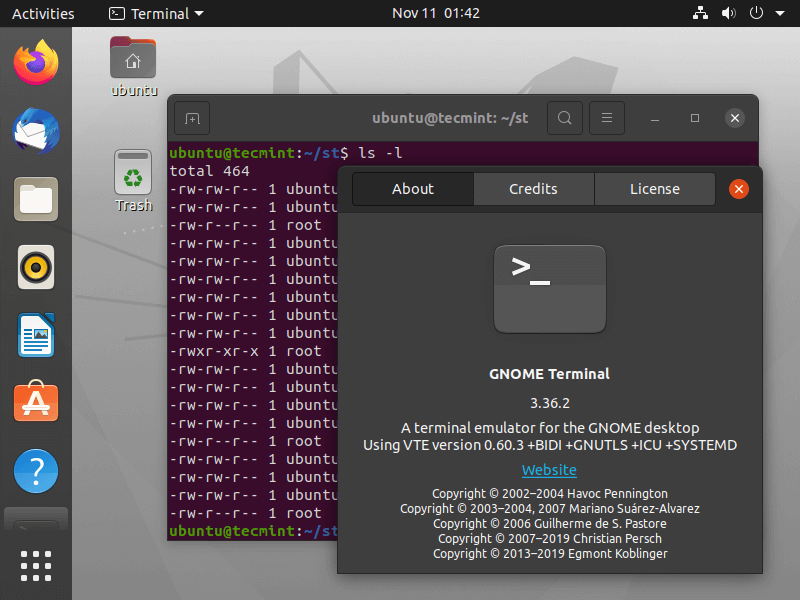
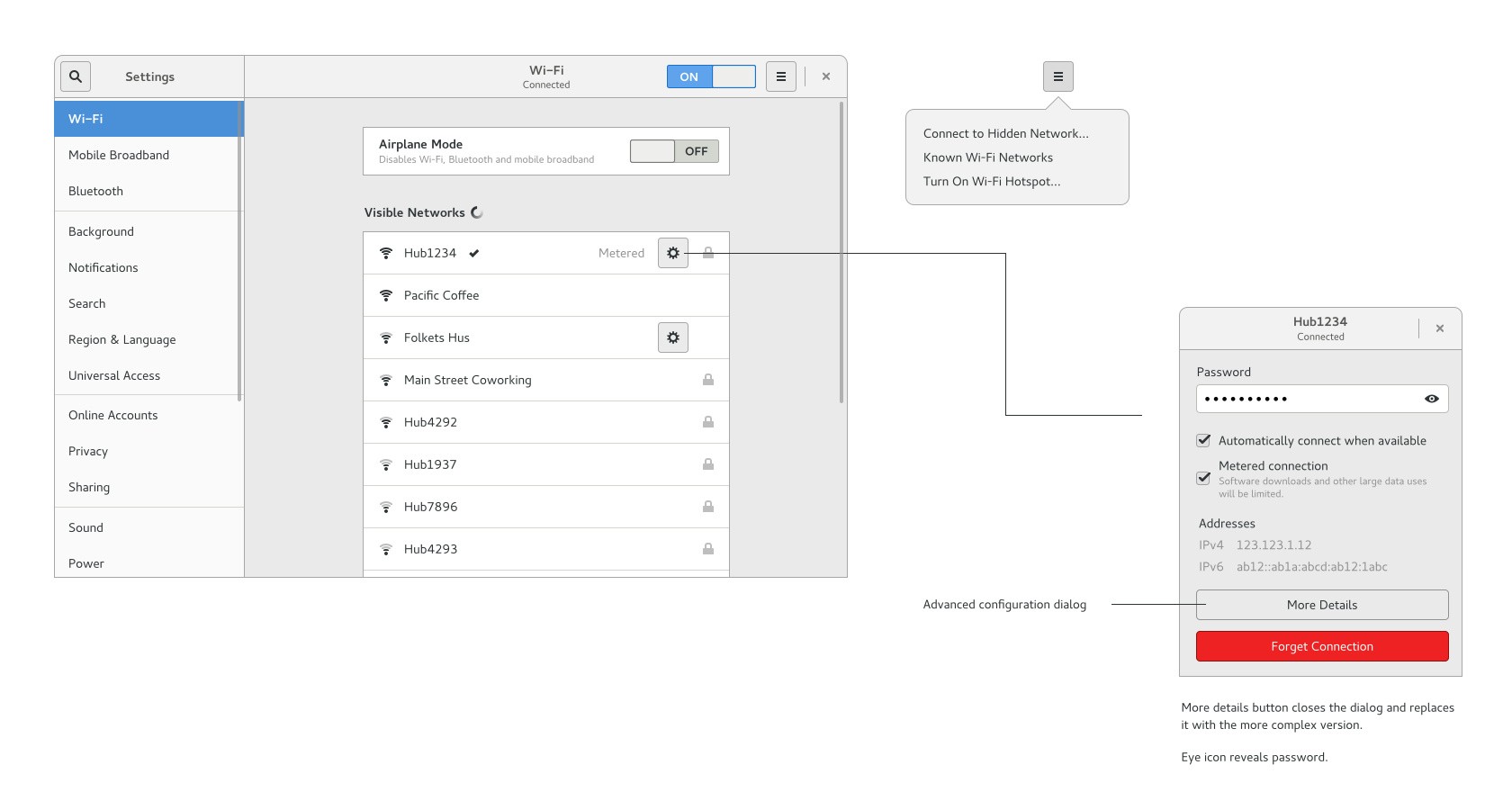
It turns out, at least for me, he was 100% right. I grew to really like Gnome after I dropped all preconceived notions about what it was supposed to be. I ended up loving the fact that the number of virtual desktops is dynamic, I ended up really liking how much could be done without a mouse, and I ended up being kind of surprised how it was both pretty and fast on my (admittedly fairly beefy) laptop.
I use macOS right now dude to the fact that I got it at a discount, but the next computer I buy will probably be a Linux machine, and it will probably be running Gnome.