I was talking to some friends who are teachers about remote learning the other day. They were saying many of their students (they work in rural areas) had the devices but no access to internet. It's a very complex issue now with all the restrictions.
Starlink has just started beta service (without requiring an NDA like the pre-beta service did). ~100Mbps and a competitive 20-40ms latency (although I think sometimes you can get worse as the constellation isn't yet fully deployed... some satellites that have already been launched still haven't fully raised themselves to operational orbit, but this is still a Beta service, so that should be addressed within weeks). It’s spendy at $100/month (which is comparable to other, FAR worse, satellite internet options... and some non-satellite broadband in the US costs this much for worse service), but rural folk should qualify for the rural broadband subsidy which should help a lot.
I’m really excited about these LEO satellite constellations just solving the rural/urban digital divide. As launch costs continue to go down (SpaceX’s partially reusable Falcon 9 has already made a massive difference in making this feasible, about a quarter the marginal launch cost per kg, and Starship should enable an order of magnitude improvement on that) and competition increases (OneWeb has been brought through bankruptcy but is starting to launch again, plus Amazon’s Project Kuiper and the potential of launching on the partially reusable New Glenn), it’s an exciting time for the ending of digital poverty in rural areas.
You've reminded me of my anger about telcos promising to Congress to connect the USA shore-to-shore to the internet and then they just gave up and said "phones will be good enough." No, no they aren't.
"Using the Bells own words and filings, by 2000,
approximately 50 million homes should have been rewired with a fiber optic wiring to the home,
capable of 45 Mbps in two directions, which could handle over 500 channels of video and was
totally open to competition. About 86 million households should be wired by 2006."
Still waiting on that fiber optic connection to my home in 2020...sure would be useful to all the kids that are trying to learn remotely via a damn phone right now.
My makerspace has done a program with Title 1 schools, Girl Scouts, etc. where we give kids a Pi with keyboard, mouse, display and teach them a little electronics, coding, etc. The biggest learned lesson has been that many of them do not have internet access at home other than via a smartphone. So we started loading the Pi's with as much free educational content as we could.
During the past lockdown my University sent students without internet SIM cards with data contracts so they could use their cellphones to tether. IMHO in an emergency situation a public good like the radioelectric spectrum should be commandeered by the authorities --- mobile operators should provide free data service to students in need.
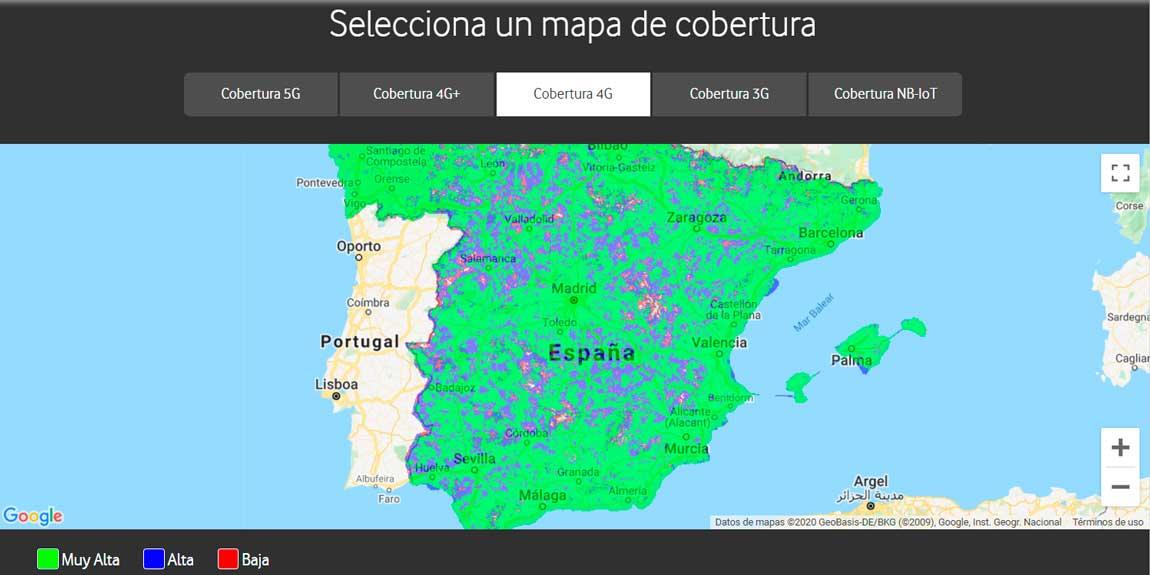
For people without internet in rural areas, cell data probably isn't a solution. Unless you live in a very flat area, being too far from civilization to get wired internet significantly correlates with being too far to get good cell reception.
I recently moved out of the bay area to a my house in relatively rural Oregon. I can't actually work from home though, I had to rent a second house in a nearby town because the best internet connection I can get at my actual house is GEO satellite internet which is far from suitable for work.
I'm only 7 miles down the road from a town of 700, and only ~30 miles from a city of ~20,000, yet I have 0 options for wired internet and 0 cell reception from any provider at home.