The Polarstern ("Pole Star") is a ship of the AWI (Alfred-Wegener-Institute [0]). Another project of theirs, which you might know from images because it has a characteristic look, is the current Neumayer-Station [1][2]. It sits on columns that can hydraulically raise and lower the station to adapt to different heights of snow. This is off-topic but you might like it as well.
The station is of course host to experiments of others as well. The DLR (Deutsches Luft- und Raumfahrtzentrum, "German Aerospace Center") has an indoor-container-greenhouse called EDEN ISS [3][4] there which grows vegetables, herbs and fruits under artificial conditions [5] (german). The fresh produce is a welcome variation of diet for the crew during the long months of winter which otherwise consists solely of dried or deep-frozen food.
Tangentially, there's a great bit in Patti Smith's book M Train about joining a society dedicated to Wegener's memory:
> Formed in the early 1980s by a Danish meteorologist, the Continental Drift Club is an obscure society serving as an independent branch of the earth-science community. Twenty-seven members, scattered across the hemispheres, have pledged their dedication to the perpetuation of remembrance, specifically in regard to Alfred Wegener, who pioneered the theory of continental drift. The bylaws require discretion, attendance at the biannual conferences, a certain amount of applicable fieldwork, and a reasonable passion for the club’s reading list. All are expected to keep abreast of the activities of the Alfred Wegener Institute for Polar and Marine Research, in the city of Bremerhaven in Lower Saxony.
> I was granted membership of the CDC quite by accident. On the whole, members are primarily mathematicians, geologists, and theologians and are identified not by name but by a given number. I had written several letters to the Alfred Wegener Institute searching for a living heir in hopes of obtaining permission to photograph the great explorer’s boots. One of my letters was forwarded to the secretary of the Continental Drift Club, and after a flurry of correspondence I was invited to attend their 2005 conference in Bremen, which coincided with the 125th anniversary of the great geoscientist’s birth and thus the 75th of his death. I attended their panel discussions, a special screening at City 46 of Research and Adventure on the Ice, a documentary series containing rare footage of Wegener’s 1929 and 1930 expeditions, and joined them for a private tour of the AWI facilities in nearby Bremerhaven. I am certain I didn’t quite meet their criteria, but I suspect that after some deliberation they welcomed me due to my abundance of romantic enthusiasm. I became an official member in 2006, and was given the number 23.
I only heard about this expedition after it was finished. I would have loved to follow their daily updates, but seems like too much work to go through them here afterwards.
Does anyone have a good idea about where news about this type of expeditions are shared up front? I searched to subreddits called something with "expedition" but no luck. So all ideas are welcome. Even more cool would of course be to join an expedition like this - but following one must be second best.
"Spektrum der Wissenschaft", the German edition of the "Scientific American", covered their expedition regularly. I imagine other pop-sci sites and magazines did too...
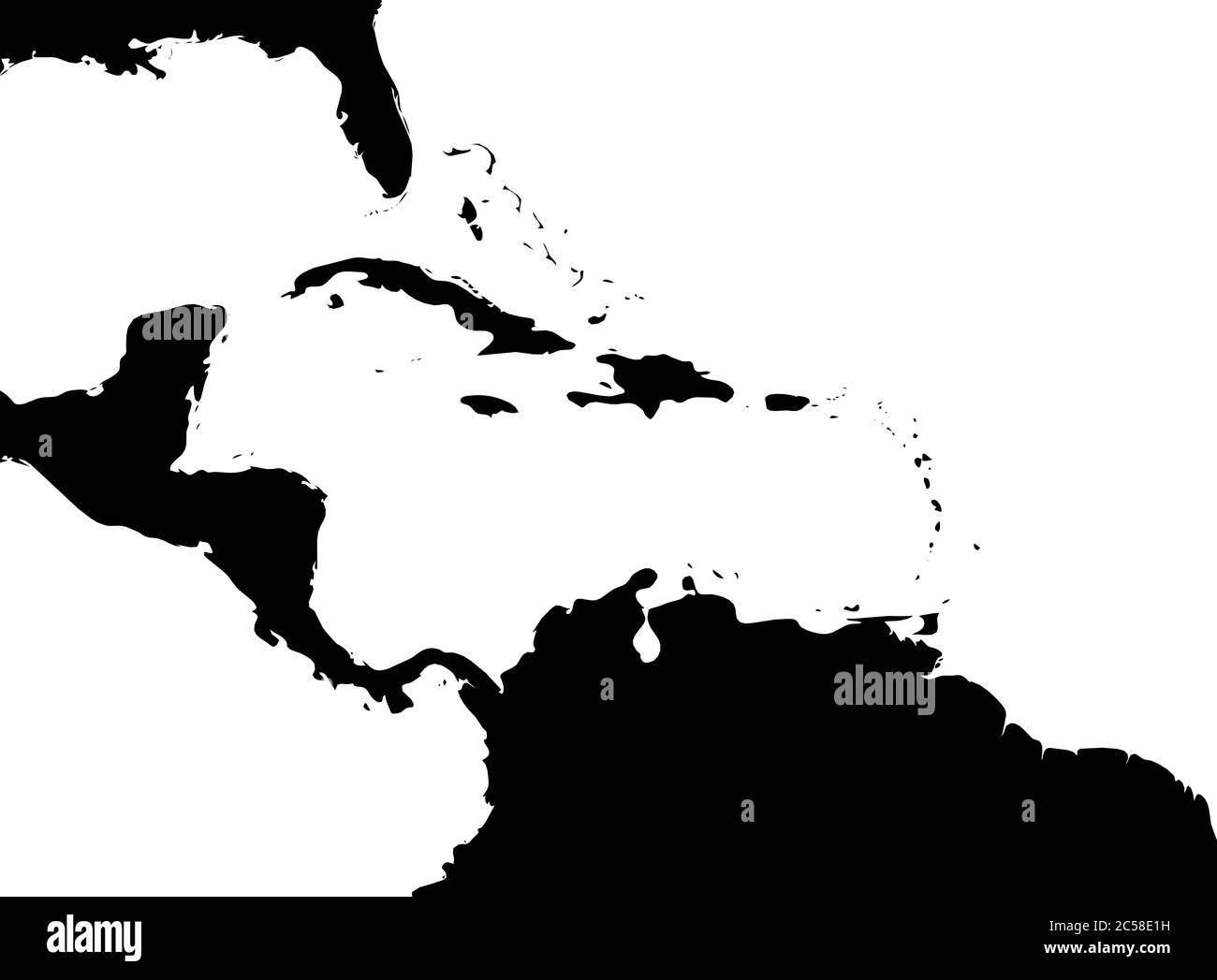
Bad coloring in schematic maps is something that is driving me crazy. This is especially a problem in maps published by media outlets. Often the water is for example white, and the land is black (like here: https://c8.alamy.com/comp/2C58E1H/map-of-caribbean-region-an...). I am regularly staring at these maps trying to figure out which place on earth it shows, only to realize after 10 seconds or so that it is e.g. Europe, and I was confusing water and land.
I'd agree if it were a full color map, but it's a single color map, where the color is used to make the subject (ice) pop. Not to mention artic ice is indeed blue(ish), so the color does accurately represent the subject of the map.
I don't think it's that strange. Orienteering maps use white to indicate "forest", because it's the thing you have the most of and therefore is of the least interest. As another commenter pointed out, the colour scheme helps the ice "pop out", especially the pockets of ice near land.
That is if we ignore the Jevons effect: "In economics, the Jevons paradox occurs when technological progress or government policy increases the efficiency with which a resource is used (reducing the amount necessary for any one use), but the rate of consumption of that resource rises due to increasing demand." https://web.archive.org/web/20150529111127/http://sspp.proqu...
The width of this slim bright side you talk about - is it epsilon?
The harm done by ships travelling the northwest passge might outweigh any emission savings (there - not in total). Carbon dioxide emissions are a rather non-localized problem while soot, spilled oil, invasive species, noise pollution and you name it, are very localized problems.
You should probably also feel bad for every living create on earth including for yourself. Their extinction is likely a sign ours might not be so far behind.
Edit: Go for the down vote, but the uncomfortable truth is that we're not likely to colonize Mars in 50 years or live underground, we need the biosphere just like these creatures. No level of denial will alter this fact.
At our current rate humans won’t face extinction for thousands of years. We don’t need a biosphere to live in a 5C warmer planet.
What will happen is likely massive unrest and famine due to crop shortages leading to a significant population decline. But we can lose 80% of the population and barely be set back 1-2 centuries.
Aside from probably being plain wrong, this sort of thinking is also a germ for boundless evil; from saying "we can lose 80% of the population..." to saying "we should lose 80% of the population so things will be better for the other 20%" and then "let's do something to lose that useless 80% so that ours will be the 20%" is all too small a step.
FFS it’s just a simple refutation of the “human extinction” bullshit. It’s horrific enough without making shit up.
There is no scientific evidence for climate change being an extinction event for humans so there is no substance backing your “probably wrong” statement.
Of course there is no "scientific evidence" for exactly what it will take to drive humans to extinction seeing as that that's never happened yet. But some things we need to consider even if we can't "scientifically" define their probability, and many people who are quite well versed in scientific thinking don't think the probability of human
extinction as a direct or indirect consequence of global warming (especially combined with other forms of environmental destruction that are also happening) is too low to bother talking about.
Anyway, even if "human extinction" is unscientific, the rest of your comment is rather even less scientific than that. Let me see now...
1) "We don’t need a biosphere to live in a 5C warmer planet."
What scientific evidence is there that we can survive without a biosphere (regardless of temperature for a moment)? I know! We'll do it just like the Martian colonists did it. Oh, wait! (facepalm) Or are you saying that a 5C warmer planet will making living easier, because somehow agriculture will work better when it's warmer even without the "natural" biosphere? It's a bit hard to understand what you really meant with that statement, but I'm pretty sure nobody who studies agriculture or ecology would agree with that statement any way you parse it. So: unscientific, I'm afraid.
2) "we can lose 80% of the population and barely be set back 1-2 centuries."
Oh, so that's what happened last time we lost 80% of the population? Oh, wait! (facepalm again) Seriously, if you want a scientific, or at least scholarly take on that question, read Joseph Tainter's "The collapse of complex societies"... sometimes when societies collapse they settle on a lower level of complexity, but other times they just disappear. Also, there simply is no such thing as just being set back 1-2 centuries... we no longer have the technology of the 19th century and it's nowhere nearly as easy to recreate as you might think. And we no longer have the same resources; in your scenario fossil fuels would be gone, at least those that can be accessed with 19th century technology, and that 19th century technology ran on coal. Go back to wood and charcoal and you have to go back more centuries, too.
3) "massive unrest and famine due to crop shortages leading to a significant population decline"
There's another problem with this... you know what usually happens when you have massive unrest and famine? Especially when some of those people who are starving happen to be heavily armed? I'll give you a hint... they don't just starve to death quietly. Again, there are quite a few illustrative examples from past civilizations in Tainter's book. Human extinction may have war as its proximate cause and still be due to global warming at the same time.
We also used up all the easy carbon reserves. Not obvious we could bounce back easily if we go to a before the industrial revolution level of technology.
I thought if mentioning that. On the other hand, many of those will remain as scrap So I’m less sure how that balances out. The burned carbon is just gone.
And makes the atmosphere less hospitable to boot. So any new civilization with 1800 era tech would have headwinds.
But humans can currently live in vastly different climates on the earth already. Unless something happens way outside of the worst case climate change models, we’re just not looking at anything near an extinction level event for humans.
The big island of Hawaii alone has enough population to not suffer genetic inbreeding problems and it’s mountains mean it can handle multiple meters of sea level rise. The entire rest of the planet could be dead and they would be enough to avoid extinction.
If we’re going to start ignoring climate science to scream about human extinction, then we’ve moved into the same corner of the deniers. Let’s stick with what we know, which is catastrophe and mass migrations; but that’s leagues away from extinction.
I remain optimistic that the human race will figure things out before we completely decimate all ocean life and before we make half of the planet inhospitable.
However, I am certain the powers that be will not take any action until MAJOR death waves in the western world such as the destruction of a major picturesque city from a freak weather event. Before that, I expect we will lose:
The last 2 will cause a substantial sea level rise, and decimate places like Bangladesh causing tens of millions of climate refugees that we will be dealing for the next century.
As someone who has direct connections into a part of the research community looking at the sustainability of fishing in the north Atlantic in regards to the real and ongoing acidification of the ocean as well as the policy making over the last few decades I would say that your optimism is misplaced.
There is really nothing being done at the scale needed to avert catastrophic collapse of the ocean food chains.
> ClimateDepot.com is the website of the Committee for a Constructive Tomorrow (CFACT) employee Marc Morano, a conservative global warming denier who previously served as environmental communications director for a vocal political denier of climate change, Republican Sen. James Inhofe.
I think the parent poster was being sarcastic; either way, you're engaging in an ad hominiem attack.
Wouldn't it be better to point out that it is normal for animal populations to fluctuate, or that this is likely a transient phenomenon? Perhaps you could find a study or two to buttress your view?
Your comment is more likely to alienate people than to convince them, though perhaps your objective is to improve your status among like-minded people, rather than to engage with an outgroup.
Does that really matter if they lose their habitat? No matter how many of them there are, without a place where they can thrive, the bears will just die off.
I would be curious if anyone can give a scientific analysis of the "Blue Ocean Event" theory. If you apply heat to a pot of water that has ice cubes, most of the energy goes to melting the ice, and once the ice is melted the remaining water warms much more quickly. Are we not due for similar abrupt disruption when the ice finally disappears?
I've tried to find any strong support or criticism of this idea but haven't come up with anything thorough.
Interesting question, it relates to the heat of fusion of water ice.[1] I think the issue is that there just isn't that much ice on Earth, so its heat capacity (which is somewhat proportional to its temperature) dominates the equation. Here's the information you'd need to do the math yourself:
>"It has been estimated that there are 1,386 million cubic kilometres (333,000,000 cubic miles) of water on Earth.[6] This includes water in liquid and frozen forms in groundwater, oceans, lakes and streams. Saltwater accounts for 97.5% of this amount, whereas fresh water accounts for only 2.5%. Of this fresh water, 68.9% is in the form of ice and permanent snow cover in the Arctic, the Antarctic and mountain glaciers; 30.8% is in the form of fresh groundwater; and only 0.3% of the fresh water on Earth is in easily accessible lakes, reservoirs and river systems."[2]
But there is not that much sunlight at the poles, which is actually the reason why there is ice. Also, the antarctic ice coverage seems to be pretty stable.
Apparently the Arctic gets more insolation than the Antarctic, but the former only peaks at about 25% higher than the Equatorial mean, and the peak is relatively short.[1]
You might want to read what you link: Because the insolation function is the same for the northern and southern hemispheres, i.e., S˜(φ,ε)=S˜(−φ,−ε), annual solar insolation is the same for corresponding latitudes in each hemisphere.
(Encountering crevasses which were not there a few days before is one of the traditional ways for mountaineers to die doing what they love. A local village was recently able to close a nineteenth century missing persons case when the ice disgorged some personal effects.)




The station is of course host to experiments of others as well. The DLR (Deutsches Luft- und Raumfahrtzentrum, "German Aerospace Center") has an indoor-container-greenhouse called EDEN ISS [3][4] there which grows vegetables, herbs and fruits under artificial conditions [5] (german). The fresh produce is a welcome variation of diet for the crew during the long months of winter which otherwise consists solely of dried or deep-frozen food.
[0] https://en.wikipedia.org/wiki/Alfred_Wegener_Institute_for_P...
[1] https://en.wikipedia.org/wiki/Neumayer-Station_III
[2] https://www.bing.com/images/search?q=Neumayer-Station+III
[3] (english) https://eden-iss.net/
[4] While ISS refers to the international space station (see [3]), it is almost certainly a play on words because "Iss!" means "Eat!" in german)
[5] (german) https://www.mdr.de/wissen/dlr-antarktis-gewaechshaus-gaertne...