> and it seems to me applicable to a very narrow case
The floor of the wealth tax doesn't really refute the central argument, because it just means that it impacts anyone who owns a business worth over $50 million. This is a LOT of businesses in the US!
> and even in that case doesn't have drastic consequences.
That level of liquidation and lost ownership will have potentially disastrous ripple effects on the economy, because for a lot of companies, the theoretical market value — upon which one's theoretical net worth ("wealth") is calculated — is based in large part on that individual maintaining ownership and control of the company. Once a founder starts liquidating large portions of their wealth and divesting their ownership, it's difficult to predict what that could do to the value of the company, and consequently the value of pension funds and portfolios that rely on the stability of the corporate value, and ultimately impacts the employees of those very corporations.
> The floor of the wealth tax doesn't really refute the central argument, because it just means that it impacts anyone who owns a business worth over $50 million. This is a LOT of businesses in the US!
We can actually look at the Fed's Survey of Consumer Finances and get a reasonable number here. Household's with >$50m are top 0.07% percentile and there are approximately 84k of them out of around 130 million households....
The Cartesian product of all ownership * value that work out to > $50M is substantial enough that it's 1) probably not fair to individual business owners to force them to divest to raise a minuscule percentage of the Federal budget, and 2) probably not worth the potentially disastrous 2nd-order effects on pension funds and investment funds that are largely predicated on stable/competent corporate ownership.
In any case, it sounds like you've conceded that there is a forced divestiture, and now the argument boils down to: "is that justified?"
Just want to say I appreciate how civil you've been and thorough in replying to the comments. You've added so much knowledge and wisdom to this whole discussion I wish I could save all your comments.


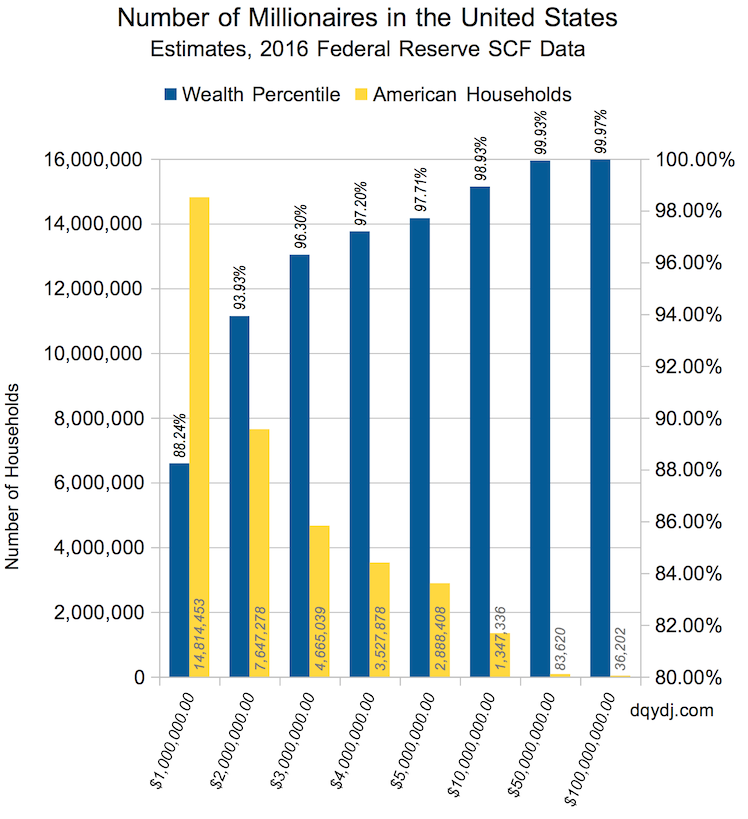
> and it seems to me applicable to a very narrow case
The floor of the wealth tax doesn't really refute the central argument, because it just means that it impacts anyone who owns a business worth over $50 million. This is a LOT of businesses in the US!
> and even in that case doesn't have drastic consequences.
That level of liquidation and lost ownership will have potentially disastrous ripple effects on the economy, because for a lot of companies, the theoretical market value — upon which one's theoretical net worth ("wealth") is calculated — is based in large part on that individual maintaining ownership and control of the company. Once a founder starts liquidating large portions of their wealth and divesting their ownership, it's difficult to predict what that could do to the value of the company, and consequently the value of pension funds and portfolios that rely on the stability of the corporate value, and ultimately impacts the employees of those very corporations.