Sure, but that doesn't mean they... won't go away. In fact, I'm pretty confident all signs point to the fact they will go away. In fact you get ground glass opacities with H1N1 inflenza [1]. I guess the question is "functional asymptomaticity" vs "actual asymptomaticity". Like, if it's not bad enough for people to even notice does it really matter?
There's no evidence to date that people are being re-infected. They may in the future, but to date, no such evidence exists. There are some people who tested negative before who are testing positive now, but that is much more likely to be false negatives and/or false positives.
It would be pretty novel for the human immune system to clear out the disease on it's own, then a few days later forget how to do that, and become re-infected. SARS-COV-1 saw immunity conferred for 2-3 years. [1] I suspect something similar is likely here, probably for a shorter duration due to the more limited severity, but long enough to get us to a vaccine.
Ah my old friend greedo. That's how it normally works, this time could be different, but we have no reason to believe that.
Generally for as long as you show antibody response you won't be re-infected because that's what antibodies do. The link I provided to the study I referenced was specifically for the purpose of, and I quote: "to assess SARS patients’ risk for future reinfection."
"To be clear, most experts do think an initial infection from the coronavirus, called SARS-CoV-2, will grant people immunity to the virus for some amount of time. That is generally the case with acute infections from other viruses, including other coronaviruses." [1]
If you think this time is different the burden of proof is on you to provide studies and not provide unsupported, unsubstantiated conjecture.
We have no idea how long lived the antibodies we develop in response to SARS-CoV-2 last. And obviously, an initial infection to COVID-19 will generate antibodies that will immunize the patient, as long as the antibodies persist. Don't you think that if this was a foregone conclusion, we'd be able to demonstrate that? Isn't it odd, that with people having been infected and recovered months ago, that no one is saying how long the antibodies persist?
In science, it's incumbent on those making the claim to provide studies and proof. That means you...
And to say that this is unsupported, unsubstantiated is ridiculous, and you know it. It's straight from the WHO's mouth.
but it would go against everything we know about viruses and our adaptive immune systems. I know there are some vaccines with lower take rates. Hep B requires 3 injections and only has a 60% change of generating antibodies.
But an immune response from an actual virus should last for at least a few years. There are situations where you can get reinfected later in life if you're not exposed or given booster shots (likes Shingles).
Is there evidences that our adaptive immune system only generates short lived antibodies, and for what families of viruses?
This should be something that can/will be resolved by testing. I find it unusual that no medical authority is going on record as saying there's any long term immunity granted by infection, and that the WHO is being extremely clear in the lack of evidence to support such a conclusion.
Greedo, no. haha. They're not on record yet because the tests are under way. Had they found an early failure that shakes the foundations of medical science, they'd have shared it. Especially in this news cycle which overwhelmingly favors negative information.
It's like saying "I find it very strange no scientists came out on record this week with a study showing water remains wet -- does it?! How can we tell if we don't check again."
Lack of proof of an affirmative is not proof of a negative, and especially not when plenty of other evidence points in the direction of the affirmative (again, not conclusively).
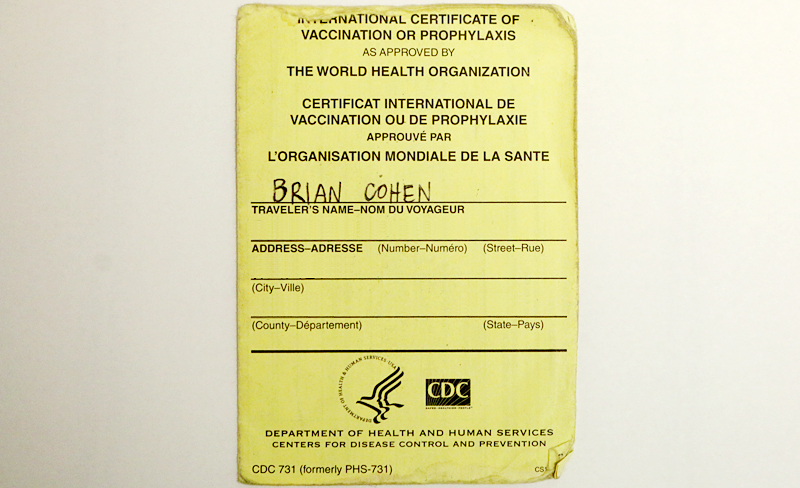
Nothing there is at all incompatible with what I had to say. In context, the WHO is saying that getting the disease once may not be a lifetime immunity to COVID guarantee and shouldn't be used as the basis for issuance of something along the lines of yellow fever prophylaxis certifications like these [1].
I agree. In fact, its highly unlikely, as with coronaviridae we've seen that the milder the disease the less likely you are to obtain long-term immunity. Even SARS, a much, much more serious disease, gives you 2-3 years as per my reference.
However, that's not what GP was arguing. GP argued broadly that "people who test for antibodies [may not be] immune to future infections." That's extremely unlikely. The question is how many people, and for how long, and then how do we utilize that information. Broadly speaking a positive test for antibodies means you're pretty likely immune at the time the test is taken. Of course the question is how that antibody response changes over time.
I was pretty clear about that: "Generally for as long as you show antibody response you won't be re-infected because that's what antibodies do."
The WHO is saying don't issue one-off certificates of immunity for life on the basis of testing positive for antibodies at one point in time before we know more. I agree.
I suspect a round of infection is likely to tide us over to a broad vaccination program, but we need a study.
""There is currently no evidence that people who have recovered from COVID-19 and have antibodies are protected from a second infection.""
They were prompted to issue this because some people were touting this idea of immunity being granted perpetually and allowing people to safely return to work.
"Broadly speaking, a positive test for antibodies means you're pretty likely immune at the time the test is taken."
That's in complete contradiction to what the WHO is saying. Read carefully: There is no evidence.
You're using circular arguments to provide bad information. Something you've consistently been doing.
"...but we need a study."
Why? You've said it's unlikely to be different than other viruses. Of course we need a study, because we don't know.
There is currently no evidence of X does not mean X is not true. It just means there's no evidence of X being directly true yet. Nothing I said contradicts the WHO.
What I said was that we can reasonably infer from similar coronaviruses (including both more and less severe ones that are up to 90% genetically identical) that immunity is conferred. Also from other viruses. We shouldn't base our global health policy decisions on that until we have conclusive evidence but there's no reason for you to continue with the messaging when all evidence points to immunity being conferred for some duration of time.
Specifically what I said was that we do not have enough evidence to issue prophylaxis certificates, but that chances are good immunity is conferred based on studies of very similar diseases. I also stand by the fact it would be hugely surprising (totally novel) that any of those testing positive right now are actually re-infections due to the limited timescale involved.
Seeing smoke doesn't mean there's fire, but it means there's a pretty good chance of fire. Yeesh.
All evidence points to (i.e. implies) but does not prove conclusively yet because studies are under way. Is there some disconnect in your reading of this? This is absolutely how science works. You identify something likely to happen due to a preponderance of evidence then you attempt to prove or disprove it by study. This is called inductive reasoning, and it's the basis for what's known as a hypothesis. An experiment or study is then conducted to prove or disprove your hypothesis.
You have not brought any evidence to the table. If there is a study that says SARS-COV-2, unlike the majority of (all?) viruses and all coronaviruses that results in immune response sufficient to clear the disease that then immediately dissipates, I'll certainly accept the premise.
Until then, a preponderance of evidence points (or suggests without proving conclusively) otherwise.
> That's crystal clear, but it doesn't align with your opinion that this is just like the flu in seriousness.
That is not my opinion. My opinion is that it's milder than the flu for young people (it is) [1], and much worse than the flu for older folks (it is) -- no citation needed, I assume. To suggest otherwise would be to ignore the evidence you claim to hold sacrosanct.
SARS-COV-1 has a two orders of magnitude higher fatality rate, so one would imagine the damage would be substantially worse. Is it really a stretch to believe that level and quantity of damage correlate both to recovery time and to mortality rates? Further, were there asymptomatic SARS-COV-1 cases?
SARS-COV-1 had an IFR (not CFR) of 14-15%. Broken out, it's less than 1% for people younger than 25, 6% for those aged 25 to 44, 15% for those aged 45 to 64, and more than 50% for people 65 or older, officials said. [1]
On the other hand SARS-COV-2 has an IFR of somewhere in the lower quartile of the range 0.1% to 1%, trending to around 0.3%.
Not to mention, I argued that lung function would recover, to which you said "strong argument, not [the much worse disease saw lung function recover in 6 months]" which implies you were actually supporting my argument not refuting it.
The coronaviridae family is huge, and fatality varies from ~0% in the 15% of common colds they cause to 0.1-1% for COVID to 15% for SARS-COV-1 to 50% for MERS. I can't stress this enough. SARS-COV-1 and MERS are not SARS-COV-2, they are much worse diseases.


[1] https://pubs.rsna.org/doi/full/10.1148/radiol.10092240