I've recently been making very low effort bread, which takes less then 10 minutes overall, and is (in my novice eyes) exactly the same as bread that has been kneaded with the "proper" schedule. Perhaps one of the experts here can shine a light on why something simple like below creates (almost) the same quality as a mixture that has been processed with much more effort?
- Put everything in a bowl, and mix it until it's consistent. Usually takes 2-ish minutes. I find a simple, non-sharp knife to work best.
- Cover it with cloth and let it sit for 12-20 hours depending on the mixture and temperature.
- Get the mixture out, en cover with flower on all sides. Don't knead or overly touch (it will lose volume).
- Preheat the oven with an iron cast over pot, once it's hot (250C), take out the pot, put in the mixture, and put on the lid. Halfway into the baking time, take off the lid.
This is exactly my recipe, which I have been using for 5 years now with great success. It's foolproof. The bread will usually look like shit after you dump it into the iron cast pot, but will have a nice and smooth and tight surface after the first baking round with the lid on.
Gluten development can happen through two mechanisms (usually both are in play), once water is added to flour: either physical stretching (kneading), or just time. The stretch-and-fold method balances these two. But if you're letting the dough sit for 12-20 hours, that's achieving the same effect.


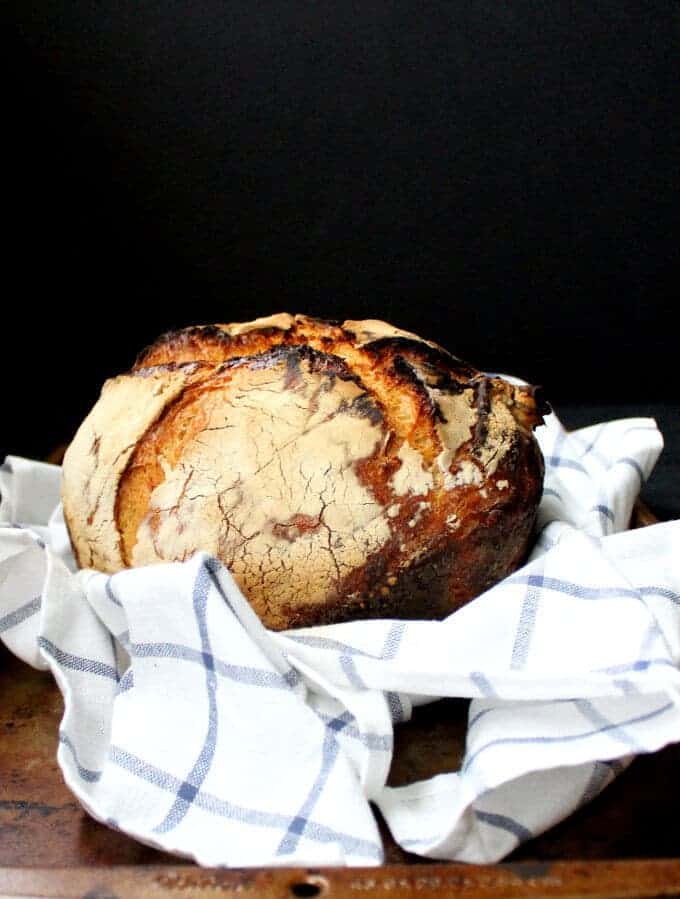
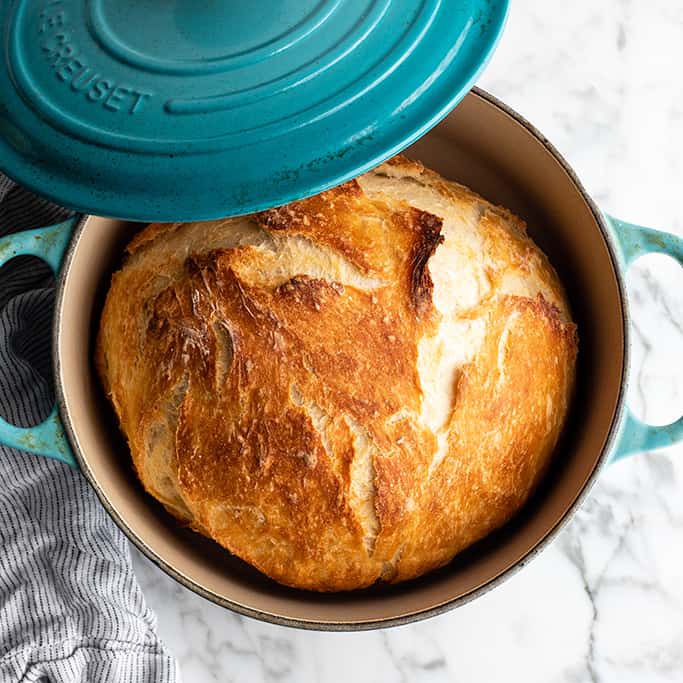
- Put everything in a bowl, and mix it until it's consistent. Usually takes 2-ish minutes. I find a simple, non-sharp knife to work best. - Cover it with cloth and let it sit for 12-20 hours depending on the mixture and temperature. - Get the mixture out, en cover with flower on all sides. Don't knead or overly touch (it will lose volume). - Preheat the oven with an iron cast over pot, once it's hot (250C), take out the pot, put in the mixture, and put on the lid. Halfway into the baking time, take off the lid.