Compare the fox's journey of 2,176 miles in 76 days to the average Pacific Crest Trail through hiker's 2,660 miles in 152 days. That's 29 vs 18 miles per day. The PCT record is about 50 miles per day. So an athletic human could have kept up with this canine.
Of course the humans don't have to scavenge their meals along the way and the fox doesn't have to carry supplies.
Typically dog companions don't do well on such long hikes.
So while we can't keep up with migrating fish or birds at least we can potentially keep pace with a fox 1/8th of our size. Yay team. We're bred with the talent to keep on truckin.
Marching 30 miles per day with their entire gear on their body was expected of soldiers during the napoleonic wars and the Prussian (later German) army kept that requirement until WW1.
It's scary how inept people are in general at navigation. Telling the time and obtaining a rough compass heading by the position of the sun should be something anybody can do but surprisingly few people can do this.
Human navigation is cultural. Urban culture (for better or worse) tends to cut people off from physical reality. Spend a few days with a Cape York indigenous person and find out how amazingly good people can get at this.
John Huth's The Lost Art of Finding Our Way is a good read for anyone interested in improving their navigation skills.
Urban culture . . . tends to cut people off from physical reality.
No, it simply puts them in a different physical environment. People who grow up in a city learn to navigate in a city. People who grow up in the bush learn to navigate in the bush. We adapt to the physical environment in which we find ourselves. Studies have shown that even pigeons follow roads to the extent that if they take a wrong turn, they will backtrack to a roundabout and follow a different road rather than cut "cross country." And why not? The roads are obvious physical landmarks; why wouldn't pigeons use them?
You are confusing culture and physical environment. People don't only spontaneously 'learn' about how to get around a space they happen to be dumped into. They are inculcated into a culture. There is a depth of accumulated knowledge and engagement with physical reality in rural cultures (especially, but not only, indigenous ones) that is largely absent from urban cultures. There are good reasons for this (relative differences in cultural longevity, role specialisation, population mobility, navigational complexity of environment etc).
For those who don't know: The natives of the Cape York area speak a language with no words for front, back, left, or right, they only have words for compass directions. Thus, speaking their language forces you to be aware of compass directions at all times.
This would solve an issue I have regularily. Sighted people tend to invert left/right almost more then 50% of the time when telling directions to a blind person, especially if they are not looking in the same direction.
In fact, the error is so common that I actually gave up listening to directions from random strangers. The likelihood of them being wrong is so high that it actually is dangerous to listen to sighted people without double-checking if they actually can be right.
> front, back, left, or right, they only have words for compass directions.
I know it's not exactly the same thing by I remember my Eastern-European grandma almost never using the words "right" of "left", she was almost always using what I can roughly translate as "upwards" and "downwards", as in: "paganel, give me that pitchfork that is upwards from you" or "pass me the rake that is downwards from where you are".
My grandparents lived in a mountainous region, and as such one of their main tools for making sense of where things were was to position those things "higher" or "lower" compared to the position of the speaker.
Thanks for that link. Fascinating. I had no idea of that linguistic aspect. My comments were just based on having spent some time in Cape York (in the bush & on the water) a few years ago.
I'm pretty good at this at home in the southern hemisphere, but I'm much worse when visiting the northern hemisphere and the sun "goes the wrong way"...
My instinctive sense of direction doesn't work with "the sun in the south midday" thing, and I need to pull that up into the intellectual part of my brain all the time.
"Ummm, I'm in SF, if the sun's over _there_ and it's mid morning that much be, ummm, south east-ish I think. Yeah. So north must be (turns around) _that_ way".
I _never_ end up thinking those things at home, I just "know" which way north is. It doesn't even occur to me to question how or why I know that.
Yes. I live at 50° North so can assume that the Sun is always in the southern half of the sky and always goes from left to right across the sky (as you look at it). So if it's sunny I can make a good guess at the compass directions, especially if I know the time. I can reverse this process, e.g. in South Africa, with a bit of thought. The Sun still seems 'wrong' though.
Where I get confused is the equator, where my simple rules don't work.
I know how you feel. I used to live in OZ, and when I visited NYC, I'd always end up going in the opposite direction of where I was supposed to go (and no, taking the opposite of the direction I "felt" I should go, didn't work either... haha)
I am always impressed and a little bit worried that some people I know completely rely on Google Maps (or competitors), even for basic navigation tasks like driving to some nearby village or getting to some tourist attraction in a foreign town they are visiting. With some of them, it is obvious that they don't have the mental representation of a city you normally would have after living/staying there for only a few days. I don't know whether this is sad / dangerous or even unhealthy for their brains, but it worries me enough that I make a conscious effort every day to only use route planning software to get an understanding what the optimal route would be. After that, I always rely on printed maps, general handwritten waypoints or just wandering around a foreign town in roughly the right direction.
For the same reason that you should be able to set up a tent, cook a meal, write some software and repair some piece of kit that you need. It's the kind of thing that comes in handy all the time. Of course you could rely on all kinds of technical gizmos to cover you but that stuff can break, run out of battery power, be lost and so on.
Good luck finding your way out of the national park with your empty phone.
Hah, tents. Those can be broken or lost, utterly unreliable. Best just cover yourself in leaves when the rains come.
Sarcasm, of course. But this manly-man "gotta be self sufficient" thing always strikes me as so peculiarly limited. Why assume that this piece of gear will be lost but not that one? Why should we believe that, when all the restaurants have gone and civilization has collapsed, the grocery stores will still be open? That by the time a software engineer cannot be found at all their skills will be at all relevant?
I get being a well-rounded person and the desire to be useful in a pinch, but let's not delude ourselves about how prepared any of us really are for The End Of The World. Certainly none of us should be getting up on soapboxes about it.
It's nothing to do with manliness, but just common sense. If you don't know the sun sets in the West and is at its highest point roughly at noon in your local timezone what else is there that you don't know? Basic practical knowledge comes in handy all the time. There isn't a skill that I have that I have not used (and not just to use it when some better alternative was available) and there are still plenty that I'd like to acquire and it has nothing to do with the end of the world but mostly with living in the one I am in right now.
> If you don't know the sun sets in the West and is at its highest point roughly at noon in your local timezone what else is there that you don't know?
And how many more things I do know
> Basic practical knowledge comes in handy all the time.
It doesn’t. The ability to strike a tent, roast a grizzly bear, read weather from moss and bird patterns comes in handy about 0% of the time.
Even knowing that the sun sets in the West has zero practical applications in urban settings.
> Even knowing that the sun sets in the West has zero practical applications in urban settings.
Certainly not zero. If I know I'll be coming back to my car in the late afternoon, knowing roughly where the sun will be means I can park in a spot where the shadow will probably be, possibly even in an unfamiliar lot.
Here's another one. The first step in cell phone navigation is frequently something like "Head West on such-and-such street". In the absence of any other markings, the sun can tell you which way that is.
It's not about preparing for the Zombie apocalypse, it's simply a matter of attaining and retaining skills that might come in handy in one or several fairly unlikely scenarios. Very few preppers expect to actually survive armageddon on their own; if the shit hits the fan for real then then only way to survive AND thrive will be as a part of a group.
Being able to set up some basic shelter and navigate in the wilderness is more likely to be handy if your car breaks down in the middle of nowhere and your cell phone battery is flat.
> but let's not delude ourselves about how prepared any of us really are for The End Of The World.
What does that even mean? Is there an upcoming mass extinction event that comes with a detailed list of skills required to survive it? All the parent was talking about was basic practical skills that lets you solve day to day problems. You can chose to solve them differently, or avoid those problems altogether.
> Good luck finding your way out of the national park with your empty phone.
That's why the national park is full of clearly marked trails.
If you're backpacking through unmarked wilderness, you need a navigation system, and you know you need it. That's 0% of people to several significant figures.
I have ended up in neighbourhoods in cities I'm not familiar with, which all have "clearly marked roads", but knowing I'm on the corner of Smith St and 22nd Avenue isn't the same as knowing how to get back to somewhere I know where I am.
Having a very coarse idea of compass directions lets you do things like "I just need to keep heading east until I hit the railway line, then follow it to a station", or "I can head to the coast then turn right and I'll eventually end up at Cliff House, and I know how to get home from there".
It is still a useful skill, especially if you ride a motorcycle, where those strategies are often "good enough" that it's not worth stopping to pull out your phone (even if you do have coverage and battery...)
Even just being at a large event like a festival, and being able to look at a map with north indicated and then go, "yeah, so we need to go _that way_ to get to the stage we need next" is better than trying to match landmarks from the map to choose which direction to go (in my opinion...)
I assume you haven't gone hiking in many places. In national parks and similar areas the trails are often vague, poorly marked, and easily confused with animal paths. Get just a few steps off the path and it's easy to become completely disoriented, especially in dense forest where you can't see anything but trees.
I agree. There are some trails that are poorly marked. Other times, spring snow-melt will create what looks like a trail, misleading people. Flash floods can wipe away whole sections of trail. I've had fallen trees, yet to be cleared by trail maintenance, obscure the actual trail and I end up following an animal path or an otherwise deprecated path. Hiking in snow presents yet another problem. There are several places I've hiked above the timberline that are wide-open scree fields with no discernible markings. There are plenty of "unmaintained" trails -- they're on maps, but not the beneficiary of any upkeep. Even with a flashlight, hiking at night in thick cover can be a real challenge at times. Many trails are well marked, but there are many instances in which they're not.
>> If you're backpacking through unmarked wilderness, you need a navigation system, and you know you need it. That's 0% of people to several significant figures.
I semi-regularly backpack through unmarked wilderness with no navigation and no map, and I have friends who do as well. But as you said, perhaps I'm in the 0% to several significant figures.
> I semi-regularly backpack through unmarked wilderness with no navigation
If this were true, you'd be lost. I'm including things like "keep the mountains on your left" in the category of "navigation".
The people complaining about forests are correct in that regard -- in a forest, you can't see the mountains, the sun, or the stars, and getting lost, unless you have very good training in forest navigation, is pretty much inevitable. (If there's a river, you _can_ still see that.)
as someone who has gone hiking in most of the national parks in the west of the US I can tell you that trails are marked pretty well and whenever you’re in doubt you should just go back. most people that get in trouble are a little too adventurous for their own sake (or just plain stupid in their decision process)
I live in NYC and live pretty much my entire life in dense urban cities. Why on earth would I need to know how to make a tent, tell the time via the sun, or other things you probably view as crucial like starting a fire or knowing how to fish. Heck, for me it is a waste to learn how to drive.
It is very self centered of you to think everyone's lives are similar enough to yours that this skill even has a chance d being used once, less so being necessary.
By the same reasoning I could argue that everyone should know how monetary policy in the united States works, because it effects everyone in the world, even if you don't live in the USA. We have finite time and energy to learn things, it would be a waste to use them on learning how to do something you will never have to do.
I haven't had to setup a tent in well over 20 years. I hate camping and have no plans to ever go again. So... No. I fully disagree that it's necessary to be able to do everything you've mentioned.
Why? Certainly anyone could learn to do this, but is there any practical reason for someone like me who absolutely never goes to the wilderness to spend time doing this?
I can't tell you how many times I've told my wife something using cardinal directions (it's due west of here) and she has no idea which way that is. Frankly its frustrating. Cardinal directions are so very useful that not knowing naturally which way is which is self-limiting.
I'm so annoyed when somebody gives me cardinal directions, because it requires me figuring out where the north is, when half the time I couldn't even tell you where the sun is due to high buildings and cloud cover. There are countless better ways of giving directions when you're within 100 miles of civilization.
It’s hard to walk on a straight heading for most people. A simple trick helps. Pick a landmark on the horizon, walk toward it checking for it periodically, and once you reach it pick a new distant land mark in the direction you’d like to travel and repeat.
Of course this requires knowing which direction is which. That’s a separate skill using gps, compass, sun, moon,
stars, moss, or whatever.
It’s not the sense of direction or ability to find our way that I was referencing, but simply that we are large, bipedal, ground dwelling animals. Picking through the brush is much faster for a Fox. Inclines that would have to be carefully negotiated by a person can be simply scampered up by an agile quadruped.
Humans have the pretty nearly the best long-distance speed of any land animal, lots of things can out sprint us (which is bad for us if they are preying on us), but very few can evade sustained stalking by humans (which is bad for them if we're preying on them.)
True, but persistence hunting evolved in a hot climate. (Which is why we have other adaptations such as mostly-hairly skin to facilitate sweating.) Persistence hunting in the Arctic without the coat you're trying to catch would be a rather different matter.
Well but that's the thing - we can out walk a vast majority of animals on this planet. Early human hunters were successful partially because they could chase their prey for days if needed until it collapsed from exhaustion. We might have not have the same speed as some of the animals, but human endurance is unparalleled in the animal world.
Human endurance is unparalleled in the animal world when the temperature is high. At low temperatures some canids and horses can do as well or better, but they can't shed heat efficiently.
Unparalleled in the _land_ animal world perhaps. But there are stories of birds that fly for months at a time. Penguins (in water), ostrich's and camels can also achieve pretty unparalleled things wrt endurance. And who knows about things in the sea...
I don't understand why articles like this cant have a map? id argue almost every news article should have a map, giving it context locally, regionally and globally. But especially when you're talking about a crazy trek, even if it was just two points on a map - context is king.
Related: I recently watched Werner Herzog's "Happy People: A Year in the Taiga" (can highly recommend). At the end of the documentary, a Siberian hunter returns from his cabin to his home village for Christmas. I takes him an entire day by snowmobile in harsh Siberian winter conditions, and at the end he travels for several hours in total darkness. He does not make a single stop.
His dog travels with him, but not on the snowmobile. He runs next to the snow mobile the entire trip.
Finally, the hunter arrives at the village late in the evening. The dog doesn't even seem to be exhausted. He happily greets the hunter's family members, and a woman casually mentions "well, the dog must be hungry". They give him something to eat, and that's that.
  You might also like:

  - Polar bear shot dead in Iceland
I can't say that I would.
I guess this is as good a place as any to ask – what's the value of interrupting the article halfway through to link me to other articles? It's something I expect from the likes of Buzzfeed, but now the BBC is doing it too. Did they think I'd get bored halfway through?
The article on a polar bear shot in Iceland is also about migrations patterns of mammals in the far north Atlantic. So someone is reading it for the subject rather than the story may like it.
Their metrics are for “articles viewed”, not “articles that the reader read and enjoyed”.
They don’t care if you get bored halfway through, they probably don’t even care if you read the article. As long as the numbers for the money metrics go up, they’re happy.
The BBC does not run ads, and as far as I'm aware does not use any sort of metric you described. It is tax-payer funded service. What they have been doing is copying "features" from other popular news websites, i.e. Buzzfeed, and been integrating them into their own. I appreciate the fact they copied the "suggested articles" feature. I just don't think they considered it long enough to question as to why other websites put the articles half way through and not at the bottom...
While I generally agree with what you said, they do track metrics, and that is one part of how the BBC decides how to spend it's money. If their articles online got a 10th of the traffic they would probably get a lot less money to write those articles. Public service is only useful if people consume it even if it should not optimize for that metric alone (or even primarily).
So the people who fund them are happy to just have the money go into a hole and... then what? They definitely have metrics. How do they know which journalists are writing good articles? How do they know which topics to write about?
This makes me wonder: could a human who is totally attuned to this cold environment do the same thing at the same speed? This would mean not being able to get any supplies, carry clothing and tent if needed and basically live off the land. Can humans do that?
Your question reminded me of the purported efforts of one of the male children of the Lykov family (the family separated from civilisation in deep Siberia):
> Lacking guns and even bows, they could hunt only by digging traps or pursuing prey across the mountains until the animals collapsed from exhaustion. Dmitry built up astonishing endurance, and could hunt barefoot in winter, sometimes returning to the hut after several days, having slept in the open in 40 degrees of frost, a young elk across his shoulders.
A few years ago I read travel by a man who spent a summer with nudists/naturists in Europe. His intention was a travel article about about the nudist subculture, but towards the end of summer he found himself hiking nude beside a frozen lake. "I didn't even feel the cold." The article then became about the ability of the human body to adapt. He realized that by wearing so many different types and layers of clothes we deny our natural ability to adapt.
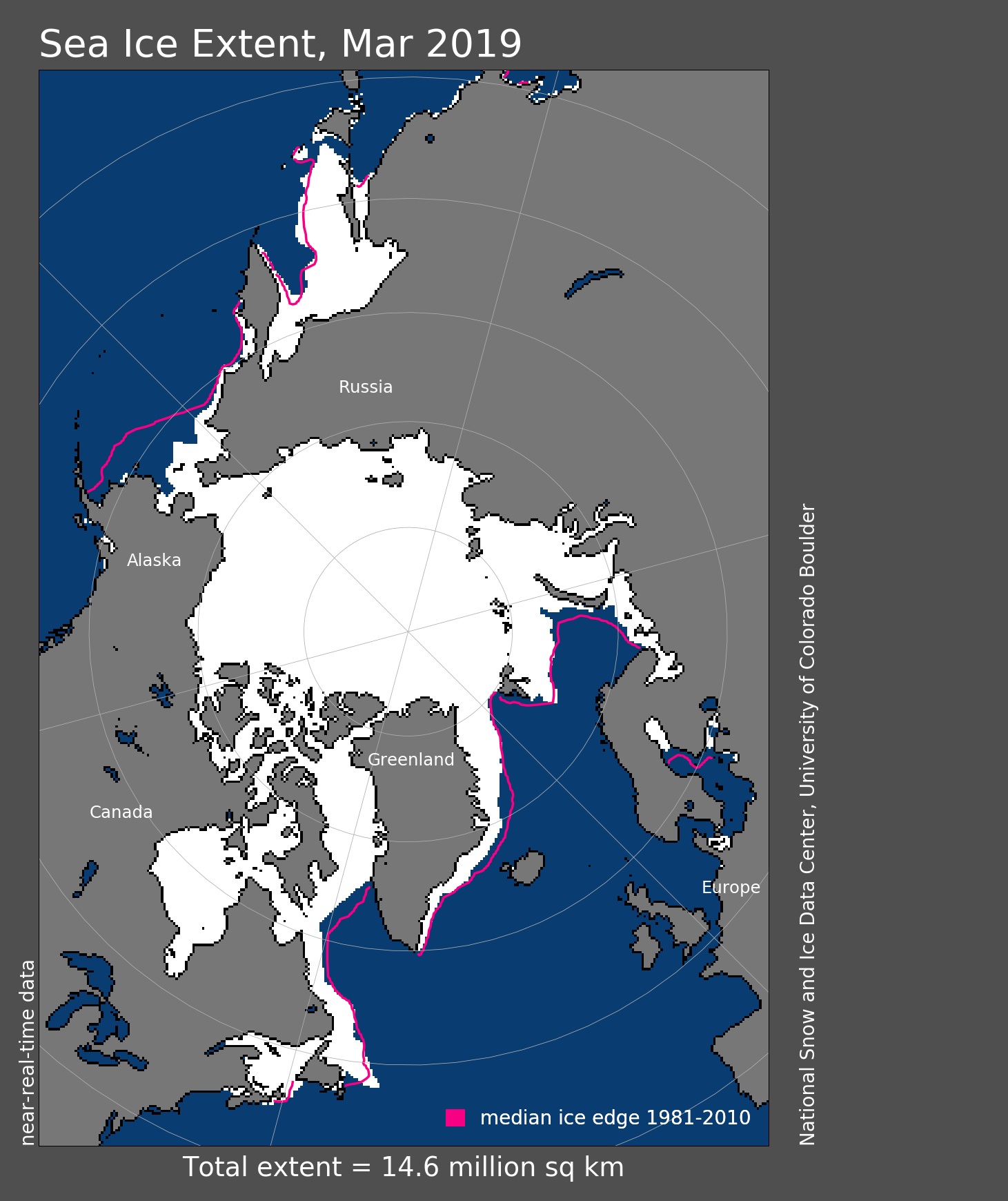
Wow, I assumed that there was so much water surrounding Greenland that it would be impossible for a fox to swim or get there by themselves. Any idea how much of the path to Greenland from the poles and Canada is covered by ice and how far is pure water?
Does the bbc now have the modern clickbait intensifier generator as well? something that randomly adds "speechless", "your draw will drop", "what they dont want you to know" etc etc
I was going to point out that 'speechless' is a quote, but it appears to be just a (translated) quote from the linked article, not from the scientists themselves. Still, it's at least quoting someone else's clickbait.
I wonder how f there's anything to eat on the ice. Otherwise, it's hard to fathom what drives these foxes to keep going deeper into the frozen desert without so much a a faint smell of game for weeks.
It’s even more impressive when you consider she was rubbing her shoulder on the ground the entire 2,700 miles trying to get the transponder to come off.
I couldn't find that info anywhere in the text so I assume it's a remark trying to point out a problematic animal-abuse like aspect of this research. Which I do not see
Surely you mean that she checked several social media feeds on the smartphone she was outfitted with every half mile. And that at least five ad companies and twenty trackers followed her journey, none of which correctly deduced that she was a fox.
But what about the plastic pollution as a result of this (from the GPS tracker that will now become permanent plastic garbage).
You need a little perspective about the true extent of the problem. A GPS tracker probably weights 4 ounces. For comparison, the Yangtze river alone dumps 1.5 million metric tons of plastic per year into the Yellow Sea.
Some oceanic science experiments drop thousands of ocean drones into the oceans to track currents. I’m not saying it’s not worth it, but how come nobody questions if it is worth it?
Perhaps because it's obvious enough that the drones are being used for something useful (research) and also that the amount is so small they don't even register compared to the sheer amount of actual waste that is being constantly generated.
You'd probably have to do millions of there experiments to even show up on the radar


Of course the humans don't have to scavenge their meals along the way and the fox doesn't have to carry supplies.
Typically dog companions don't do well on such long hikes.
So while we can't keep up with migrating fish or birds at least we can potentially keep pace with a fox 1/8th of our size. Yay team. We're bred with the talent to keep on truckin.