> And unlike with object recognition that uses cameras, there are no privacy concerns, or need to maintain line-of-sight or good lighting conditions. Radar works through different materials and in the dark as well as the light.
Wait, what? The ability to see through walls and not require line of sight leads to fewer privacy concerns?
Seems to me the privacy concerns are significantly greater for radar than facial recognition. Radar can see places that cameras can't, and while it doesn't capture color information, it does capture detailed 3D data that camera-based systems need to interpolate.
Plus, you know, the whole working through walls thing. Seems like there are at least as many opportunities for abuse as with facial recognition technology.
Firstly, I think (though I could be wrong) that when they talk about privacy concerns they mean the sort of concerns the average person would have about having a camera about... I.e. naked or compromising pictures of themselves getting leaked. I would guess this wouldn't be a problem with radar as it doesn't create images.
Out of curiosity though, not having much knowledge on the subject myself, what would be your security concerns? I would be genuinely interested in knowing what we should be looking out for, privacy wise, with such technology.
Don’t confuse privacy with secrecy. I know what you do in the bathroom, but you still close the door. That’s because you want privacy, not secrecy. (From I have nothing to hide. Why should I care about my privacy? : https://medium.com/@FabioAEsteves/i-have-nothing-to-hide-why...)
But privacy is relevant here. Easy example: a person whispering,their private conversation no loses it's privacy due to lip movements being read. Two people enter a room and exchange an item for cash,with radar their transaction loses privacy.
Emotional manipulation. Using radar to detect emotional states with 70% accuracy for the general public was achieved 2 years ago by the EQ Radio team at MIT.
They did this by detecting breathing & heart rate at a level of accuracy on par with wired sensors.
This tech works through walls for multiple people at a time, whether they're sitting still or moving.
The world is not emotionally responsible enough to protect against this tech.
If the technology were fetishised, the tech itself would acquire the status of fetish, which isn't the same as the tech being used to ends of fulfilling a fetish (e.g voyeurism). Some brands arguably promote technology fetishism, but fetishism isn't necessarily sexual, for instance the theory of commodity fetishism.
Radar can create images just not true to life color photos. But, leak such a photo of a couple in their bedroom with the blinds closed and you have a problem.
If you mean from the inside that’s a question of contrast. Look at a tv in a dark room through one side of a t-shirt a few inches from your face and it’s a non issue. Try the same while the side facing you is well lit and it does not work.
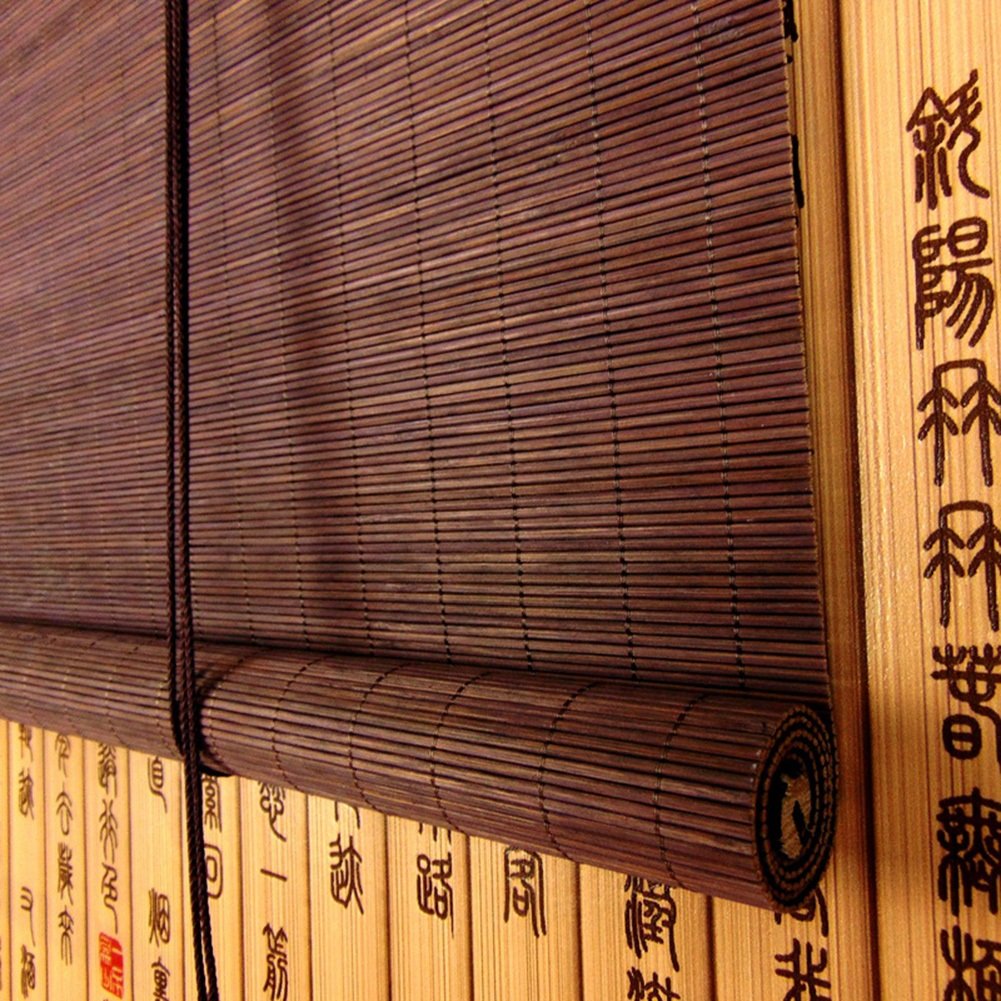
Under some situations you can see through thin cloth blinds like this from the outside, but that’s mostly poor blind choices.
It's actually a blind on my backporch similar to this: https://images-na.ssl-images-amazon.com/images/I/71rijF9vnlL... , but it has tiny gaps in-between each slats... I could see through the blind when I was zoomed in to 300mm while being a meter away from it... I could see my neighbor's house and the slats were invisible in the picture. Kind of creepy but I don't have this camera anymore so I cannot do anymore tests...
The video linked below literally has an example of this technology recognizing individual credit card even when stacked. While (I assume) the CVV code isn't readable because it's not embossed into the card this still seems like exactly the kind of application that does have privacy implications.
Imagine someone sticking these under the chair in a cafe and skimming the card numbers of everyone who sits down.
I'm wondering about applications of this to robotics? Like, could this replace any of the needs/uses for force-feedback sensors in robotics, and/or for all the cool stuff Dexter[1] is doing to precisely locate it's arm in space with solutions less coupled to the hardware specifics/manufacturing? Could also maybe be really cool way to train robots on really precise behaviors if they can copy with really fine precision exactly what someone does with their hands and fingers, maybe can generalize/learn from a few simple demonstrations really complex interactions if the 3d fidelity is good enough? Dunno, definitely lots of other concerns/questions but robotics and VR/AR stuff come to mind for me and weren't mentioned at all in the article or any of the other comments, curious if any reasons I'm missing why not relevant there.
This small radard is sensitive enough to identify playing cards by looking at the tiny texture. Looking forward to seeing magicians using this in card tricks. Face ID with hyper sensitive radard should also be very accurate.
I'm not sure "self-styled" is quite right here, he is a card mechanic, that's the term for someone who cheats at card games by manipulating cards, and he demonstrates exactly those techniques.
Hmm are you sure? I thought they were just using hole cams still. Little cameras built into the rail or into the table that players just showed their hands to while playing.
Yep, that's the old tables problem is it's up to the player to show their hands and some either don't care or don't want to reveal their startegy ... I think they even have RFID chips, it makes the game much more televisable
rfid/nfc is popular at the moment simply because it's cheaper; no table to cut up or glass/cameras to put everywhere.
as a poker player i've always been queezy about the idea that my hand could be read remotely in theory -- but I don't play those kind of tables anyway.
Random side-fact: a co-worker who climbs a lot stopped using fingerprint sensors on his phones because his prints change frequently enough due to climbing, that it's basically useless.
Many years ago I had to clock in and out of a job with a fingerprint scanner. I had the same issue because I played acoustic guitar a lot and had thick calluses on my fingers that would occasionally crack.
I had continual issues ~20 years ago when I worked nightfill in a supermarket's perishable department. The freezer exposure apparently changed my prints enough that clocking out was an issue.
It was an entry-level IT support job at a US public school district circa 2005. They had just recently installed the scanners at every building. I believe that part-time and hourly employees like custodians, mechanics, groundskeepers, and cafeteria workers were the primary target, but the policy also extended to the tech support department (which was only me).
Mandolin positions your finger such that the callouses form even further onto the fingerprint than with guitar. I gave up on TouchID with my left hand (thumb still worked, though), and FaceID was a nice upgrade.
I mostly stopped using mine because I have a bad case of hyperhydrosis (sp?), so my fingers are always sweaty / oily enough that none of the devices I use can reliably tell what my prints are.
Even when I got printed for the feds (for work reasons), they had to redo most of the fingers.
I climb regularly and can say that I am a bit concerned that the finger print scanner on my Pixel 2 works as often as it does. It makes me wonder if the initial scan of an abused finger means that it will read false positives more often.
Anecdata: I regularly grow a beard and then cut it fully. Windows Hello on my Surface Pro works flawlessy during the growth phase, but it stops working when I cut it off. I guess it adjusts while my beard grows and then it can't recognize me anymore once I don't have it anymore all of a sudden.
It is difficult to cramp everything into a 3 minutes video that's why. The first part is just the summary so it might be really fast but the next part should be slower.
good catch, probably it's not actually resolving the individual card layers, but using the Lambert-Beer law of attenuation, after callibrating on a deck of known number of cards?
The big gain I see is enabling more controls on smaller devices. Right now physical size is a hard limitation on the number of different control interfaces (buttons or screens or, for future devices with Soli or it's kin on board, gestures), with Soli though the whole volume above the object becomes interface space and the limit is the number of gestures that can be recognized.
I wonder if you could use this for a battery free controller. If you can detect the orientation of thumbsticks on the controller, or whether or not buttons are being depressed, it seems you could have a simple and cheap device for a controller.
The HCI win doesn't come from making gestures in thin-air, it comes from being able to interpret regular tactile interactions with physical objects.
Consider the playing cards example: instead of tapping on digital images of cards, you can now touch and hold physical cards to manipulate a digital system with one convenient sensor.
This tech is taking ages to get to market. I worked at a place hired to come up with app ideas for it 5 years ago. I would have expected a pair or bangles by now that give you hands in VR and a finger gestures library.
so if I understand this correctly, if it can pass through many materials then does that include clothing? so a passive the target system by which you can determine what they have hidden on their person? what is the range?
set it recognize certain shapes, walk past a sensor laden wall, and have it high light in bright green images objects of interest like total recall?
That's how american TSA airport security scanners operate. They use a millimeter wave scanner to identify foreign objects on a person. The only lacking bit is the real-time hollywood-style visualizations.


Wait, what? The ability to see through walls and not require line of sight leads to fewer privacy concerns?
Seems to me the privacy concerns are significantly greater for radar than facial recognition. Radar can see places that cameras can't, and while it doesn't capture color information, it does capture detailed 3D data that camera-based systems need to interpolate.
Plus, you know, the whole working through walls thing. Seems like there are at least as many opportunities for abuse as with facial recognition technology.