I'm not a big fan of Elon Musk, but let's not get political.
I do however, want to point out Buffalo .. its troubles with Solar City .. and its troubles with Elon Musk.
Key (non-disputed / non-political points)
- Tesla did not hire local workers, and did not hold up on its end for diversity of work-force
- SolarCity received 750$ million in the Billion to Buffalo at a time it hadn't operated at a profit in over 2 years (I believe)
- Ciminelli, Buffalo's prior largest construction company that built SolarCity was charged with bid rigging / bribery by the Federal Government and it has all but folded up shop.
- Panasonic / Tesla agreement / partnership existed in 2006, yet Cuomo said he brokered this deal (fabrication)
The Riverbend site that SolarCity started has all but been successful in Erie County. That's my 2c, and the above is factual, non-disputed points.
So .. my real question, is why is this not brought to the national level for discussion to what Elon is doing to communities like Buffalo, where I live? That's my question ...
> So .. my real question, is why is this not brought to the national level for discussion to what Elon is doing to communities like Buffalo, where I live? That's my question ...
Because Buffalo isn't a place that attracts much attention about anything outside of lake-effect snow and how terrible the Buffalo Bills are.
These silver-bullet projects that promise to bring large number of high-paying jobs rarely pan out. Remember when Yahoo put in that data center in Lockport (just outside of Buffalo for everyone not familiar with the area)? It was touted as a big win...as of two years ago they have a whopping 98 employees (most making less than 6 figures according to Glassdoor.)
> These silver-bullet projects that promise to bring large number of high-paying jobs rarely pan out. Remember when Yahoo put in that data center in Lockport (just outside of Buffalo for everyone not familiar with the area)? It was touted as a big win...as of two years ago they have a whopping 98 employees (most making less than 6 figures according to Glassdoor.)
Meanwhile, Wisconsin is bending over backward to give somewhere near $4Billion to foxconn to build a new manufacturing facility in Wisconsin, and everytime someone asks if they should spend that much, they get "10,000 JOBS" shouted at them.. (even then, that seems like way too much per job, at $300,000 in direct state subsidy per employee, if they get to 10,000, but its an impressive sounding number). then they have local subsidies, promised freeway widening, etc..
These incentives are often transferable tax credits. It isn’t unusual for a company to have little or no tax liability in the state offering the incentive. There are markets where the tax credits are sold to companies that do have tax liability in the state.
It’s effectively putting cash directly into the pocket of the businesses you seek to attract.
Other companies are putting that cash directly into those businesses, not the state. The ones with the tax liability just get to keep more of their cash, again not the state's!
Dude I'm as libertarian as they come; taxation is theft. But you're doing stupid things with semantics here. The company has more money to operate with; we're just talking about this from a business-operation point of view.
If you appreciate roads, education, police, fire, private property, military, food safety, breathable air, safe drugs, etc, then you shouldn't be trying to cut taxes whenever and however you can as a base principle.
While I agree we should have some taxes, for some of these things, I think the above list could be paid for with far less than what we currently spend. Plenty of waste. Also, for example, we could likely get away with spending a bit less on some of these, like the military for one.
It looks like you listed every sacred cow of public finance, but I'll just pick on the first... sure, for the most part, roads are publicly financed/owned (although built by privately owned companies). But, conversely, if you appreciate all the privately financed/owned driveways, toll roads, parking lots, fueling infrastructure and vehicles(!!), then you shouldn't be trying to raise taxes as a base principle either.
The truth is that there's plenty to appreciate and hate in both sectors, but there's only one that forces us to finance it, and we don't like being forced to finance something without having much say in the matter or if the results are suboptimal.
I'm curious, as a libertarian, how do you come to the conclusion that private property, which is a political construct, is a good thing, while taxation, which is also a political construct, established by the same set of laws, is a bad thing (If judging by your description of one being "theft" of the other) ?
I think that private property can be easily derived from individual rights. The right to control my own life, the right to do what I want, the right not to be interfered with. Those set a pretty strong precedent for private property. If I create something out of nothing, shouldn't I be able to keep that?
I could be down with taxation if someone actually offered me a contract to join the USA with all the provisions. But they didn't, they just implicitly assumed it, without my consent.
One of the oldest forms of writing that we know of, Babylonian tablets, are mostly about goods exchanges and paying taxes. I think that you assessment that taxation is a new thing is blatantly wrong.
Conversely, the concept of taxation is as old as civilization, and private property at current depth and scale is barely as old as the most recent extension of the rights associated with copyright in the DMCA, and already showing cracks.
You are talking to a libertarian and you assumed a right granted by state is a private property. Why ?
The private property I referred is land right, which IS as old as civilisation and have been acceptable by most humans ever.
Since most democracies are less than 200yrs old, the taxation cannot have been as old as civilisation.
When 100 people form a camp, they implement property rights before taxation. Historically taxations have been imposed by distant rulers not socially decided at local level.
> Since most democracies are less than 200yrs old, the taxation cannot have been as old as civilisation.
That would be true if the concept of taxation was dependent on the concept of democracy (and if it was correct that democracy was less than 200 years old, which is off by around an order of magnitude), which it is quite obviously not; taxation long precedes democracy.
> Historically taxations have been imposed by distant rulers
Historically, taxation (until fairly recently, in-kind; money taxes as the primary form is fairly new) has been imposed at every level from small bands to vast empires; it certainly is not correct that they've normally been imposed by distant rulers.
If Foxconn has 10 apples and they decide to move to Wisconsin. When they arrive, Wisconsin decides to NOT take 4 Apples away. How many apples does Foxconn have left?
Oddly enough its not the amount of snow, but rather the severity of it. I was born in Virginia - dad in Florida, mom in Georgia. :) I'm here because pops moved to Syracuse and I lived in Cortland area, before moving here (and a stint for college in AL).
What really WAS the catalyst for downtown was not SolarCity or anything major, but the total opposite.
Chris Collins (R) - despite his negative reputation - started out as our County Executive and in combination with Brian Higgins, balanced our budget and make Buffalo profitable for once after some dark economic times, while Higgins asked Bass Pro its intentions at the for Aud site (previous home of the Sabres). They (after several years of promising to build a mega-store) backed out and we created a ton of smaller projects - not continuing on the path of the "silver-bullet" approach to anchoring the downtown on.
So ... Republican ideas (not dominant liberal thinking) IMHO was the catalyst. Collins comes from the business sector, much like Trump. Mind you, I am not trying to make a political point here - merely a strategic small business / economic en-devour that helped Buffalo get back on its right track.
Mayor Brown is actually a good mayor. Thoughtful even .. but Collins set him up to be - again subjective opinion. I like Byron personally ... and lukewarm on his politics, however ... he has maintained great en-devours here. I just hope he goes into the East Side of Buffalo with as much as we have here as downtown.
I remain optimistic that the leadership we have now, will see the benefits of making our minority populations ... better.
Higgins asked Bass Pro its intentions at the for Aud site (previous home of the Sabres). They (after several years of promising to build a mega-store) backed out and we created a ton of smaller projects - not continuing on the path of the "silver-bullet" approach to anchoring the downtown on.
That sound a lot like liberal thinking to me. Traditional Republican philosophy is generally to seek out one or two major storefronts to anchor an entire town. It's pretty much the entire economic premise of the extremely red Midwest. I'm not trying to make a political point, just pointing out that copying the strategy most frequently used by large, liberal cities like LA, Chicago, SF, and NYC (lots of economic projects spread out over the metropolitan area) helped Buffalo get back on the right track.
>Traditional Republican philosophy is generally to seek out one or two major storefronts to anchor an entire town.
How can you make a generalization like that with a straight face? I spent a significant number of years in Wyoming, Montana and Idaho and most of the Republicans I interacted with there were pro small business and disliked dominating large chains owned by out of state corporations. A single store without meaningful competition is antithetical to the message of the Republican party.
You are confusing what naturally happens when you have small cities (<200k) not filled with rich people with a political view. When you have small cities, anyone with a large war chest can pretty easily bully everyone else on price and a regular middle class population will not pay a significant premium to 'support local'.
Talk to folks in a town dominated by a Walmart. Tons of people hate going there but still do because it's the best price.
Finally, the only thing that gets a smaller city on the right track is businesses that attract outside money. A small city will never thrive regardless of building one huge retail store vs tons of small ones if the same small population are the only folks shopping there. The easiest way for city to get external money pouring in is to accept a deal for a big industrial operation.
> Finally, the only thing that gets a smaller city on the right track is businesses that attract outside money. A small city will never thrive regardless of building one huge retail store vs tons of small ones if the same small population are the only folks shopping there. The easiest way for city to get external money pouring in is to accept a deal for a big industrial operation.
Buffalo is hampered by being in the same state as NYC - it's too far from it to reap any of the benefits. High taxes, a ton of regulation, red tape and little to no political sway at the state level. If NYC were to secede and form its own state/district/etc, Buffalo and the rest of upstate NY might be better off.
It's near and dear to my heart, but nothing will save Buffalo. Will it get better? Sure, but not fast enough to stop the bleeding:
"Buffalo, on the other hand, has experienced the sharpest rate of decline, losing 61.75 people per month."
> it hadn't operated at a profit in over 2 years (I believe)
And how much of that is a direct result of the fact they are competing against Chinese-made panels that are directly funded by the Chinese government?
There is literally no way you can have a discussion about ANY renewable energy without it being political. Either the US is going to protect US industry from Chinese goods being sold below-cost, or we're going to have to do the same thing to compete.
I don't dispute that point - however, investment in a company that can't turn a profit by a magnitude of $750 million of our tax dollars and area doesn't seem to be a wise use of dollars. That's really my overarching concern. There's no real benefit to the local economy, so why do it? That's my business mind, not my political mind on what's good or not for the environment. In the end it's tax dollars (rather high at that) that I'm putting directly into these incentives .. asking for some better investment is all.
What does profitability have to do with an investment to bring a company to a region? I've never heard of a profit-sharing agreement between a company and city/local government.
> There's no real benefit to the local economy, so why do it?
You're assuming the politicians have the area's best interest at heart. Start by thinking - what's in it for them? Good press for bringing in a nationally recognized brand to the area. Maybe campaign contributions from said company. Maybe you get thrown some more campaign contributions from the construction companies that get work out of the deal.
The reality is, the companies have all the cards in these deals. They have more information, better information processing, and critically, they have options.
Keep in mind the opportunity cost for these deals. Cut the company a tax break, or continue to not collect taxes on a vacant lot. If Buffalo actually brought cash to the table... that was quite a gamble.
Or you can say there are many way worse investments. This is actually a company that demonstrate they can make things work and have a record for deliveries
Aside from maybe your first point, what do any of those points have to do with "troubles with Elon Musk"? After the second point I'm not even sure what they could have to do with Solar City in general.
Your third point seems to be more of an issue with a local construction company and the last point seems to be an issue with Cuomo. Could you clarify? Am I missing some connections?
Yeah, if he hadn't merged solar city with tesla, it might have failed as a company. i'm just waiting till they merge tesla+solar city with space x. and the boring company.
I don't really understand this complaint (grew up in Buffalo myself and drove by the factory last week to check it out).
The factory is in an area that's been basically abandoned since Bethlehem Steel closed up shop. A large factory with people working there is likely to increase people spending money at local places in the nearby area (restaurants, stores, apartments, etc.).
The alternative for that area is a large empty field.
I also knew Chris Collins as a kid growing up (he lived near me) and he seemed reasonable at the time, but his current Trump related political comments come across as ridiculous.
I also live in Buffalo and would point out I agree with the sentiment. I really wish SolarCity/Tesla would hire the workers here. Talent and good skills exist here and Buffalo is only growing. Why bring ambitious projects here and then have them go bust like this? The effect on the population here would be a lot more than that of a big city where people have a lot more opportunity and don't need to hope for one big project.
Most of the articles that I have read regarding the Buffalo plant have been about what a mess that it has been. This feels like an aberration, and maybe a sign that things are improving a little bit?
I don't want to digress here, but $345 million dollars has been spent in the last 5-7 years to promote growth in our region. However, entities like 43 North (our regions YC of sorts) has failed to retain / keep new businesses that they recruit for their yearly $1million VC contest. I think all but one company has stayed here since its inception. Secondly, the dollars here have all been spent on revitalization of Main St - which if you walk the 1 block to 800 block (basically Canal Side to Theater district) - one can make the argument of gentrification (controversial on its best day).
The money / jobs / growing enthusiasm isn't reflected in a minority middle class. Bottom line, that's what I personally call success of any city trying to regain momentum. By all accounts, I am an educated, white, privileged, and successful conservative living in the suburbs.
However, I take the post-Civil War northern Republican view of reconstruction by giving the vision of today should be the vision of 1865 .. and that's equality of all minorities with their white counterparts. The death of Abe Lincoln put us back 50 - 70 years in that movement, and as Andrew Johnson favored the status quote of Southern Democrats / Aristocratic colonialism ... it bleeds into the inequities that minorities today.
I know that's long winded, but the historical throw-back .. plays out today, in cities like Buffalo .. where all I want is my black / latino / muslim communities of Buffalo to have the same equity that I have and live as well as I do. Unfortunately ... it's just not happening, despite the welfare dollar being so dominant here in New York (which I do not detest - I just want it used more strategically in regions of poverty).
> I know that's long winded, but the historical throw-back .. plays out today, in cities like Buffalo .. where all I want is my black / latino / muslim communities of Buffalo to have the same equity that I have and live as well as I do. Unfortunately ... it's just not happening, despite the welfare dollar being so dominant here in New York (which I do not detest - I just want it used more strategically in regions of poverty).
I grew up in Buffalo (on the west side) among the minorities you mentioned - nothing stopped my peers (white, black, hispanic, etc) in school from succeeding except their own choices. It helps to have supportive parents, but it doesn't guarantee anything (my brother never got into any trouble but he's also never been motivated/driven either.) A friend who wound up being class valedictorian had two siblings that were both dropouts.
Poverty is like starting a race in last place. There's only one person who's responsible for making sure you don't finish last. No amount of welfare, coddling, etc is going to make up for lack of motivation and drive. My parents weren't poor, we were middle-class - but they lived paycheck to paycheck and that scared the daylights out of me as I got older. That's what motivated me to succeed IMO - and I'm obviously fortunate to have picked software dev as a profession.
My grandparents were poor (my grandfather never learned to read - he went to work in the fields in Sicily at age 8) - that didn't stop him from working hard all of his life, buying a house, raising a family.
I’m not sure if they can discriminate and just hire locals and eliminate all others Have you ever seen that happen in the US without hearing the word lawsuit?
... and why is that? why can we ask for benefits? Another irony is the hydro-power we get from the Niagara Falls energy generation, yet we pay the highest energy costs in the country in Erie County .. we sell most of that hydro power to PA and OH. It seems rather upside down, IMHO.
typically these massive corporate incentives are just a part of the corporatist strategy of pitting all American cities against each other in order to get a company to set up shop there (look no further than Amazon's scheme from this summer accepting 'applications' (per-se) from different cities for HQ2 - many suspect this is just a scheme to force Seattle into more favorable tax incentives, etc which they previously were unwilling to offer).
Whether the city's leadership truly believe the corporation will aid them is up in the air, most of the time the city loses out, and the corporation leaves when the incentives dry up. If you're optimistic, than many city council members just get unlucky because it is 100% 'beneficial in theory and just not in practice'. If you're a little more skeptical, given this corporatist strong arming happens nationwide constantly, it is just the reality of corporations exploiting cities.
I really love the work that Tesla is doing in this area, and wish them all the luck in the world, but if the estimates in the article are even close ($57K for a Tesla roof, $41K for a tile roof with a small solar panel, $22K for a conventional asphalt roof) it's hard for me to see this being cost effective.
It's like any sort of tech: the first version is too expensive and then the price drops some % every year until we all have "supercomputers" in our pockets.
Plain Solar Panel (non roof) installation has gone from $52k to $20k in the last decade [1] which is craziness.
The other aspect of this is longevity. Setting all solar power generation aspects aside an asphalt roof will generally last 20-25 years. Tesla roof tiles appear to last much longer (infinite warranty, etc.) and are maybe more comparable to a slate roof which would be 10x the cost of an asphalt roof.
As a reference point, I grew up in a house built in the 1920s and just confirmed via Google Streetview that it still has it's original slate roof.
Actually, no. Moore's law is really a general trend that is apples to pretty much everything, just with different constants. As our knowledge and tech advances, everything gets cheaper and easier. This is also known as "Economies of Scale".
No. In basically no other industry does "performance" double every two years. Agricultural output doesn't double every two years, drugs aren't twice as effective every two years, and cars aren't twice as fast every two years. Semiconductor manufacturing is the exception, not the rule.
As for the different constants point -- you can model anything as an exponential function with a small enough coefficient. Moore's law is significant because it doubles every two years.
Economies of scale is in reference to mass production (scale). Making 1000 widgets is cheaper than making 10 widgets on a per widget basis. This is fundamentally different from the predictions made by Gordon Moore.
It's also like to point out that Moore's Law hasn't applied for a while now. Ultimately, we'd be at >5nm, and that's nowhere near ready.
In addition to the other replies, a slate roof is nowhere near ten times the cost of asphalt shingles. It's more like 3x, and that's only if you price the cheapest asphalt shingles.
I had a damaged slate roof. Bids to repair it, replacing most of it, were north of $100k. An asphalt roof with 30 year shingles was under $5k. Ten times isn’t enough.
I have a slate roof now, and pay a few hundred a year for replacement of broken skates. For historical-commission reasons, I’m much more likely to do Tesla-style tiles than anything else... and electricity here is 22¢/kWh.
Average cost to replace a 2,000 sf slate roof is ~$30,000. Someone was likely trying to rip you off.
Lifespan is kind of a leading question as many buildings simply are not going to last. Still, the high end for slate is very high. "There is a chapel in England, built during the 8th century, which has one of the oldest slate roofs known. After 1,200 years of service, the moss-covered roof is still in good condition, demonstrating the permanence of the material."
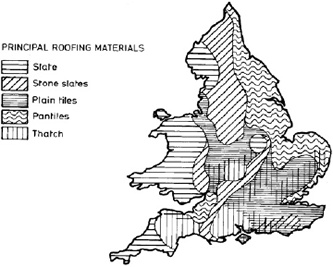
In the UK most tiles are made of clay which are cheap and pretty durable. My neighbourhood is Victorian and I guarantee some of the houses here still have their original tiles. Some towns have slate roofs (e.g. the Lake District), but it's more expensive and a local aesthetic/tradition, more than anything else.
An entire slate roof on a big house is around £12k max. I'm surprised that the difference isn't that much compared to clay, but I imagine most of the cost is labour.
Depends on the style of home (Spanish, traditional, modern, etc). I see clay tile, slate, and asphalt mixed in the same neighborhood pretty frequently. Of course, the higher the home value the less likely it's going to have asphalt (or at least asphalt that looks like asphalt).
20-25 years is at the limit of what I could imagine staying in one house with any certainty. How does the extra longevity justify the cost unless I plan to never ever move again?
It goes to the home's value (aka you'd get more when you sell it). I kind of think of it like brick. Brick has a much longer maintenance cycle than vinyl or wood siding.
Part of our bubble is that at times it's been "more than 100% efficient", so to speak.
Witness dozens of TV shows, "You guys had $50K for your reno budget. Your original value was $250K, and you spent $50K and now your house is worth $350K!"
Your example doesn't show excessive value capture for the upgrades in the home. Rather, for the extra 50k in bank loaned money, the buyer is choosing not to engage in renovation for reasons typically related to: inconvenience, time restrictions, lack of vision, etc.
So you don't have to replace it again before selling it, or take the hit from someone deducting the cost of a new roof off of an offer, the first is typically better for you as a seller. It also adds value to the house in multiple dimensions: they don't have to replace the roof when they sell it, and a solar roof reduces their electric bill.
They're already backordered. If they lowered the price, they would be even more backordered, but have less money. We won't know what the non-early-adopter price is until a few years from now.
Well, roof work is an endless source of work .. and an endless source of material (before Elon). The material gets better every year .. its the workmanship that doesn't unfortunately, nor do the hazards associated with roof work. At any price, solar still remains a "cut the wire" thing, and the more wires you cut to the house eventually the more "free" you live. That said, it does not surprise me that Elon has this problem .. no matter what his reputation is .. because he delivers on the workmanship.
Probably depends on the home. I don't think it would add $35k worth of value over the other installation to a home (especially for a typical $200k home). Also, who cares about property value? If you're selling anytime soon after installing either system, you're going to be taking a significant loss because I doubt you'll make it back in added property value. Especially for the Tesla system. Hard to justify to folks, "Yeah, my otherwise standard $200k home has a fancy $57k roof."
Maybe for the bay area where homes are often over $2mm and the desire for such a roof is plausibly high.
I thought you had to be wrong until I read the article. If people found solar panels garish, unsightly, this would sell like hotcakes. But just the oposite: people will put panels towards the street even when that's not the best angle or side. Like buying Prius over Honda's hybrid because the Toyota is distinctive, people want to flaunt their green.
Being conservative has nothing to do with it. The area of NY I live in right now is extremely conservative and there are dozens of solar panel installations from Apex Solar on homes and businesses.
Every time Tesla talks about a "gigafactory" like this one, or the one in Reno, I'm reminded of the episode of The Simpsons, where a snake oil salesman comes to town and sells Springfield on the idea of building a monorail.
It's a factory. Yes, a big factory. But not bigger than a hundred that came before it. And even if it was, it doesn't warrant a new word.
No, you're thinking of Hyperloop. (I like Elon Musk and Tesla and even the Hyperloop idea, but I can't help but get that song out of my head. "Sorry, Mom, the mob has spoken! Monorail! Monorail! Monorail")
It's just another superlative to "one-up" whats already been there: "What's better than a factory? The megafactory! And whats even better than that? The gigafactory!".
I like the idea of a solar roof, but the incentives just don’t work out where I live. We have lots of sun, so I could plausibly produce quite a bit of excess power... but my electric company won’t buy it from me. The most they’ll do is let me offset my own consumption.
So my upside is capped at getting free electricity, which’ll save me $100-150 a month. That’s not nothing, but it’ll take a LONG time to recoup the cost.
There's a company building a distributed grid exchange system so your neighbors could get a slight discount by buying your power as opposed to that of the electricity company, and you would make more than you would by selling to the electricity company. Currently piloting this idea across a couple places in Australia and SE Asia.
I have this set to false and it's pretty annoying. It seems that the same triggers that make auto-play work are used to play regular video. So I always have to fiddle with Youtube to get a video to start, and Vimeo videos don't play at all. I've had to keep from using this flag in Chrome so I have a backup browser for such sites.
Why do they call them all a "gigafactory"? This is getting ridiculous since the subject "gigafactory" in the article is a million square feet and 500 employees.
> The name Gigafactory comes from the word “Giga,” the unit of measurement representing “billions.” The factory’s planned annual battery production capacity is 35 gigawatt-hours (GWh), with one GWh being the equivalent of generating (or consuming) 1 billion watts for one hour. This is nearly as much as the entire world’s current battery production combined.
If you put "giga" everywhere you increase the hype, increased hype probably means a higher share price, a higher share price means more money for investors (virtual or real money, it doesn't matter), more money is good.
Just over two years ago solar panels were prohibitively expensive for me. I read a couple of Instructables showing how to make your own panel using solar cells. I ordered the solar cells. The plan was to cover the whole garage roof with solar cells.
The price of solar panels dropped. Now I have a box full of solar cells and it just isn't worth it to go the DIY route. The Solar Roof is out of my price range.
Frustrating to see prices change, but it sounds like you were up for doing the work at the old price, so it could be a learning opportunity...
Alternatively, you might be able to sell the cells (at a loss) to recoup some funds and still end up with solar power for cheaper than you were originally intending to pay!
Thanks for the encouraging response. I will use the solar cells as a learning opportunity. I am thinking that they will be a good way to teach kids the basics of solar power.
...Solar shingles will cost more than a conventional roof along with photovoltaic panels -- but not “wickedly so,” said Hugh Bromley, a New York-based Bloomberg New Energy Finance analyst. He estimates a Tesla roof would cost about $57,000 for a 2,000-square-foot house
From where I sit that is wickedly more expensive.
I had a new composite roof installed 2 years ago for $2,900
In addition to the other points made (you often won't be able to charge enough for typical usage), you're also weighing down the car, and you're also immediately disincentivized from parking in a garage, while a house is never not going to be outside.


I do however, want to point out Buffalo .. its troubles with Solar City .. and its troubles with Elon Musk.
Key (non-disputed / non-political points)
- Tesla did not hire local workers, and did not hold up on its end for diversity of work-force - SolarCity received 750$ million in the Billion to Buffalo at a time it hadn't operated at a profit in over 2 years (I believe) - Ciminelli, Buffalo's prior largest construction company that built SolarCity was charged with bid rigging / bribery by the Federal Government and it has all but folded up shop. - Panasonic / Tesla agreement / partnership existed in 2006, yet Cuomo said he brokered this deal (fabrication)
The Riverbend site that SolarCity started has all but been successful in Erie County. That's my 2c, and the above is factual, non-disputed points.
So .. my real question, is why is this not brought to the national level for discussion to what Elon is doing to communities like Buffalo, where I live? That's my question ...