As a counterpoint to the comments about how very dense cities are unlivable, I'd like to offer the example of Paris. I think many people will agree that it's a really nice first-world city, with great culture, transportation, no sanitation troubles, etc (as opposed to Dhaka, which many take issue with).
Well, that's a city with 55000 per square mile inside city limits. Some of the suburbs (the richer ones, mind you) even have up to 65-69000 per sqmi. Dhaka has about 50000. Of course, a lot of suburbs are less dense than this, but those tend to be the impoverished & forsaken ones you definitely don't want to live in.
High density does not necessarily mean Manhattan or Hong Kong, in fact, closely built, dual use 7-story buildings with offices & shops & restaurants on the ground floor are a more balanced and less costly way to achieve it. And it offers a real opportunity to finally get rid of the cars, something that will be impossible to achieve in low-density cities because those could not support decent public transportation.
Paris is slightly smaller in area than San Francisco, yet has three times the population. As you said, Paris is a very livable city. Yet, a lot of people would describe San Francisco as "full". It is nowhere near "full" if the city updates its infrastructure to accomodate the incoming population, and it puts the housing crisis into perspective: there is room for a lot of housing in San Francisco.
> Paris is slightly smaller in area than San Francisco
Its either much smaller (if you count the city proper: less than 1/4 the size of the City and County of San Francisco; given your 3:1 population ratio, this seems most likely to be the comparison you were making) or much bigger (if you count the continuous stretch of urbanized land area within any given radius of the city center) or slightly bigger (if you count by a larger region -- the Ile-de-France is slightly larger than the 9-county Bay Area and has similar population density.)
I can't find any kind of like-for-like comparison by which Paris is "slightly smaller" than SF.
> It is nowhere near "full" if the city updates its infrastructure to accomodate the incoming population
Which isn't an argument that SF isn't "full" (at its current limit of support), but that it wouldn't be full in a hypothetical situation which doesn't exist and which doesn't show any prospects of existing, since the money to change would have to come from somewhere, and even those proposing more aggressive development don't usually propose concrete major infrastructure improvements to support the increased population (and even when they wave their hands in the direction of the idea of such improvements, don't propose a concrete funding mechanisms.)
I don't live in SF and haven't for a long time, but this seems essentially correct to me. My experience of SF is of a lot of small, low-slung buildings; the Mission seems like it consists almost entirely of wood-frame 2-flats.
Also, what cities like DC have happen is an artificial density. In the desirable parts of DC, no space is wasted. People don't live in big units. A lot of the housing is tightly packed low rises and tiny rowhouse-which are often chopped up into several condos.
It feels more cramped in DC than when I lived in a 45 story highrise building in Chicago, even though the DC neighborhoods have fewer people per sqft.
Building up relieves prices and more efficiently uses the land. It also lets young, childless people live together leaving the less dense areas for families who may appreciate more space.
Instead the DINKS (Dual Income No Kids) are running minorities out of their neighborhoods by bidding up the price of the land. And they end up in neighbourhoods that aren't even dense enough to support local bars and restaurants.
DC should be zoning Shaw, Logan Circle, Columbia Heights, Admo, etc for 60 story high rises.
Instead the DINKS (Dual Income No Kids) are running
minorities out of their neighborhoods by bidding up the
price of the land.
Uhh, that's pretty much the plan. The landowners in places like SF and DC want to watch their holdings achieve lower Manhattan valuations. The history of NYC through the 90s proved the way you do that is demographic transformation.
Paris, as they say, is a nice place to visit, but I wouldn't want to live there. Come to think of it, I'm not even that fond of visiting.
I am very grateful that my parents brought me up in a decent-size house with a nice biggish backyard. I can't imagine growing up in an apartment. Particularly in today's world where kids don't play in the park unsupervised. It must be even worse for the parents, who can't say "go play outside!" whenever the kids get rowdy and annoying. I don't think indoor living is good for kids.
For people without children apartments are fine of course, which is why I think the ideal city consists of a combination of a higher-density centre with surrounding low density areas.
People need to quit it with the desire to make everyone else live like a single twenty-something professional.
> People need to quit it with the desire to make everyone else live like a single twenty-something professional.
On the other hand, if all the twenty-something professionals were allowed to live in the city center of their dreams, with Paris-like population density, and hipster cafes and restaurants in each city block, there would be more room for the suburban sprawl for the families to be closer to the city center.
When the "suburban party" denies the "city hipsters" the dense, walkable neighborhoods, they also force the hipsters to compete for the same suburban estate, which drives prices up and commutes longer, and everyone is worse off as a result.
People who want X for themselves, would actually benefit and get their X cheaper and better, if they allowed other people who want Y get and build their Y, instead of forcing everyone to compete in the market for X.
I don't think the "suburban party" is denying any such thing. In cities like San Francisco people who paid a million plus for their townhouse don't want new highrises blocking their view or their light. People who live in suburbs don't care one way or the other.
What's your opinion of how Dallas turned out? There's a whacking great set of huge rings around the city center that are extremely suburban, but a lot of dense "file cabinets for hipsters" closer to downtown, and a fairly functional light rail system.
I think it's precisely the opposite. In a high-density, pedestrian-friendly apartment environment, parents can actually say "go play outside", with kids free to roam around the neighborhood or larger city by public transit, without worrying too much about being run over by cars.
In a typical American suburban environment, "play outside" means play alone in the confines of the backyard, or be shuttled in cars by parents to "play dates", with most roads lacking even sidewalks.
Play where? Even if you're happy letting your kid play unsupervised in the park across the street in a high-density area, in the Paris style cities we're talking about the nearest park is still usually blocks away. You gonna send a five year old strolling through the city alone?
Even then, I live in a high-density area with a park across the street and I'd be hesitant to let kids below ten at least go there unsupervised, if I had them. Whereas if I had a backyard I could tell them hey, go nuts, and peek out the window every fifteen minutes.
Of course I'm not defending streets without sidewalks. I'm defending the sort of place I grew up, which combines quarter-acre blocks and trees and parks with having shops and schools and libraries within walking distance.
These were mid-rise buildings connecting together to form protective courtyards, filled with gathering places, playgrounds and mini-parks, inaccessible to cars, where 5-year olds could play, and 10 year olds had the whole city accessible to them thanks to good public transit.
>> I'm defending the sort of place I grew up, which combines quarter-acre blocks and trees and parks with having shops and schools and libraries within walking distance.
That sounds like a pretty rare place though. Walking distance to schools and libraries tells me either pedestrian-friendly high density, or a very small town with not many job options. If it's neither, I'd love to check it out. Where was that, if you don't mind?
I did play outside in that kind of environment because mid-rise houses had internal courtyards big enough to accommodate all the kids. Parents were ok to see us playing there, they were not ok to see us on the street with cars and people passing by.
Hong Kong at least happened much because of Georgist taxation of land rents. When people can commute ten more miles and divide the cost of living there by a factor of ten, they will. So don't hold your breath on "getting rid of cars" any time soon without some incentive for capturing land rents. For now, we use cars for that.
And it's interesting that we still talk about "shops & restaurants". Other than craft/fine dining, those can eventually be highly virtualized in terms of logistics and depend much less on place.
I have lived in Paris, and it was the most crowded place I have been. The price of housing has gone through the roof and the municipality has passed at least two regulations in the past few years - the first one putting bounds on the rents of apartments up to 13m^2 and the other one banning the rental of apartments below 9m^2!
I live in Milan now and the density seems close to optimal for my taste
The numbers in this article are somewhat lazily assembled, which confuses the analysis. The density numbers everyone's immediately going to fixate on are those of SF and NYC. But they're using the numbers for the combined statistical areas for SF-SJ and the NY metro area.
SF population density is something like 18k/sqmi. NYC's is 27k across all the boroughs, ranging from ~10k in Brooklyn to ~20k in Queens to 66k(!) in Manhattan.
The analysis is trickier in the midwest. Chicago has a citywide population density of 12k, seemingly lower than that of SF. But Chicago dwarfs San Francisco, and the average is brought way down by places like South Chicago and Ashburn. Lakeview, for instance, has a density around 30k. You'd presumably have even worse problems making comparisons to a place like Detroit, which has large areas that are virtually depopulated within it's city limits.
Communities like Lakeview and Lincoln Park in Chicago do not seem to have taken a major quality of life hit despite being far more dense than San Francisco. They consist of tree-lined streets and relatively capacious 2-flats and 2-3-4bdr apartments. I would 1000x rather live in a vintage stone Lakeview apartment, with an alley and a parking garage, than share a rickety wooden apartment in the Mission.
You think of people with a fixation for low-density living as those wanting lots of living space, a yard, plenty of parking, low crime, that sort of thing. But the median San Francisco resident gets none of that. It really seems like a worst-of-all-worlds situation, unless you've been grandfathered in to a huge house that you bought in the 90s, or have struck it rich and decided to plow all your winnings into real estate.
They certainly didn't do themselves any favors by comparing every city to Dhaka.
I thought the point of the analysis was to think of a city as a whole (I.e., MSA) and not just a downtown with surrounding neighborhoods... Chicago, for example, is very low density compared to CA cities despite having a downtown that could swallow all of CA cities' downtowns. And yet, it has miles of single-story homes, empty lots and abandoned factories. Comparing a city like Chicago using only the city and not the entire MSA to any CA city like SF and it still loses (if the game is density). I really appreciated the analysis because th baby boomer generation and their "I got mine..." attitude is keeping most urban places down: literally. Thank you prop 13, if you live in CA, for destroying affordability.
An MSA is not simply a city as a whole. It's the city and the surrounding area. For instance, the statistical area this article uses for San Francisco includes San Jose, a wildly different and in fact larger city than San Francisco. Worse, it includes all the little towns between SF and SJ, from San Mateo to Atherton.
Even analysis on a city-by-city basis is much too coarse.
Most of the residential area of San Francisco is houses with “lots of living space, a yard, plenty of parking, that sort of thing”, for generous definitions of “lots” and “yard”. Though some of the folks I know who live in such houses are sharing a 2–4-bedroom house between 3–5 roommates, which might not be quite what you have in mind (and many of them would vastly prefer to have their own apartments in a larger building if possible).
If you count by population instead of land area, of course, a large proportion of the people live in neighborhoods zoned for low-rise buildings, e.g. your “rickety wooden apartment in the Mission”, because such neighborhoods by definition have much denser housing.
With even modest portions of the city re-zoned to allow housing denser than one unit per lot, with less space spent on parking, we could relieve much of the housing pressure.
Some of the comments in the article seems a bit disingenuous. The Dhaka vs DC graph was kind of funny, because the quality of life in Dhaka is probably much lower in large part due to that density. But more to the point, I agree that no one has a right to the density they've become accustomed to, but that doesn't mean that an increase in density won't amount to a drop in the quality of life to them. Take for instance the comment where someone sad something to the effect that without going all Hong Kong, SF could increase density by 30 or 40% by utilizing unused/undeveloped parcels, and adding a few floors to existing buildings. Thats probably true, but that has no effect on the public spaces. So you now have 30-40% more people on the sidewalks. 30-40% more cars on the road. 30-40% higher density. For some people that is a positive thing, but for those that think it is a negative thing, no amount of hand waving is change that.
By hand waving, I mean assertion without argument. You may convince them that more and better restaurants will open, and that may genuinely change their mind, but many people I've talked to that prefer the high density lifestyle have a hard time grasping that there are those of us that genuinely do not. I live in a city of 120k in one of the least densely populated states in the US. It was 50k when I first came here. It has been genuinely intolerable for me, and I spend all my free time getting away to significantly less dense areas, and I am actively looking for jobs in areas lower than 50k (hard to do in technical fields). Of course I'm an extreme example, but the point being that trying to portray the quality of life concerns of people that prefer lower density as irrelevant is not an honest comeback. Disregard those concerns as being counter to the larger good, but don't pretend that people that hold those concerns will be happy about all the things they will gain at higher densities.
>many people I've talked to that prefer the high density lifestyle have a hard time grasping that there are those of us that genuinely do not.
Personal preferences for this kind of thing vary wildly. When my wife and I moved from suburban Memphis, TN to urban Seattle, WA, my Mother-in-law was convinced that we were making an awful decision that would make us miserable and fill us with regret. She actually broke down crying about how much she worries about us moving somewhere so dangerous, loud, and cramped.
My in-laws live in rural Mississippi in a 4,000sqft home where they cannot see any of their neighbors' houses. They have to drive 20 minutes to get to the nearest store.
It really baffled them to see my wife and I eating up the city life and talking about how much we love our 650sqft apartment. They couldn't believe that we valued the convenience of having a grocery store across the street given that we had to look at it every day from our room.
I wouldn't want to live in rural Mississippi as much as they wouldn't want to live in urban Seattle. We're more at an understanding with each other, but it really sheds some light on how people's preferences can differ, and how those differences could lead to disagreements when cities change in population (like jumping from 50k to 120k).
I think there's a significantly different question at play between the choice of whether to live in a town of 40,000 people or 120,000 people, and the choice of whether to live in a city with 18k/sqmi density or 60k/sqmi density.
At less than 50,000 people, you're talking about wanting to live in a place smaller than Ann Arbor, MI. Effectively, you want to live out in the country. That's fine! But you're having a different discussion than the people in this article and in the rest of the thread, who are debating how the character of major cities changes as density changes.
Density doesn't really enter into the equation when you're talking about places smaller than Auburn, Alabama.
When the population density increases over a certain limit, it becomes more economical (also faster and more efficient) to move people around by a combination of walking, subway, and buses. Like in London, Paris, New York, central Boston etc. After that, adding more people will not add more cars.
Of course, in the ultra-nimby San Francisco, building a subway would also get more resistance than in most other cities of the world.
> When the population density increases over a certain limit, it becomes more economical (also faster and more efficient) to move people around by a combination of walking, subway, and buses.
Only if the infrastructure for those things (particularly subway) exists. Which has to be built -- in advance of the increase in population, if quality of life isn't going to drop before it gets better.
So when we start seeing concrete proposals for infrastructure improvements first, it makes sense to start talking about density increases.
> Of course, in the ultra-nimby San Francisco, building a subway would also get more resistance than in most other cities of the world.
If true, this suggests that people who want to build a new high-density utopia should find some other city to descend upon.
Or, as the demography shifts, they can just vote the NIMBYs out. It's not like the realistic alternatives are "high-density utopia" and "low-density utopia". The low-density alternative is terribly distorted.
> this suggests that people who want to build a new high-density utopia should find some other city to descend upon.
Yes. As far as I understand the situation, of the first world cities of similar size or larger, San Francisco was probably the worst possible choice to base the tech boom in. As it has the most conservative attitude and least desire towards growth and building new homes and infrastructure. And poor quality houses and infrastructure to begin with.
What really happened (and this is true to some degree in the Boston area as well), is that the tech boom(s) actually started in what was (at least then) largely suburban or even semi-rural areas. Silicon Valley and Route 128. This was, after all, a period when there was largely a migration away from cities.
When I was working in the Boston area tech industry (actually near 495) in the 80s/90s out of school, relatively few people I knew lived in the city proper or had a particular interest in doing so.
But then this interest in migrating to at least a handful of specific dense cities by young professionals blossomed and the nearby cities to these booms aren't really prepared for it.
There are only about 5 walkable cities in the US. Boston would have been the other possibility for the computer industry. It might have worked but doesn't have that much better odds than San Francisco for making room for everyone.
I don't know Bangladesh well, but the Indian megacities are generally far more pleasant than the rural areas. Mumbai is a wonderful place to live. Density does make life better.
Admittedly, some megacities are poor, but it's hardly fair to compare a Bangladeshi megacity to a city in a wealthy town.
...and I am actively looking for jobs in areas lower than 50k (hard to do in technical fields).
So it's not actually intolerable - in fact, you prefer it compared to all the other opportunities. Your revealed preferences suggest that having a tech job (a product of density) is more important than other concerns.
Well the reason I haven't moved is I haven't found jobs that wouldn't amount to a 75% reduction in pay, not because good paying jobs don't exist in the small towns, but because my skills don't qualify me for those jobs. As a result I'm weighing my options to get the necessary skills/experience to make the move. Nothing happens instantly, so to deny my claim that it is intolerable just because I haven't abandoned everything to move to a small town and take a job as a fry cook overnight, is disingenuous.
And your assertion that "Density does make life better" is just that--an assertion, and exactly the kind of assertion that dismisses the opposing offhand that I was commenting about.
Job market liquidity is certainly one of the benefits of density. Its not just an assertion - your experience seems to prove it to be true. As well as the experience of millions of people moving to cities for better jobs.
The character of a city changes as it attracts more people, even if it does not get more dense.
For example, there are not more cars per linear lane mile on the streets of New York than there are on the streets of DC. In fact, DC has worse traffic than New York by any measure, despite being far less dense. (It's full of public spaces, and buildings are limited to no more than 13 floors.)
As a city starts to become more attractive to people, either density or property values will go up. When property values go up, poor and middle class residents are forced out, either by property taxes, or by landlords who want to sell instead of rent.
These people then need someplace to live, and the higher property values are soaring, the farther away they will have to move. These folks may have actually preferred increased density to moving away, BTW.
But of course they still work in the city (that's why they lived there in the first place), and now have a huge commute. Thus even though density has not gone up appreciably, traffic and use of public transportation still go up, harming quality of life. DC is largely a commuter city and the traffic is truly awful, despite the low density. LA is another city that is not particularly dense but the traffic is awful.
Agreed that the article fails to empathize with different preferences - I would also argue that it really only considered one side of the environmental argument. Density leads to efficiency in many cases, but the culture of high consumption, travel, and general activity that is promoted by density can result in more pollution rather than less.
In the ideal if we could hold human behavior constant, high density would still be more efficient per capita. Also certainly there are suburbanites who consume and travel with the best of them - but to an individual who is self-aware of their carbon footprint, living in a less dense area may even be an improvement (for instance if it makes the idea of a walking or bicycling commute less unpleasant). And certainly our planet cannot support billions of people driving and buying new plastic toys every year in perpetuity, regardless of where or how densely they live.
Ultimately, if we want to fix the environmental/ecological issues our species faces, it will take more than building some new residences in major cities. This isn't to say it shouldn't be done - but the article definitely seems to overstate the impact of it.
By preventing some areas from getting very dense, you are forcing the rest of the city to get dense to compensate. Cities don't have to be uniformly dense, and probably shouldn't.
Cities like New York and Chicago have very dense portions but also have fairly less dense areas. And those dense areas are more affordable than if no high rises were ever built.
Every high rise buildling in Chicago or New York means dozens of single family homes don't have to be explanded and split into 500 sqft condos. They lower cost of living. And they reduce urban sprawl.
By isolating people and businesses that want super dense areas, you actually give the rest of the city more breathing room.
I wonder if we should find a word other than "dense" to describe dense urban living. Images like those are exactly what non-urban people picture when they hear "dense," but it doesn't have to be anything like that.
For example, I live in one of the densest residential neighorhoods in New York[1], pushing 80k-100k people per square mile, and the buildings largely range from 5-7 stories. I have close access to parks, tree-lined sidewalks, and no skyscrapers blocking sunlight. The buildings and storefronts are varied, colorful, and interesting to walk past: no concrete jungle slabs of grey here.
and I am actively looking for jobs in areas lower than 50k (hard to do in technical fields).
There are multiple 15-25k population suburbs on the south/southwest side of Portland, Or, with a commute in the 30-45 minute range. Tualitin, Wilsonville, Canby, Sherwood, etc.
There is a lot of farm land, acreage available between Portland and Salem. It's certainly not Billings, but there are tech jobs available in Portland (New Relic), Beaverton, Hillsboro (Intel), Wilsonville (Xerox/Flir). Then there are a lot of SMBs all over.
US city's only have relatively low populations because so many people are willing to put up with soul sucking commutes. If DC prevented people from commuting from the outside you would see a dramatic increase in population density without adding a single building.
Union City's population density is twice that of NYC specifically because we pretend meaningless markings mean suburbs are not really just another part of one big city.
PS: City's get this way in large part because they can offload lot's of costs by simply having vastly more office space than residential space. One fairly simple solution is to replace zoning with a fee to add new housing / office space and then let the markets decide. Want to add 1,000 homes or a 1 Million square feet of new office space to an area? Sure, just pay for the infrastructure cost for new schools, wider roads, sewage, and whatnot up front.
> So you now have 30-40% more people on the sidewalks. 30-40% more cars on the road. 30-40% higher density.
This is the fallacy that the article is pointing at: an increase in 50% pop density doesn't result in a 50% increase in everything: mass transit is the best example of this, higher density enables much more efficient mass transit systems. A lower density city will have most people go to work by car, a higher density one will easily have over 50% of the population commute to work by mass transit and bicycle.
Why not just go look this up? Economists and other social scientists study this by, among other things, taking surveys. Sprawl cities have, apparently, lower reported quality of life than dense metropolises.
It's probably not, as you seemingly imply, that economists have simply modeled this up out of thin air.
Seriously, has the world not copped on to these cod merchants yet? Why are journalists still deferring to "Economists" as experts on what's going on? They have no more idea than Punxsutawney Phil. Priests of a failed religion, mumbling the rote-learned catechisms of a banal faith - no existence but that granted by cynics cloistered in vaults of pure iron pyrite.
you'd probably say Dhaka is too full at 112,000 per square mile, right? Well, why do humans live there? Indians are as human as any of us. Why would humans live in a city that's too full?
Because theyd still rather live there than the indian countryside. Even for Indians in Dhaka it's all about tradeoffs.
I would say Indian humans are different from Occidental humans. Large cities in the West have generally been population sinks over the centuries. People move to NYC or London and don't have two kids. This isn't a new pattern. For whatever reason this doesn't happen as much in some other cultures.
I've recently been to Delft. What struck me was that much of the housing was multiple dwellings on one plot divided by floor. e.g. three apartments atop each other.
Wow, no real surprise there, people crowd together like that everywhere. But take a look around :
Yeah this is what annoys me so much here in the UK when the topic of high density comes up, historically high density housing was used as cheap social housing where very little thought or art was put into aesthetics/services or providing for tenants then when the inevitable maintenance cost cutting makes it slum-like everyone recoils at the idea of living there.
And yet The Barbican Estate in London is one example of just how beautiful high density housing can be.
The best way to do 'high' density IMO is 4-6 stories across most of the city, like Edinburgh or Barcelona. If everyone lives in an apartment there's no stigma.
To my mind as a Londoner the coolest places to live here are towers. But that's because the modern ones are being built as luxury accommodation. The '60s tower blocks were built to be cheap - and it showed, and coloured the reputation of anything built in that shape.
> The Barbican Estate in London is one example of just how beautiful high density housing can be.
Really? De gustibus non est disputandum and all that, but I've lived in London for 15 years, and I can't remember hearing anyone describe the Barbican as anything other than a Brutalist eyesore.
Indeed, taste is subjective but I'm a fan of brutalism when it's done well and The Barbican (is ime) done well, it's better then the cheap 60's towerblocks they threw up in the 60's in terms of actually creating a please space to be at any rate.
Another interesting data point was the Kowloon Walled City in Hong Kong. It no longer exists, however, at one point it was considered the most densely populated place on earth with an estimated population density of 3,250,000/sq mi. [1]
It being lawless made it a popular place to go. That made it dense.
It being lawless also meant there was no requirement to make it a nice place.
So I suppose lawlessness is the thread linking everything.
(Of course, yes, density does make it awful in some ways. A lack of natural light, for example. Though I do wonder if proper planning could have improved that.)
The most densely populated part of Montréal is Côte-des-Neiges, at around 7500 people/sq. km. (edit: to be comparable to the examples in the article, that's around 19500 people/sq. mi.) Typical street:
Exactly, just because you can stuff millions of people in a city doesn't mean you should. Dhaka has one of the worst pollution, sanitation, traffic that no other city wants.
Is that more of a function of poverty, rather than density though? HK has a lot of density, yet if not for the shitty climate, would IMO have been the most desirable place to live on earth (yeah I know this is subjective, but there is no shortage of people who would agree with me here).
It's a function of both. Pack enough people into a small enough area and the support + infrastructure gets really, really expensive.
There are many stupidities in the original piece, but one significant one is the apparent lack of understanding that cities have to be supported by political, financial and physical infrastructures which extend far outside the geographic boundaries.
The effective footprints of London, NY, and HK stretch across the world. So you can make an argument for effective economic and ecological density being very much lower than the density you get from a naive division of population by immediate area.
When the effective density is much more constrained, you don't just get financial poverty, you get somewhere that's a shitty place to live in many different ways.
And when there's no political understanding of what an effective footprint is, you get disasters like the California drought - which is largely the result of to appreciate that water is a limited resource that comes from elsewhere, and has to flow into an area before anyone can use it.
Generally speaking, you don't get financial poverty at all as a result of density. You get wealth. London is wealthier than the rest of the UK. NYC is wealthier than the rest of the US. Hong Kong is the wealthiest city in China. Mumbai is the wealthiest city in India, unless Delhi has surpassed it since I last checked. I haven't checked, but I'd bet 5:1 odds that Dhaka is significantly wealthier than the rest of Bangladesh.
The California drought is primarily caused by inefficient use of water in agriculture. City usage of water is pretty much irrelevant.
That's a completely different argument though -- the way I read the article, this is about internal density of cities specifically. In particular, iirc the resource consumption of a person living in a dense city is shown to be smaller compared to that of a same-income person living in a low-density city or a suburb, so dense cities should contribute to a reduction in effective density that you are talking about here.
Yea, I agree, wealth can help fix many of the problems of density. Still, except for some global hotspots like HK, NYC, Tokyo, etc. there's not enough money to warrant crowding to such an extent. And in many of the global cities the problems of density are typically worst on the poorest.
Not sure -- one question is, why are all those people staying in Dhaka? I've never been there, but I would suspect that their income/standard of living, while quite horrible, might still be better compared to Bangladesh countryside?
Have you ever been to HK, if you complain about housing prices in SF, try to get 1 bed room apartment in HK, worse try to go for a run there and see what happens to your lungs after some time.
Though poverty is part of it--Dhaka is actually less dense than Manhattan. That said, Manhattan is gross too, despite being one of the richest places in the world.
I think that poverty will tend to amplify and accelerate a lot of the negative effects of high-density living without conveying much of the benefit, so it's both.
While some may not share this feeling, to me there's a constant sensation of pressure from not having enough space; from being too closed in with too many people. You go somewhere where there's a single building you own, in the middle of a nice bit of land, and you can go to town and not have to ram your way through the people, or go for a drive and not be sitting in traffic. That's relaxing to me. That's a pressure coming off... it feels almost like physically coming up from being at the bottom of a swimming pool.
I've even noticed I think worse in that sort of environment. Like I'll look at things I wrote in a high-density area and they look like insane ramblings.
That doesn't seem to be a 'well, you just need to find a nice high-density area' problem. I've lived in some very well-appointed flats in very nice areas before, and didn't care for the experience in the slightest. I don't care whether the flat's fantastically appointed with real oak furniture and good lighting[1].
And what are we offered in return for that unpleasant sensation? I don't care how many coffee shops or restaurants or whatever there are. I don't go to town unless there's something I can't buy on the internet or I need to go to work. There's little I'd value there. Rampant consumerism is not a society, nor is it a community. The ability to shop in a hundred stores is not the same as a high quality of life.
Ultimately, that is why I don't live in a high-density area despite being offered several multiples of my current wage to do so. I make enough to be comfortable here, it would be almost impossible for me to make enough to be comfortable there.
---
1. Which, by the way, is very difficult in a high-density area. Good lighting means light from multiple directions in at least some of the rooms. Quite how you're supposed to do that when there's another building in the way I'm not clear on - the general answer seems to be that one doesn't.
If you've lived in a property with good lighting angles some practices, such as an open-plan setup seem rather like bad hacks.
> I've even noticed I think worse in that sort of environment.
There have been many posts on HN in the past little while about interruptions killing concentration. Well, in that environment, there's always a siren going off outside, or a car alarm, or a car horn, or... You can't just think there unless you get a place that insulates you from all that. Even then, it takes time for all the mental jarring that happened to you on your way to that place to die away, so that you can think.
This is a massive exaggeration. I'm aware this is anecdotal but I work close to the centre of a large city with 18000/sqm density (according to wikipedia) and I honestly can't recall the last time I heard a siren or car horn.
Just like there are people in Boulder who wish startups would leave and never come back, there are also people in Detroit who wish Dan Gilbert had never moved Quicken Loans downtown and started buying buildings.
Most of it is pure jealousy, because at the time no one wanted to bid against him. Engineers have caused downtown rents to soar and pushed the poor completely out. Sound familiar?
Even Gilbert's fabled security grid which has made a night and day difference on crime in downtown has its enemies, one merchant got upset when his landlord let Gilbert post cameras and demanded they be removed. There's even a protest t-shirt:
Reddit's Seattle thread on this article pointed out that Istanbul has the kind of density talked about in this article, at least in some neighborhoods. This picture[1] was linked as a representative example, not too different from Seattle's South Lake Union neighborhood (that Amazon has essentially remodeled in the past few years).
This is a fascinating article, thanks for posting.
It's unfortunate that so many U.S. cities (and some abroad) were designed and built in a way that results in them being unwalkable. I'm really interested in seeing how cities respond to this, and whether or not these cities will start to become more dense in order to possibly improve efficiency, or whether they'll just continue to sprawl because it's the easiest way to grow.
On one hand they propose dramatically increasing economic spending because if only one thing is certain and in no dispute, its that denser design is more expensive to construct AND maintain. On the other hand they dismiss property rights and representative government as obsolete concepts to be scoffed at because they stand in the way of "progress" where progress is curiously defined as lowering standards of living due to higher density. The only rational conclusion is they must be proposing socialized government owned and operated and maintained ultra high density housing. AKA "the projects". And nobody wanted to live there when we tried it.
Usually the WP has better written articles. The individual lines and paragraphs are well organized written. It only fails are the higher organizational writing levels where its wrong, and poorly organized. One exception is the conclusion is completely wrong. Detroit never stopped evolving. It just evolved in a direction most people hated, so everyone who could, left. FUD along the lines of turn this place into the projects or else it'll turn into the projects isn't very logical.
Really. It's important to remember that every floor in a building has to support all of the floors above it - not just physically, but all the services and access for the floors above too. Above three floors or so, you also need extra infrastructure like pumps to get drinking water to the upper floors, tanks to store it, and elevators so people near the top don't have to carry their shopping and furniture up all the flights of stairs. At the same time, you're losing economies of scale because rather than building the same house 10 times, you're building a one-off, with every floor having to be designed and analysed separately because it's under different loading. And of course that one building has the same transportation, power, water and sewerage needs and generates the same amount of garbage as all 10 houses, but now you have much less space at ground level to satisfy those needs with.
And this just gets worse as the building gets taller. Eventually, the infrastructure required to add more floors removes so much usable space from all the floors below that it's not ever economically viable to do so, which is why all the tallest skyscrapers are built for bragging rights these days.


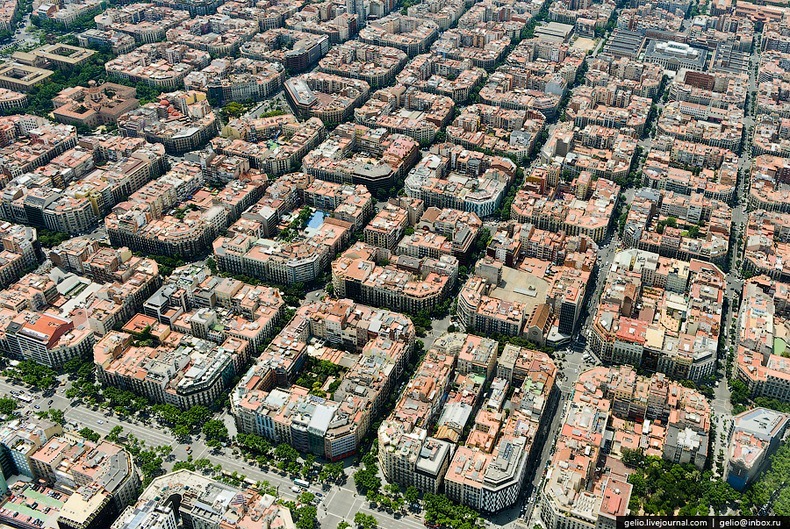
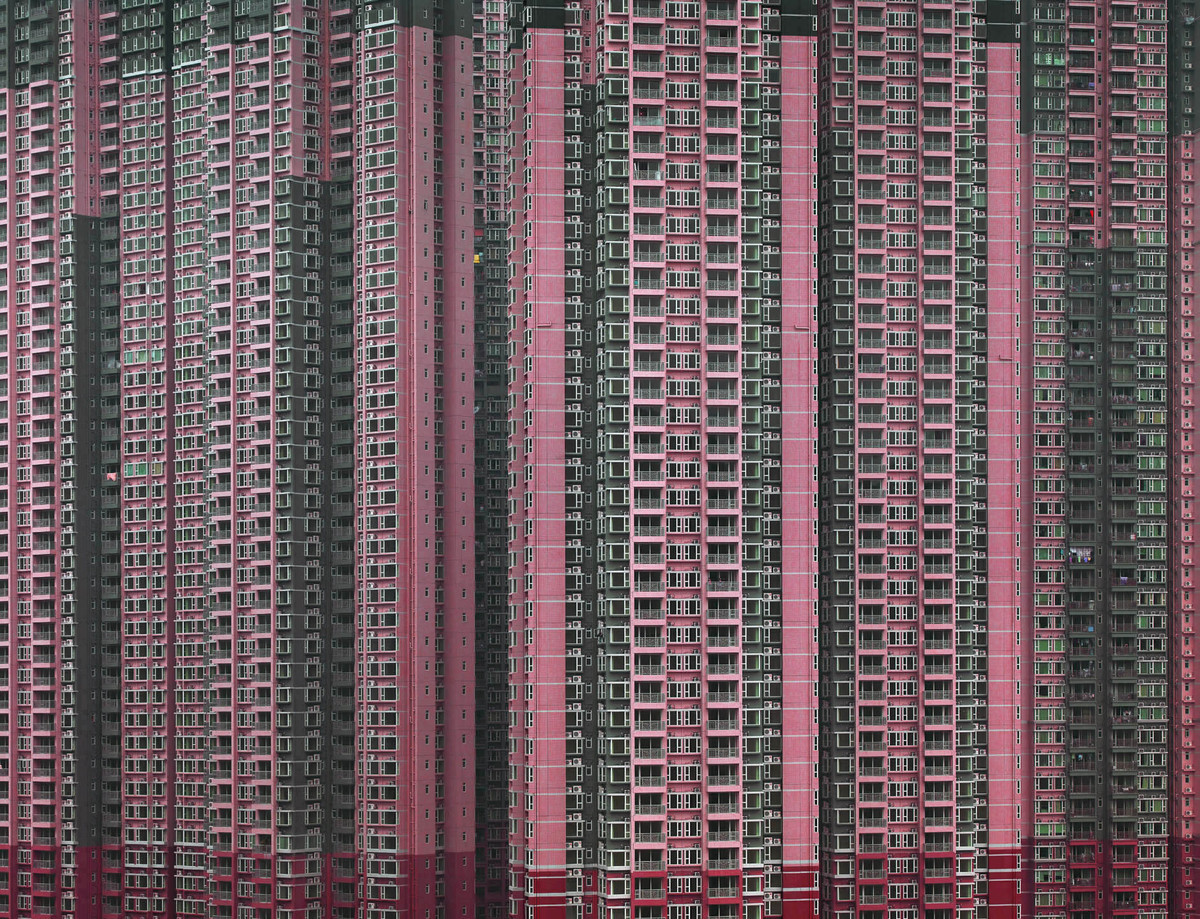
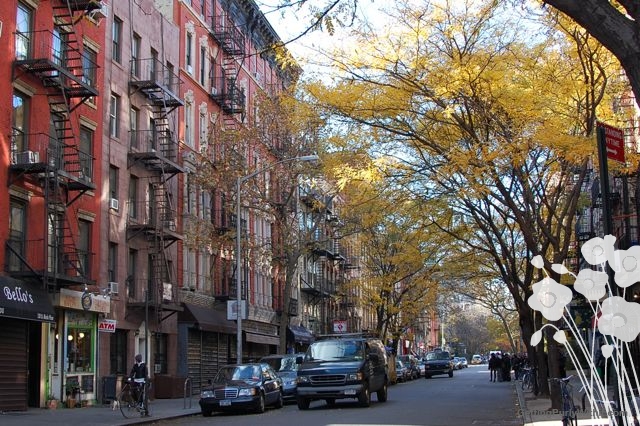

Well, that's a city with 55000 per square mile inside city limits. Some of the suburbs (the richer ones, mind you) even have up to 65-69000 per sqmi. Dhaka has about 50000. Of course, a lot of suburbs are less dense than this, but those tend to be the impoverished & forsaken ones you definitely don't want to live in.
High density does not necessarily mean Manhattan or Hong Kong, in fact, closely built, dual use 7-story buildings with offices & shops & restaurants on the ground floor are a more balanced and less costly way to achieve it. And it offers a real opportunity to finally get rid of the cars, something that will be impossible to achieve in low-density cities because those could not support decent public transportation.