If you look at water usage in Nevada, 75% of it goes to agriculture [1]. Agriculture provides a lot of jobs and food. Unfortunately the resources are no longer there. You can eliminate landscaping (yards, golf courses, las vegas fountains, etc), but it still won't make a dent in the water use.
It's not just Nevada, but Nevada is the poster child here for everything that's gone wrong with water use.
So something's gotta give. And it turns out that farming in deserts may not have been the best use of the land (or water).
Nevada gets 4% of the water in the first place. Almost all of that 4% goes to Ag and mining as you said. The things people use as "the poster child" like fountains and golf courses are rounding errors.
The Desert Land Act under which a lot of desert land was claimed (and, the only remaining way I know of state land can still privately be claimed) only gave it to you if you established irrigation and agriculture.
The government basically asked for it, and then made it the only way to get much of the land. And now of course, many heads in government now complaining about the evil private land owner who did the thing the government asked for and precondition.
Yay, they own the land. A hundred plus years later, I don't see why the descendants (or corporate owner) should have the same water rights now after things have changed. Don't strip them of the land...but something has to give.
Yes that could be done via eminent domain of their water rights. The only note would be that since the value of especially the more rural desert land is tied almost completely to acreage times water rights per acre, it's basically a full buyout of the entire non-residential rural desert due to the takings clause. I don't know how much it'll cost, but it will be a lot.
>A hundred plus years later
I know of people still investing large sums today to claim under the Desert Land Act. It's still active. They need to establish irrigation and usually drill/share a well (maybe hauling could work but you have to show it's economically viable), and establish that over a multi year proof process the viability of the land. Just harder than it used to be. So to be clear it might be someone from yesterday, although it's just less common. I'm not sure if the takings clause would cover them though, as they don't technically own it until the proof process is complete, so for them it'd probably merely just be a total loss.
The takings issue is why I believe that rather than invoking eminent domain, the CA government should institute a Uniform Water Use Tax, whose aim is to establish a single price for any use of water (charged per gallon/acre foot) in the state. The cost of acquiring the water used can then be claimed as a credit against the Uniform Water Use Tax.
This respects water rights while aligning incentives to conserve water and as a bonus establishes a more even playing field in the agricultural sector, enhancing competition and reducing the unjust profits of the Resnicks' shady water empire.
Is that actually taken into account in a taking? I haven’t thought about this stuff in decades, and I know there is some weirdness with regulatory takings.
Another way to frame the question: if the government just changes the water rights per acre, does that itself trigger the takings clause?
It depends on the type of water right (there are many kinds). The State has the ability to effectively recall some water rights. True titled rights would be a taking.
Like 60-75% of all ag land in the US is to grow feed for cows. Mostly in dry environments. This is because the old water rights were distributed on a "use it or lose it" basis which encourages wasteful use.
In some desert areas there is no other use for the water because the aquifers are fragmented. People don't live there, you can't readily move the water to somewhere useful, and it won't flow anywhere useful on its own. Agriculture is a way to convert water into something easily transported.
This doesn't apply to many places but in the desert Mountain West this is often the case. Also, while it may seem surprising, a few crops really thrive in the high desert e.g. onions.
This is absolutely not the case when it comes to Nevada agriculture. They're moving water in from outside the state to feed ag for places where people do live.
Rust isn't so much "competing" as it is "complimentary" to python. This is very much how python was billed originally as a scripting language for "C" in it's early days.
The slow parts of your python program can be rewritten in rust or C, your choice. So refreshing.
I found myself traveling recently and missed my 3d printer. There were a few neat things I could have done if I had a printer in a carry on. It would be kinda awesome to have a self contained 3d printer with a battery to take wherever I go.
If you're near a harbor freight, they have cheap rugged cases. Maybe design around that form factor, since they're easy to get?
I have a couple idea's on how I wanted to do it:
- Belt printer fitted into a briefcase (the harbor freight case form factor would be good for that!)
- Positron style
- Maybe mess around with double four-bars
Making it self-contained with a battery is also a really cool concept I'll have to explore!
May not meet your particular definition of small, but my portable printer is a Voron 0.2. The frame is sturdy enough that you can attach a handle to one corner and just carry it around with you, at least for a while. It's not particularly lightweight. But it is small (fits completely inside the build volume of my other printer), and being fully enclosed within the frame, seems more durable than the likes of the other tiny printers (Lemontron, A1 Mini, etc.)
You'd need a pretty substantial battery on account of how much heat it takes to melt filament. Even the Bambu A1 Mini uses ~150W while heating the hot end. I like the idea of a portable printer, though.
It's actually not the hotend heating that's the largest power drain, it's heating the large heat bed. Bambu Lab is introducing firmware features to more slowly ramp up the heat, but I don't need if that could happen slowly enough to not drain a battery.
You’re understating it. Meshtastic is horribly designed. If you designed a wireless mesh network making all the worst possible choices, with the most shortsighted design decisions imaginable, you’d get something a little better than Meshtastic.
> Next on the list of worst things to happen to programming is Python's popularity as a CSC101 language
My school kept track of computer science graduates, and the numbers dropped sharply after copying MIT's example for their intro course. And predictably it was 4 years after the change.
Some might call that "Gatekeeping" (though that's a more recent word in the vernacular), but I think it's more 90% of the jobs were C/C++/Java back then, and a BS degree was meant to get a graduate in a job in the real world.
Also students dropping out of the computer science program wasn't a great look when requesting funds for servers and stuff.


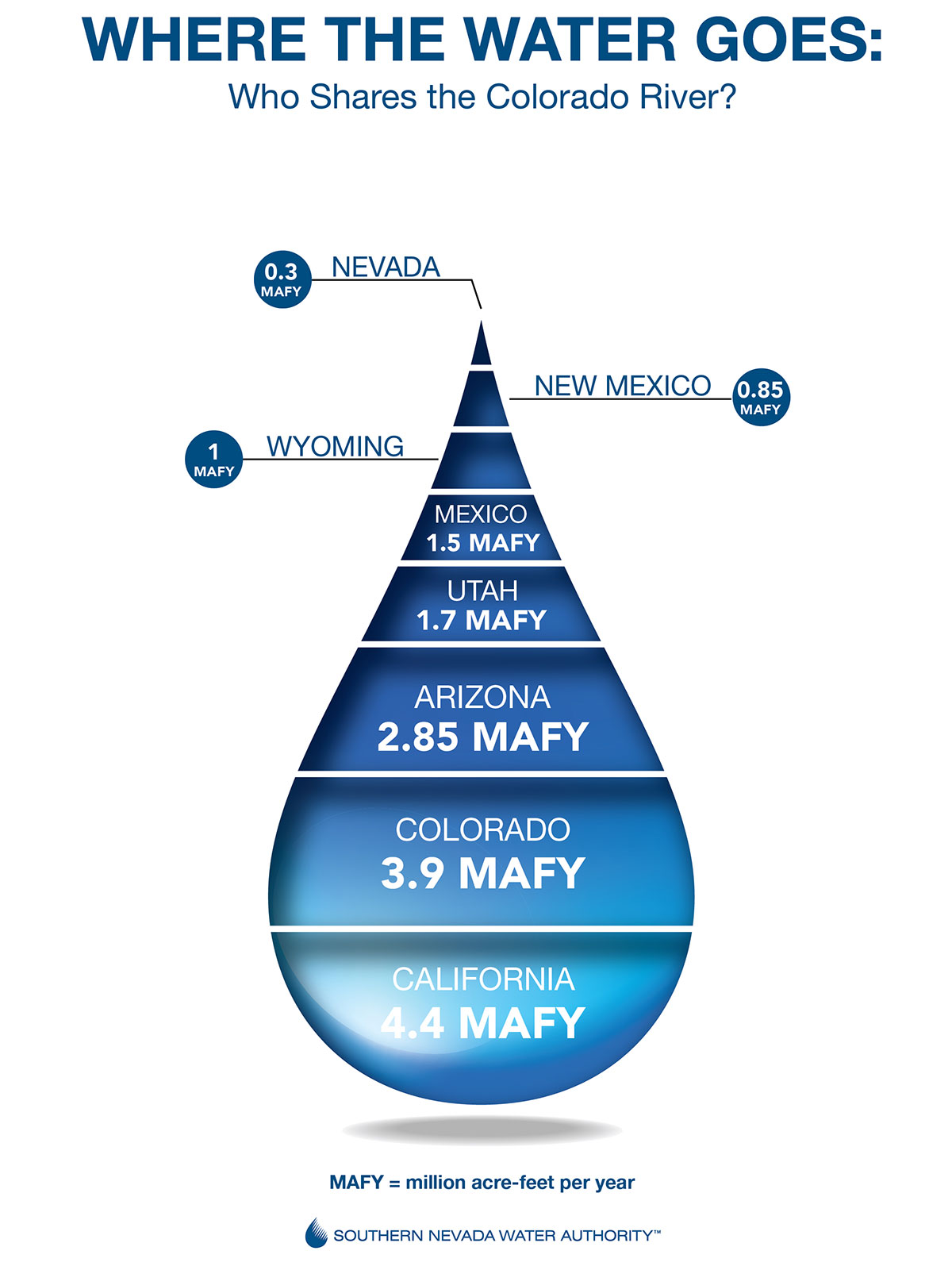
It's not just Nevada, but Nevada is the poster child here for everything that's gone wrong with water use.
So something's gotta give. And it turns out that farming in deserts may not have been the best use of the land (or water).
[1] https://extension.unr.edu/publication.aspx?PubID=4764
reply