> Autism symptom severity change was evaluated during early childhood in 125 children diagnosed with autism spectrum disorder (ASD). Children were assessed at approximately 3 and 6 years of age for autism symptom severity, IQ and adaptive functioning. Each child was assigned a change score, representing the difference between ADOS Calibrated Severity Scores (CSS) at the two ages. A Decreased Severity Group (28.8%) decreased by 2 or more points; a Stable Severity Group (54.4%) changed by 1 point or less; and an Increased Severity Group (16.8%) increased by 2 or more points. Girls tended to decrease in severity more than boys and increase in severity less than boys. There was no clear relationship between intervention history and membership in the groups.
> I asked [Governor] Hutchinson more broadly if he had concerns about the message he’s sending about when citizens should report web vulnerabilities.
> “Well the question is, do you see a vulnerability or did you find a vulnerability? I think we’ll let the investigation speak for itself on those points.”
> A visual cortical prosthesis (VCP) has long been proposed as a strategy for restoring useful vision to the blind, under the assumption that visual percepts of small spots of light produced with electrical stimulation of visual cortex (phosphenes) will combine into coherent percepts of visual forms, like pixels on a video screen. We tested an alternative strategy in which shapes were traced on the surface of visual cortex by stimulating electrodes in dynamic sequence. In both sighted and blind participants, dynamic stimulation enabled accurate recognition of letter shapes predicted by the brain’s spatial map of the visual world. Forms were presented and recognized rapidly by blind participants, up to 86 forms per minute. These findings demonstrate that a brain prosthetic can produce coherent percepts of visual forms.
I'm not taking a stance on the topic, but I think that if you quote the part that you did, then you should also quote the part right before it, for full context:
> In the race to effect substantial, system-wide rejuvenation, Harold Katcher is a dark horse. He has the right academic credentials and a solid history of research. In fact, in earlier life he was part of a team that discovered the breast cancer gene, brca1. I asked Harold for a biographical sketch, and have printed it in a box at the end of this posting.
And here's the bio sketch itself:
> So, you might consider me a late bloomer. While I have thousands of citations in the literature, with publications ranging from the discovery of the human ‘breast cancer gene’, to protein structure, bacteriology, biotechnology, bioinformatics, and biochemistry, there was no center or direction to my work as I had given up my personal goal of solving/curing aging when I learned that ‘wear and tear’ was the cause of it. Yet something happened in year 1985 when I was in California working with Michael Waterman and Temple Smith (fathers of bioinformatics) that is inexplicable: I found myself in Intensive Care with a tube inserted into my trachea and the knowledge that I might not live. And then I had a dream: I dreamed that somehow in the far future (and on another world), I was being feted for ‘bringing immortality to mankind’. Clearly, I survived that incident (started with an infected tooth). I lived a wonderful life – becoming a computer programmer (which I loved), leaving that for the University of Maryland’s Asian division, becoming a full professor and then the Academic Director for the Sciences, in Tokyo, Japan. By the time I left Japan in 2004, (my daughter Sasha was a fourth-grader, (yonensei), in the Japanese school system), I was teaching for U of M online – somewhat retired, and looking forwards to writing computer programs for fun and profit. Yet I never ever forgot that dream. It was clearly impossible; I had no lab – and really, there was no way to repair all damaged cells – it’d be like sweeping back the ocean. And then, in 2009, I read an old paper from 2005, a paper written by the Conboys, (Michael and Irina), Tom Rando and others, coming from Irv Weisman’s lab, that completely changed my life; that showed me that everything I believed about aging was wrong – that aging occurred at the organismic level, not at the cellular level and could be reversed. Well, the rest of the story is about persistence and the blessed intervention of Akshay Sanghvi who too saw there was another way and provided the structural, monetary, and emotional support (and some good ideas) that had me start a new career at age 72 in Mumbai, India. I feel twenty years younger than I did three years ago, I guess that’s another hint about aging. Now the ‘mystical’ dream? It wouldn’t be the first time in history that that happened – take that as a datum.
> The FCC argued in court that making the millions of IP addresses contained in the logs publicly accessible would constitute an “unwarranted invasion of personal privacy.” And while [Judge Schofield] didn’t entirely disagree, she said the agency had failed to adequately spell out how anyone would be harmed by the disclosure.
> Regardless, Schofield said she also decided to weigh any hypothetical harm against the potential value of the information to the public. “In this case, the public interest in disclosure is great because the importance of the comment process to agency rulemaking is great,” she said, adding: “If genuine public comment is drowned out by a fraudulent facsimile, then the notice-and-comment process has failed.”
The judge also wrote that:
> ...despite the privacy concerns raised by the agency, releasing the logs may help clarify whether fraudulent activity interfered with the comment period, as well as whether the agency’s decision-making process is “vulnerable to corruption.”
I’m a bit confused about the privacy issue here. Isn’t the (alleged) commenter’s full name and address published along with their comment in the public filing? If the commenter’s address is already published what other information can be gleaned from their IP address? Is the fear that someone could use it to piece together a person’s web history?
The New York times isn't seeking the name or address in their request, just some other metadata about each comment including the IP and user agent header.
Edit: upon reading more, now I'm not sure if the NYT already has the names and addresses and is just seeking the metadata or if they don't need that data to do their analysis. Your guess might have been right, the ruling is unclear.
> The New York times isn't seeking the name or address in their request, just some other metadata about each comment including the IP and user agent header.
The point of the person you're responding to is that the NYT doesn't need to seek names or addresses, because they're already public information. Anyone can go look up the docket and see them[1].
So, their argument I believe is that, given that the names and addresses of the filers of comments are already publicly available, what further privacy concern is there in releasing IP address information?
And there might be one. IP address & UA might further allow me to correlate the user's activity elsewhere; some comments didn't submit names or addresses — IIRC these were "required" but some people filled in the fields with things like "none".
There were also allegations that the names of some comments were falsified on comments not in favor of net neutrality. IP address information might lend evidence to or against those allegations.
Exactly; I was on that list and looked at the db during the intial controversy. I looked up some of my neighbours, and it was clear to me they had no obvious connection to the issue, and had in fact very similar or exact things to say, as I recall. I took it at the time to mean they had gave someone a proxy to speak for them, maybe some business or political group.
This is really great news and I admire the judge's dedication to truth and justice. It makes me wonder how much pressure the judge recieved behind-the-scenes before making this ruling. Excited to see how this develops. Unfortunately I suspect the answer is probably more mundane than anything; e.g. the comments were from a botnet which the FCC lacks technical competence to deal with.
What’s crazy is if you own the ISP (who generally wants to repeal net neutrality) you already know which names are associated with each IP as well as other information since you looked up their credit score among other things.
It would make the ip address information useless. What they probably want to do is figure out how many comments came from the same network blocks that were allocated to organizations (to detect large numbers of fake comments). If you hash the ip addresses you can't figure out which ones came from the same network allocation, the most you could do is figure out which comments came from identical ip addresses.
Used to a play a server called Civcraft that was persistent for several years - server-side plugins enabled preservation of structures (to an extent) through reinforcement (Citadel), culling of mobs using "Mustercull", biome-specific farming with RealisticBiomes, and an imprisonment system (PrisonPearl) which gave players the power to ban others from the server.
People naturally formed their own laws, governments, societies, and over the years the balance of power went from a fractal multipolar world to a massive "red vs. blue" cold war with minimal conflict. Quite interesting really. Not to mention the massive international infrastructure works, including rails, bridges, tunnels, massive towns, and lag-inducing automated farms.
It's unfortunately that games with thriving modding communities are so few far between these days. So many fantastic games have branches off of GoldSrc, Source, Starcraft, WC3, Quake, etc. Nowadays it's mostly just Minecraft left.
I do wonder if it has to do with game making tools such as Unity becoming so much more prevalent. I'm guessing most people have just migrated to making their own indie games instead of making mods for other games which is much harder to monetize and scale.
Although I guess there's a resurgence of game creator games. Dreams [0] and Crayta [1] specifically. Very reminiscence of Gmod and the like.
For one thing Minecraft absorbs a lot of this interest. I'm not going to check out your new mod for some game I don't own and which has no other notable mods, but I might check your Minecraft mod, and I definitely will play it if it gets bundled into a "pack" I was interested in anyway. I had no particular enthusiasm for a mod focused on rats (plague rats, rat breeding, rat training, an entire rat civilisation including terrible rat-based puns...) but it's baked into MC Eternal so now I have a cage full of tame rats and a hankering to find Ratlantis.
The choice of Java for Minecraft really matters. Java's if-it-compiles-it-probably-runs approach means third rate programmers can easily put something together that doesn't crash the game mysteriously every five seconds. Java's strong OO background is well-suited to modifying a game too, and particularly to allowing mods to be compatible with each other.
Constraint is often helpful in art. Few of us have the grand vision (and sufficient free time) to build a sprawling Total Conversion that radically overhauls gameplay, visual style and so on. So if you're thinking smaller then something like Super Mario Maker 2 looks pretty good. Can you put in weeks to make something as fresh as the Mario "ROM hacks" made with Lunar Magic (software to modify Mario) which Nintendo won't admit inspired SMM? No. But you can spend a few hours arranging pre-existing components to make something pretty interesting within Nintendo's agreed constraints. Or you can spend five minutes adding every possible boss character to a single screen fight like a two year old finger painting. Whatever you want.
I would also add IMO the main reason that Java matters: it's easily moddable without the creator's permission. For most of Minecraft's existence, there was zero official mod support and zero in-game scripting abilities. However, Java is relatively easily decompilable and many modders put in effort to deobfuscate it.
The end result is that Minecraft was easily moddable without Mojang needing to officially support them in any way.
Large scale terraforming (land masses, forests, mountains, rivers) is done via external tools. Most "human scale" features like buildings are done in-game.
And for those who want to create in a similar environment, but in an open source way, the OSS clone Minetest is pretty mature and is designed to be easy to mod.
"The year 1816 is known as the Year Without a Summer... because of severe climate abnormalities that caused average global temperatures to decrease... Evidence suggests that the anomaly was predominantly a volcanic winter event caused by the massive 1815 eruption of Mount Tambora..."
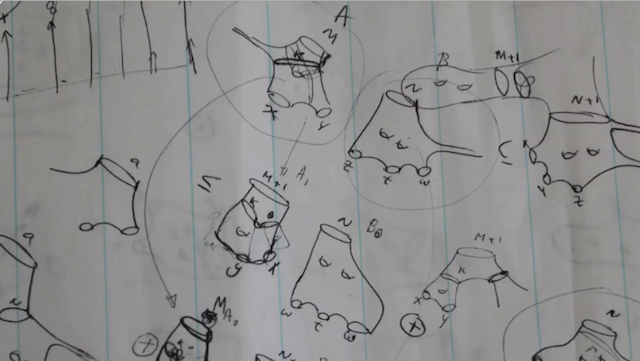
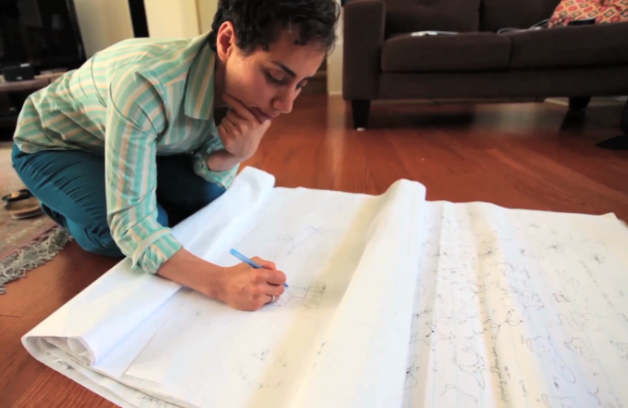
> Mirzakhani described herself as a "slow" mathematician, saying that "you have to spend some energy and effort to see the beauty of math." To solve problems, Mirzakhani would draw doodles on sheets of paper and write mathematical formulas around the drawings. Her daughter described her mother's work as "painting".
> She declared: "I don't have any particular recipe [for developing new proofs] ... It is like being lost in a jungle and trying to use all the knowledge that you can gather to come up with some new tricks, and with some luck, you might find a way out."
This reminded me of our Analysis prof. "I really hate Iternational Mathematical Olympiad. The problems there give you the false impression that math-theorems have elegant solutions. No. You are usually banging your head against the problem, and when nobody is looking you use dynamite!" - especially the "lost in a jungle" part of the quote :)
Not sure if others are having the same problem, but as soon as I try to scroll down on that page, it gets replaced by a subscribe request or something like that.
Here are some direct links to the 3 images in that article...



> Autism symptom severity change was evaluated during early childhood in 125 children diagnosed with autism spectrum disorder (ASD). Children were assessed at approximately 3 and 6 years of age for autism symptom severity, IQ and adaptive functioning. Each child was assigned a change score, representing the difference between ADOS Calibrated Severity Scores (CSS) at the two ages. A Decreased Severity Group (28.8%) decreased by 2 or more points; a Stable Severity Group (54.4%) changed by 1 point or less; and an Increased Severity Group (16.8%) increased by 2 or more points. Girls tended to decrease in severity more than boys and increase in severity less than boys. There was no clear relationship between intervention history and membership in the groups.
The study can be found at: https://link.springer.com/article/10.1007/s10803-020-04526-z